

Operating a zero liquid discharge system is expensive, and most of that expense shows up long before the first evaporator is installed. I’ve commissioned ZLD trains for electroplating, pharmaceutical, and landfill leachate duty, and the pattern is always the same: the capital cost gets all the attention, while the operating cost quietly drains the budget for the next fifteen years. The most effective way to reduce ZLD system operating cost is to attack energy and chemical consumption at the design stage, then protect that design with disciplined pretreatment, correct compressor and evaporator selection, and data-driven maintenance. In this article I’ll walk through the levers that actually move the needle, based on what I’ve seen work and fail in real plants.
Where the Money Actually Goes in a ZLD Train
Before you can cut cost, you need to know where it lives. A typical ZLD system is a chain: pretreatment, preconcentration (usually membrane-based), evaporation/crystallization, and solids handling. Each stage has a different cost profile, and the same dollar spent in the wrong stage buys you nothing.
From my project experience, the split usually looks something like this:
| Cost Category | Typical Share of Annual OPEX | Main Driver |
|---|---|---|
| Thermal energy (steam or electricity) | 40–60% | Evaporator type, compression ratio, boiling point elevation |
| Electric power (pumps, compressors, blowers) | 15–30% | Membrane pressure, circulation rates, compressor efficiency |
| Chemicals (antiscalant, cleaning, pH control) | 8–18% | Feed chemistry, scaling tendency, cleaning frequency |
| Maintenance and consumables | 5–15% | Corrosion, fouling, mechanical wear |
| Labor and sludge/salt disposal | 5–15% | Automation level, solids quality, local disposal routes |
These ranges are indicative and shift with feed salinity, flow rate, and whether you’re running a primarily thermal train or a hybrid membrane-plus-thermal train. The point is that energy dominates, so that’s where I start every optimization discussion.

Design Decisions That Lock In or Lock Out Savings
Evaporator Selection Is the Single Biggest Lever
I’ve watched plants save 30% or more on thermal energy simply by choosing the right evaporator architecture. The decision usually comes down to mechanical vapor recompression versus multi-effect evaporation, and sometimes a hybrid.
Mechanical vapor compression reuses the latent heat of the vapor it generates, so for electricity prices that aren’t punitive, it’s often the lowest-energy option for moderate evaporation duties. Multi-effect evaporators spread the same heat across several stages, which cuts steam demand per unit of distillate, but they need a steam source and more plot space.
For a rough comparison, here’s how the main options typically stack up:
| Technology | Relative Energy Demand | Best Fit | Main Watch-Out |
|---|---|---|---|
| Single-effect evaporator | High | Small flows, simple duty | Poor steam economy |
| Double-effect evaporator | Moderate | Medium flows with steam available | Boiling point elevation losses |
| Triple-effect evaporator | Low steam demand | Large flows, stable feed | Higher capital, more fouling surfaces |
| MVC evaporator | Low, electricity-based | No steam, moderate salinity | Compressor power and maintenance |
| MVR evaporator | Low, electricity-based | High-purity distillate needs | Compressor cost and control complexity |
I don’t treat these as competing religions. On several projects the winning configuration was a membrane preconcentration stage feeding a smaller evaporator, which cut the evaporator size and its energy draw simultaneously.
Preconcentration Saves More Than It Costs
Every cubic meter you remove with membranes is a cubic meter the evaporator never has to boil. High-pressure RO and DTRO membrane systems can push recovery well beyond conventional RO, especially on high-salinity or high-COD streams. The trade-off is membrane replacement cost and concentrate management, but in most of my projects the energy savings from a smaller thermal duty outweighed the membrane OPEX.
The design rule I use: size the membrane stage to the point where its marginal cost per cubic meter of permeate is still below the marginal thermal cost per cubic meter of distillate. Beyond that point, you’re just adding complexity.

Cutting Thermal Energy Without Cutting Reliability
Once the architecture is fixed, energy reduction becomes an operations game. Here’s what I actually adjust in the field.
Run at the Highest Stable Concentration
Evaporators are most efficient when they’re pushing the concentrate as far as the chemistry allows. Every percentage point of extra concentration reduces the volume you have to evaporate next cycle. The limit is scaling and viscosity, not the equipment. I always run a solubility and scaling study on the actual feed before setting the operating setpoint, because a generic setpoint from a datasheet is a recipe for either wasted energy or a fouled heat exchanger.
Recover Heat From Every Stream You Can
Condensate, distillate, and blowdown all carry usable heat. A well-designed heat exchanger package can preheat feed with distillate and cut the external heat demand noticeably. On one leachate project, adding a feed/distillate exchanger reduced the effective steam demand by roughly a fifth, and the payback was under two years.
Match Compressor Control to Load, Not to Habit
Compressors are the heart of an MVC or MVR train and often the largest single electrical load. Running them at fixed speed when the load is variable is one of the most common ways I see money wasted. Variable-frequency control, proper turndown, and honest load-following logic usually beat any mechanical upgrade in terms of return.
In my experience, the biggest energy savings in a ZLD plant rarely come from new equipment. They come from running the equipment you already own at the right setpoint, with clean heat transfer surfaces and a control system that actually follows the load.
Pretreatment: The Cheapest Reliability You’ll Ever Buy
Fouling and scaling are the silent cost multipliers. A heat exchanger that’s 10% fouled doesn’t just lose efficiency; it forces the compressor or steam supply to work harder, increases cleaning frequency, and shortens equipment life. I’ve seen plants where poor pretreatment doubled chemical cleaning costs and cut evaporator availability by a third.
What I look at:
- Hardness and silica removal upstream of any thermal stage, because these are the classic scale formers.
- Oil and grease control, since even trace organics can foul surfaces and cause foaming.
- Suspended solids removal, usually with filtration or clarification, to protect membranes and heat exchangers.
- pH and chemistry stabilization so the evaporator isn’t fighting a moving target.
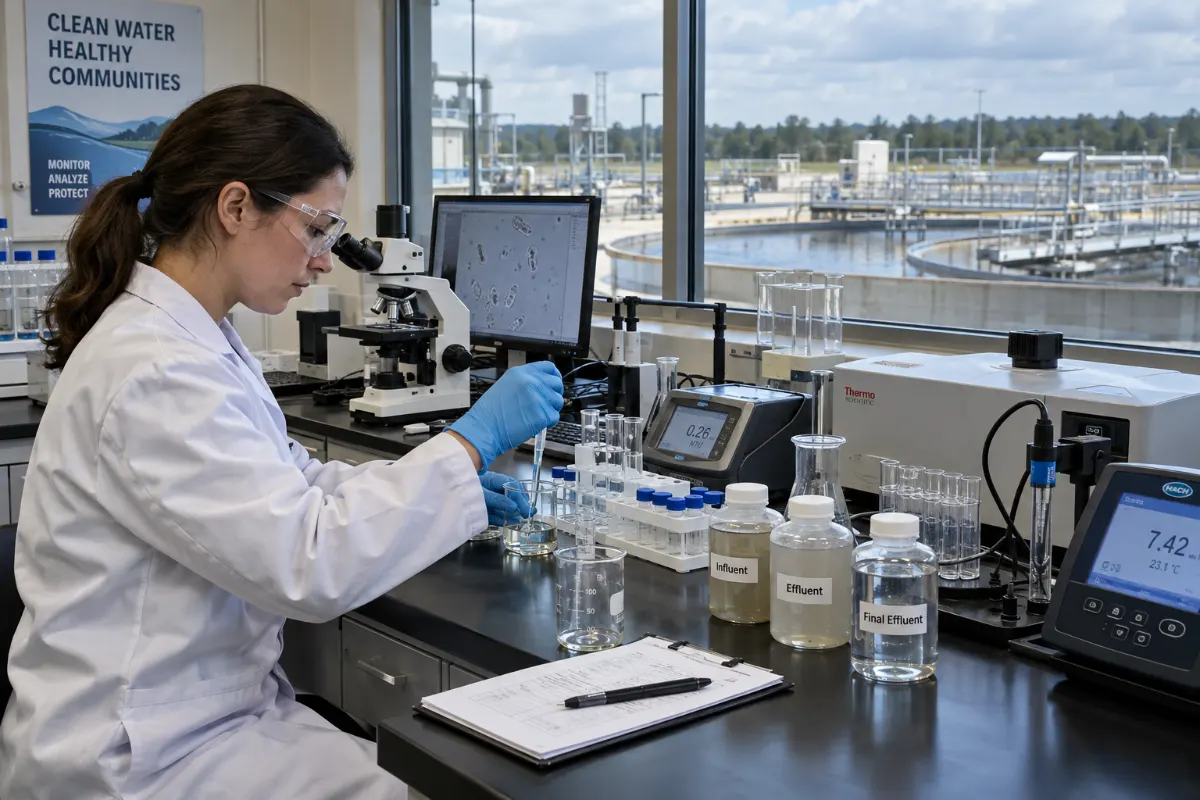
For leachate and complex industrial streams, understanding what’s actually in the water is half the battle. I’ve written elsewhere about what chemicals are in landfill leachate, and the lesson applies broadly: you can’t design pretreatment for a feed you haven’t characterized.
Solids Handling and Disposal Costs
The back end of a ZLD train is where a lot of hidden cost lives. Salt crystallization, sludge dewatering, and disposal fees can quietly eat the savings you made on energy.
Key moves I’ve seen work:
- Maximize dewatering performance so you’re paying to dispose of water, not solids. A properly selected screw press dewatering system can raise cake dryness meaningfully, and every point of dryness reduces hauling volume.
- Recover reusable salts where the market or process allows, turning a disposal cost into a product or at least a lower-fee waste.
- Match crystallizer design to the salt you’re actually producing, because a crystallizer optimized for the wrong salt chemistry will plug, foul, and cost you downtime.
Disposal cost is highly local. In some regions, landfill fees dominate; in others, thermal drying to reduce volume is worth the energy. I always build a simple cost model with local disposal rates before finalizing the solids train.
Maintenance Strategy That Protects the OPEX Curve
ZLD systems don’t fail suddenly; they degrade. The plants with the lowest lifetime cost are the ones that catch degradation early.
Condition Monitoring Over Calendar Maintenance
I push for monitoring that tells you what’s happening inside the equipment: heat transfer coefficient trends, compressor vibration and current draw, differential pressures across membranes and heat exchangers, and distillate conductivity. When the heat transfer coefficient starts drifting down, you clean before it becomes an energy problem.
Cleaning Protocols Tuned to the Real Fouling Mechanism
Generic CIP recipes waste chemicals and can damage surfaces. I’ve seen caustic washes used on scale that needed acid, and acid washes that attacked the wrong metallurgy. The fix is simple: identify the foulant, then match the cleaning chemistry and temperature to it.
Spare Parts and Compressor Care
Compressors are the most expensive rotating equipment in the train. Bearing monitoring, oil analysis, and keeping genuine spares on the shelf prevent the catastrophic failures that turn a maintenance line item into a capital project.
Automation and Operator Discipline
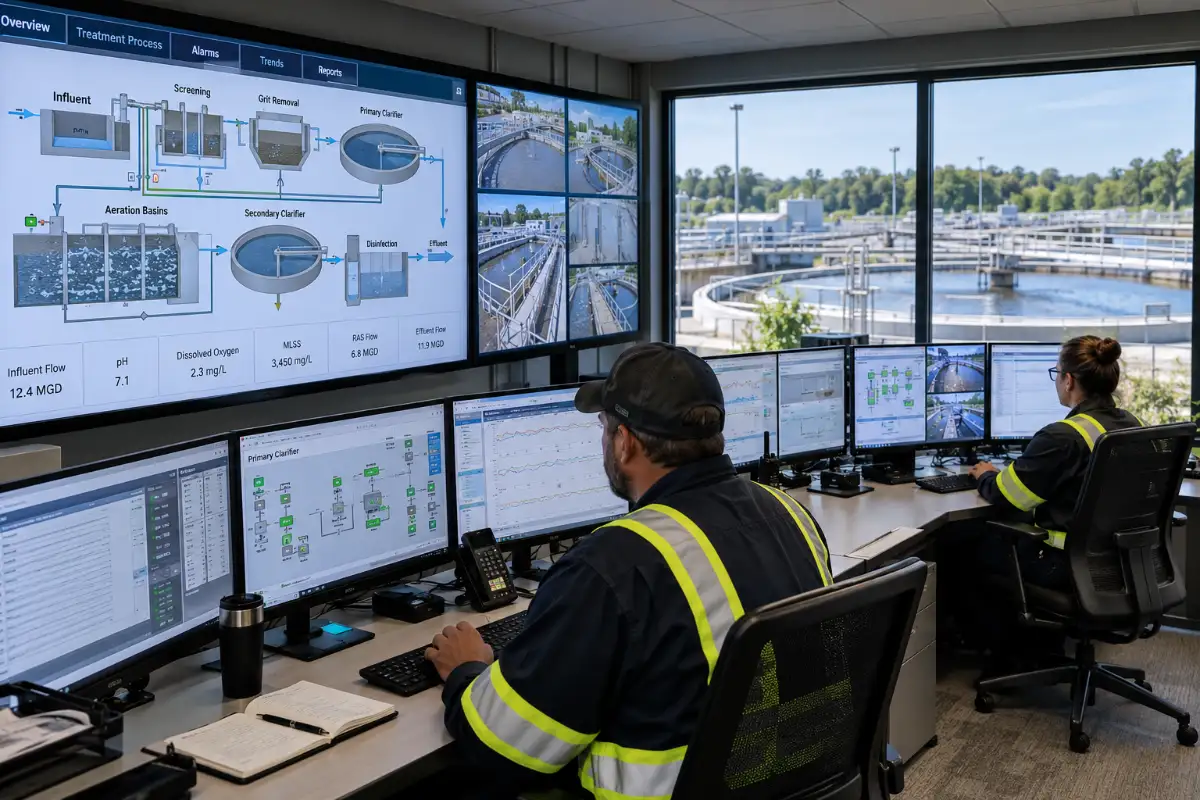
I’ve never seen a ZLD plant run at its design cost without good automation. Manual operation drifts toward conservative setpoints, and conservative setpoints mean higher energy and chemical use.
What matters most:
- Automatic control of concentration setpoints and blowdown.
- Load-following control for compressors and pumps.
- Trending and alarms on the key efficiency indicators, not just on trips.
- Operator training on why the setpoints exist, not just how to change them.
A plant I worked with cut chemical consumption by close to 15% simply by giving operators visibility into cleaning frequency and cost per cubic meter treated. People optimize what they can see.
A Practical Cost-Reduction Sequence
When a client asks me where to start, I give them this order:
- Characterize the feed and audit the actual cost split. You can’t optimize what you haven’t measured.
- Fix pretreatment and cleaning. This is usually the highest-return, lowest-capital move.
- Optimize setpoints and heat recovery. Often free or nearly free.
- Improve compressor and pump control. Moderate capital, fast payback.
- Consider membrane preconcentration. Higher capital, but it shrinks the thermal duty permanently.
- Evaluate evaporator architecture changes only after the above are exhausted. Replacing an evaporator is the last resort, not the first.
I’ve seen this sequence cut total operating cost by 20–35% on mature plants without touching the core evaporator. The gains come from discipline, not from buying new iron.
If you’re planning a new ZLD train or trying to rein in an existing one, it helps to talk through the specifics of your feed and duty. You can reach out to our engineering team and we’ll walk through the cost drivers for your case.
Frequently Asked Questions
What is the single biggest operating cost in a ZLD system?
Thermal or electrical energy for evaporation is almost always the largest line item, typically 40–60% of annual operating cost. That’s why evaporator selection and heat recovery get the most attention in any cost-reduction effort.
Is MVC always cheaper to operate than a multi-effect evaporator?
Not always. MVC tends to win when electricity is reasonably priced and steam is unavailable or expensive. Multi-effect evaporators win when you have cheap steam and large flows. The right answer depends on your local energy prices, feed chemistry, and required distillate quality.
How much can pretreatment actually save?
Indirectly, a lot. Good pretreatment reduces cleaning frequency, protects heat transfer efficiency, extends equipment life, and lowers chemical consumption. In my experience, plants that neglect pretreatment often spend 20–30% more on maintenance and chemicals than well-protected plants of similar size.
How often should a ZLD evaporator be cleaned?
It depends entirely on the feed and the fouling mechanism. Rather than a fixed schedule, I recommend cleaning based on heat transfer coefficient trends and differential pressure. Cleaning too often wastes chemicals and downtime; cleaning too late wastes energy and risks damage.
Can membrane preconcentration replace the evaporator entirely?
Rarely. Membranes can concentrate to a point, but the final step to zero liquid discharge still requires thermal or crystallization duty. Membranes are best used to shrink the evaporator, not to eliminate it. That said, shrinking the evaporator is often where the largest energy savings come from.
What’s the fastest payback improvement in an existing ZLD plant?
In my experience, it’s fixing pretreatment and cleaning, followed by setpoint optimization and heat recovery. These usually require minimal capital and can show results within weeks. Compressor control upgrades come next, with payback typically measured in months to a couple of years.
How do I know if my ZLD system is running at its design cost?
Track cost per cubic meter treated, energy per cubic meter evaporated, chemical consumption per cubic meter, and equipment availability. If those numbers are drifting up, something in the train is degrading, and finding it early is far cheaper than reacting after a failure.