

A 100 m³/day DTRO system typically lands between $180,000 and $420,000 for the core membrane skid, with a fully installed, commissioned plant — including pretreatment, chemical dosing, controls, and civil work — running $450,000 to $950,000 depending on feed chemistry and discharge requirements. The single biggest cost driver is not the membranes themselves; it’s the pretreatment train and the brine handling strategy behind it. I’ve quoted and delivered these systems for leachate, plating, and pharmaceutical streams, and the pattern is consistent: two projects with identical flow rates can differ by 2x in price because one feed is “clean” RO reject and the other is raw landfill leachate with 30,000 mg/L TDS. This article breaks down where the money actually goes, what specifications matter, and how to size a 100 m³/day unit without over- or under-building it.
What a 100 m³/day DTRO System Actually Is
DTRO stands for Disc Tube Reverse Osmosis. Instead of the spiral-wound elements you see in a standard industrial RO, DTRO uses a stack of flat membrane discs clamped between hydraulic plates inside a cylindrical pressure vessel. Feed flows across the disc surface through a open channel, which is the key mechanical difference.
That open-channel geometry is why DTRO shows up in the hard applications. Spiral-wound elements have a feed spacer that clogs fast when you’re dealing with high suspended solids, scaling salts, or biological fouling. The disc tube design tolerates much more of that before performance drops. For a 100 m³/day duty, you’re usually looking at 2–4 pressure vessels in a staged array, depending on recovery target.
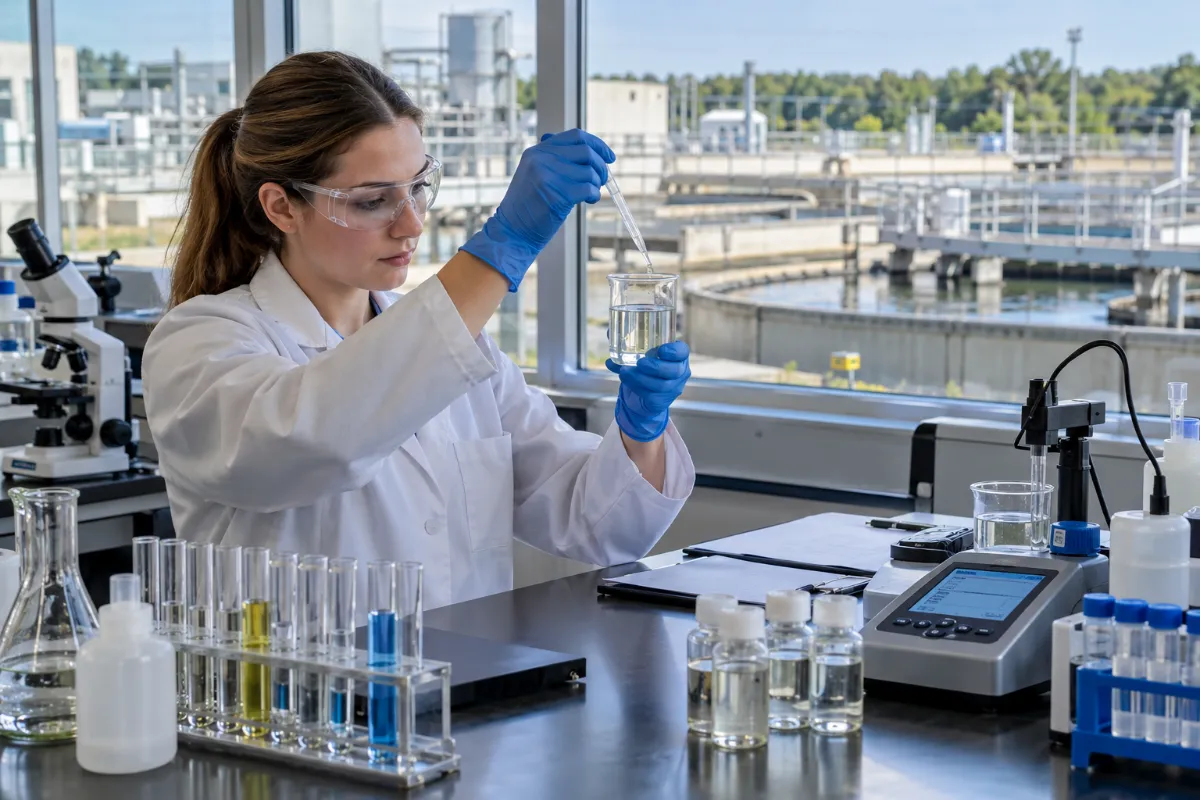
At 100 m³/day (roughly 18–20 GPM), this is a small-to-mid industrial scale. It’s the size where a single containerized skid makes sense, and where operators can realistically run the system without a dedicated full-time membrane engineer. That matters for lifecycle cost more than most people admit during the quoting phase.
Where the Feed Water Comes From Determines Everything
Before you look at a single price, you need to know your feed. I ask five questions in the first call, and the answers move the budget by hundreds of thousands of dollars:
- TDS and conductivity — drives osmotic pressure, which drives pump pressure, which drives energy cost.
- COD and BOD — organic load determines whether you need biological pretreatment or just filtration.
- Suspended solids and turbidity — dictates the pretreatment membrane selection.
- Scaling ions (Ca, Mg, Ba, Sr, silica, sulfate) — decides antiscalant strategy and recovery ceiling.
- Discharge or reuse target — sets the required permeate quality and whether you need a second pass.
For context on how variable these streams are, landfill leachate alone can range from 2,000 to 60,000 mg/L COD depending on the site’s age and climate. If you’re dealing with that class of feed, it’s worth understanding what chemicals are actually in landfill leachate before you commit to a membrane-only approach.
Typical Feed Categories and Their Impact
| Feed Type | Typical TDS (mg/L) | Pretreatment Complexity | Relative Capex Impact |
|---|---|---|---|
| RO reject / concentrate | 8,000–25,000 | Low | Baseline |
| Electroplating rinse water | 2,000–10,000 | Medium (heavy metals) | +15–30% |
| Pharmaceutical process water | 3,000–15,000 | Medium (organics, API residues) | +20–40% |
| Landfill leachate | 10,000–40,000 | High (COD, ammonia, scaling) | +40–90% |
These are indicative ranges. Your actual numbers depend on site-specific sampling, and I never quote a firm price without at least a 7-day composite analysis.
Core Specifications for a 100 m³/Day Unit
Here’s the specification envelope I work within for a standard 100 m³/day DTRO system. Treat these as design ranges, not fixed values.
Membrane and Hydraulic Parameters
- Design permeate flow: 100 m³/day (4.17 m³/h)
- Recovery rate: 70–85% single stage; 85–92% with staged concentrate recirculation
- Operating pressure: 40–75 bar for standard duty; up to 90–120 bar for high-TDS leachate
- Membrane area: roughly 90–160 m² of active disc area, depending on flux target
- Flux: 8–15 LMH for dirty feeds; 15–22 LMH for cleaner streams
- Feed temperature: 15–35°C ideal; performance derates above 35°C
The pressure number is where a lot of owners get surprised. A system quoted at 60 bar for one feed can need 100+ bar for another. That’s not a membrane problem — that’s osmotic pressure doing what physics says it will. If your feed is above 25,000 mg/L TDS, plan for high-pressure pumps and thicker vessel walls, and budget accordingly.
For a broader look at how disc tube systems fit into a full treatment train, the DTRO membrane systems overview covers the configuration options.
Pretreatment Train — The Part Nobody Budgets For
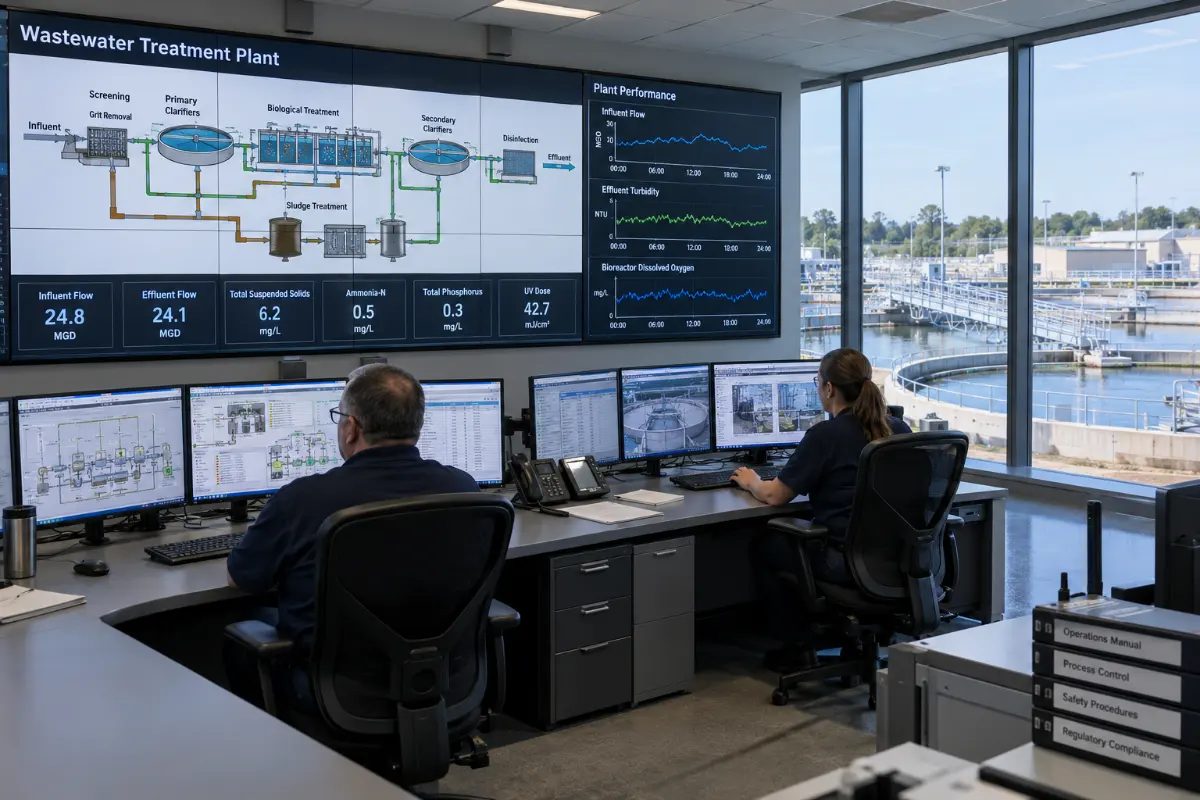
This is where I see the most cost overruns. A DTRO membrane is robust, but it’s not a trash pump. It needs a feed that’s been conditioned. For a 100 m³/day unit, expect to include:
- Coarse and fine screening — 1 mm or finer downstream protection
- pH adjustment — dosing skid with acid or caustic, plus mixing
- Antiscalant dosing — critical for silica and carbonate control
- Cartridge filtration — 5–20 micron absolute, replaced regularly
- Optional: softening or chemical precipitation — for high-hardness feeds
The pretreatment train for a simple feed might cost $40,000. For leachate with high scaling potential, it can exceed $150,000. This is the variable that separates a $450K project from a $900K project at the same flow rate.
Cost Breakdown: Capex and Opex
Let me give you the honest numbers I’d put in front of a client, clearly labeled as ranges because that’s all anyone can honestly give without a full water analysis.
Capital Cost Structure
| Component | Indicative Cost Range (USD) | Notes |
|---|---|---|
| DTRO membrane skid (vessels, discs, pumps) | $180,000 – $320,000 | Core equipment |
| High-pressure pumps | $25,000 – $60,000 | Pressure-dependent |
| Pretreatment train | $40,000 – $150,000 | Highly feed-dependent |
| Chemical dosing systems | $15,000 – $35,000 | Antiscalant, acid, caustic |
| Controls and instrumentation | $30,000 – $70,000 | PLC, SCADA, sensors |
| Concentrate handling (if ZLD) | $80,000 – $400,000+ | Evaporator or crystallizer |
| Installation and commissioning | $50,000 – $120,000 | Site-dependent |
The concentrate handling line item is the one that catches people off guard. If your discharge permit allows brine disposal, you skip it. If you’re in a zero liquid discharge (ZLD) environment, that 100 m³/day DTRO becomes the front end of a much larger system — and the ZLD systems train downstream can easily cost more than the membrane plant itself.
Operating Cost Drivers
Opex at 100 m³/day generally runs $3.50 to $9.00 per m³ of permeate produced. The spread is wide because it depends on:
- Energy: 2.5–6.5 kWh/m³, driven almost entirely by feed TDS and recovery rate
- Membrane replacement: disc sets typically last 2–4 years in clean service, 1–2 years in harsh service
- Chemicals: antiscalant, cleaning agents, pH adjusters — roughly $0.30–$1.20/m³
- Cartridge filters: consumable, replaced every 2–8 weeks depending on solids load
- Labor: 0.25–0.5 FTE for routine operation at this scale
Energy in particular scales non-linearly with TDS. Doubling feed concentration can increase specific energy by 60–90%, not 100%, because the pump efficiency curve shifts — but it’s still a substantial jump. Any honest energy comparison has to be made at your actual feed conditions.
DTRO vs. Conventional RO vs. Thermal at 100 m³/Day
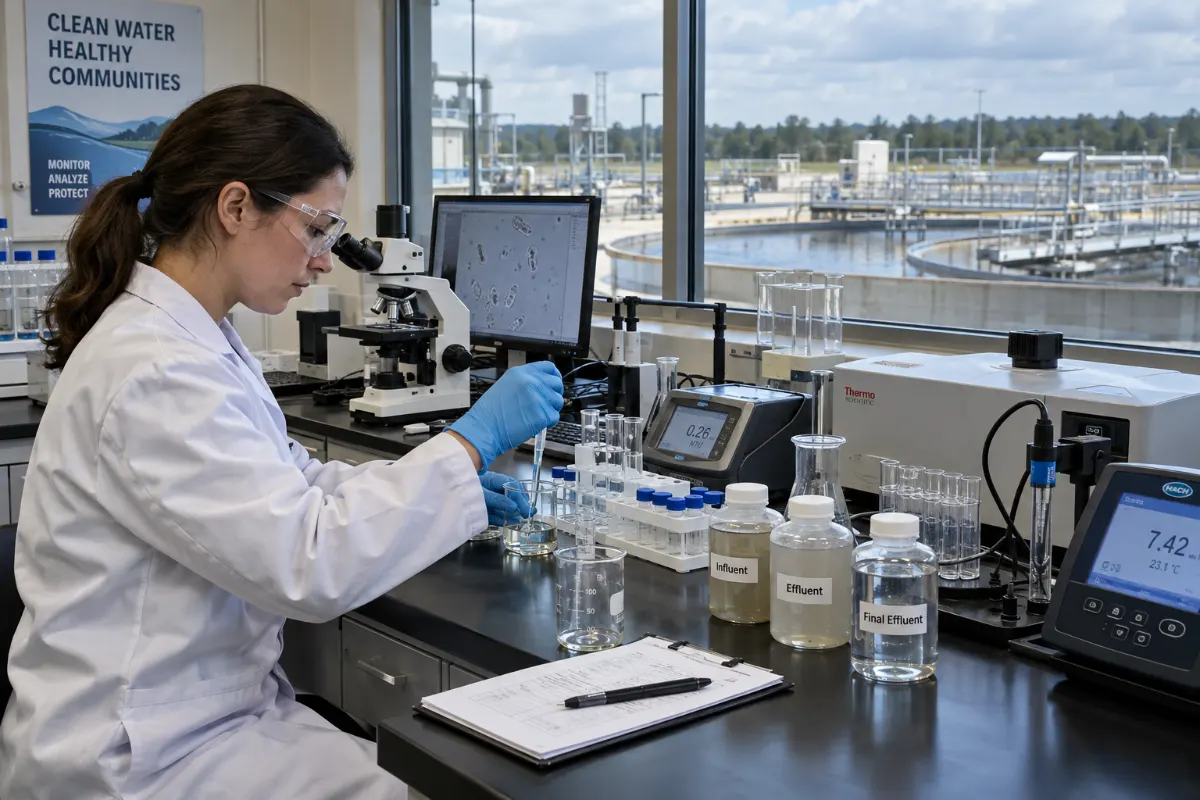
I get asked this constantly. Here’s how I frame the decision:
| Parameter | DTRO | Spiral-Wound RO | MVC Evaporator |
|---|---|---|---|
| Feed TDS tolerance | Up to 80,000+ mg/L | Typically <15,000 mg/L | Very high, 100,000+ mg/L |
| Fouling resistance | High | Low–Medium | Medium (scaling) |
| Energy (kWh/m³) | 3–7 | 1.5–4 | 15–40 |
| Recovery | 70–90% | 60–80% | 90–98% |
| Relative capex | Medium–High | Low–Medium | High |
| Best fit | Dirty, high-TDS feeds | Clean, low-TDS feeds | Near-ZLD, high salinity |
When the feed is genuinely nasty and the discharge target is strict, DTRO is usually the right middle path. It’s not the cheapest per cubic meter, but it’s often the only membrane that survives the feed without constant cleaning. When the target is true zero discharge, you’re combining DTRO with an evaporator — and that’s where the MVC evaporator becomes the workhorse on the concentrate side.
System Layout and Footprint
For a 100 m³/day DTRO plant, plan on roughly 60–120 m² of covered floor area for the membrane skid, pumps, and controls. Add another 30–60 m² if you include chemical storage and a cleaning-in-place (CIP) station. A containerized skid is the most common delivery format at this scale — it simplifies shipping, commissioning, and future relocation.
Vertical layout matters more than people expect. High-pressure pumps need accessible maintenance space, and CIP tanks need to be positioned so that gravity works with you, not against you. I’ve seen retrofits where the CIP system had to be pumped uphill 8 meters because nobody thought about it during layout. That’s a permanent energy penalty.
If you’re integrating this into an existing plant, the general principles in process in water treatment apply — flow balancing, buffer tanks, and instrumentation for stable operation are not optional at this scale.
Maintenance Reality at 100 m³/Day
Here’s what a realistic maintenance schedule looks like. This is based on systems I’ve commissioned and followed up on, not a theoretical schedule.
Routine Tasks
- Daily: pressure and flow readings, permeate conductivity check, visual inspection for leaks
- Weekly: cartridge filter differential pressure check, chemical tank levels, pump vibration check
- Monthly: CIP cycle if performance drops, antiscalant dosing verification, instrumentation calibration spot-check
- Quarterly: membrane performance normalization (temperature- and pressure-corrected), pump seal inspection
- Annually: full membrane inspection, vessel O-ring replacement, control system backup verification
Common Failure Modes
After enough years in the field, you start recognizing patterns. The failures I see most on DTRO systems are:
- Scaling on the disc surface — usually from inadequate antiscalant dosing or recovery running too high
- O-ring leaks between discs — often from pressure cycling or thermal stress
- Pump cavitation — feed tank level control issues, or undersized suction lines
- Cartridge filter breakthrough — upstream pretreatment underperforming
- Membrane compaction — running above rated pressure for extended periods
Most of these are preventable with proper instrumentation and honest operator training. The systems that fail early are almost always the ones where the operator wasn’t given the tools to see a problem coming.
In my experience, a well-instrumented 100 m³/day DTRO system with a disciplined operator will run 3–5 years between major membrane replacements. The same system run blind will need new discs in 12–18 months. The instrumentation cost is trivial compared to that difference.
Selection Logic: When DTRO Is the Right Answer
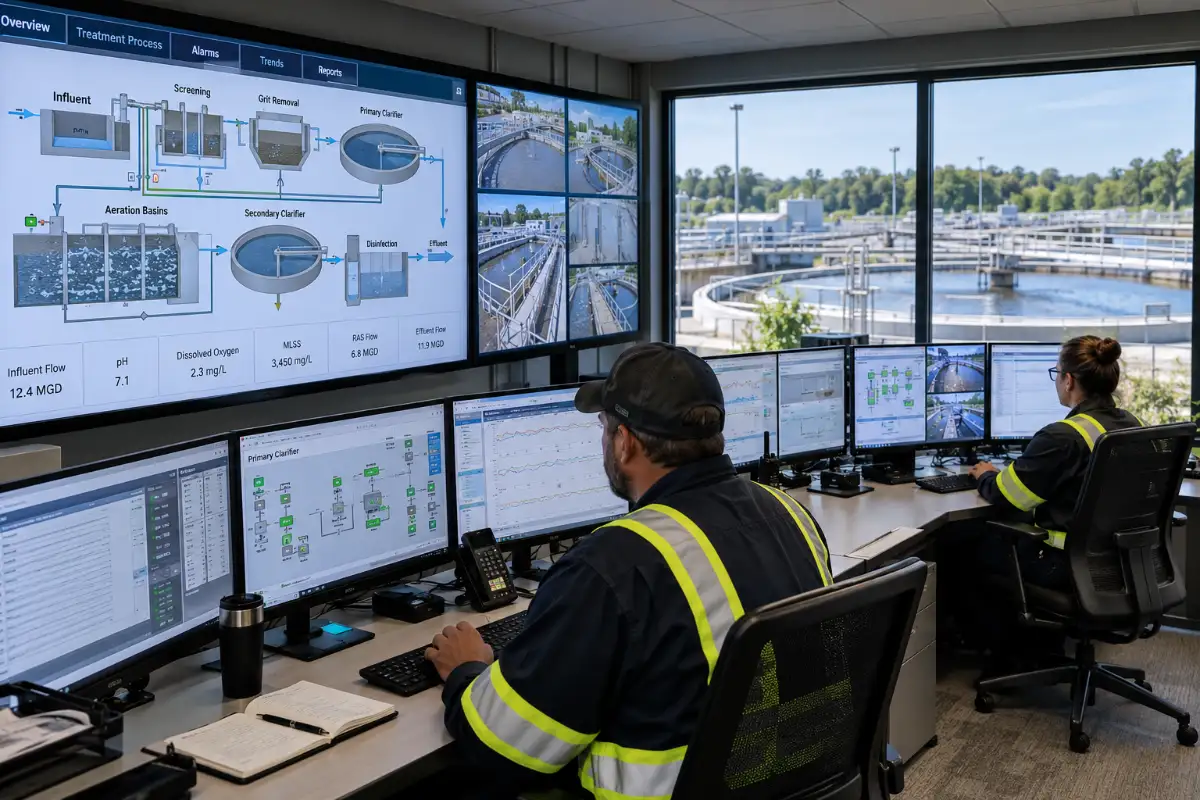
I’ll be direct about this because too many quotes get built on the wrong premise.
Choose DTRO when:
- Feed TDS is above 15,000–20,000 mg/L and rising
- Feed has suspended solids or organic load that would foul spiral elements
- You need high recovery on a difficult stream
- Space is limited and you want a compact, containerized solution
- You’re feeding an evaporator downstream and need to reduce its hydraulic load
Choose conventional RO when:
- Feed is clean, low-TDS, and stable
- You need the lowest capex per m³ of permeate
- Pretreatment can reliably deliver SDI <3
Choose thermal (MVC/MVR) when:
- You need near-complete water recovery
- Feed is extremely high TDS or has components membranes can’t handle
- You have waste heat available to offset energy cost
At 100 m³/day, DTRO sits in a sweet spot. It’s small enough to be containerized and standardized, but large enough that the per-m³ cost is reasonable. That combination is why it’s become the default choice for leachate and high-strength industrial streams in this flow range.
What to Include in Your Specification Package
If you’re writing a spec or evaluating bids, these are the items that separate a serious quote from a lowball one. Ask for all of them.
- Feed water analysis — at least 7-day composite, with all major ions, silica, and COD
- Guaranteed recovery and permeate quality — with the specific feed conditions they’re based on
- Membrane flux and cleaning frequency assumptions — these drive lifecycle cost more than membrane price
- Energy consumption at design point — kWh/m³, not just total kW
- Chemical consumption rates — kg/day for each dosing point
- Pretreatment scope — clearly defined, including what’s excluded
- Concentrate disposal plan — volume, composition, and handling method
- Warranty terms on membranes and pumps — separate them
- Spare parts list — what’s recommended to keep on site
If a supplier won’t commit to guaranteed recovery at a specified feed condition, that’s a red flag. Performance guarantees should be tied to a defined water quality, not to vague “typical” values.
Integration with Downstream Concentration
For many 100 m³/day projects, the DTRO is only part of the story. The concentrate it produces — typically 15–30 m³/day at 3–5x feed concentration — still needs handling. Options include:
- Evaporation — reducing concentrate volume further before disposal or crystallization
- Crystallization — for true ZLD, producing a solid salt for landfill or recovery
- Off-site disposal — viable only where permitted and economically sensible
This is where the total project cost diverges most. A DTRO with a permitted brine discharge line might total $600K installed. The same DTRO feeding a full ZLD train can push $1.5M+. Neither is wrong — they serve different regulatory and site conditions. But if you don’t clarify the concentrate strategy before design, you’ll be redesigning mid-project.
For high-strength feeds that need both membrane and thermal stages, the wastewater evaporator page outlines how the two technologies typically interface.
Frequently Asked Questions
How much does a 100 m³/day DTRO system cost?
The membrane skid alone typically runs $180,000–$420,000. A fully installed and commissioned plant, including pretreatment and controls, usually falls between $450,000 and $950,000. If the project includes zero liquid discharge downstream, total installed cost can exceed $1.5 million. The dominant variables are feed TDS, scaling potential, and concentrate handling strategy.
What recovery rate can I realistically expect?
Single-stage DTRO at this scale typically achieves 70–85% recovery. With staged concentrate recirculation or a second pass, 85–92% is achievable on favorable feeds. The ceiling is set by scaling ions — silica, calcium carbonate, and sulfate — not by the membrane itself. Higher recovery always means higher antiscalant cost and more frequent cleaning.
How much energy does a 100 m³/day DTRO system use?
Specific energy consumption generally ranges from 2.5 to 6.5 kWh per m³ of permeate. Low-TDS feeds sit near the bottom of that range; high-TDS leachate sits near the top. High-pressure pumps account for 85–90% of total energy. Adding a variable frequency drive on the main pump typically saves 10–20% on energy over the system’s life.
How often do DTRO membranes need to be replaced?
In clean service with proper pretreatment, disc sets last 3–5 years. In harsh service — high scaling potential, high organic load, frequent cleaning — expect 1–2 years. The single biggest factor is whether the operator is monitoring normalized performance and cleaning proactively. Reactive maintenance roughly halves membrane life.
Can a 100 m³/day DTRO system handle landfill leachate directly?
Not without pretreatment. Raw leachate typically needs pH adjustment, antiscalant dosing, and fine filtration at minimum. High-ammonia leachate may also need biological or stripping pretreatment. DTRO is excellent at the concentration step, but it’s not a primary treatment technology. The pretreatment train is what makes the membrane stage reliable.
What’s the difference between DTRO and conventional spiral-wound RO?
DTRO uses flat membrane discs in an open-channel configuration, which tolerates higher suspended solids and fouling than spiral-wound elements. Spiral-wound RO is cheaper per unit of membrane area and more energy-efficient on clean feeds. DTRO wins on dirty, high-TDS streams where spiral elements would foul or scale too quickly to be practical.
How much space does a 100 m³/day DTRO system need?
Plan on 60–120 m² of covered area for the membrane skid, pumps, and controls. Add 30–60 m² for chemical storage and cleaning-in-place equipment. Containerized skids are common at this scale and can reduce the site footprint, but you still need space for chemical delivery, maintenance access, and concentrate handling.
What should I look for in a DTRO supplier’s performance guarantee?
Insist on a guarantee tied to a specific feed water analysis, with defined recovery, permeate quality, and energy consumption at that condition. Vague guarantees based on “typical” feeds are not enforceable. Also ask for the membrane flux assumption and cleaning frequency projection — those numbers reveal whether the design has any margin.
Final Engineering Notes
At 100 m³/day, a DTRO system is a solved engineering problem — but only if the feed is characterized honestly and the concentrate strategy is decided before design starts. The membrane itself is rarely the failure point. The failures I see come from undersized pretreatment, unclear discharge requirements, and operators who weren’t given the instrumentation to see problems developing.
Get the water analysis right. Define the concentrate path. Specify performance guarantees against actual conditions, not catalog values. Do those three things and the system will run for years with predictable cost. Skip them and you’ll be rebuilding the plant within two years — at which point the original capex difference between a good design and a cheap one looks very small.