

A 100 m³/day wastewater evaporator typically lands between $180,000 and $650,000 in capital cost, with the widest swings driven by evaporator type, materials of construction, and how far you push concentration. Operating cost usually matters more than capex over a 10-year horizon — a mechanical vapor recompression (MVR) system at this scale often runs $8–$18 per cubic meter in electricity and maintenance, while a multi-effect thermal system trades higher steam cost for lower power draw. This article breaks down the design logic, cost drivers, and engineering trade-offs I work through on real projects at this capacity, so you can size and budget a system that actually holds up in daily operation.

Why 100 m³/day Is a Sizing Sweet Spot — and a Trap
At 100 m³/day, you’re past the point where a small packaged unit works, but you’re not yet in the range where a full multi-effect train with all the bells and whistles is automatically justified. This is the zone where a lot of projects get over- or under-engineered, and both mistakes are expensive.
I’ve seen plants buy a single-effect evaporator because it was cheaper upfront, then spend three years fighting scaling and paying for steam they didn’t budget for. I’ve also seen clients talked into a triple-effect system when their waste stream chemistry would have destroyed the tubes within 18 months. The right answer depends on three things: what’s in the water, what you’re trying to recover or discharge, and what utilities you actually have available.
Before anyone quotes you a number, they need to know your feed chemistry. Total dissolved solids, chemical oxygen demand, oil and grease, hardness, chlorides, and pH all change the design. A stream at 15,000 mg/L TDS behaves completely differently from one at 120,000 mg/L, even at the same flow rate.
Reading Your Waste Stream Before You Read a Quote
The first thing I ask for is a full water analysis, not just TDS. Here’s what actually drives design decisions at this scale:
- TDS and target concentration: Determines whether you’re evaporating to 20% solids or crystallizing to dryness.
- Scaling ions (Ca, Mg, Ba, Sr, silica): These decide whether you need softening pretreatment or a seeded slurry design.
- Organics and COD: High organics cause foaming and fouling, and can push you toward a different evaporator configuration.
- Oil and grease: Even 50–100 mg/L will coat heat transfer surfaces and kill efficiency.
- Volatile compounds: Ammonia, solvents, and low-boiling organics can carry over into condensate and change your permit strategy.
- pH and corrosivity: Chlorides above a few hundred mg/L at temperature mean you need duplex, titanium, or higher-grade alloys.
If your lab data is more than six months old, get fresh numbers. Waste streams drift. A plating line adds a new chemistry, a pharmaceutical process changes solvents, and suddenly your evaporator design assumptions are wrong.

Choosing the Right Evaporator Type at 100 m³/day
This is the decision that drives 60–70% of your total cost. Let me walk through the realistic options.
Mechanical Vapor Recompression (MVC/MVR)
For most 100 m³/day industrial applications, mechanical vapor compression is the default choice. You compress the vapor you generate and reuse its latent heat to boil more feed. Electricity replaces steam, and at this scale the numbers usually work.
Typical specific energy consumption sits around 15–40 kWh per cubic meter of distillate, depending on boiling point elevation and compression ratio. If you have cheap power and no steam, MVC wins almost every time. If your electricity is expensive and you have waste steam available, the math shifts.
The catch is the heat exchanger design. Compressor selection, tube geometry, and material grade have to be matched to your specific chemistry. A generic package will fail on high-chloride or high-scaling streams.
Multi-Effect Evaporators
A multi-effect evaporator reuses vapor across successive stages, cutting steam consumption roughly proportional to the number of effects. A double-effect system uses about half the steam of a single-effect; a triple-effect uses about a third.
At 100 m³/day, multi-effect systems make sense when you have cheap or waste steam and want to minimize electrical load. The trade-off is more vessels, more instrumentation, more footprint, and higher capital cost. You also need to manage scaling across each effect, which gets harder as concentration rises.
I generally steer clients toward multi-effect only when steam is genuinely cheap or already available on site. Otherwise the capex premium rarely pays back within a reasonable window at this flow rate.
Single-Effect and Hybrid Approaches
A single-effect evaporator is the simplest and cheapest option, but it’s also the most energy-hungry per unit of water evaporated. At 100 m³/day, it’s usually only justified for short campaigns, small volumes of very difficult water, or as a concentrator feeding a downstream crystallizer.
Some projects benefit from a hybrid: membrane concentration first (RO or DTRO) to reduce volume, then evaporation on the concentrated reject. This can cut evaporator capex and opex significantly, but it only works if the membrane can handle your chemistry without fouling.
Cost Breakdown: What You’re Actually Paying For
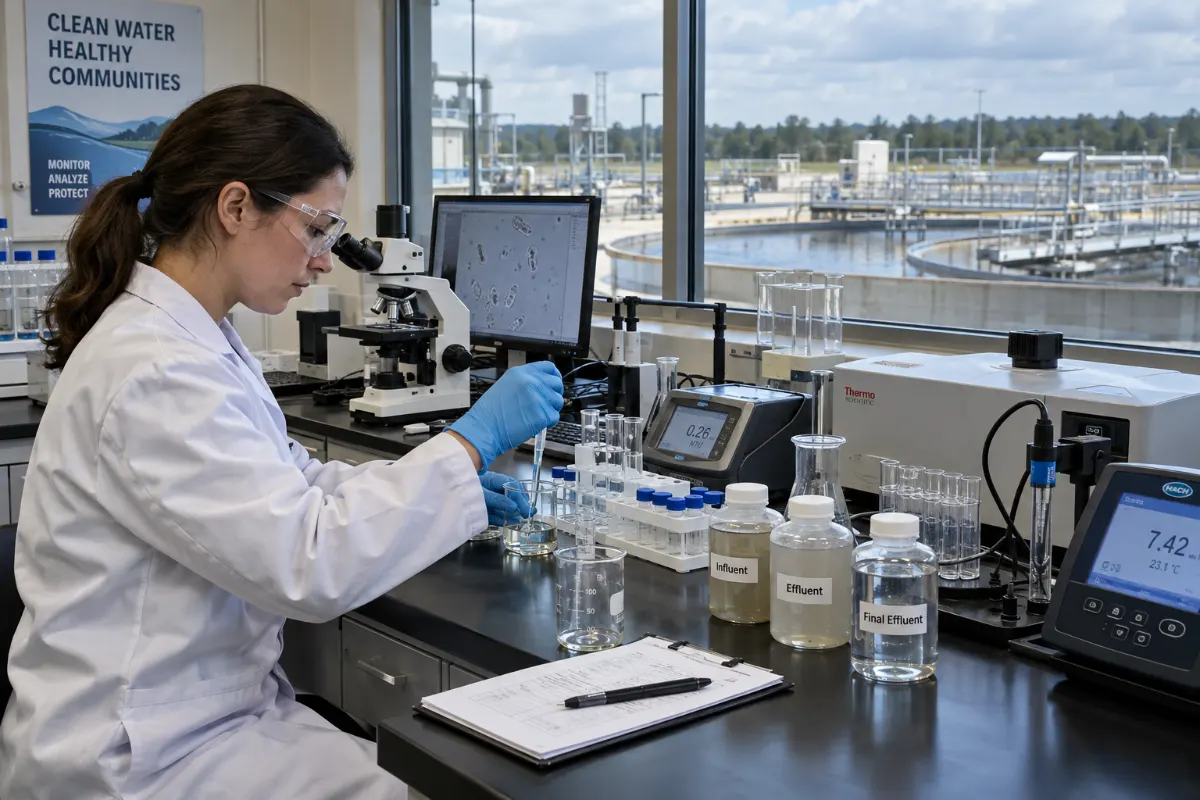
Here’s a realistic breakdown of where the money goes on a 100 m³/day system. These are indicative ranges from projects I’ve worked on or reviewed — your numbers will vary with chemistry, location, and scope.
| Cost Component | Typical Share of Capex | Notes |
|---|---|---|
| Evaporator body and heat exchangers | 25–35% | Material grade drives this heavily |
| Compressor or steam system | 15–25% | MVC compressor is a major line item |
| Pretreatment (softening, filtration) | 10–20% | Often underestimated |
| Pumps, piping, valves, instrumentation | 10–15% | Corrosion-resistant alloys add cost |
| Controls and automation | 5–10% | Worth investing in for stability |
| Civil, structural, installation | 10–15% | Site-dependent |
| Engineering and commissioning | 5–10% | Don’t cut this |
Total installed capex for a 100 m³/day MVC system typically falls in the $250,000–$550,000 range. Multi-effect systems run higher, often $400,000–$800,000 depending on effects and materials. Single-effect units can come in below $200,000 but cost more to run.
Operating cost is where the real money lives. Electricity, steam, chemicals for cleaning and antiscalant, and maintenance labor all add up. Over 10 years, opex typically exceeds capex by a factor of 1.5 to 3.
Materials of Construction: Where Cheap Becomes Expensive
This is the single most common place I see projects go wrong. Someone specifies 316L stainless steel to save money, and 14 months later the tubes are pitted through.
Chlorides are the main driver. At elevated temperatures, even moderate chloride levels attack standard stainless. Here’s how I think about material selection:
- Low chloride, neutral pH: 316L is often fine.
- Moderate chloride (200–1,000 mg/L): Consider duplex 2205 or 904L.
- High chloride (1,000+ mg/L): Titanium or higher alloys become cost-effective despite the price tag.
- Highly acidic or alkaline: Specialty alloys or non-metallic linings.
The upfront premium for titanium over 316L might be 40–60% on the heat exchanger. But if it doubles the service life from 3 years to 8, it’s the cheaper choice. I’ve watched plants replace tube bundles twice in five years because they tried to save 15% on materials.
Pretreatment: The Step Everyone Wants to Skip
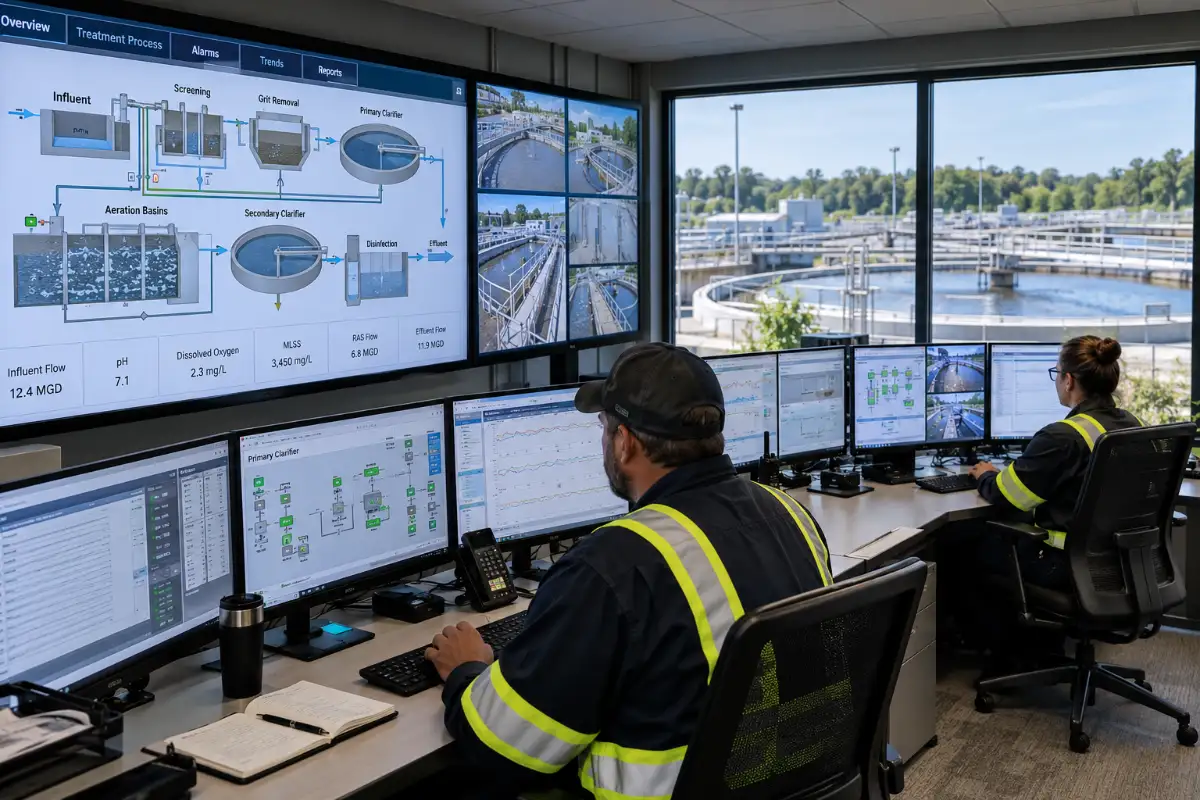
Evaporators don’t like scale, and they really don’t like oil. If you feed raw wastewater directly into an evaporator, you’re setting yourself up for weekly cleaning and declining performance.
Typical pretreatment for a 100 m³/day system includes:
- Oil and grease removal: DAF, coalescing plates, or a settling tank depending on concentration.
- Hardness removal: Softening or chemical precipitation to control Ca and Mg scaling.
- Silica management: Either removal or operation at reduced concentration factor.
- Filtration: Removing suspended solids before they foul heat transfer surfaces.
- pH adjustment: Bringing the stream into a range that minimizes corrosion and scaling.
How much pretreatment you need depends entirely on your feed. A clean RO reject stream might need almost nothing. A plating rinse water with heavy metals needs substantial conditioning before it touches an evaporator.
I usually budget 15–25% of total capex for pretreatment on industrial streams, and I’d rather over-specify than under. Cleaning an evaporator every two weeks costs more than a properly designed softening system.
Energy and Operating Cost: The Numbers That Matter
Let me give you a realistic picture of what 100 m³/day costs to run.
For an MVC system, the compressor is the dominant load. At 100 m³/day, expect a compressor in the 75–150 kW range depending on boiling point elevation and compression ratio. At $0.10/kWh and 20 hours of operation per day, that’s roughly $150–$300 per day in electricity, or $1.50–$3.00 per cubic meter just for compression.
Add pumps, controls, and auxiliary equipment, and total electrical consumption typically lands at 20–45 kWh per cubic meter. That translates to $2–$4.50 per cubic meter at typical industrial power rates.
Chemicals add another $0.50–$2.00 per cubic meter depending on scaling tendency and cleaning frequency. Maintenance and labor run $0.50–$1.50 per cubic meter when amortized. So total opex for an MVC system commonly falls in the $3–$8 per cubic meter range, with difficult streams pushing higher.
For multi-effect thermal systems, electricity drops dramatically but steam cost dominates. If steam is $20–$30 per ton, a double-effect system might cost $4–$7 per cubic meter in steam alone. Whether that beats MVC depends entirely on your local energy prices.
I always tell clients to model 10-year total cost of ownership before signing a PO. The cheapest capex option is rarely the cheapest system.
Design Details That Determine Whether the System Actually Works
Beyond the big decisions, there are a dozen smaller design choices that separate a system that runs smoothly from one that’s a constant headache.
Concentration Factor and Discharge Strategy
How far you concentrate determines everything downstream. Evaporating to 20% solids produces a manageable brine. Evaporating to dryness produces a solid waste stream that’s easier to dispose of but requires a crystallizer and significantly more energy.
At 100 m³/day, most projects target 15–30% concentration and send the brine to a disposal facility or a zero liquid discharge system. Going all the way to ZLD roughly doubles capex and increases opex by 40–70%.
Boiling Point Elevation and Compressor Selection
As concentration rises, the boiling point of your solution increases. This raises the compression ratio the compressor must achieve, which increases power consumption and can push you into a more expensive compressor class. This is a design detail that gets missed surprisingly often.
Foaming Control
High-organic streams foam. Foam carries over into the condensate, contaminates it, and can foul downstream equipment. Defoaming systems, mechanical foam breakers, or operating at lower concentration are the usual fixes. If your stream has significant surfactants or proteins, plan for this from the start.
Turn-Down and Turndown Ratio
Real plants don’t run at exactly 100 m³/day every day. Your evaporator needs to handle 60–110% of design flow without losing stability. This affects pump selection, control valve sizing, and compressor turndown capability. Systems designed for a single operating point often struggle when reality intrudes.
Common Failure Modes and How to Avoid Them
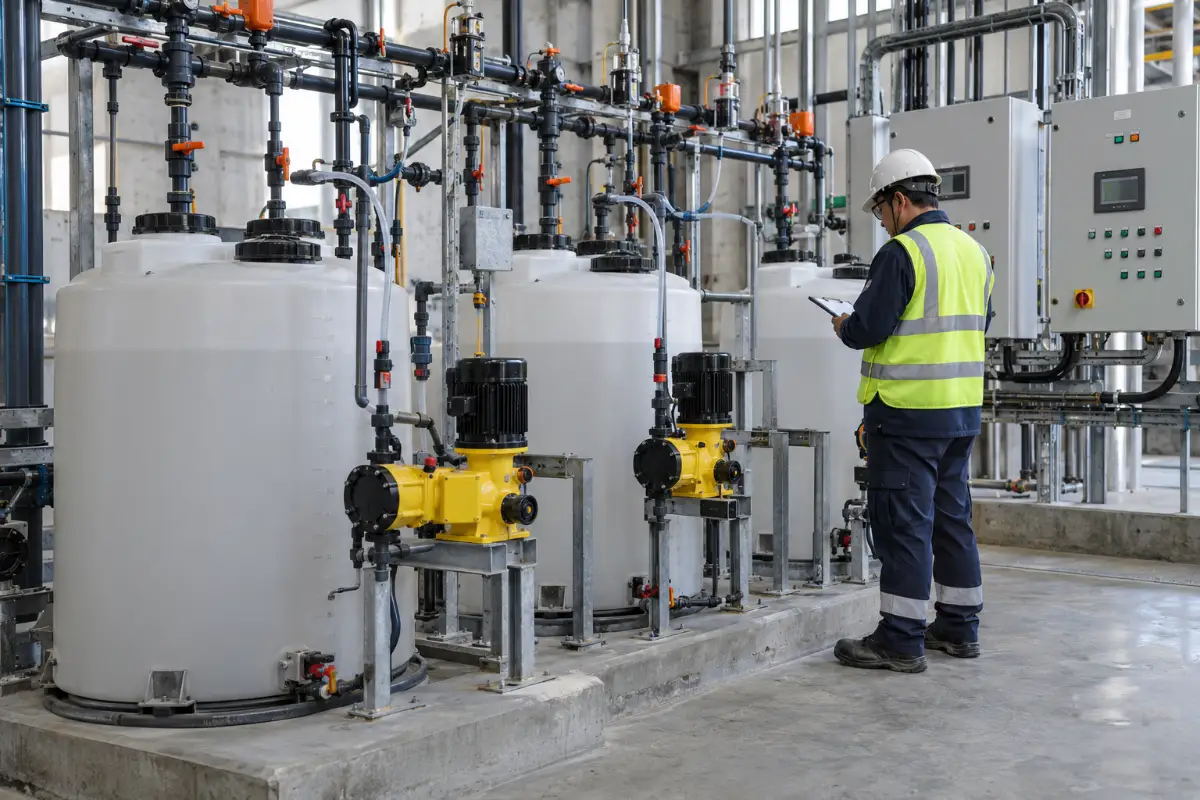
After enough projects, you start seeing the same problems repeat. Here are the ones I run into most often at this scale:
- Scaling on heat transfer surfaces: Usually a pretreatment shortfall or an operating concentration that exceeds the design basis. Fix is either better pretreatment or lower concentration factor.
- Compressor erosion or corrosion: Often caused by carryover of droplets or corrosive vapors. Mist eliminators and proper material selection prevent this.
- Condensate contamination: Volatile organics or foaming carryover. Requires either pretreatment to remove volatiles or a polishing step on the condensate.
- Frequent cleaning shutdowns: Usually a symptom of running beyond design concentration or inadequate antiscalant dosing.
- Control instability: Often from undersized control valves or a control philosophy that doesn’t account for real-world variability.
Most of these trace back to design assumptions that didn’t match operating reality. The fix is usually more upfront engineering, not more equipment.
Maintenance Reality: What You’ll Actually Do
An evaporator at 100 m³/day needs regular attention. Here’s what a realistic maintenance schedule looks like:
| Activity | Frequency | Typical Downtime |
|---|---|---|
| Visual inspection and log review | Daily | None |
| Antiscalant and chemical dosing checks | Daily to weekly | None |
| Condensate quality testing | Weekly | None |
| Heat exchanger cleaning (chemical) | Monthly to quarterly | 4–12 hours |
| Compressor inspection | Semi-annual | 4–8 hours |
| Major overhaul | Annual to biennial | 1–3 days |
If you’re cleaning more than once a month, something in the design or operation needs to change. Frequent cleaning is a symptom, not a solution.
Project Example: What a Real Design Looks Like
Let me walk through a scenario that’s typical of what I see. A metal finishing operation generates 100 m³/day of rinse water with 8,000–12,000 mg/L TDS, 300 mg/L chlorides, moderate hardness, and trace heavy metals. They have no steam, average electricity at $0.11/kWh, and a discharge limit that requires near-zero liquid discharge.
The design I’d propose: oil removal and filtration first, then softening to control hardness, then an MVC evaporator concentrating to 25% solids, with the brine going to a crystallizer for full ZLD. Condensate gets polished and reused as process water.
Indicative capex for this scope: $550,000–$750,000 including the crystallizer. Opex: $6–$10 per cubic meter depending on actual scaling behavior. Payback versus trucking liquid waste depends on local disposal costs, but at $80–$150 per cubic meter for hauling, the system often pays back in 2–4 years.
This is a scenario, not a specific project. Your numbers will differ. But the design logic — pretreatment, MVC, concentration to a manageable level, ZLD on the brine — is what I’d apply to most industrial streams at this flow rate.
Selection Logic: How to Decide
When I’m working through a selection with a client, I walk through this decision tree:
- Do you have cheap steam? If yes, multi-effect may win on opex. If no, MVC is usually the answer.
- How difficult is the chemistry? High scaling or corrosive streams need more pretreatment and better materials, which shifts the economics.
- What’s your discharge or reuse target? ZLD roughly doubles capex and adds significant opex. Only pursue it if regulations or disposal costs require it.
- What’s your realistic operating profile? If flow varies widely, design for turndown. If it’s steady, you can optimize more tightly.
- What’s your maintenance capability? A system that needs daily attention is fine if you have operators. If you don’t, invest in automation and reliability.
I’ve never seen a project where the cheapest option was also the best option. The goal is the lowest total cost of ownership over the system’s life, not the lowest invoice on day one.
If you want to talk through your specific stream and constraints, our engineering team can review your water analysis and help you scope a system that fits your actual operating reality.
Frequently Asked Questions
How much does a 100 m³/day wastewater evaporator cost?
Installed capex typically ranges from $180,000 for a basic single-effect system to $800,000 or more for a multi-effect or ZLD configuration. MVC systems at this scale commonly fall in the $250,000–$550,000 range. The biggest cost drivers are evaporator type, materials of construction, pretreatment requirements, and whether you’re concentrating to brine or crystallizing to dryness.
Is MVC or multi-effect better for 100 m³/day?
It depends on your utilities. MVC is usually better when you have no cheap steam and reasonable electricity costs. Multi-effect wins when you have waste steam available or very low steam prices. At 100 m³/day, MVC is the more common choice because it avoids steam infrastructure and has a smaller footprint.
What pretreatment does my evaporator need?
At minimum, remove oil and grease and suspended solids. Most industrial streams also need hardness removal to control scaling. High-silica streams may need silica reduction or operation at reduced concentration. The right pretreatment depends on your specific feed chemistry — there’s no universal answer.
How often will I need to clean the evaporator?
A well-designed system on a properly pretreated stream should need chemical cleaning every 1–3 months. If you’re cleaning more often, either your pretreatment is inadequate, your operating concentration is too high, or your antiscalant dosing isn’t right. Frequent cleaning is a design or operational problem, not a normal condition.
Can I send the condensate to discharge or reuse it?
Often yes, but it depends on what’s in your feed. Clean streams produce condensate that meets discharge standards or can be reused as process water. Streams with volatile organics, ammonia, or foaming agents may produce condensate that needs polishing before discharge or reuse. Test your condensate quality during commissioning and plan for polishing if needed.
What’s the typical energy consumption for a 100 m³/day MVC evaporator?
Expect 20–45 kWh per cubic meter of distillate, with the compressor accounting for most of that. Actual consumption depends on boiling point elevation, compression ratio, and system efficiency. At typical industrial power rates, that translates to $2–$4.50 per cubic meter in electricity alone.
How long does installation and commissioning take?
For a 100 m³/day system, plan on 4–8 months from order to commissioning, depending on scope and site conditions. Pretreatment and civil work often take longer than the evaporator itself. Commissioning typically runs 2–4 weeks including performance testing and operator training.
What happens if my wastewater chemistry changes?
Small changes are usually manageable with adjustments to antiscalant dosing or operating parameters. Significant changes — new process chemicals, much higher TDS, or different organics — may require design modifications or additional pretreatment. This is why I always recommend building in some flexibility at the design stage rather than optimizing for a single, narrow operating point.