

If you operate a reverse osmosis plant, you already know the reject stream is the part nobody wants to talk about. It’s the concentrated brine left behind after the membranes have done their job, and it typically represents 15–30% of your feed volume while carrying almost all of the dissolved solids. Discharging it is getting harder, trucking it out is getting more expensive, and in many places the permit simply won’t allow it anymore. An MVR evaporator for RO reject treatment solves this by using mechanical vapor recompression to boil off clean distillate and leave you with a small, manageable concentrate. In this article I’ll walk through how the technology actually works, where it fits, what it costs to run, and the design mistakes I see most often on real projects.

Why RO Reject Is Harder to Treat Than It Looks
People new to the problem often assume RO reject is just “salty water.” That’s only part of the story. What makes it difficult is the combination of high total dissolved solids, scaling ions, and whatever organics or pretreatment chemicals made it through the membranes.
A typical brackish RO reject might sit anywhere from 8,000 to 30,000 mg/L TDS. Seawater RO reject runs higher. Leachate and industrial RO rejects can push past 50,000 mg/L while also carrying silica, calcium, magnesium, sulfate, and residual antiscalant. That mix is what drives evaporator design, not the TDS number alone.
The three things that kill evaporator performance on RO reject are:
- Scaling — calcium carbonate, calcium sulfate, and silica all precipitate as you concentrate. Silica is the worst offender because it’s hard to remove once it deposits.
- Corrosion — chloride-rich brine at elevated temperature is aggressive. Material selection is not a place to save money.
- Foaming and carryover — organics and surfactants in the reject can cause the boiling sump to foam, which pushes liquid into the vapor path and contaminates the distillate.
I’ve seen projects where the evaporator was sized correctly but failed within a year because nobody measured silica in the feed. That’s a design input, not an afterthought.
How MVR Fits Into an RO Reject Treatment Train
Mechanical vapor recompression is a thermal process, but it’s not a boiler. The compressor takes the vapor boiled off from the sump, compresses it slightly, and returns it to the heat exchanger as the heating medium. That’s the whole trick: you reuse the latent heat instead of throwing it away in a condenser.
The practical result is that an MVR evaporator runs on electricity, not steam. For a plant without a steam header, that’s often the deciding factor. For a plant that already has cheap waste steam, a multi-effect evaporator may make more sense. I usually frame the choice this way:
| Configuration | Typical Energy Source | Best Fit |
|---|---|---|
| Single-effect MVR | Electric compressor | Small flows, no steam available |
| Multi-effect MVR | Electric compressor + staged effects | Large flows, high concentration targets |
| Multi-effect (steam-driven) | Steam or waste heat | Plants with existing steam infrastructure |
| MVR + crystallizer | Electric compressor | Zero liquid discharge (ZLD) requirements |
If you’re heading toward zero liquid discharge, the evaporator is usually the concentrator and the crystallizer is the finisher. You can read more about how those two stages work together in this overview of ZLD system design.
Where the Evaporator Sits in the Overall Process
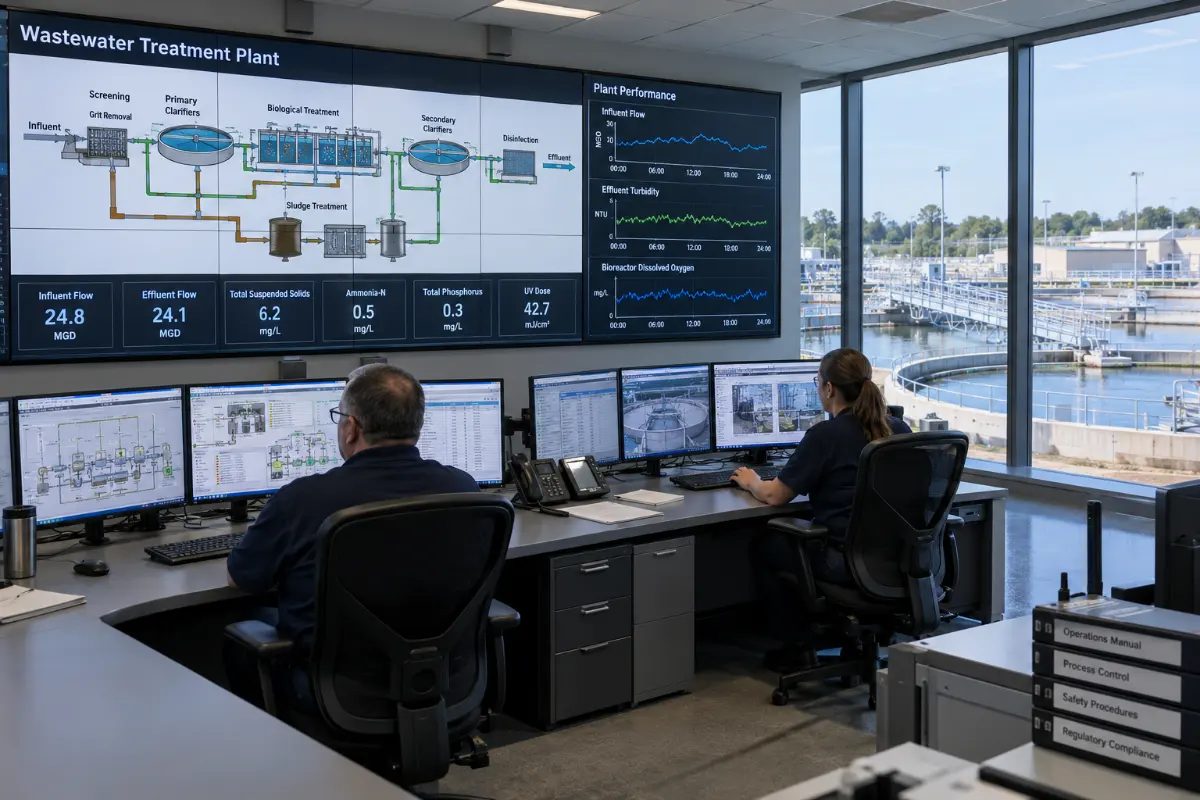
An MVR evaporator rarely operates alone. On most RO reject projects it sits downstream of some form of pretreatment and upstream of a crystallizer or a solid waste handling step. A typical arrangement looks like this:
- RO reject collection and equalization
- Chemical softening or antiscalant dosing
- Optional membrane preconcentration (DTRO or high-pressure RO)
- MVR evaporation to concentrate the brine
- Distillate polishing and reuse
- Concentrate dewatering or crystallization
Step 3 is where a lot of projects leave money on the table. If you can push the RO reject from 20,000 mg/L up to 60,000–80,000 mg/L using a DTRO membrane system, the volume the evaporator has to handle drops by two-thirds. That’s a big reduction in capital and operating cost. The tradeoff is that DTRO has its own maintenance burden and its own brine to deal with.
Core Design Parameters That Actually Matter
When I review a proposal, I look at a short list of numbers first. If any of them are missing or vague, the design is probably optimistic.
Evaporation Rate and Turn-Down
The evaporator needs to handle your peak reject flow, not your average. RO reject flow fluctuates with recovery, feed temperature, and cleaning cycles. A system sized for average flow will trip on high-level alarms every time the RO goes into a cleaning sequence. I usually ask for at least 20% headroom above design peak.
Concentration Factor and Final Brine Concentration
How far you concentrate determines the boiling point elevation, the viscosity in the sump, and the scaling risk. Going from 20,000 to 200,000 mg/L is a very different machine from going to 400,000 mg/L. Be honest about what the downstream step actually needs.
Boiling Point Elevation and Compressor Duty
As brine concentration rises, the boiling point rises with it. That extra temperature lift has to come from the compressor, which means more power. This is why the last few percent of concentration is always the most expensive.
Material Selection
For chloride-rich RO reject, I default to duplex stainless or titanium for wetted surfaces in the heat exchanger, and higher-grade alloys in the vapor path. Carbon steel with a coating is a false economy. I’ve replaced enough corroded shells to know.
Antiscalant and Cleaning Strategy
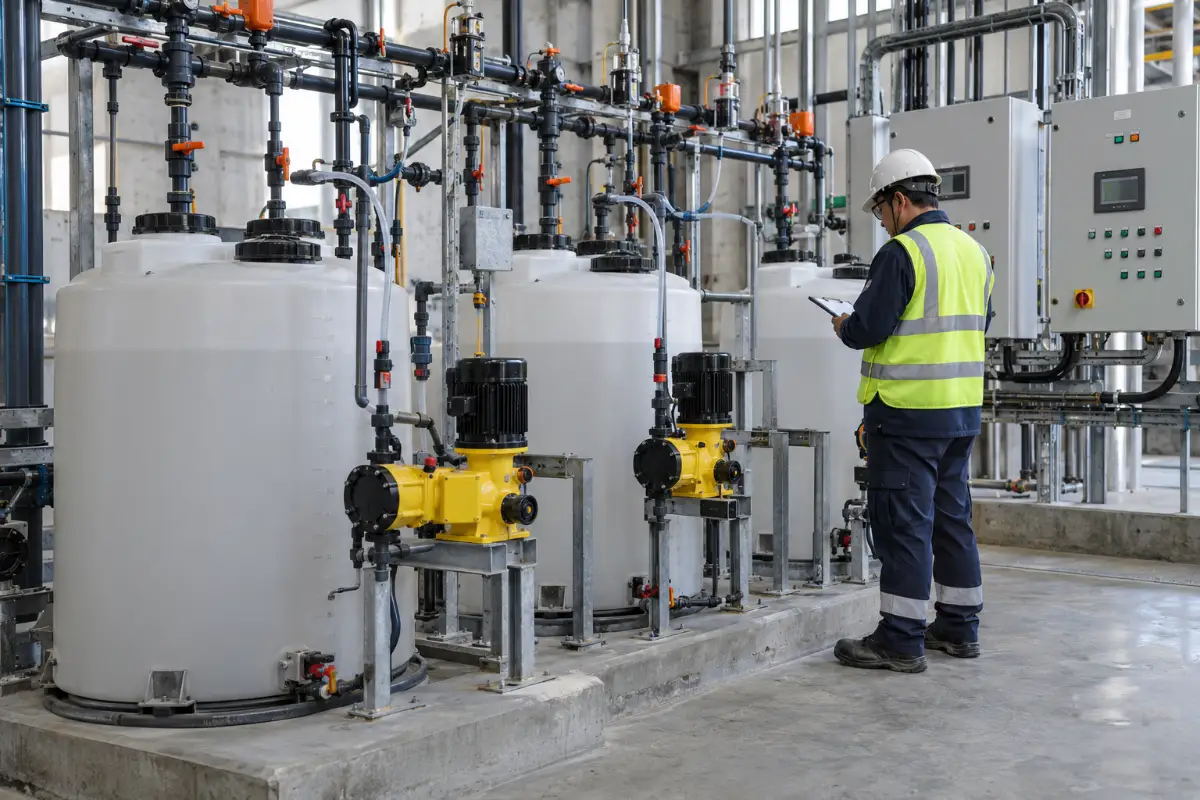
Every MVR evaporator on RO reject needs a cleaning plan before it’s commissioned, not after the first fouling event. That means CIP connections, a caustic and acid circuit, and a defined trigger — usually a drop in heat transfer coefficient or a rise in compressor amps.
Energy Consumption: The Real Numbers
MVR is efficient, but “efficient” is relative. A well-designed single-effect MVR evaporator typically consumes somewhere in the range of 15–35 kWh per cubic meter of distillate produced, depending on boiling point elevation, compressor efficiency, and how much heat recovery is built in. Multi-effect MVR can push that lower on larger flows, but the compressor train gets more complex.
Compare that to a steam-driven multi-effect evaporator, which might use 0.3–0.5 kg of steam per kg of water evaporated. If your steam costs $20/ton, that’s roughly $6–10 per cubic meter of distillate. If your electricity is $0.10/kWh and your MVR uses 25 kWh/m³, that’s $2.50/m³. The gap is usually what tips the decision toward MVR.
But here’s the part that gets missed in the sales brochure: the compressor is the single largest maintenance item over the life of the plant. Screw compressors are cheaper up front but need more attention. Centrifugal compressors cost more but run longer between overhauls. I’ve seen both work well, and I’ve seen both fail badly when the wrong one was chosen for the duty.
If you only look at kWh per cubic meter, you’ll pick the wrong machine. Look at the compressor overhaul interval, the spare parts lead time, and who’s going to service it. That’s where the real cost lives.
Pretreatment: The Step Everyone Wants to Skip
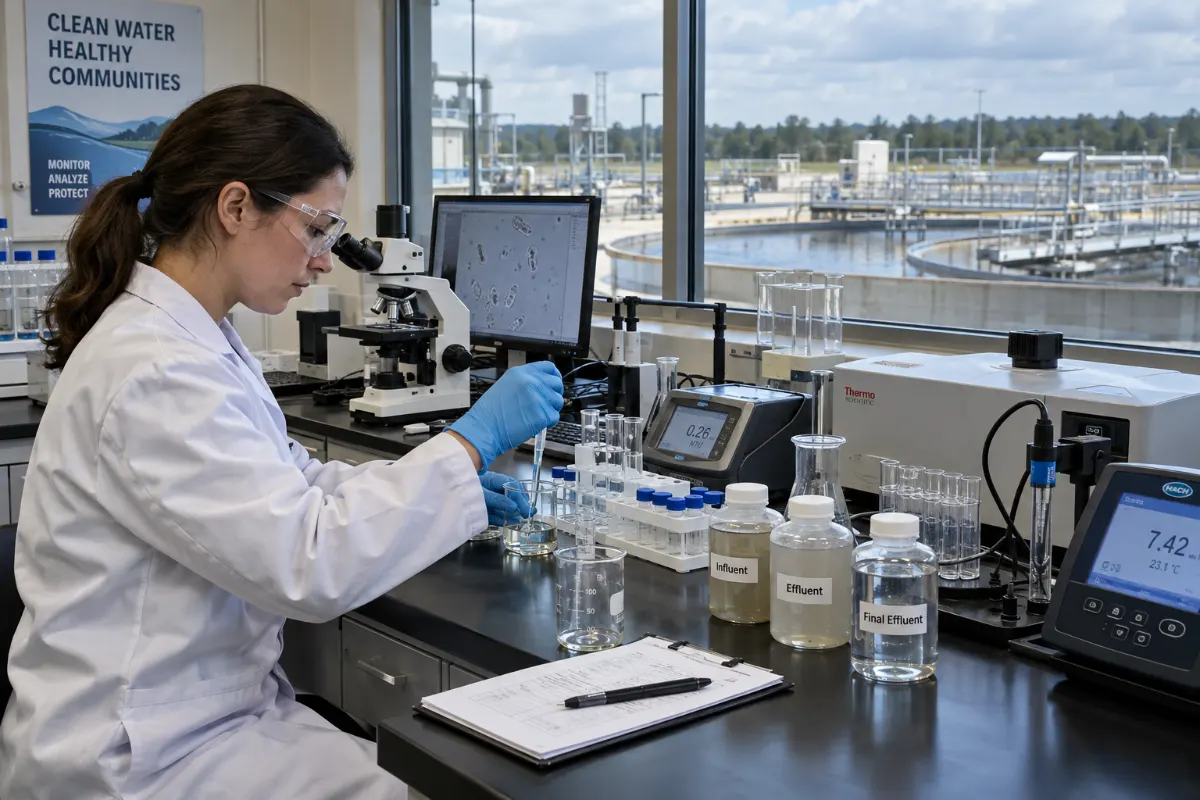
I’ve never seen an MVR evaporator on RO reject succeed without adequate pretreatment. The evaporator is a concentrator, not a treatment process. Whatever is in the feed stays in the feed, only more concentrated.
What that means in practice:
- Hardness removal — lime softening or ion exchange to drop calcium and magnesium before they hit the boiling sump.
- Silica control — either removal or operation below the solubility limit, which usually means limiting the concentration factor.
- Organics and oil removal — DAF or similar if the reject carries any hydrocarbon load. Foaming in the sump is almost always an organics problem.
- pH adjustment — often to keep the brine in a range where scaling is minimized and corrosion is manageable.
If you’re dealing with a stream that has both high salinity and high organic load — landfill leachate is the classic example — the pretreatment train can be more expensive than the evaporator itself. That’s not a reason to skip it. It’s a reason to plan for it.
Common Operating Problems and How to Handle Them
After enough years in the field, you start to see the same failure modes repeat. Here are the ones I run into most often on RO reject MVR systems.
Scaling in the Heat Exchanger
Symptoms: rising compressor amps, falling evaporation rate, higher temperature difference across the exchanger. Response: CIP with the appropriate chemistry, then review the antiscalant dose and the concentration factor. If it keeps happening, the design limit is wrong, not the chemical.
Foaming and Distillate Carryover
Symptoms: high conductivity in the distillate, erratic sump level, visible foam in the sight glass. Response: reduce the boiling rate, check for organics in the feed, consider an antifoam addition or a mechanical foam breaker. Long term, fix the source.
Compressor Vibration and Bearing Wear
Symptoms: rising vibration trend, elevated oil temperature, unusual noise. Response: this is a scheduled maintenance item, not an emergency — but only if you’re trending the data. Vibration monitoring on the compressor is not optional on a plant that runs continuously.
Corrosion in the Vapor Path
Symptoms: discolored distillate, pitting on internals, chloride stress cracking at welds. Response: verify material spec against actual chloride and temperature. If the spec was wrong, no amount of operation will fix it.
Frequent Trips on High Level or High Temperature
Symptoms: repeated shutdowns, unstable operation. Response: usually a control tuning issue or an undersized sump. Sometimes it’s an upstream flow that swings more than the design assumed.
Selection Logic: When MVR Is the Right Answer
Not every RO reject project should use MVR. Here’s how I think through it:
| Condition | Better Choice |
|---|---|
| Low flow (<5 m³/h reject), no steam | Single-effect MVR or thermal driven evaporator |
| High flow, existing steam header | Multi-effect evaporator |
| ZLD requirement, high TDS | MVR concentrator + crystallizer |
| High organic load, variable flow | Membrane preconcentration first, then MVR |
| Power cost high, steam cost low | Multi-effect steam-driven |
| Power cost low, no steam | MVR |
The single biggest mistake I see is choosing the evaporator before understanding the feed chemistry. It’s backwards. Get the water analysis, run the scaling and foaming assessment, then size the machine. If you want a deeper dive on how the compressor side of the system is put together, this overview of mechanical vapor compression evaporators is a good starting point.
Cost Picture: Capex, Opex, and Lifecycle
I’m not going to give you a single number, because it would be wrong. What I can give you is the shape of the cost curve.
Capital cost scales roughly with evaporation rate and material grade. A small single-effect MVR might start in the low six figures. A large multi-effect MVR with a crystallizer can run into the millions. The compressor and the heat exchanger are the two biggest line items, followed by the vessel fabrication and the control system.
Operating cost is dominated by electricity for the compressor, then chemicals for pretreatment and cleaning, then maintenance. On a typical industrial RO reject project, the electricity line item is 60–75% of opex.
Lifecycle cost is where MVR usually wins against thermal alternatives, but only if the compressor is maintained properly. A compressor that’s neglected for five years will cost more to rebuild than it would have cost to maintain correctly.
For a more detailed breakdown of what drives MVR evaporator pricing, including capex and opex factors, there’s a good write-up on MVR evaporator cost drivers that’s worth reading before you request quotes.
Integration With the Rest of the Plant
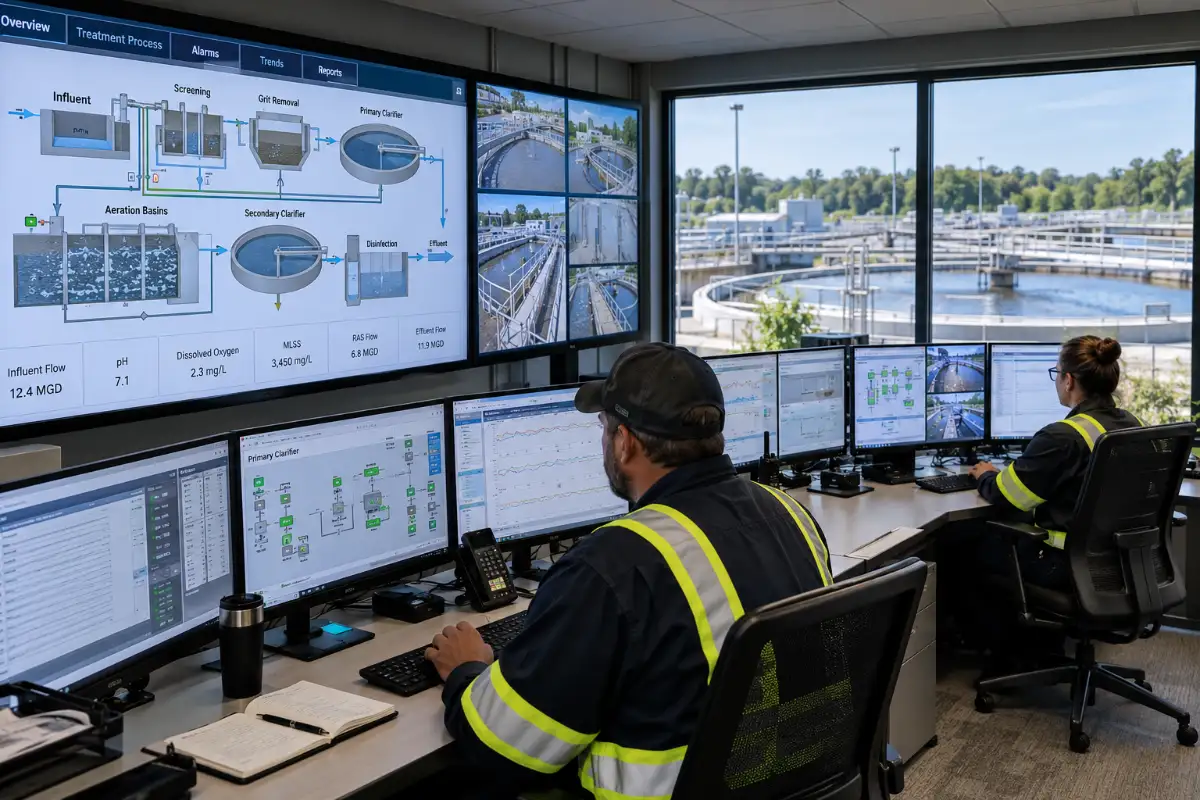
An MVR evaporator doesn’t live in isolation. It has to fit into the plant’s utilities, controls, and waste handling. A few integration points that are easy to underestimate:
- Electrical supply — the compressor is a large motor load. If your plant has limited transformer capacity, that’s a constraint on the design.
- Cooling water — even with heat recovery, some cooling is usually needed for the distillate and for compressor oil. Don’t assume zero.
- Distillate quality and reuse — MVR distillate is usually clean enough for reuse as boiler feed or cooling tower makeup, but only if carryover is controlled. Test it before you commit to reuse.
- Concentrate handling — how you deal with the final brine determines whether you need a crystallizer, a spray dryer, or a truck-out arrangement.
- Controls and instrumentation — the evaporator needs its own control loop, and it needs to talk to the upstream RO and downstream handling systems.
I’ve seen projects where the evaporator worked perfectly but the plant couldn’t use the distillate because nobody checked the quality spec. That’s a planning failure, not a technology failure.
What I’d Tell a First-Time Buyer
If this is your first RO reject evaporator project, here’s the short version of what I’d say over coffee:
- Get a full water analysis, including silica, and get it seasonally if the feed varies.
- Decide early whether you’re going to ZLD or just concentrating for disposal. It changes the design.
- Don’t size the evaporator for average flow. Size it for peak, with margin.
- Budget for pretreatment honestly. It’s not optional.
- Pick a vendor who will still answer the phone in year five. Compressor service matters more than the initial price.
- Plan the cleaning strategy before commissioning, not after the first fouling event.
- Trend your operating data from day one. The evaporator tells you when it’s unhappy long before it trips.
If you want to talk through a specific application, our team works on these systems every day and can help you think through the design tradeoffs. Talk to an engineer about your RO reject stream
Frequently Asked Questions
What concentration can an MVR evaporator reach on RO reject?
It depends on the chemistry, but a typical design range is 200,000 to 300,000 mg/L TDS in the concentrate for a standard MVR system. Going beyond that usually requires a crystallizer, and the scaling risk goes up sharply as you approach saturation for the least soluble salt in the feed. Silica and calcium sulfate are usually the limiting factors.
How much does an MVR evaporator for RO reject cost?
Capital cost is driven by evaporation rate, material of construction, and whether a crystallizer is included. Small single-effect units can start in the low six figures, while large multi-effect systems with crystallization can run into the millions. Operating cost is mostly electricity for the compressor, typically 15–35 kWh per cubic meter of distillate. Get a site-specific quote — the range is too wide for a meaningful single number.
Can MVR handle RO reject with high organic content?
Yes, but organics change the design. High organic load causes foaming, fouling, and carryover into the distillate. The usual fix is upstream pretreatment — DAF, oxidation, or activated carbon — to knock down the organic load before it reaches the evaporator. Trying to handle it inside the evaporator is a losing battle.
How often does the evaporator need cleaning?
With good pretreatment and correct antiscalant dosing, a well-run MVR evaporator on RO reject might go several months between cleanings. Without proper pretreatment, it can foul in weeks. The trigger should be a measurable change in heat transfer coefficient or compressor amps, not a fixed calendar interval.
What’s the difference between MVR and MVC?
They’re the same thing. MVR stands for mechanical vapor recompression, and MVC stands for mechanical vapor compression. Both describe a system where a compressor raises the pressure and temperature of the vapor so it can be reused as the heating medium. You’ll see both terms used interchangeably in the industry.
What happens if the compressor fails?
The plant stops evaporating until it’s repaired or replaced. That’s why compressor selection and service support matter so much. Centrifugal compressors generally have longer intervals between overhauls than screw compressors, but they cost more and are less tolerant of off-design operation. Either way, keep critical spares on site and have a service agreement in place before you need it.
Can I reuse the distillate from an MVR evaporator?
Usually yes. MVR distillate is typically low in TDS and can be reused as cooling tower makeup, boiler feed (with polishing), or process water. The main risk is carryover during foaming events, which can spike the distillate conductivity. Test it under realistic operating conditions before committing to a reuse application.
Do I need a crystallizer with an MVR evaporator?
Only if you’re pursuing zero liquid discharge or if your disposal route requires a solid product. If you can send a concentrated liquid brine to a permitted disposal facility, you don’t need a crystallizer. Adding one significantly increases both capital and operating cost, so make that decision based on your actual discharge constraints, not on a default assumption.
For context on discharge limits and how they vary, the U.S. Environmental Protection Agency publishes effluent guidelines that are worth reviewing before you finalize your treatment train. The World Bank also maintains environmental, health, and safety guidelines for industrial wastewater that are widely referenced in project specifications.