

Pharmaceutical wastewater is one of the hardest streams to concentrate because it carries solvents, residual active ingredients, high COD, and dissolved salts all at once. In most plants I have worked on, a mechanical vapor recompression (MVR) evaporator is the only thermal option that reaches 85–95% volume reduction without burning a fortune in steam. The core answer is simple: an MVR evaporator reuses the vapor it generates as its own heat source, so the energy you pay for is mainly electricity to run the compressor, not boiler fuel. That single design decision changes the operating cost profile of the whole treatment train.
Below I will walk through what actually matters on a pharmaceutical MVR project — feed chemistry, pretreatment, heat exchanger selection, compressor behavior, fouling control, and the real cost drivers I see during commissioning and the first two years of operation.
Why Pharmaceutical Wastewater Breaks Conventional Evaporators
Pharma wastewater rarely behaves like the clean brine that evaporator vendors test on. I have opened heat exchangers after six weeks of service and found a mix of organic film, crystallized salts, and a stubborn gel layer that no single cleaning chemical removes. The stream is usually:
- High in COD, often 5,000–80,000 mg/L depending on the process stage
- Carrying solvents such as methanol, ethanol, acetone, or dichloromethane
- Loaded with dissolved salts from neutralization and API synthesis
- Variable in composition batch to batch, sometimes hour to hour
- Foaming aggressively in the boiling chamber
That variability is the real enemy. A design that works on a steady feed can fail the moment a new production campaign changes the solvent ratio. I always ask for at least three months of feed analysis before sizing anything, and I prefer a six-month window when the client has it.
How an MVR Evaporator Actually Works on This Stream
The principle is straightforward. Wastewater enters the evaporator and is boiled. The vapor that comes off is compressed, which raises its temperature and pressure, and then that compressed vapor is fed back into the heat exchanger to boil more feed. The only external energy input is the compressor motor, plus a small amount for pumps and controls.
For pharma streams, this matters because the alternative — a multi-effect evaporator — still needs a steam supply, and steam is expensive and often unavailable in a cleanroom-adjacent utility area. If you want to understand the underlying thermodynamic cycle, MVR technology is worth reading before you commit to a configuration.

Where the Energy Actually Goes
On a typical pharma MVR unit, the compressor consumes the bulk of the electrical load. Pumps, vacuum systems, and controls are secondary. What surprises most first-time buyers is that the compressor power per ton of water evaporated rises sharply as the boiling point elevation increases. High salt content and high dissolved solids push the boiling point up, and the compressor has to work harder to bridge that gap.
This is why feed concentration matters so much. A stream at 3% total dissolved solids behaves very differently from one at 15%. I have seen projects where the client assumed a fixed power consumption and then discovered the real number was 30% higher because the salt load was underestimated.
Pretreatment: Where Most Projects Are Won or Lost
An MVR evaporator is not a pretreatment device. It is a concentrator. If you feed it raw pharma wastewater, you will spend more time cleaning than evaporating. The pretreatment train I typically recommend includes:
- Equalization to smooth batch swings in COD and solvent content
- pH adjustment to bring the feed into a range that protects materials
- Removal of suspended solids, usually by filtration or dissolved air flotation
- Deaeration or stripping when volatile solvents are present
- Optional membrane concentration upstream to reduce evaporator load
Membrane concentration is worth considering when the feed is dilute. A high-pressure RO or DTRO stage can pull out a large fraction of the water at lower energy cost than evaporation, leaving a smaller, more concentrated stream for the MVR unit. If your plant already runs DTRO membrane systems, the two technologies combine well.
Handling Solvents Before They Reach the Compressor
Volatile organic compounds are the biggest hidden risk in pharma MVR design. If methanol or acetone enters the vapor stream, it travels with the vapor into the compressor. That can corrode seals, degrade lubricant, and in the worst case create an explosive atmosphere inside the vapor loop.
I always recommend a stripping or distillation step ahead of the evaporator when solvent content is above roughly 1–2% by weight. The exact threshold depends on the solvent, the compressor type, and the plant’s safety classification. Do not let a vendor talk you out of this step to save capital cost.
Choosing the Right Evaporator Configuration
Not every pharma plant needs the same evaporator. The decision usually comes down to feed volume, salt load, steam availability, and how much the client cares about electrical demand versus thermal demand.
| Configuration | Typical Use Case | Energy Source | Relative Operating Cost |
|---|---|---|---|
| Single-effect | Small flows, low salt, pilot or batch operations | Steam or electric | High per unit of water |
| Double-effect | Medium flows with stable feed | Steam | Moderate |
| Triple-effect | Larger flows, steam available, low electricity price sensitivity | Steam | Lower steam, higher capital |
| MVR | High electricity availability, no steam, medium to large flows | Electric compressor | Lowest when power is cheap |
In pharma, MVR usually wins because steam is rarely available at the point of use and because the plant already has a strong electrical infrastructure. But I have also seen double-effect and triple-effect units make sense where the site has an existing boiler and electricity is expensive. There is no universal answer here.
Compressor Selection: The Heart of the System
The compressor is where the engineering gets serious. Two main types dominate pharma MVR service: centrifugal and positive displacement (usually Roots or screw). Each has a distinct behavior profile.
Centrifugal Compressors
Centrifugal units handle large vapor volumes well and have fewer wearing parts. They are a good fit when the boiling point elevation is modest and the flow is steady. The downside is that they lose efficiency quickly when the operating point drifts, which is common in pharma because feed composition changes.
Positive Displacement Compressors
Roots and screw compressors handle higher pressure ratios and tolerate more variability. They are more forgiving when the boiling point elevation is high or when the feed fluctuates. The trade-off is more maintenance on seals and bearings.
I usually lean toward positive displacement for pharma streams with variable salt content, and centrifugal for larger, more stable installations. The decision should be made with the compressor vendor in the room, not after the evaporator is already specified.
Heat Exchanger Design and Fouling Control
Fouling is the number one reason MVR units underperform in pharma service. The heat exchanger surfaces see the worst of the stream — high temperature, high concentration, and a chemistry that changes with every batch.
Key design choices that reduce fouling:
- Falling film versus forced circulation: forced circulation tolerates higher solids but costs more energy
- Tube material: duplex stainless or titanium for chloride-bearing streams
- Surface finish: smoother surfaces foul more slowly but cost more
- Cleaning access: design for chemical clean-in-place from day one
I have seen plants cut fouling-related downtime by half simply by adding a proper CIP loop and a scheduled cleaning protocol. The capital cost is modest compared to the production loss from an unplanned shutdown. Detailed heat exchanger selection is covered in this guide on MVC evaporator heat exchangers.
Antifoam and Foaming Control
Pharma wastewater foams. Proteins, surfactants, and residual solvents all contribute. Foaming causes carryover into the compressor, which is expensive to fix. Mechanical solutions include larger vapor space, demister pads, and sometimes a foam breaker. Chemical antifoam works but adds operating cost and can foul the heat exchanger. I prefer mechanical solutions first and chemical dosing only as a backup.
Materials of Construction
Material selection is where pharma projects get expensive fast. The stream is often chloride-bearing, sometimes acidic, and occasionally contains solvents that attack elastomers. Typical choices:
| Component | Common Material | When to Upgrade |
|---|---|---|
| Heat exchanger tubes | 316L stainless | Chlorides above ~200 mg/L → duplex or titanium |
| Vapor body | 316L stainless | Acidic vapors → higher alloy |
| Seals and gaskets | PTFE or EPDM | Solvent exposure → PTFE or FFKM |
| Piping | 316L stainless | High chloride → duplex |
Do not let anyone specify carbon steel anywhere in the wetted path for pharma service. The maintenance cost will eat the capital savings within a year.
Energy Consumption and Operating Cost
The headline advantage of MVR is energy efficiency. A well-designed unit typically consumes 15–40 kWh per ton of water evaporated, depending on boiling point elevation, compressor efficiency, and feed temperature. That range is wide because the variables are wide. A low-salt stream at 25 °C feed might sit near the bottom of that range; a high-salt stream at 60 °C boiling point elevation pushes toward the top.
For comparison, a multi-effect evaporator using steam typically needs 0.3–0.5 tons of steam per ton of water evaporated, depending on the number of effects. If steam costs $25–40 per ton, that is $8–20 per ton of water — often more than the electrical cost of an MVR unit, but not always. The comparison depends heavily on local energy prices.
The other operating cost most people forget is maintenance. Compressor overhauls, heat exchanger cleaning, and antifoam dosing add up. I budget 3–6% of capital cost per year for maintenance on a pharma MVR unit, and I tell clients to plan for a compressor overhaul every 3–5 years.
Concentrate and Distillate Handling
An MVR evaporator produces two streams: a distillate that is mostly clean water, and a concentrate that carries the salts and residual organics. Both need a plan.
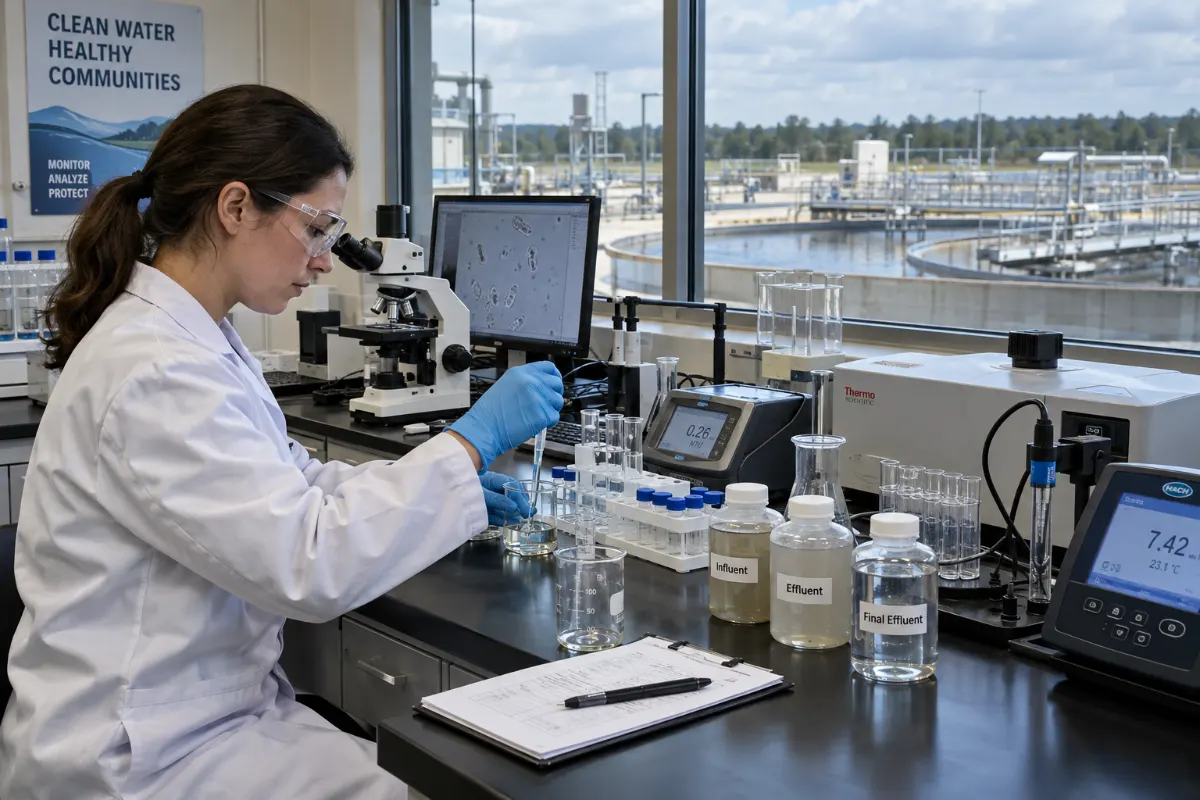
The distillate usually meets discharge standards for most parameters, but not always. Volatile organics can carry over, and ammonia can distill if pH is not controlled. I always recommend testing the distillate against the plant’s discharge permit before assuming it can go to the sewer. If your plant operates under wastewater discharge standards with tight limits, plan for a polishing step.
The concentrate is the harder problem. In zero liquid discharge (ZLD) projects, the concentrate goes to a crystallizer or a spray dryer. In non-ZLD projects, it is often sent off-site for incineration or disposal. Either way, the volume is small — typically 5–15% of the original feed — which is the whole point of using an evaporator in the first place. If you are pursuing ZLD, this overview of zero liquid discharge systems covers how the evaporator fits into the wider train.
Control Strategy and Automation
Pharma MVR units need better control than most industrial evaporators because the feed is variable. The control system should handle:
- Feed flow control tied to evaporator level
- Compressor speed or inlet guide vane modulation
- Boiling temperature and pressure control
- Concentrate density or conductivity control
- Antifoam dosing on demand rather than fixed rate
- Automatic CIP sequencing
I have seen plants where the control system was an afterthought, and the operators ended up running the unit manually. That always ends badly. Spend the money on a proper PLC and HMI with trend logging. You will use the data later when something goes wrong.
Common Failure Modes and How to Avoid Them
After enough commissioning visits, the failure patterns become predictable. Here are the ones I see most often:
Heat Exchanger Fouling
Cause: high organics, high hardness, inadequate pretreatment. Fix: improve pretreatment, add CIP, review cleaning frequency.
Compressor Vibration or Seal Failure
Cause: liquid carryover from foaming or poor demister performance. Fix: address foaming at the source, upgrade demister, verify vapor quality.
Loss of Vacuum or Pressure Control
Cause: leaks in the vapor loop, fouled condenser, or control valve issues. Fix: leak test, clean condenser, recalibrate instrumentation.
Scaling in the Boiling Chamber
Cause: hardness salts, silica, or phosphate precipitation. Fix: soften or demineralize feed, adjust pH, add antiscalant if compatible with the process.
Distillate Quality Excursions
Cause: foaming, pH drift, or solvent carryover. Fix: control pH tightly, improve demister, add polishing stage if needed.
Most of these problems trace back to pretreatment or feed variability. The evaporator itself is usually doing what it was designed to do.
Selection Logic: When MVR Is the Right Answer
I use a simple decision framework with clients:
- Is steam available at the point of use at a reasonable cost? If yes, compare multi-effect against MVR on total cost of ownership.
- Is the feed volume large enough to justify the compressor capital? Below roughly 1–2 m³/h of evaporation, MVR rarely pays back.
- Is the electricity supply adequate and reliable? MVR units draw significant power and are sensitive to voltage swings.
- Is the feed chemistry compatible with the materials and compressor type? Solvent content above a few percent usually requires pretreatment.
- Is there a clear plan for the concentrate? If not, solve that before buying the evaporator.
If you can answer yes to all five, MVR is usually the best technical and economic choice. If not, look at multi-effect or a hybrid membrane-thermal approach.
Talk to an Engineer About Your Pharma Wastewater Stream
Commissioning and Startup: What to Expect
Commissioning a pharma MVR unit takes longer than most clients expect. Plan for 4–8 weeks from mechanical completion to stable operation, and longer if the feed is highly variable. The first weeks are spent tuning the compressor, establishing cleaning cycles, and learning how the unit responds to different batches.
I always recommend running the unit on actual plant feed during commissioning rather than a synthetic blend. Synthetic feed never captures the full variability, and problems that show up on real feed are easier to solve while the commissioning team is still on site.
Maintenance Planning for the Long Run
A pharma MVR unit needs a maintenance plan that goes beyond the OEM manual. Key items:
- Daily: check compressor vibration, temperatures, and pressures
- Weekly: verify antifoam dosing, inspect for leaks, review trends
- Monthly: clean heat exchanger if fouling indicators rise, check instrumentation calibration
- Quarterly: inspect compressor internals, replace filters, review CIP effectiveness
- Annually: full compressor inspection, heat exchanger inspection, control system audit
The plants that do this well get 8,000+ hours of operation per year. The ones that do not are down every few weeks.
Frequently Asked Questions
How much does an MVR evaporator cost for pharmaceutical wastewater?
Capital cost depends mainly on evaporation capacity, materials of construction, and compressor type. A small unit in the 1–3 m³/h range typically starts in the low six figures in USD, and larger units scale up from there. Operating cost is driven by electricity, maintenance, and cleaning chemicals. I always recommend a total cost of ownership comparison over 10 years rather than looking at capital alone.
Can an MVR evaporator handle high-solvent pharmaceutical wastewater?
Not directly. Solvents above roughly 1–2% by weight should be stripped or distilled before the evaporator. If solvents enter the vapor loop, they can damage the compressor and create safety hazards. Pretreatment is not optional in this case.
What is the typical water recovery rate?
Most pharma MVR units recover 85–95% of the feed as distillate, with the remainder leaving as concentrate. The exact rate depends on feed chemistry and the target concentration factor. Higher recovery means higher boiling point elevation and more compressor power.
How often does the heat exchanger need cleaning?
On a well-pretreated feed, cleaning every 4–8 weeks is common. On a poorly pretreated feed, it can be weekly. The right answer comes from tracking heat transfer coefficient over time and cleaning when it drops by a set percentage.
Is MVR better than a multi-effect evaporator for pharma wastewater?
It depends on steam availability, electricity cost, and feed volume. MVR wins when steam is unavailable or expensive and electricity is reasonably priced. Multi-effect wins when steam is cheap and the plant wants to minimize electrical demand. There is no universal answer.
What happens to the concentrate?
In ZLD projects, the concentrate goes to a crystallizer or spray dryer. In non-ZLD projects, it is typically sent off-site for incineration or disposal. The volume is small, which is the main reason to use an evaporator in the first place.
How long does commissioning take?
Plan for 4–8 weeks from mechanical completion to stable operation, longer if the feed is highly variable. Running on real plant feed during commissioning is strongly recommended.
Final Thoughts on Engineering the Right System
Pharmaceutical wastewater is not a forgiving stream. The chemistry changes, the solvents complicate everything, and the discharge limits are usually tight. An MVR evaporator is a powerful tool for this job, but it only works when the pretreatment is right, the compressor is matched to the duty, and the maintenance plan is realistic.
If you take one thing from this article, let it be this: design the system around the feed you actually have, not the feed you wish you had. Get six months of analysis data, run a pilot if the stream is unusual, and talk to engineers who have commissioned units on similar streams. The capital cost of doing this properly is small compared to the cost of a unit that never runs reliably.