

Landfill leachate is one of the most expensive waste streams a site will ever manage. You are not paying to treat water. You are paying to move a small, heavily contaminated volume through tankers, third-party treatment contracts, and disposal fees that rise with every ton. The fastest way to reduce landfill leachate disposal costs is to stop hauling water at all. Concentrate the leachate on site, recover clean permeate for reuse or discharge, and leave only a fraction of the original volume as solid or semi-solid residue. In my experience, that single shift in strategy is what separates sites paying $80–$200 per cubic meter from sites paying a fraction of that. Everything else — membranes, evaporators, dewatering — is just how you get there.
Why leachate disposal costs spiral out of control
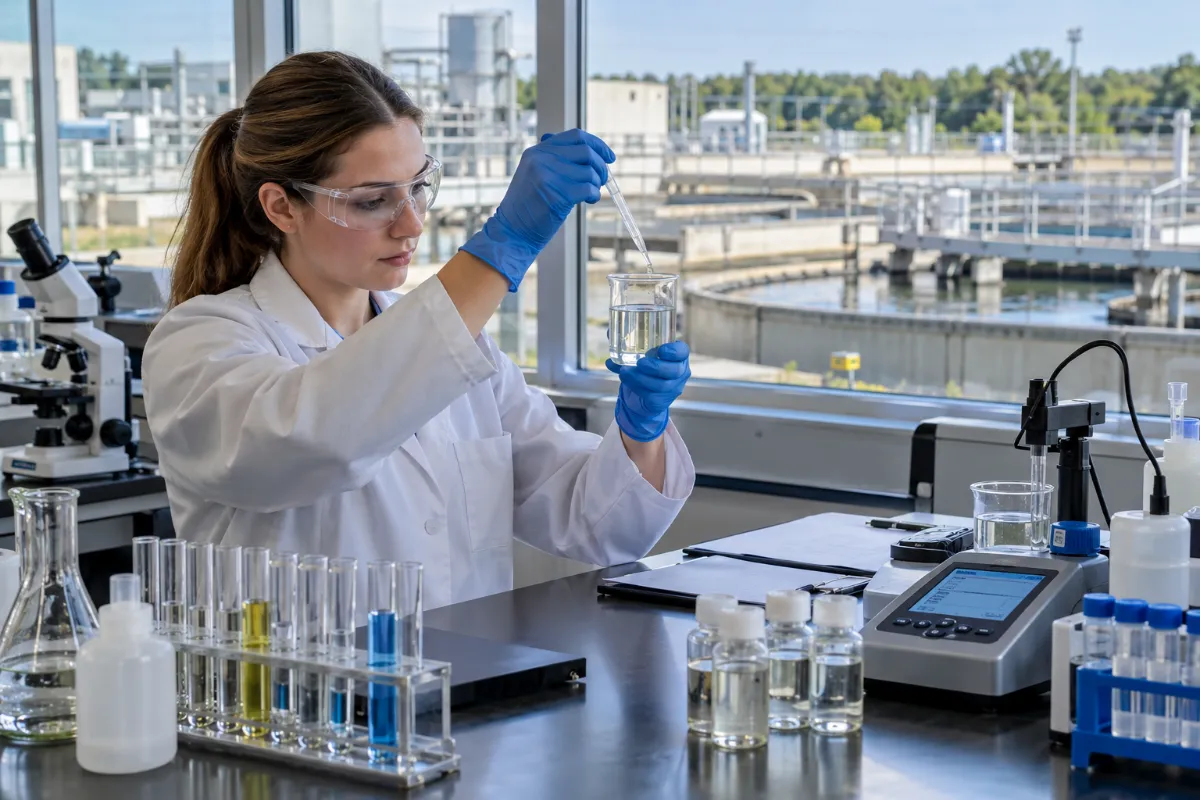
Most landfill operators start with the simplest possible arrangement: collect leachate in a lagoon or holding tank, then truck it to a municipal wastewater plant or a permitted industrial treatment facility. It works. It is also the most fragile cost structure you can build, because every variable moves against you.
Leachate strength climbs as a landfill ages. Young leachate carries high volatile fatty acids and a BOD/COD ratio that shifts over time. Mature leachate turns into a stubborn, high-ammonia, low-biodegradability liquid loaded with chlorides and refractory organics. If you want a deeper breakdown of what is actually in the stream, our notes on what chemicals are in landfill leachate cover the main constituents and how they change with landfill age.
Here is the practical problem. Hauling contracts are usually priced per cubic meter or per ton, and that price reflects:
- Fuel and transport distance to the receiving facility
- Receiving facility tipping fees, which track local treatment capacity
- Surcharges for high COD, ammonia, chloride, or heavy metals
- Seasonal restrictions, especially when receiving plants hit their own limits
- Regulatory tightening on what receiving plants will accept
When a municipal plant loses capacity or changes its acceptance criteria, your disposal route can disappear overnight. I have watched sites go from a stable $60/m³ contract to emergency pricing three times higher within a single budget cycle. That is the real risk: not the baseline cost, but the volatility.
The core principle: pay to dispose of solids, not water
Water is heavy, and you are paying to move it. A cubic meter of leachate weighs roughly one metric ton. If the dissolved solids content is 2%, then 98% of what you are hauling is water you could have evaporated or pushed through a membrane.
The economics flip the moment you concentrate. Instead of paying per cubic meter of liquid, you pay per kilogram of dry residue. That is a much smaller number.
| Approach | Typical volume leaving site | Cost driver | Exposure to price volatility |
|---|---|---|---|
| Direct hauling of raw leachate | 100% of collected volume | Per m³ tipping + transport | High |
| Biological pretreatment + hauling | 85–100% | Per m³ + aeration energy | High |
| Membrane concentration + hauling of concentrate | 15–30% | Per m³ of concentrate + membrane O&M | Medium |
| Evaporative concentration to near-dry residue | 2–10% as solid or slurry | Energy + residue handling | Low |
| Full zero liquid discharge (ZLD) | Dry salt / solid only | Energy + solids disposal | Low |
Those ranges are indicative. Actual numbers depend on the influent TDS, the target concentration factor, and how much water you can legally discharge or reuse. But the direction is always the same: the more water you remove on site, the less you pay someone else to take away.
Step one: characterize the stream properly before you design anything
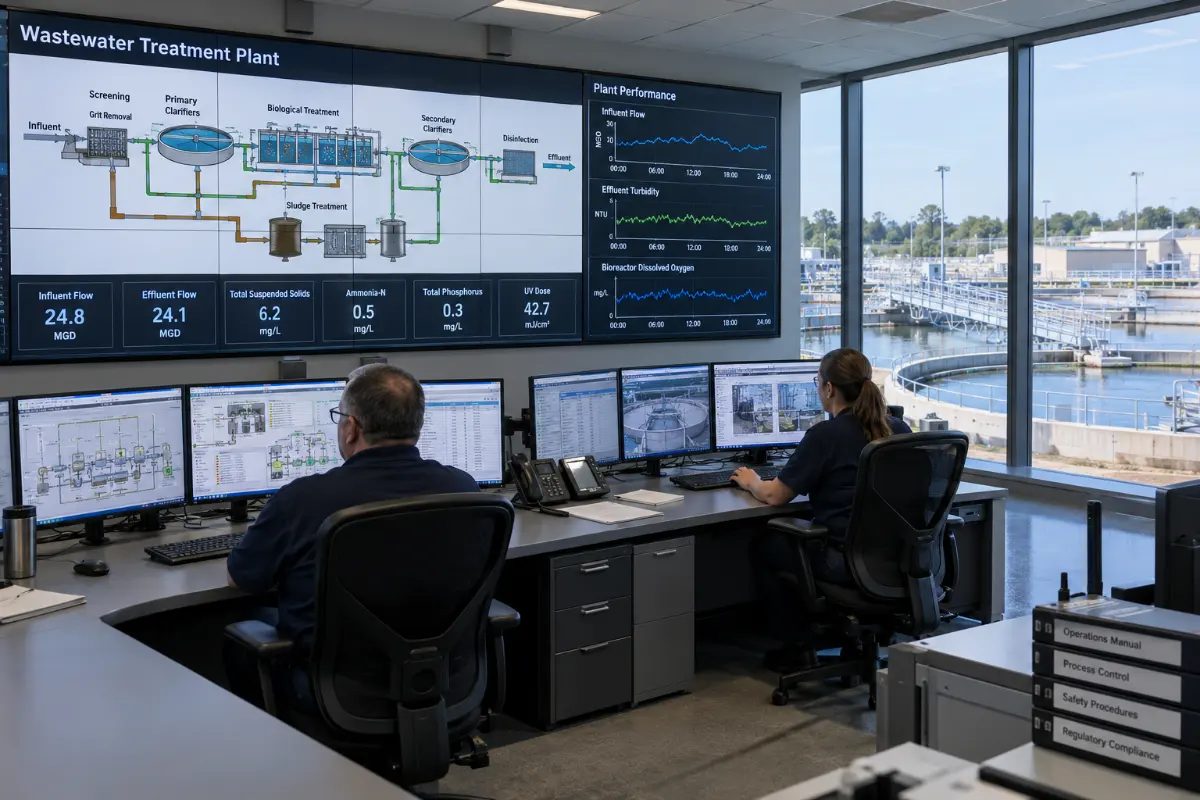
The single most common mistake I see is designing a system from a single grab sample. Leachate is not a stable fluid. It changes with rainfall, season, landfill age, and the waste mix that came in that month.
Before you commit to any process, you need at least a full year of data, ideally covering wet and dry seasons:
- COD and BOD, plus the BOD/COD ratio
- Ammonia nitrogen and total nitrogen
- Chloride and total dissolved solids (TDS)
- Heavy metals — especially if industrial waste was co-disposed
- Hardness, silica, and scaling ions
- pH and alkalinity
- Suspended solids and oil/grease
Two parameters drive most of the capital cost: TDS and scaling potential. High chloride limits what stainless steel you can use in an evaporator. High hardness and silica dictate whether you need softening upstream or whether you will be cleaning heat exchangers every three weeks. Getting this wrong is how projects end up with a system that runs for six months and then fouls permanently.
Step two: choose the right concentration technology
There is no universal answer here. The right choice depends on your target concentration factor, your energy costs, and what you can do with the treated water. Let me walk through the main options the way I would evaluate them in a real bid.
Membrane concentration (RO and DTRO)
If your leachate is relatively low in TDS and you have a discharge or reuse route for permeate, reverse osmosis is usually the cheapest way to remove water. Standard spiral-wound RO struggles with high-fouling leachate, so most landfill applications use disk-tube reverse osmosis (DTRO), which handles suspended solids and scaling far better and can be cleaned in place more aggressively.
A well-run DTRO stage can typically push recovery into the 75–85% range on pretreated leachate, leaving a concentrate that is 4–6 times the influent TDS. That concentrate still has to go somewhere, so membranes alone rarely solve the whole problem. They are best used as a first concentration step ahead of evaporation.
If you are designing a membrane train, our page on DTRO membrane systems covers the configuration logic and where DTRO beats conventional RO on landfill leachate.
Evaporative concentration (MVC, MVR, multi-effect)
Evaporation is where leachate disposal costs really come down, because it removes water as vapor and leaves a small volume of brine or dry residue. The three main configurations behave very differently.
Mechanical vapor compression (MVC/MVR) uses a compressor to recompress the vapor and reuse its latent heat. For a single-effect arrangement, the specific energy consumption typically lands in the range of 20–40 kWh per cubic meter of distillate, depending on boiling point elevation and compressor efficiency. That is dramatically lower than a simple steam-heated single-effect evaporator, which is why MVC dominates on sites with high electricity availability and moderate steam supply.
Multi-effect evaporators use steam to drive several effects in series, reusing heat across stages. A triple-effect unit can achieve roughly one-third the steam consumption of a single-effect unit, at the cost of more vessels, more piping, and a larger footprint. If you have cheap steam and expensive electricity, multi-effect wins. If the reverse, MVC wins.
For a detailed comparison of how the heat exchangers are configured in these systems, our notes on MVC evaporator heat exchangers are worth reading before you specify materials.
| Configuration | Energy source | Relative steam use | Best fit |
|---|---|---|---|
| Single-effect | Steam | Baseline (1.0) | Small flows, low budget, simple operation |
| Double-effect | Steam | ~0.55 | Medium flows, available steam |
| Triple-effect | Steam | ~0.40 | Larger flows, steam-rich sites |
| MVC / MVR | Electricity | Near zero (startup only) | High electricity, low steam, tight footprint |
Those ratios are indicative and shift with boiling point elevation, fouling, and the number of effects. Always model your specific stream rather than assuming a textbook number.
Step three: handle the concentrate correctly
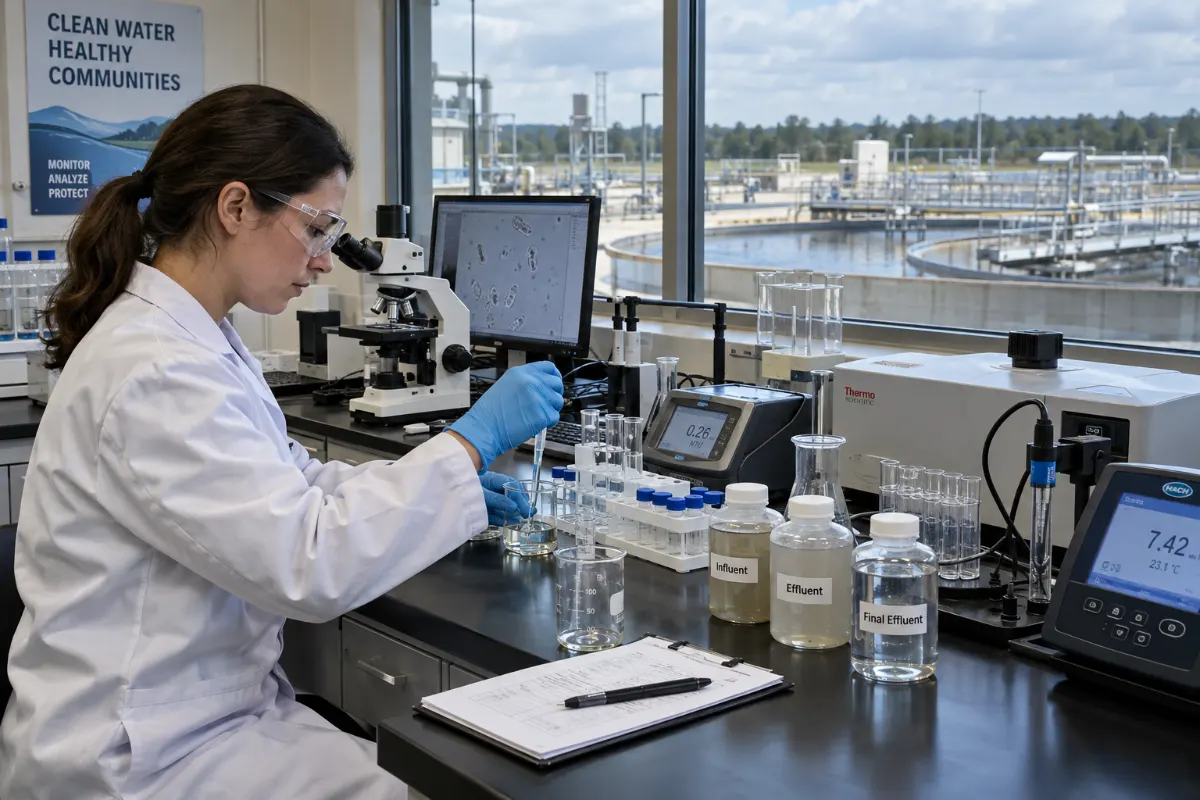
Concentration does not destroy anything. It just moves the problem into a smaller volume. How you manage that concentrate determines whether your operating cost is stable or whether you have simply created a more concentrated hauling problem.
Options, in rough order of cost and complexity:
- Haul the concentrate. Simplest, but you are still exposed to tipping fees, just on a smaller volume. This is often the right first step when capital is limited.
- Further evaporation to a slurry or salt. Pushes the residue toward solid form, which can sometimes be landfilled on site or handled as a solid waste.
- Crystallization and full ZLD. Produces dry solids and clean distillate. Highest capital, lowest long-term disposal volume, and the most defensible position if discharge rules tighten.
If your site faces strict discharge limits or a receiving plant that will not take concentrate, a zero liquid discharge system is often the only route that stays compliant long term. The trade-off is capital and energy, so it needs to be justified by avoided hauling cost, not by preference.
One thing I always check: can the distillate be reused? Evaporator distillate from leachate is usually low in TDS and can be reused for dust suppression, irrigation of non-food cover, or as wash water, depending on local rules. Reuse turns a disposal cost into an avoided water purchase. That is often the difference that makes the whole project pay back.
Step four: get the pretreatment right or pay forever
Every evaporator and membrane system I have seen fail in the field failed for the same reason: inadequate pretreatment. Leachate carries hardness, silica, organics, and sometimes heavy metals that will scale or foul the hot surfaces of an evaporator within weeks.
The pretreatment train usually includes some combination of:
- Equalization and flow buffering to smooth out storm-driven surges
- Chemical softening or lime dosing to drop out hardness
- pH adjustment to keep ammonia in a manageable form
- Coagulation and flocculation to remove colloidal organics
- Filtration or ultrafiltration ahead of membranes
- Deaeration or degassing if ammonia stripping is required
Ammonia deserves special attention. High ammonia leachate will strip into the vapor phase in an evaporator and can end up in the distillate, which then fails discharge limits. Many designs include a stripping step or a dedicated ammonia recovery stage ahead of evaporation. Skipping this is a classic and expensive mistake.
Step five: dewater the solids and manage residue volume
The solids you generate — pretreatment sludge, membrane concentrate solids, evaporator salt — all have to leave the site. Volume reduction here matters just as much as it does upstream.
A screw press or similar dewatering system can take sludge from a few percent dry solids up to 20–35% depending on the stream, which cuts hauling volume substantially. Every percentage point of dryness you gain is money saved on transport and tipping. If you are specifying this equipment, our guide on screw press sludge dewatering walks through the selection variables that actually affect cake dryness.
For leachate specifically, the residue from an evaporator is often a salt slurry rather than a conventional biological sludge, so the dewatering approach differs. Sometimes a crystallizer or a drum dryer is the better tool. The right answer depends on whether the residue is going to a landfill, a hazardous waste facility, or a salt recovery process.
What the numbers actually look like
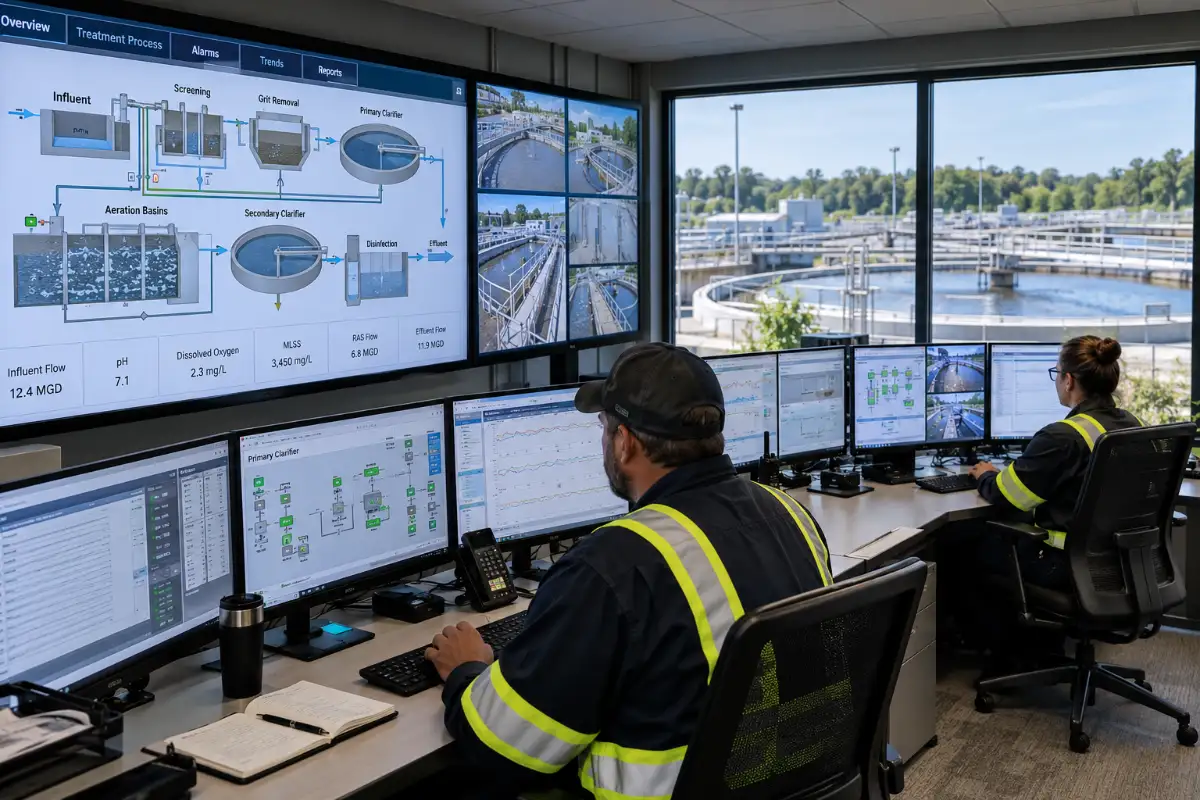
I want to be careful here, because I have seen too many articles promise specific savings that do not survive contact with a real site. What I can give you is the structure of the comparison, with indicative ranges.
Take a site generating 50 m³/day of leachate with a TDS around 15,000 mg/L. Direct hauling at, say, $90/m³ is roughly $1.64 million per year. That is the number to beat.
Now consider on-site concentration. A membrane-plus-evaporator train might run at a power draw that costs $8–$20 per cubic meter of feed in electricity, plus chemical and maintenance costs. Even at the high end, that lands well below the hauling cost, and it removes most of the exposure to tipping fee increases. The concentrate volume drops to a few cubic meters per day, and the distillate can often be reused.
The exact crossover point depends on your local energy price, your hauling rate, and your capital financing. But the pattern is consistent: sites that concentrate on site generally see disposal volume fall by 80–95%, and total disposal cost fall by a meaningful margin once the capital is amortized.
My rule of thumb after more than a decade of these projects: if you are hauling more than 20 m³/day of leachate, it is almost always worth modeling an on-site concentration system. Below that, it depends on how volatile your hauling price is and how strict your discharge rules are.
Common failure modes and how to avoid them
I have been called in to troubleshoot enough underperforming leachate systems to see the same patterns repeat. Here is what to watch for.
Scaling on heat exchanger surfaces
Hardness and silica deposit on hot surfaces and kill heat transfer efficiency. The fix is upstream softening or antiscalant dosing, plus a cleaning-in-place routine that actually gets used. If your evaporator is losing capacity month over month, scaling is the first suspect.
Foaming in the evaporator
Leachate with high organic content and surfactants foams badly. Foam carries liquid into the vapor line and contaminates the distillate. Antifoam dosing and a properly sized vapor-liquid separator solve most cases, but the separator has to be designed for the actual foam behavior, not a generic assumption.
Ammonia carryover into distillate
As noted earlier, ammonia follows the vapor. If your distillate has to meet a nitrogen limit, you need a stripping stage or a polishing step. This is a design decision, not something you can fix after commissioning without significant cost.
Corrosion from chlorides
High chloride leachate is aggressive. Material selection — duplex stainless, titanium, or higher alloys in wetted parts — is not optional. Cutting corners here shows up as pitting and stress corrosion cracking within a couple of years.
Membrane fouling and compaction
DTRO handles fouling better than spiral RO, but it still needs cleaning cycles and pretreatment. If recovery drops and cleaning does not restore it, you may be dealing with irreversible fouling or membrane compaction, which means replacement.
How to decide: a practical selection framework
When I sit down with a site to scope a leachate project, I work through these questions in order:
- What is the annual hauling cost today, and how volatile is it? This sets the budget ceiling.
- What can I do with treated water? If I can reuse or discharge it, membranes become very attractive as a first step.
- What is my energy situation? Cheap electricity favors MVC. Cheap steam favors multi-effect.
- What is my target discharge or reuse standard? This determines how many treatment stages I need.
- How much space and operator attention do I have? Simpler systems with fewer stages are easier to run reliably.
- What is the regulatory trajectory? If discharge rules are tightening, building toward ZLD now avoids a rebuild later.
If you want to talk through a specific site, the engineering team can walk through the trade-offs with your actual water data. Reach out here and we can scope it properly rather than guessing.
Maintenance and lifecycle cost: the part most budgets miss
Capital cost gets all the attention, but lifecycle cost is where leachate systems live or die. The biggest ongoing costs are energy, chemicals, membrane replacement, and labor.
| Cost category | Typical share of annual OPEX | Main lever |
|---|---|---|
| Energy | 40–60% | Technology choice, heat recovery, operating pressure |
| Chemicals (antiscalant, antifoam, cleaning) | 10–20% | Pretreatment quality, dosing control |
| Membrane / consumable replacement | 10–20% | Fouling control, cleaning discipline |
| Labor and maintenance | 10–20% | Automation, operator training |
| Residue disposal | Variable | Concentration factor, dewatering performance |
Those shares are indicative and shift with site conditions. The point is that energy dominates. That is why MVC versus multi-effect is not a trivial decision — it can swing your annual cost by a large margin.
Automation is also underrated. A system with good instrumentation and automatic cleaning cycles runs more consistently and needs less operator intervention than one that relies on manual monitoring. Over a ten-year horizon, that difference is significant.
Frequently asked questions
What is the cheapest way to reduce landfill leachate disposal costs?
For most sites above roughly 20 m³/day, on-site concentration is the cheapest long-term route, because it cuts the volume you pay to dispose of. Membranes are usually the lowest-cost first step, followed by evaporation for the concentrate. Below that flow rate, it depends on your local hauling price and whether you can discharge treated water.
Can leachate be treated on site instead of hauled away?
Yes, and it is done routinely. A typical on-site train combines equalization, pretreatment for hardness and ammonia, membrane concentration, and evaporative concentration. The output is clean distillate that can often be reused or discharged, plus a small residue stream. The main constraints are capital, energy cost, and available space.
How much does it cost to run an MVC evaporator on leachate?
Energy is the dominant operating cost. For a single-effect MVC arrangement, specific consumption typically falls in the 20–40 kWh per cubic meter of distillate range, but that varies with boiling point elevation, compressor efficiency, and feed concentration. Add chemicals, maintenance, and labor on top. Your local electricity price is the biggest variable.
What causes an evaporator to lose capacity over time?
Scaling on heat transfer surfaces is the most common cause, usually from hardness and silica. Fouling from organics and foaming can also reduce performance. The fix is proper pretreatment, antiscalant dosing, and a cleaning-in-place routine that is actually followed. If capacity keeps dropping after cleaning, check for corrosion or mechanical issues.
Do I need zero liquid discharge for landfill leachate?
Not always. It depends on your discharge permit, whether a receiving facility will accept concentrate, and how strict local rules are. ZLD is the most defensible option when discharge is restricted or the regulatory trend is tightening, but it carries the highest capital and energy cost. Many sites start with concentration and hauling of a small concentrate stream, then move toward ZLD as rules change.
How do I choose between MVC and multi-effect evaporation?
Look at your energy prices. If electricity is cheap and steam is scarce or expensive, MVC is usually the better fit. If you have low-cost steam available and electricity is expensive, a multi-effect arrangement — double or triple effect — will have lower operating cost. Footprint, maintenance complexity, and operator skill also matter. Model both against your actual utility rates before deciding.
What should I do with the concentrate or residue?
Options range from hauling the concentrate to a permitted facility, to further evaporation into a slurry or salt, to full crystallization. The right choice depends on residue volume, local disposal options, and whether the salt can be recovered or must go to a hazardous waste facility. Dewatering the residue to the highest practical solids content reduces transport and tipping costs.
How long does it take to see a return on an on-site leachate treatment system?
It depends on your current hauling cost, the concentration factor you can achieve, and your capital financing. Sites with high hauling rates and large volumes often see payback in a few years. Sites with low volumes or cheap disposal may take longer. The most reliable way to judge is to model your actual annual hauling spend against the projected operating cost of the system.