

When a plant sends me a water analysis with total dissolved solids above 15,000 mg/L, the first question is never “which evaporator should we buy.” The real question is what the dissolved solids are made of, how much water we can realistically recover, and what happens to the concentrate. High-TDS wastewater treatment system selection comes down to matching the brine chemistry to a separation method that will still run six months from now without a chemical cleaning every two weeks. I have watched projects fail because someone picked a technology from a brochure instead of from the water analysis. This article walks through how I actually screen and size systems: pretreatment, membrane limits, evaporation choices, energy, maintenance, and lifecycle cost.
Start With the Water, Not the Equipment
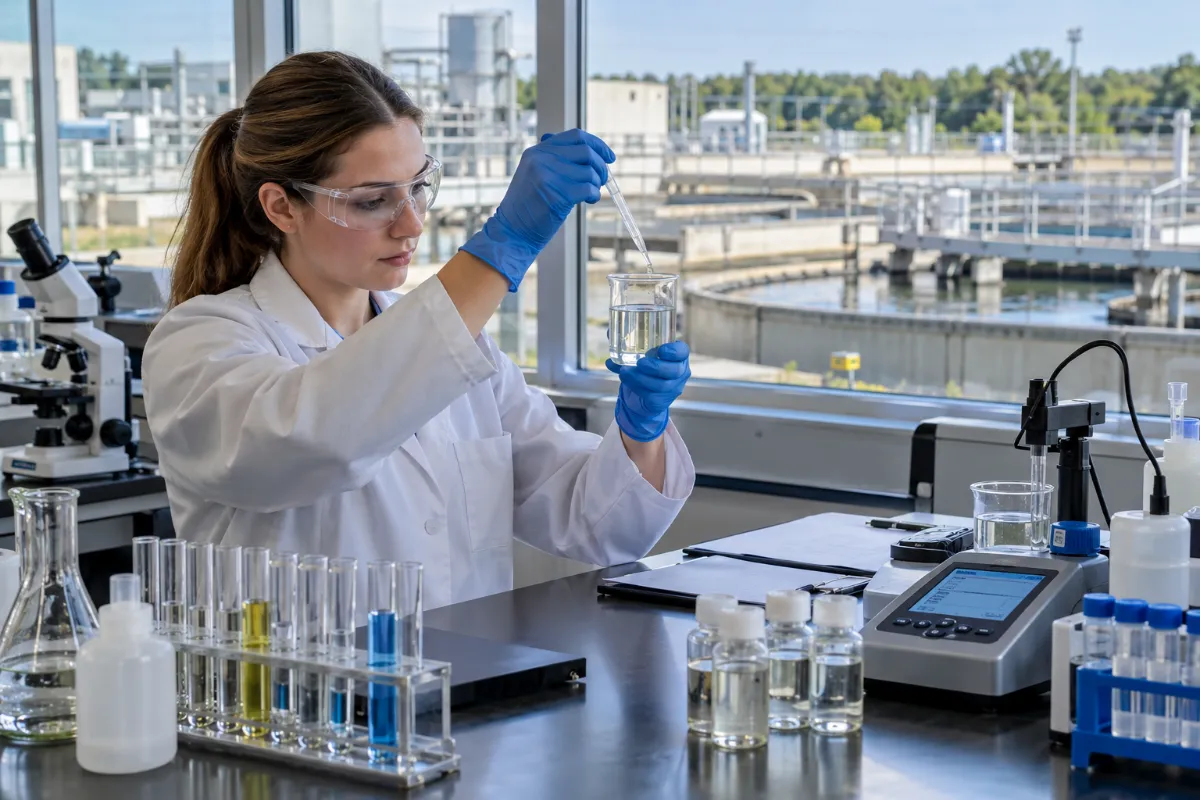
Before I sketch any process flow, I want a full ion balance. Not just TDS. I want sodium, calcium, magnesium, chloride, sulfate, carbonate, silica, and the organic load. For high-TDS streams, the ratio between scaling ions matters more than the total number on the lab report.
Here is what I look at first:
- Silica and calcium hardness. These two drive evaporator scaling more than anything else. Above roughly 150 mg/L silica, I start planning for elevated operating temperature limits or a silica removal step.
- Chloride versus sulfate. This determines whether I can use standard stainless steel or need duplex, super duplex, or titanium in the heat exchangers.
- Organics and oil. COD above a few thousand mg/L, or any free oil, will foul membranes and cause foaming in evaporators. That gets removed upstream, not inside the main unit.
- Volatile components. Ammonia, volatile organics, and some solvents will carry over in the vapor. That changes the condensate polishing design.
- pH and buffering. Aggressive pH swings during concentration can push a stream into a corrosion regime it was not in at the inlet.
I have seen a leachate project where the design TDS was 22,000 mg/L but the calcium hardness was low enough that we ran a membrane concentrator to 6x before evaporation. In another site with similar TDS but much higher hardness, the same approach would have scaled the membranes in weeks. Same headline number, completely different system.
Screening the Technology Options
For high-TDS streams I am usually choosing between three families, or a combination: membrane concentration, thermal evaporation, and crystallization for zero liquid discharge. Each has a working range where it makes sense, and a range where it becomes expensive or unreliable.
Membrane Concentration and High-Pressure RO
Standard reverse osmosis tops out around 70–80 bar and practical brine concentrations of roughly 70,000–85,000 mg/L, depending on the osmotic pressure of the specific ions. Disc-tube and high-pressure RO can push further, but the operating window narrows fast. For a stream that starts at 20,000 mg/L TDS, a high-pressure RO membrane stage can cut the volume going to the evaporator by 60–75%, which directly reduces evaporator capital and energy. That is usually worth doing when the chemistry allows it.
The catch is pretreatment. High-TDS streams often carry hardness, silica, and organics that will foul membranes long before they reach the design recovery. Antiscalant alone will not save a stream that is already saturated in gypsum. I plan for softening, and sometimes a DTRO membrane system, when the fouling risk is high or the stream is dirty enough that spiral-wound elements would need cleaning too often.
Thermal Evaporation: MVC, MVR, and Multi-Effect
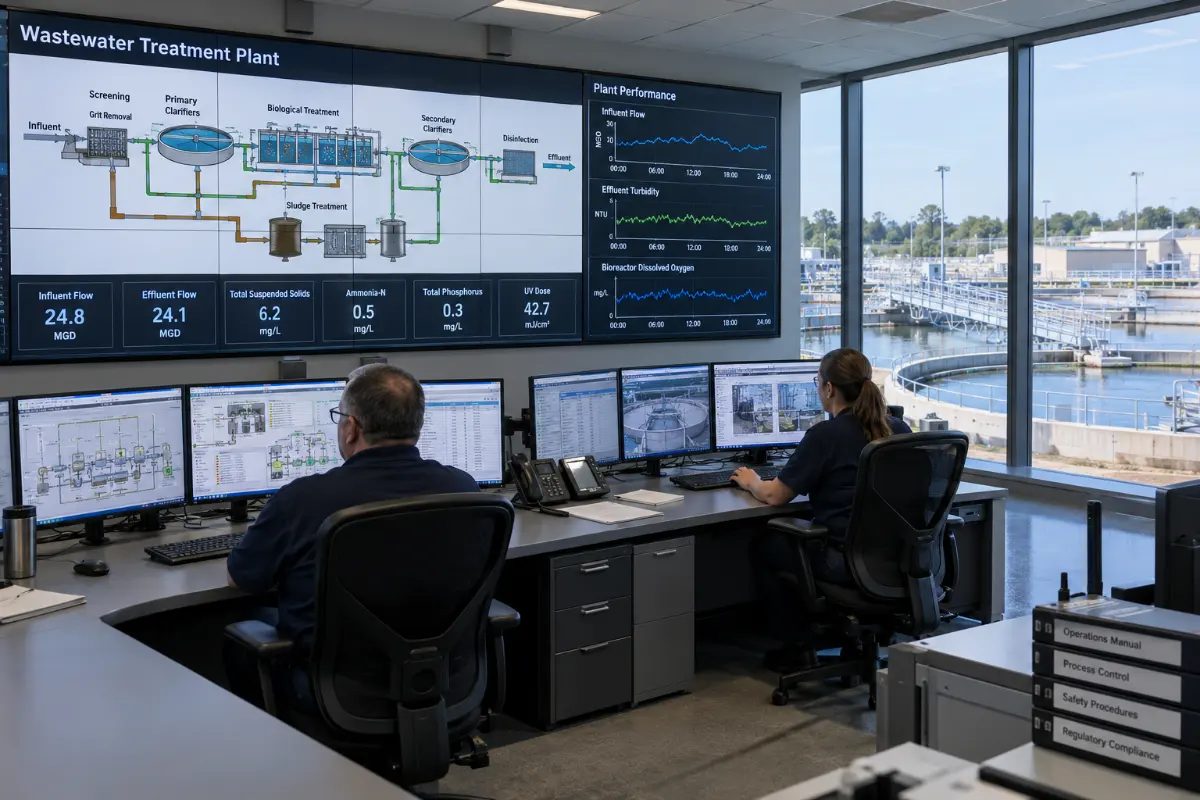
Once membranes hit their limit, evaporation takes over. The three main configurations I work with are mechanical vapor compression, mechanical vapor recompression, and multi-effect. They are not interchangeable, and the choice depends on steam availability, electricity cost, and the size of the plant.
Mechanical vapor compression uses a compressor to raise the pressure and temperature of the vapor so it can be reused as the heating medium in the same effect. It is electrically driven and needs no external steam, which makes it attractive where boilers are not available. The trade-off is that compressor power scales with the compression ratio, so very high boiling point elevation streams get expensive. A mechanical vapor compression MVC evaporator is usually my default for medium to large high-TDS streams when power is reasonably priced.
Multi-effect evaporation splits the duty across several vessels running at decreasing pressure. Each effect reuses the vapor from the previous one, so steam consumption drops roughly in proportion to the number of effects. A multi-effect evaporator makes sense when you have cheap steam and want to minimize electrical load. The capital cost is higher and the footprint is larger, but the operating cost can be lower than MVC if steam is genuinely cheap.
For smaller flows, a single-effect evaporator is sometimes the honest answer. It is simpler, cheaper to build, and easier to operate. It only becomes the wrong choice when energy cost over the equipment life exceeds the savings from a more complex train.
Comparing the Main Options Side by Side
The table below reflects typical design ranges I use for early screening. These are not guarantees. Actual values depend on the specific ions, the target concentration, and the site utilities.
| Technology | Typical feed TDS range | Concentration limit | Main energy input | Key pretreatment | Best fit |
|---|---|---|---|---|---|
| High-pressure RO / DTRO | 3,000–35,000 mg/L | ~70,000–85,000 mg/L brine | Electric (pumps) | Softening, antiscalant, organics removal | Volume reduction ahead of evaporation |
| MVC / MVR evaporator | 10,000–200,000 mg/L | Near saturation, 200,000–300,000 mg/L | Electric (compressor) | Degassing, oil removal, hardness control | No steam available, medium to large flow |
| Multi-effect evaporator | 10,000–250,000 mg/L | Near saturation | Steam + small electric | Degassing, hardness control | Cheap steam, large flow, low power cost sensitivity |
| Crystallizer (ZLD) | Concentrate from above | Solid salt discharge | Steam or electric | Full pretreatment train | Zero liquid discharge requirement |
One thing the table cannot show is how much the chemistry shifts the limits. A stream with 200,000 mg/L sodium chloride behaves very differently from one with 200,000 mg/L mixed sulfate and calcium. The first can run in a crystallizer with modest scaling risk. The second will scale the heat exchanger surfaces almost immediately unless the pretreatment is right.
Pretreatment: Where Most Projects Are Won or Lost
I spend more design time on pretreatment than on the evaporator itself. The evaporator is a heat exchanger with a vapor compressor attached. If the feed is clean enough, it runs. If it is not, it does not, and no amount of automation will fix that.
The pretreatment train for a high-TDS stream usually includes:
- Equalization. High-TDS streams often come in batches. Buffering the flow and composition protects everything downstream.
- Oil and grease removal. Any free oil will coat heat transfer surfaces and reduce the overall coefficient. I remove it before it reaches the evaporator, not inside it.
- Chemical softening or precipitation. Lime softening, caustic softening, or a combination to drop calcium and magnesium to a level the evaporator can tolerate at the target concentration factor.
- Silica removal. Where silica is high, a magnesium-based or alum-based coagulation step may be needed.
- Degassing. Removing carbon dioxide and ammonia before the evaporator reduces corrosion and condensate treatment load.
- Filtration. Fine filtration protects the heat exchanger and the compressor from suspended solids.
I have seen plants skip softening because the feed hardness looked “manageable” at the inlet. It was manageable at the inlet. At 5x concentration it was not, and the first effect had to be opened up for mechanical cleaning within three months. The lesson is always the same: design for the concentrate, not the feed.
Energy and Lifecycle Cost
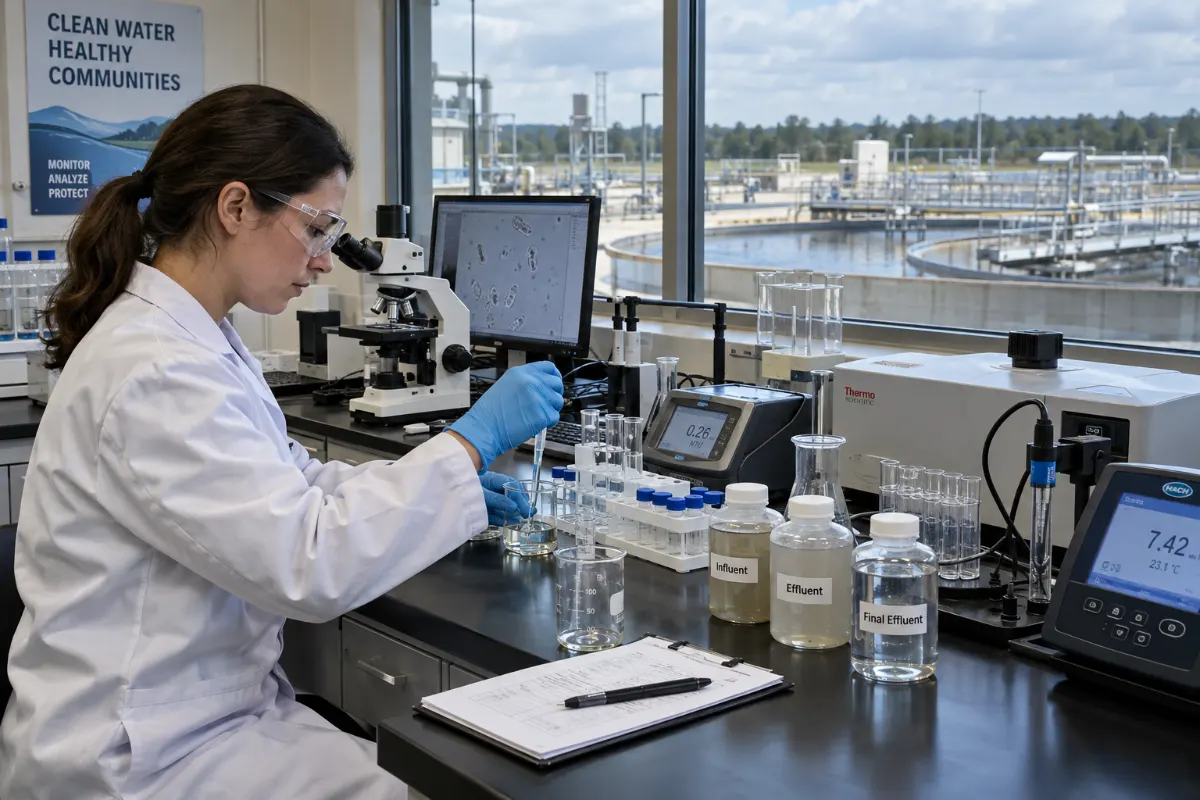
Energy is where the technology choice shows up in the monthly bill. For MVC, the compressor is the dominant load. For multi-effect, the steam is the dominant cost, but the electrical load is much lower. For a membrane concentrator ahead of either, the pumping energy is small relative to the thermal step.
I use a simple comparison for early screening. The specific energy consumption of an MVC evaporator typically falls in the range of 15–40 kWh per cubic meter of distillate, depending on the boiling point elevation and the compression ratio. A multi-effect evaporator with cheap steam might use 0.3–0.5 kg of steam per kg of water evaporated, with a small electrical load for pumps and vacuum. The numbers move a lot with chemistry, so I always run them against the actual site utility prices before recommending anything.
Lifecycle cost is not just energy. I include:
- Chemical consumption for pretreatment and cleaning
- Membrane or heat exchanger replacement interval
- Compressor or vacuum system maintenance
- Labor for routine operation and cleaning
- Disposal cost of the concentrate or salt
On several projects, the cheaper capital option turned out to be the more expensive choice over ten years because of cleaning frequency and downtime. The MVR evaporator cost drivers are worth understanding before you commit to a configuration, because the difference between a well-designed and a poorly-designed unit shows up in operating cost, not purchase price.
Maintenance and Common Failure Modes
The failure modes I see most often on high-TDS systems are predictable:
- Scaling on heat transfer surfaces. Almost always a pretreatment or concentration factor issue. Cleaning frequency tells you whether the design was right.
- Foaming and carryover. Organics and surfactants in the feed cause foam that carries liquid into the vapor path. Antifoam helps, but the real fix is upstream removal.
- Compressor fouling or erosion. Entrained droplets or fine solids damage the impeller over time. Demister design and inlet filtration matter.
- Corrosion at the vapor-liquid interface. Chlorides plus oxygen plus heat equals pitting. Material selection has to account for the concentrate, not the feed.
- Condensate quality drift. Volatile components that carry over show up in the distillate. If the condensate is reused, this matters.
I plan a cleaning schedule based on the water chemistry and the concentration factor, then adjust it after the first few months of operation. A system that needs cleaning every two weeks is not a maintenance problem. It is a design problem.
When Zero Liquid Discharge Is the Only Option
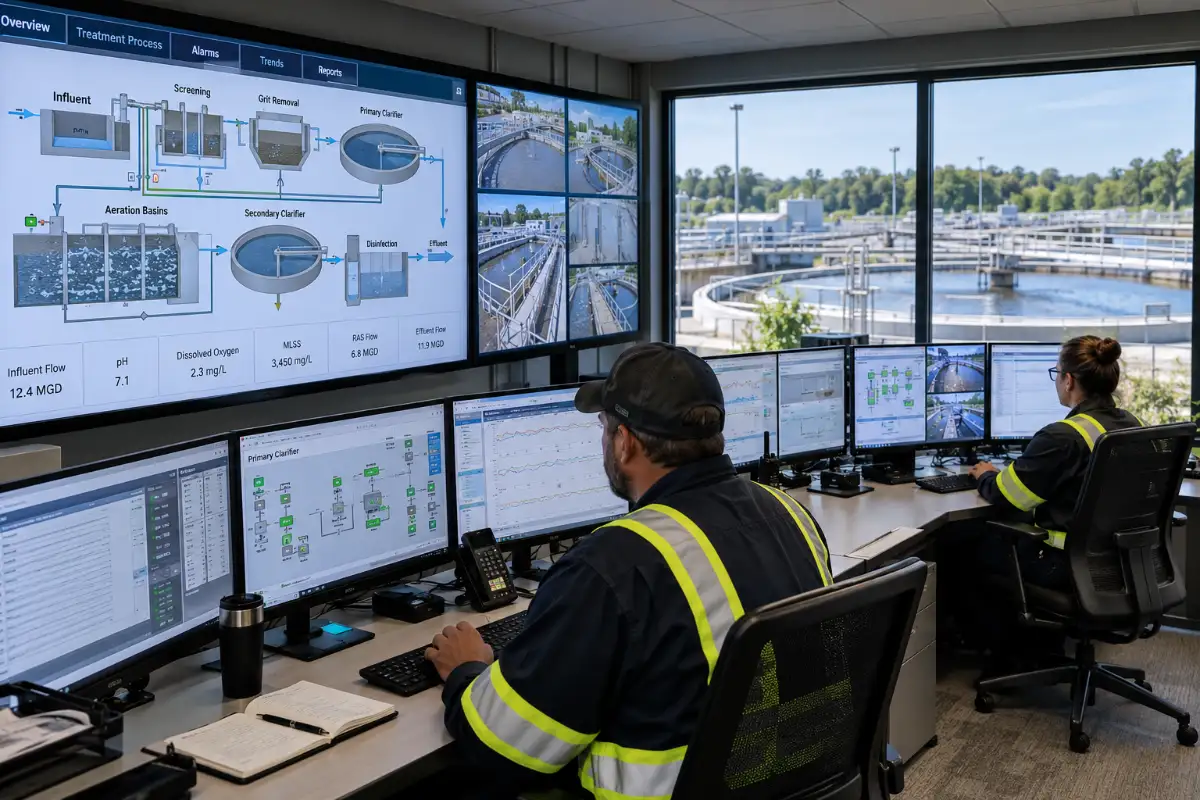
Some sites cannot discharge liquid at all. In that case, the evaporator becomes a concentrator ahead of a crystallizer, and the whole train has to be designed together. A zero liquid discharge system is not just an evaporator with a bigger concentrate tank. It is a sequence: pretreatment, concentration, crystallization, solids dewatering, and often a purge treatment step.
The economics of ZLD depend heavily on the salt composition. A stream that produces a marketable sodium chloride or sodium sulfate crystal can offset some of the disposal cost. A stream that produces a mixed salt with no reuse path becomes a disposal cost that has to be carried for the life of the plant. I always ask the client what they intend to do with the solids before I size the crystallizer.
Sludge handling is part of this picture too. If the pretreatment produces a chemical sludge, a screw press sludge dewatering step reduces the volume that has to be managed. It is not glamorous, but it affects the operating cost and the footprint of the whole facility.
Selection Logic I Actually Use
When I sit down with a new high-TDS project, I run through the same sequence:
- Characterize the stream fully. Ions, organics, oil, volatiles, pH, temperature, flow profile.
- Define the discharge target. Liquid discharge limit, reuse requirement, or ZLD.
- Evaluate membrane concentration first. If the chemistry allows it, volume reduction ahead of thermal saves capital and energy.
- Choose the thermal step based on utilities. Steam availability, power price, and flow rate decide between MVC, MVR, and multi-effect.
- Design pretreatment for the concentrate, not the feed. This is where most of the reliability comes from.
- Check the concentrate disposal path. If there is no home for the brine or salt, the design is not finished.
- Run a lifecycle cost comparison. Capital plus ten years of operating cost, not just the equipment price.
I have used this sequence on electroplating rinse water, pharmaceutical process streams, landfill leachate, and battery manufacturing wastewater. The chemistry changes, the sequence does not. If you want to walk through it on a specific stream, you can send us the water analysis and we will review the options with you.
Frequently Asked Questions
What TDS level makes evaporation necessary instead of membranes?
There is no single number. Membranes become impractical when the osmotic pressure of the concentrate exceeds the pressure the membrane and housing can safely handle, which is typically around 70,000–85,000 mg/L TDS for high-pressure RO. The practical limit depends on the ion composition. A stream high in sodium chloride can be concentrated further than one high in calcium sulfate, because the scaling risk is different. I usually run a bench or pilot test before committing to a membrane limit.
How do I choose between MVC and multi-effect evaporation?
Look at your utilities. If you have cheap steam and expensive electricity, multi-effect is usually the better fit. If you have no steam and reasonable power, MVC is the practical choice. For very small flows, a single-effect unit may be the most economical option overall. The decision is a lifecycle cost comparison, not a technology preference.
What causes foaming in a high-TDS evaporator?
Foaming is almost always caused by organics, surfactants, or fine suspended solids in the feed. Antifoam can control it temporarily, but the durable fix is upstream removal. If foaming starts suddenly in a system that ran clean for months, I look for a change in the feed source or a pretreatment upset before I add more chemical.
How often should a high-TDS evaporator be cleaned?
It depends on the chemistry and the concentration factor. A well-designed system with proper pretreatment might run for several weeks between cleanings. A system cleaning every week or two is telling you the pretreatment or the concentration factor is wrong. I track the heat transfer coefficient over time and clean when it drops by a set percentage, rather than on a fixed calendar.
Can I reuse the distillate from a high-TDS evaporator?
Often yes, but it depends on the volatiles. Ammonia, some solvents, and other volatile components will carry over into the condensate. If the distillate is going to a reuse application, I include a polishing step or a conductivity-based diversion. If it is going to discharge, I check it against the permit limits before assuming it is clean.
What is the biggest mistake in high-TDS system design?
Sizing the evaporator for the feed and forgetting the concentrate. Hardness, silica, and scaling ions concentrate by the same factor as the water is removed. A feed that looks benign at the inlet can be saturated at 5x concentration. I design pretreatment around the concentrate chemistry, and I check the concentrate disposal path before the equipment is ordered.
How long does a high-TDS treatment system take to commission?
For a membrane concentrator train, commissioning is typically a few weeks. For a thermal evaporator with crystallization, it can be several months, including water runs, chemical cleaning trials, and operator training. The schedule depends on the complexity of the pretreatment train and whether the site utilities are ready. I always build in time for a performance test at the design concentration factor.