

An industrial wastewater treatment plant upgrade is rarely about replacing one piece of equipment. In my experience, it is about finding the actual bottleneck in the existing system and fixing the right thing. Sometimes that means adding a membrane stage. Sometimes it means replacing an aging biological process with a thermal or evaporation-based approach. Sometimes the plant is fine and the problem is upstream equalization. The upgrade path that works is the one built around your real water chemistry, your discharge limits, and your operating budget, not the one that looks best on a vendor’s brochure. This guide walks through how I evaluate upgrade options, what equipment choices make sense for different waste streams, and where the hidden costs usually sit.
Start With the Water, Not the Equipment
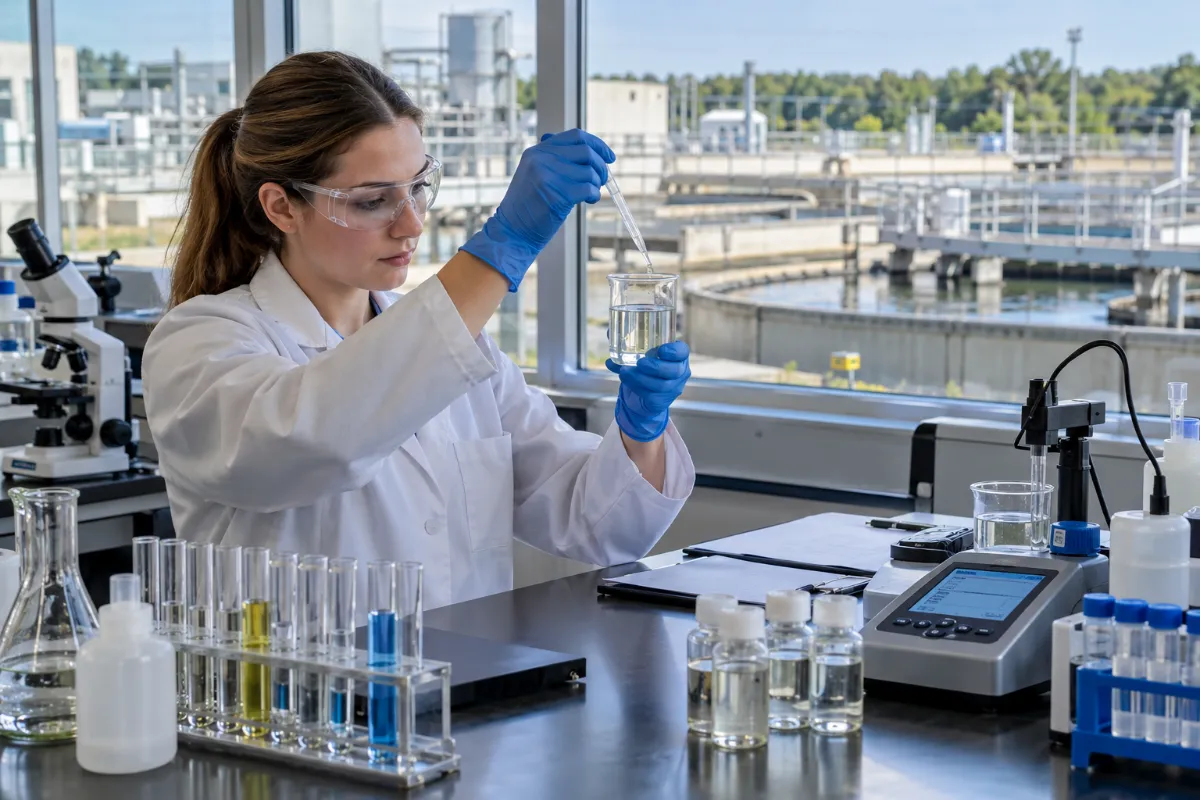
Before anyone talks about an upgrade, the first job is characterizing the wastewater properly. I have seen more failed upgrades caused by bad influent data than by bad equipment. A single grab sample from a batch tank tells you almost nothing about what the plant will see over a full production cycle.
What I want to see before design work begins:
- At least two weeks of composite sampling, ideally covering seasonal production changes
- COD, BOD, TSS, TDS, conductivity, pH, and temperature ranges, not just averages
- Specific contaminants: heavy metals, ammonia, oils and grease, surfactants, solvents, cyanide, sulfides
- Hardness, silica, and scaling ions, because these drive thermal and membrane design
- Flow profile: peak, average, and minimum, plus how fast the flow changes
That last point matters more than most people expect. A plant designed around average flow but hit with a four-hour peak every morning will underperform no matter how good the core process is. Equalization is boring, but it is often the cheapest upgrade you can make.
If you are not sure what is actually in your water, it helps to step back and look at what wastewater really contains before assuming you know the composition. Industrial streams vary enormously, and assumptions carried over from a similar-looking plant are a common source of design error.
When an Upgrade Makes Sense and When It Does Not
Not every compliance problem needs a new process. I always run through a short decision list before recommending capital work.
Upgrade triggers I take seriously
- Discharge limits have tightened and the existing process cannot physically meet them
- Production has expanded and the plant is hydraulically or organically overloaded
- Operating costs have climbed to the point where a new process pays back in a reasonable period
- Sludge disposal costs have become the dominant operating expense
- Water reuse is now required, which means the effluent quality target has changed completely
Signals that the upgrade should wait
- The existing process is not being operated at its design point
- Maintenance is reactive and instrumentation is unreliable
- Influent is uncontrolled and highly variable
- Pretreatment upstream is missing or poorly run
It is uncomfortable to tell a client that the fix is operational, not capital. But I have watched plants spend seven figures on new equipment only to have the same effluent problems because the real issue was a broken equalization tank mixer or an over-dosed coagulant.
Core Process Options for an Upgrade
Once the water is understood and the target is clear, the process selection narrows quickly. Here is how I think about the main families of technology.
Biological treatment upgrades
If the stream is biodegradable and the main issue is organic load or nutrient removal, biological upgrades usually win on operating cost. Moving bed biofilm reactors, membrane bioreactors, and sequencing batch reactor retrofits are common. The trade-off is that biology is sensitive to toxicity, salinity, and temperature swings. High-TDS streams or streams with solvents and biocides do not play well here.
Membrane separation
For high-salinity or high-COD streams where biology struggles, membranes take over. Reverse osmosis handles low to moderate salinity well, but as salinity climbs, you need higher pressure or a different membrane configuration. Disc tube reverse osmosis is a common choice for difficult streams like landfill leachate because it tolerates fouling better than spiral-wound elements and can run at higher pressures. If you are evaluating this route, the DTRO membrane systems overview is a reasonable place to see how the configuration compares to conventional RO.
Membranes produce concentrate. That concentrate has to go somewhere, and this is where projects get expensive. Which brings us to evaporation.
Evaporation and concentration
When the concentrate stream is too saline or too contaminated to discharge, thermal concentration becomes the backbone of the upgrade. There are three main approaches:
| Technology | Typical use | Energy profile | Key trade-off |
|---|---|---|---|
| Multi-effect evaporation | Large flows, available steam | Steam-driven, scales with number of effects | Needs steam supply; more effects means more capital |
| Mechanical vapor recompression | Medium flows, no steam available | Electric-driven, high efficiency at steady load | Compressor is the critical component; sensitive to fouling |
| Membrane concentration + evaporation hybrid | High-volume, moderate-TDS streams | Membrane does bulk removal, evaporator polishes | Requires careful pretreatment to protect membranes |
For most industrial upgrades where steam is not already on site, mechanical vapor recompression is the default starting point. The mechanical vapor compression MVC evaporator recovers the latent heat of the vapor it produces, which is why its energy consumption per cubic meter is dramatically lower than a single-effect system. The catch is that the compressor and heat exchangers need to be protected from scaling and fouling, which is where pretreatment design decides whether the project succeeds or fails.
If steam is available at low cost, multi-effect configurations can be the better economic choice. The multi-effect evaporator family covers double, triple, and higher-effect arrangements, and the right number of effects depends on steam cost versus capital cost. There is no universal answer here; it is a straightforward payback calculation once you know your steam price and your flow.
Pretreatment: Where Most Upgrades Are Won or Lost
I want to spend real time on this because it is the most under-budgeted part of nearly every upgrade I have been involved with.
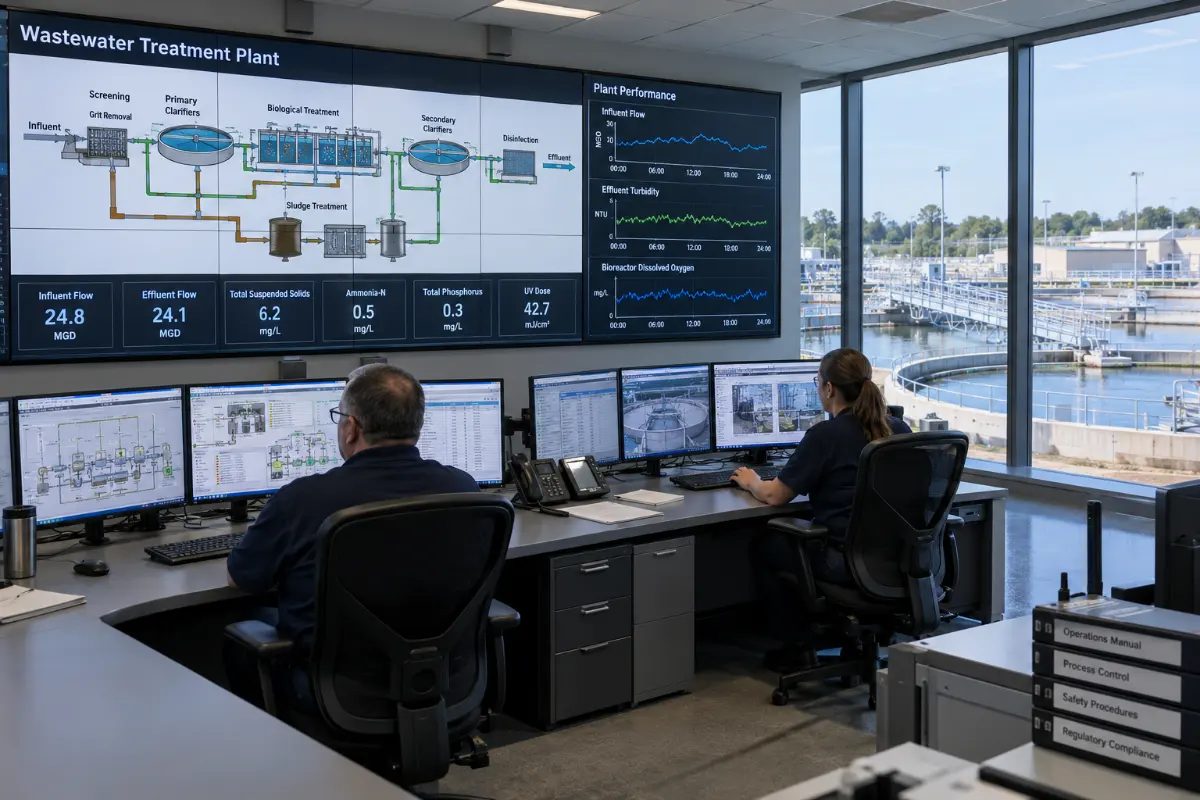
Evaporators and membranes are both sensitive to the same things: scaling ions, suspended solids, oils, and organics that foul surfaces. If the pretreatment is not designed for the actual water, the expensive equipment downstream will underperform within months.
What good pretreatment looks like for a thermal concentration upgrade:
- Coarse and fine screening to remove debris that would plug heat exchangers
- Oil and grease removal if any oily stream is present
- Chemical softening or ion exchange to remove hardness and silica
- pH adjustment to keep the concentrate in a non-scaling range
- Optional antiscalant dosing, dosed based on real water analysis, not a generic recipe
Oily wastewater is a specific case that catches people out. If your plant handles machining coolant, rolling mill effluent, or any stream with emulsified oil, evaporation behaves differently than it does on a clean brine. The evaporation of oily wastewater discussion is worth reading before you assume a standard evaporator will work.
Handling the Concentrate: ZLD and Near-ZLD
Regulations in many regions now push industrial dischargers toward zero liquid discharge, or at least toward eliminating liquid waste streams. A full ZLD system typically combines membrane concentration, evaporation, and crystallization. It is expensive to build and expensive to run, so it is worth being honest about when it is actually required versus when near-ZLD is sufficient.
Near-ZLD approaches concentrate the waste to a small volume that can be trucked off-site or solidified. This often makes more economic sense than full crystallization for smaller plants. The decision comes down to disposal cost, regulatory pressure, and the value you place on operational simplicity. A ZLD system is not a checkbox; it is a long-term operational commitment with its own maintenance and energy profile.
Equipment Selection and Sizing Logic
Once the process is chosen, sizing is where I see the most avoidable mistakes. A few principles I apply consistently:
Size for the worst realistic case, not the average
Evaporators and membranes should be sized for peak flow plus a reasonable margin. If you size to average and the plant runs at peak for six hours a day, you will be out of compliance every afternoon.
Do not oversize to hide a process problem
Oversizing increases capital cost, increases energy consumption at part load, and often makes control harder. A correctly sized system with good instrumentation beats an oversized system with poor control almost every time.
Match materials to the actual chemistry
Chlorides, fluorides, and low pH all drive material selection. Stainless steel is fine in some services and a maintenance nightmare in others. Titanium, duplex, and specialized alloys cost more up front but can be the difference between a ten-year heat exchanger and a two-year one.
Instrumentation is not optional
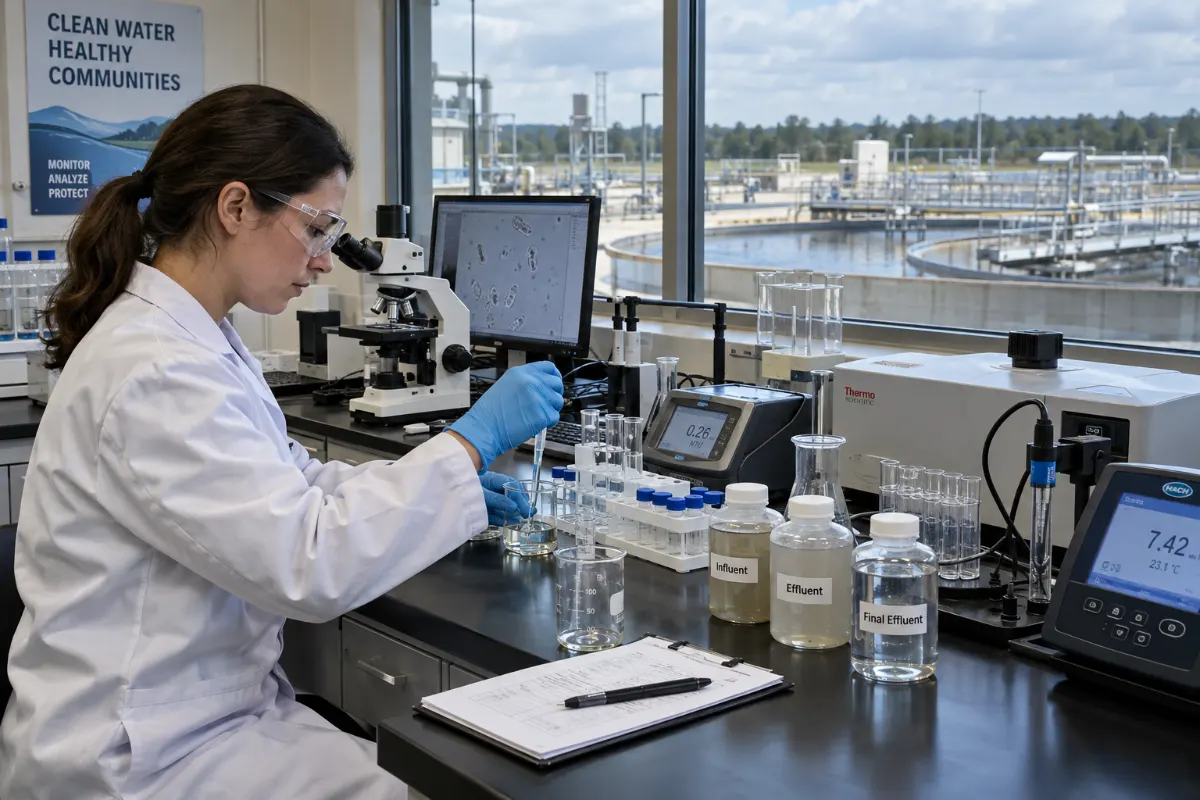
Conductivity, pH, temperature, flow, and pressure transmitters are the difference between a system that runs itself and a system that needs an operator watching it constantly. I would rather cut a redundant pump than cut the instrumentation package.
Energy and Lifecycle Cost: The Real Numbers
Capital cost is what gets approved. Operating cost is what determines whether the upgrade was actually a good decision. I always build a lifecycle model before recommending a process.
Typical design ranges I use for early-stage comparison, clearly marked as indicative and project-dependent:
| Cost element | Typical range | Main drivers |
|---|---|---|
| MVC evaporator energy | Roughly 15–40 kWh per m³ of distillate | Boiling point elevation, compressor efficiency, scaling margin |
| Multi-effect evaporator steam | Roughly 0.3–0.5 kg steam per kg water evaporated for a triple-effect | Number of effects, steam pressure, feed temperature |
| RO membrane replacement | Every 3–7 years depending on fouling | Pretreatment quality, cleaning frequency, feed chemistry |
| Chemical pretreatment | Highly variable | Hardness, silica, oil content, target scaling margin |
| Sludge or concentrate disposal | Often the largest single operating cost | Local disposal options, volume reduction achieved |
These ranges are starting points, not promises. Every project I have worked on has shifted within them based on water chemistry and site conditions. Treating them as fixed numbers is how projects get into trouble.
If you only model capital cost, you will pick the wrong process about half the time. The evaporator that looks cheap on the quote is often the one that eats your maintenance budget for the next decade.
Operational Stability and Maintenance
The best-designed upgrade still fails if it is not maintainable. I look at three things during design that most people defer to the end.
Access for cleaning
Heat exchangers, membranes, and compressors all need periodic cleaning. If the design does not allow someone to physically get to those components without a major disassembly, cleaning will be skipped, and performance will degrade.
Spare parts strategy
Compressors, membranes, and pumps have lead times. If a critical spare is not on the shelf, a two-day repair becomes a two-month outage. I recommend identifying the three to five components whose failure would stop the plant and stocking those.
Control philosophy
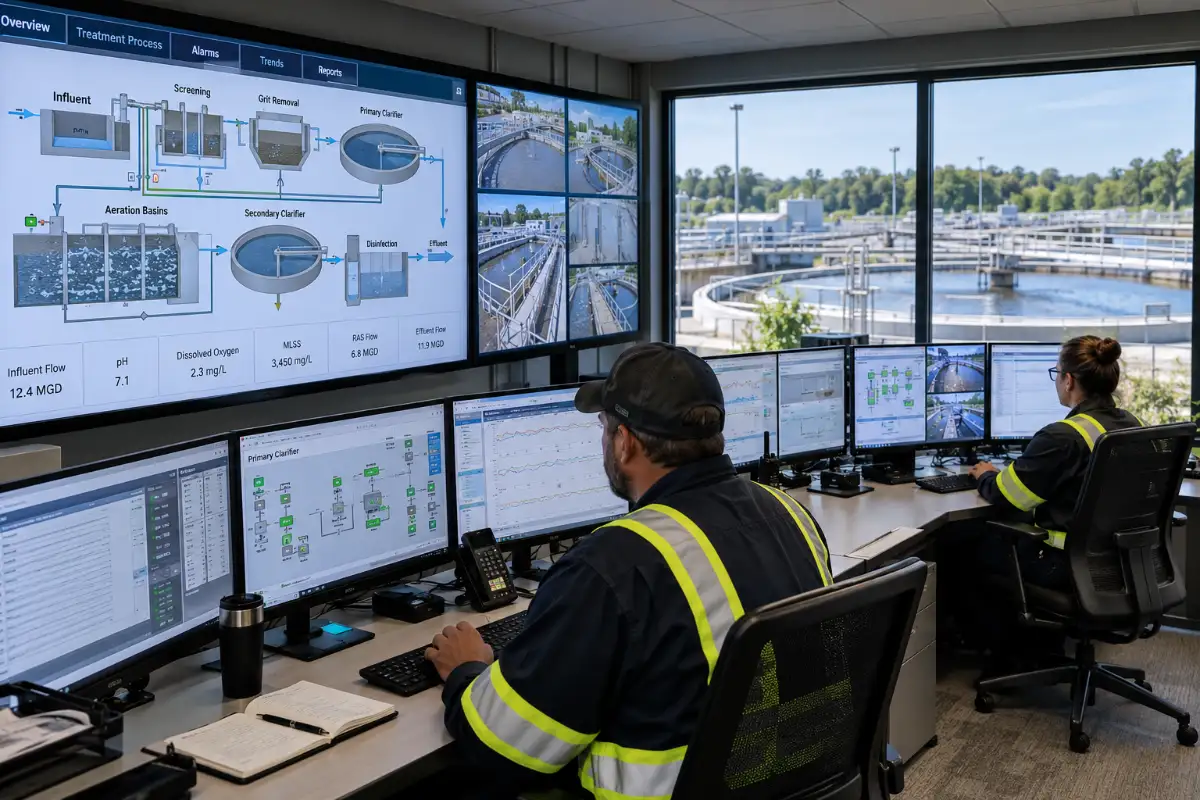
Automated control with clear alarms and trends is worth the investment. Operators need to see what the system is doing and be able to intervene before a problem becomes a shutdown. A well-instrumented system with a simple control loop beats a complex system with poor visibility.
If sludge handling is part of the upgrade, dewatering performance matters as much as the treatment process. The screw press dewatering guide covers the practical side of what cake dryness you can realistically expect and how upstream conditioning affects it.
Common Failure Modes I See Repeatedly
After enough projects, patterns emerge. These are the ones I see most often:
- Undersized equalization, causing process upsets every time production changes
- Pretreatment designed for average water quality, not the worst batches
- Scaling in evaporator heat exchangers because antiscalant dosing was not adjusted to real water
- Membrane fouling from oils that were assumed to be removed upstream
- Instrumentation installed but never calibrated, so control drifts
- Spare parts not stocked, turning routine maintenance into extended downtime
- Operators not trained on the new process, so the system is run like the old one
None of these are exotic. All of them are preventable with design discipline and a realistic operating plan.
How I Would Sequence an Upgrade Project
If I were starting an upgrade from scratch, this is the sequence I would follow:
- Characterize the wastewater thoroughly, including variability and peak conditions
- Define the actual discharge or reuse target, with margin
- Evaluate whether the existing process can be optimized before replacing it
- Select the core process based on water chemistry, not vendor preference
- Design pretreatment to protect the core process
- Size for realistic peaks with sensible margin
- Build a lifecycle cost model, not just a capital model
- Design for maintenance access, spares, and operator visibility
- Commission with real water and real operating conditions, not clean water
- Train operators on the new process and its failure modes
Steps four through six are where most of the money is spent, but steps one through three and nine through ten are where most of the project risk lives. Skipping them is how a technically sound design still fails in the field.
Frequently Asked Questions
How do I know if my existing plant can be upgraded or needs replacement?
It depends on whether the existing process can physically meet the new target. If the discharge limits have tightened beyond what the current process can achieve, replacement of the core process is unavoidable. If the limits are achievable but the plant is not meeting them, the problem is usually operational, hydraulic, or related to pretreatment. I always investigate those before recommending capital replacement.
What is the typical lead time for an industrial wastewater treatment upgrade?
For a membrane or biological upgrade, six to twelve months from design freeze to commissioning is common. For thermal systems involving evaporators or crystallizers, twelve to twenty-four months is more realistic, especially when long-lead compressors or specialized alloys are involved. Site conditions and permitting add time on top of that.
How much does it cost to operate an evaporator-based upgrade?
Energy is the largest single operating cost for most evaporator systems, followed by chemical pretreatment and disposal of the concentrate. Mechanical vapor recompression is generally more energy-efficient than steam-driven multi-effect systems when steam is not already available on site. The exact figure depends heavily on boiling point elevation, scaling margin, and how well the pretreatment is maintained.
Can I add membrane treatment without upgrading the whole plant?
Often yes. A membrane stage can be added downstream of an existing biological process to polish effluent or enable reuse. The key is to make sure the upstream process is stable enough that the membrane is not being asked to compensate for variability it was not designed for. Membranes are not a fix for an unstable biological process.
What maintenance tasks are most often neglected on evaporator systems?
Heat exchanger cleaning, antiscalant dosing adjustment, and compressor inspection. Cleaning gets deferred because it requires downtime, dosing gets left at the original setting even when the water changes, and compressor inspection gets skipped because it is not visible. All three lead to performance loss that compounds over time.
How do I decide between ZLD and near-ZLD?
It comes down to regulatory requirements, disposal options, and lifecycle cost. Full ZLD eliminates liquid discharge entirely but requires crystallization and significantly more energy and capital. Near-ZLD concentrates the waste to a small volume for off-site disposal or solidification, which is often more economical for smaller plants. The decision should be based on a lifecycle cost comparison, not just the capital quote.
What is the biggest mistake in wastewater treatment plant upgrades?
Designing around average conditions instead of real variability. Peak flows, batch dumps, and seasonal production changes are what break systems. A plant that performs well at average load and fails at peak is not a successful upgrade, even if the equipment is technically correct.
If you are working through an upgrade decision and want a second opinion on process selection or sizing, the engineering team can review your water data and help you pressure-test the options before you commit capital.