

If you’re evaluating small wastewater evaporators for a plant that generates a few hundred to a few thousand gallons per day of difficult liquid waste, the short answer is this: a small wastewater evaporator makes sense when your waste stream is too concentrated, too variable, or too expensive to haul offsite, and when you can control scaling, foaming, and corrosion on a small footprint. I’ve commissioned these units on plating lines, pharma pilot plants, and remote sites where a full ZLD train was never going to fit or get funded. This guide walks through what actually drives the buying decision — not the brochure numbers.
What “Small” Really Means in Evaporator Selection
People use “small” loosely. In my experience, it helps to break it into three bands, because the engineering and the price curve behave very differently in each one.
| Band | Typical Evaporation Capacity | Common Duty | Usual Technology |
|---|---|---|---|
| Micro / bench-scale | ~5–50 L/h | Lab waste, pilot skids, occasional batches | Single-effect, electric or steam-heated |
| Small industrial | ~50–500 L/h | Plating rinse, machining coolant, small pharma | Single or double-effect, sometimes small MVC |
| Compact continuous | ~0.5–3 m³/h | Leachate, RO concentrate, tanker waste | MVC/MVR, multi-effect, or hybrid |
That middle band is where most buyers land, and it’s also where the wrong technology choice hurts the most. A unit sized at 200 L/h looks cheap on a quote sheet, but if your feed fluctuates between 1% and 12% dissolved solids, the evaporator has to be forgiving, not just efficient.
One more thing before you go further: “small” almost never means “simple.” A 100 L/h unit and a 5 m³/h unit share the same failure modes — scaling, foaming, corrosion, entrainment. The smaller unit just gives you less room to hide mistakes.
Start With the Waste Stream, Not the Equipment
I’ve watched more projects fail at the water analysis stage than at any other point. Before you talk to a vendor, you need a real characterization, not a single grab sample from a good day.
The parameters that actually change your design
- Total dissolved solids (TDS) and the specific ions. Chloride, sulfate, carbonate, and silica each behave differently as you concentrate. Silica and calcium sulfate are the two that quietly destroy heat exchangers.
- Total suspended solids (TSS) and oil/grease. Anything above a few hundred mg/L TSS usually needs pre-treatment — often a screw press dewatering step or a settling/clarification stage — before it touches an evaporator.
- pH and buffering capacity. pH swings during evaporation can push you into a corrosion regime you didn’t design for.
- Volatile organics and ammonia. These don’t stay in the concentrate. They come off in the vapor and can end up in your condensate, which may or may not be acceptable for discharge.
- Foaming tendency. Surfactants, proteins, and some solvents will foam a small evaporator into a shutdown within hours.
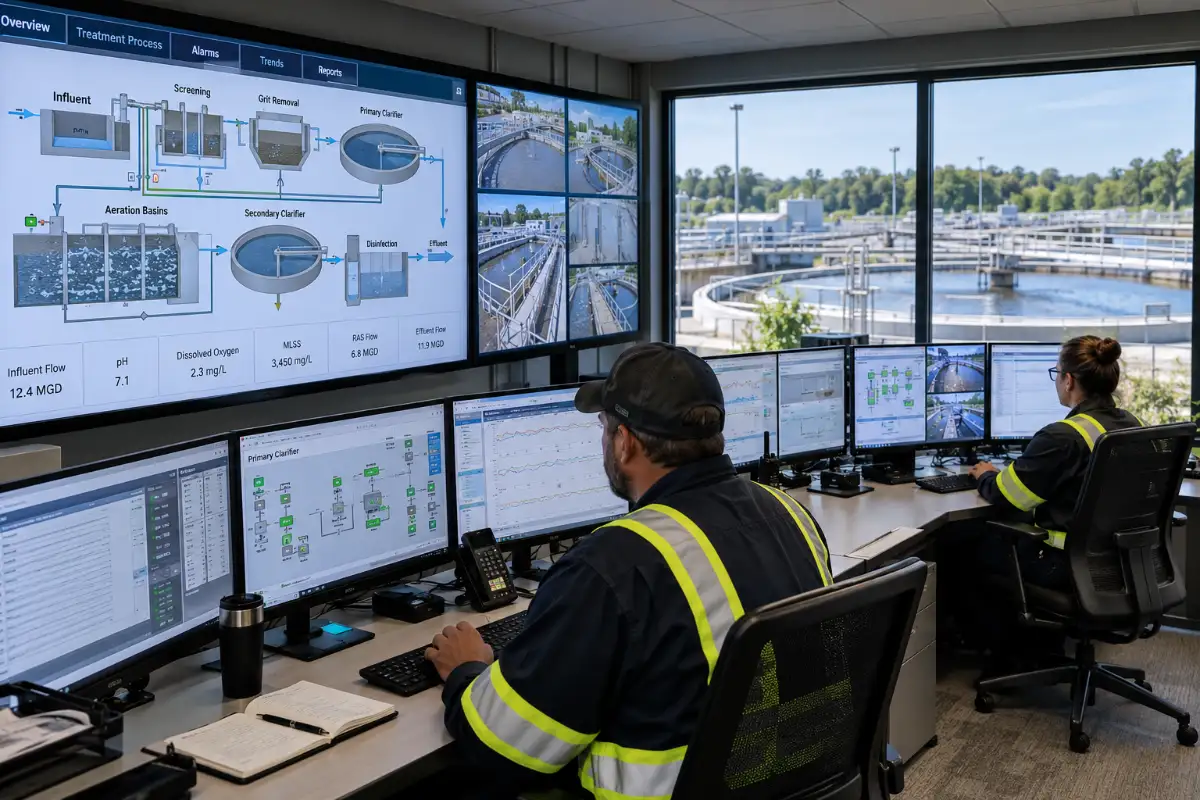
If you only have one data point, get three more across a full production week. Variability is the design driver, not the average.
Why the concentrate matters as much as the feed
Your evaporator produces two streams: distillate and concentrate. Both have to go somewhere. The distillate is usually clean enough to reuse or discharge, but if it carries ammonia or volatile organics, it needs polishing. The concentrate is where the real cost lives — its volume, its chemistry, and how you dispose of it determine whether the whole project pencils out.
A useful rule I use early in scoping: if concentrate disposal costs more than $0.50–$1.00 per gallon in your region (and in many parts of the U.S. and Europe it does), evaporator concentration almost always wins over straight hauling, provided the unit runs reliably.
Choosing the Right Evaporator Technology for a Small Footprint
There are four families you’ll realistically consider for a small installation. Each has a sweet spot, and picking the wrong one is the most expensive mistake in this category.
Single-effect evaporators
Simplest, cheapest to build, easiest to operate. You put heat in, water evaporates, vapor goes to a condenser or atmosphere. The trade-off is energy — you’re paying for roughly one pound of steam per pound of water evaporated, or the electrical equivalent. For batch operations or low daily volumes, that’s fine. For continuous duty, it gets expensive fast. If your volume is truly small and intermittent, a single-effect evaporator is often the right call.
Multi-effect evaporators
You reuse the vapor from one effect to heat the next. Two effects cut steam consumption roughly in half; three effects cut it to about a third. The catch is that each additional effect adds capital cost, footprint, and complexity. For small systems, the practical limit is usually two or three effects — beyond that, the economics stop making sense at small scale. A double-effect unit is often the sweet spot for small industrial duty, and a triple-effect configuration only pays off if you have cheap steam and steady, high-hour operation.
Mechanical vapor compression (MVC/MVR)
Instead of a steam supply, you use a compressor to recompress the vapor and reuse it as the heating medium. Electrical energy replaces thermal energy, and the specific energy consumption drops dramatically — often by a factor of 5 to 15 compared to a single-effect unit. The trade-off is capital cost, compressor maintenance, and sensitivity to fouling on the heat transfer surfaces.
For small systems, MVC is worth it when you run continuously and have reasonably stable feed. If your operation is batchy or your electricity is expensive relative to steam, the math changes. I’ve written more about the trade-offs in this piece on mechanical vapor compression evaporators, and the compressor is the single component I’d scrutinize hardest in any small MVC quote.
Hybrid and membrane-assisted approaches
Sometimes the smartest “small evaporator” isn’t an evaporator at all at the front end. High-pressure RO or DTRO membrane systems can pre-concentrate the stream, cutting the evaporator duty by 50–80%. You evaporate less water, so the evaporator gets smaller and cheaper. The catch is that membranes need pre-treatment and can’t handle every chemistry — high scaling potential or high TSS will foul them quickly.
My rule of thumb: membranes concentrate the easy water, evaporators finish the hard water. Use both when the volume justifies it, and skip the membrane when the stream is small or dirty enough that pre-treatment costs more than the evaporator savings.
Side-by-Side Comparison of Small Evaporator Options
The table below reflects typical design ranges I’ve seen across projects. Actual numbers depend heavily on your feed chemistry, operating hours, and local energy prices.
| Technology | Relative CAPEX | Relative OPEX (Energy) | Footprint | Best Fit | Main Risk |
|---|---|---|---|---|---|
| Single-effect | Low | High | Small | Batch, low volume, intermittent | Energy cost at continuous duty |
| Double-effect | Medium | Medium | Medium | Steady small industrial duty | Needs reliable steam supply |
| Triple-effect | Medium-High | Low-Medium | Medium-Large | High-hour operation with cheap steam | Complexity vs. savings at small scale |
| MVC / MVR | High | Low | Compact | Continuous duty, stable feed | Compressor maintenance, fouling sensitivity |
| Membrane + evaporator hybrid | Medium-High | Lowest | Compact | Large volumes, moderate TDS | Membrane fouling and pre-treatment |
Notice that I didn’t put dollar figures in there. That’s deliberate. If a vendor gives you a firm price without a full water analysis and a defined operating profile, they’re guessing — and you’ll pay for that guess during commissioning.
If you want to see how these technologies fit together in a full treatment train, this overview of process design in water treatment is a useful reference.
The Engineering Details That Decide Whether It Works
This is the part that separates a unit that runs for ten years from one that’s down every other week. None of it is glamorous, and all of it matters.
Heat exchanger design and fouling
Your evaporator’s heat exchanger is where the physics happens and where the problems start. Scale deposits insulate the surface, drop the heat transfer coefficient, and force you to either run hotter (accelerating fouling) or accept lower capacity. For small systems, the choice between falling-film, forced-circulation, and plate designs comes down to your scaling chemistry and how much you’re willing to clean.
I always ask vendors about the heat exchanger design and materials before anything else. If they can’t explain the circulation regime and the expected cleaning interval, that’s a red flag.
Material selection
Chlorides at high temperature are brutal. 316L stainless is fine for many streams, but once you push chloride concentration and temperature, you’re into duplex, super-duplex, titanium, or even graphite. The material cost difference between 316L and titanium on a small unit can be 30–50% of the total price. Get this right at the design stage — retrofitting is painful.
Foaming and entrainment control
Foam carries liquid into the vapor path, which contaminates your distillate and can trip the unit. Small evaporators have less freeboard, so foam control is harder. Solutions include antifoam dosing, mechanical foam breakers, and careful vapor velocity design. If your feed has surfactants or high BOD, plan for this from day one.
Control philosophy
Small units are often operated by people who aren’t evaporator specialists. The control system has to be forgiving — clear alarms, automatic shutdown on high conductivity or low level, and simple restart procedures. I’ve seen more downtime from confusing controls than from mechanical failures.
Energy and Lifecycle Cost: The Honest Numbers
Vendors love to quote energy consumption in isolation. That’s misleading. What matters is the total cost of ownership over the equipment life, and that includes energy, maintenance, cleaning chemicals, downtime, and concentrate disposal.
What drives energy consumption
- Number of effects. More effects, less energy per unit of water evaporated.
- Compressor efficiency (for MVC). A few percentage points here compound over thousands of hours.
- Feed concentration. Higher TDS means more energy per gallon of feed, because you’re evaporating a larger fraction of the water.
- Operating hours. A unit that runs 8,000 hours a year amortizes its capital much better than one running 1,000.
What drives maintenance cost
Cleaning frequency is the biggest variable. A well-designed unit on a clean feed might need a chemical clean every few weeks. A poorly designed unit on a scaling feed might need cleaning weekly — and each cleaning is downtime plus labor plus chemicals plus wastewater.
Compressor maintenance on MVC units is the other big line item. These aren’t cheap to service, and if your feed chemistry attacks the impeller or the seals, you’ll feel it.
I tell clients to budget 3–6% of CAPEX annually for maintenance on a small evaporator, and to double that if the feed is scaling or corrosive. If a vendor tells you it’ll be less than 2%, ask them to put it in writing with a performance guarantee.
Concentrate disposal — the hidden cost
This is the one people miss. Your evaporator doesn’t eliminate waste; it concentrates it. If you’re reducing 1,000 gallons of feed to 100 gallons of concentrate, you’ve cut hauling costs by 90%. But if that concentrate is hazardous, the per-gallon disposal cost can be 5–10x the original waste. Run that math before you commit.
For streams heading toward zero liquid discharge, the concentrate may need further treatment — crystallization, spray drying, or solidification. A ZLD system is a different scope and a different budget, and it’s worth understanding where your evaporator sits in that chain.
Procurement: How to Buy One Without Getting Burned
After enough of these projects, I’ve developed a fairly rigid process for evaluating vendors. It’s saved clients a lot of money.
What to demand before you sign
- A mass and energy balance based on your actual water analysis. Not a generic one. If they haven’t seen your data, they can’t design your unit.
- A defined performance guarantee. Evaporation capacity, distillate quality, and concentrate concentration, with the test conditions spelled out.
- A reference list you can actually call. Not logos — phone numbers. Ask about uptime, cleaning frequency, and how the vendor handled problems.
- Spare parts availability and lead times. A compressor that takes 16 weeks to replace is a 16-week outage.
- A commissioning and training plan. Your operators need to understand the unit, not just press start.
Red flags
- Quotes without a water analysis requirement.
- Performance guarantees with vague conditions (“under normal operating conditions”).
- No discussion of concentrate management.
- Prices dramatically below the market — usually means undersized heat exchangers or cheap materials.
- No service presence in your region.
If you want a second opinion on a design or a quote you’ve received, my team does that kind of review regularly. You can reach out here and we’ll walk through the numbers with you — no obligation, just engineering.
Installation and Commissioning: Where Small Units Get Complicated
Small evaporators look like skid-mounted packages, and vendors often present them that way. In practice, the skid is maybe 60% of the project. The rest is utilities, foundations, piping, electrical, and the concentrate/distillate handling that nobody scoped carefully.
Utilities you’ll need
- Power. MVC units draw significant amperage at startup. Confirm your electrical service can handle it without a service upgrade.
- Steam or hot water (for thermal units). Pressure, temperature, and flow rate all matter. Don’t assume your existing boiler can supply it.
- Cooling water or air. Condensers need a heat sink. If you’re using cooling water, plan for the flow and temperature rise.
- Compressed air and instrument air. Usually small, but often forgotten.
- Drainage and containment. Concentrate and cleaning solutions need containment. Check your local requirements.
Commissioning realities
First water on a new evaporator is always interesting. The unit will behave differently than the design predicted — sometimes better, sometimes worse. Plan for a 2–4 week commissioning window with the vendor on site, and don’t accept “remote support only” unless you’ve done this before with that exact unit.
Performance testing should run for at least 72 hours continuously, at design feed conditions, with all parameters logged. Anything shorter is a snapshot, not a guarantee.
Operating and Maintaining a Small Evaporator
Once it’s running, the discipline shifts to keeping it running. Small units are less forgiving of neglect than large ones because they have less buffer capacity.
Daily checks
- Feed flow and concentration
- Operating temperatures and pressures
- Distillate quality (conductivity or TDS)
- Concentrate density or conductivity
- Any unusual noise or vibration from the compressor or pumps
Weekly and monthly tasks
- Inspect heat exchanger surfaces for scaling
- Check antifoam dosing (if used)
- Verify safety interlocks and alarms
- Review operating logs for trends — rising temperature differentials usually mean fouling
- Clean or replace filters on feed and any pre-treatment
Common failure modes and what they tell you
| Symptom | Likely Cause | Action |
|---|---|---|
| Falling capacity over weeks | Heat exchanger scaling or fouling | Chemical clean; review pre-treatment |
| Distillate conductivity rising | Foaming, entrainment, or heat exchanger leak | Check antifoam; inspect for leaks |
| High compressor vibration | Bearing wear, imbalance, or liquid carryover | Stop and inspect; check demister |
| Frequent high-temperature trips | Fouling, low feed flow, or control tuning | Verify feed rate; clean if needed |
| Foam in concentrate tank | Surfactants or organics in feed | Increase antifoam; consider pre-treatment |
Most of these are manageable if you catch them early. The ones that hurt are the ones you ignore for a month.
When a Small Evaporator Isn’t the Right Answer
I’d rather tell a client “don’t buy this” than sell them a unit that doesn’t fit. Here are the cases where I steer people away from small evaporators:
- Your waste volume is genuinely tiny and non-toxic. If you’re generating 20 gallons a week of dilute waste, hauling is cheaper and simpler.
- Your feed chemistry is wildly variable. Evaporators like consistency. If your stream swings between acidic and caustic, or between clean and oily, you’ll spend more time troubleshooting than evaporating.
- You have no one to operate it. These aren’t set-and-forget. If you don’t have a dedicated operator or a reliable service contract, don’t buy one.
- Your real problem is upstream. If you can reduce waste generation at the source — process changes, recycling, better rinse control — do that first. It’s almost always cheaper.
That last point is worth emphasizing. I’ve seen plants spend six figures on an evaporator to handle waste they could have eliminated with a $15,000 process change. Always look upstream first.
Frequently Asked Questions
How do I know what size evaporator I need?
Start with your daily or weekly waste volume and your target concentration factor. If you generate 1,000 gallons per day and want to reduce it to 100 gallons of concentrate, you need to evaporate 900 gallons per day. Divide by your operating hours to get the hourly capacity, then add 15–25% margin for variability and fouling. Don’t size to the average — size to the worst realistic week.
What’s the typical payback period for a small wastewater evaporator?
It depends almost entirely on what you’re paying for disposal today. If you’re hauling at $1.00–$2.00 per gallon and can cut volume by 80–90%, payback in 18–36 months is common. If your disposal costs are low, payback stretches out and the project may not make sense. Run the numbers with your actual disposal invoice, not an industry average.
Can a small evaporator handle high-salinity or high-COD waste?
High salinity is usually fine with the right materials — you’ll need to think about chloride corrosion and scaling salts like calcium sulfate and silica. High COD is trickier because organics can foam, foul heat exchangers, and carry over into the distillate. Some streams need pre-treatment (oxidation, coagulation, or biological polishing) before evaporation. Get a full analysis and discuss it with your vendor before committing.
How often will I need to clean the heat exchanger?
On a clean feed with good pre-treatment, every 4–8 weeks is reasonable. On a scaling or fouling feed, weekly cleaning isn’t unusual. The frequency depends on your chemistry, your operating temperature, and how well the unit was designed for your specific stream. If a vendor can’t give you a realistic cleaning interval estimate, that’s a problem.
What’s the biggest mistake buyers make with small evaporators?
Buying on price without a proper water analysis. A cheaper unit that’s undersized, made of the wrong materials, or designed for a different chemistry will cost you far more in downtime, cleaning, and premature replacement than the savings on the initial purchase. The second biggest mistake is underestimating concentrate disposal costs. Run both numbers before you sign anything.
Can I operate a small evaporator without a dedicated operator?
Technically yes, if the control system is well-designed and the feed is stable. Practically, someone needs to check it daily, respond to alarms, and handle cleaning. If you don’t have that person in-house, budget for a service contract. Unattended evaporators fail — usually at the worst possible time.
Should I choose MVC or multi-effect for a small system?
If you run continuously (more than 4,000–6,000 hours per year) and have stable feed, MVC usually wins on operating cost despite the higher capital. If you run intermittently, have cheap steam, or want simpler maintenance, a double-effect thermal unit is often the better fit. There’s no universal answer — it comes down to your operating profile and energy prices.
Final Thoughts
Small wastewater evaporators are a mature, well-understood technology. The equipment itself rarely fails in surprising ways. What fails is the selection process — buying without a water analysis, sizing to the average instead of the peak, ignoring concentrate disposal costs, or underestimating what it takes to operate the unit day in and day out.
If you do the front-end work — characterize the stream, define the operating profile, run the lifecycle cost, and demand real performance guarantees — a small evaporator can be one of the most reliable pieces of equipment in your plant. If you skip that work, it becomes a very expensive lesson.
My advice: treat the evaporator as the last step in a treatment train, not the first. Reduce waste at the source where you can, pre-treat what you can’t, and let the evaporator do what it’s actually good at — concentrating the hard stuff so you’re not hauling water.