

A mechanical vapor recompression (MEE/MVC) evaporator is often the most reliable way to handle pharmaceutical wastewater that is too saline, too biologically inhibitory, or too variable for conventional treatment. In my experience designing and commissioning these systems, the evaporator does two jobs at once: it separates clean distillate from a concentrated brine, and it locks the active pharmaceutical ingredients and solvents into a small, manageable reject stream. The catch is that pharmaceutical wastewater punishes generic evaporator designs. Batch dumping, solvent slugs, foaming, and scaling will destroy a system that was sized for steady municipal-quality feed. This article walks through how I actually specify and operate an MEE evaporator for pharmaceutical wastewater, including the trade-offs that matter over a 15-year lifecycle.
Why Pharmaceutical Wastewater Breaks Conventional Treatment
Pharma wastewater is not one stream. A single plant can discharge cleaning-in-place (CIP) caustic, spent fermentation broth, solvent-laden mother liquor, and wash water from tablet coating — often into the same equalization tank. The result is a feed that swings in COD, salinity, pH, and toxicity on a daily or even hourly basis.
Biological treatment struggles here for a few reasons. High salinity (often 1–5% total dissolved solids, sometimes higher) creates osmotic stress that kills activated sludge populations. Residual antibiotics and cytotoxics can be bacteriostatic or bactericidal at low concentrations. Solvents such as methanol, acetone, or dichloromethane strip oxygen and can be toxic to biomass. When a plant receives a batch dump, the biological system may take days to recover, and recovery means a discharge violation.
Evaporation sidesteps the biology problem entirely. It’s a physical separation driven by heat, so it doesn’t care whether the feed is toxic, saline, or both. What it does care about is fouling, corrosion, foaming, and vapor quality — and those are the engineering problems we spend most of our design time on.
Understanding the Feed Before You Pick a Technology
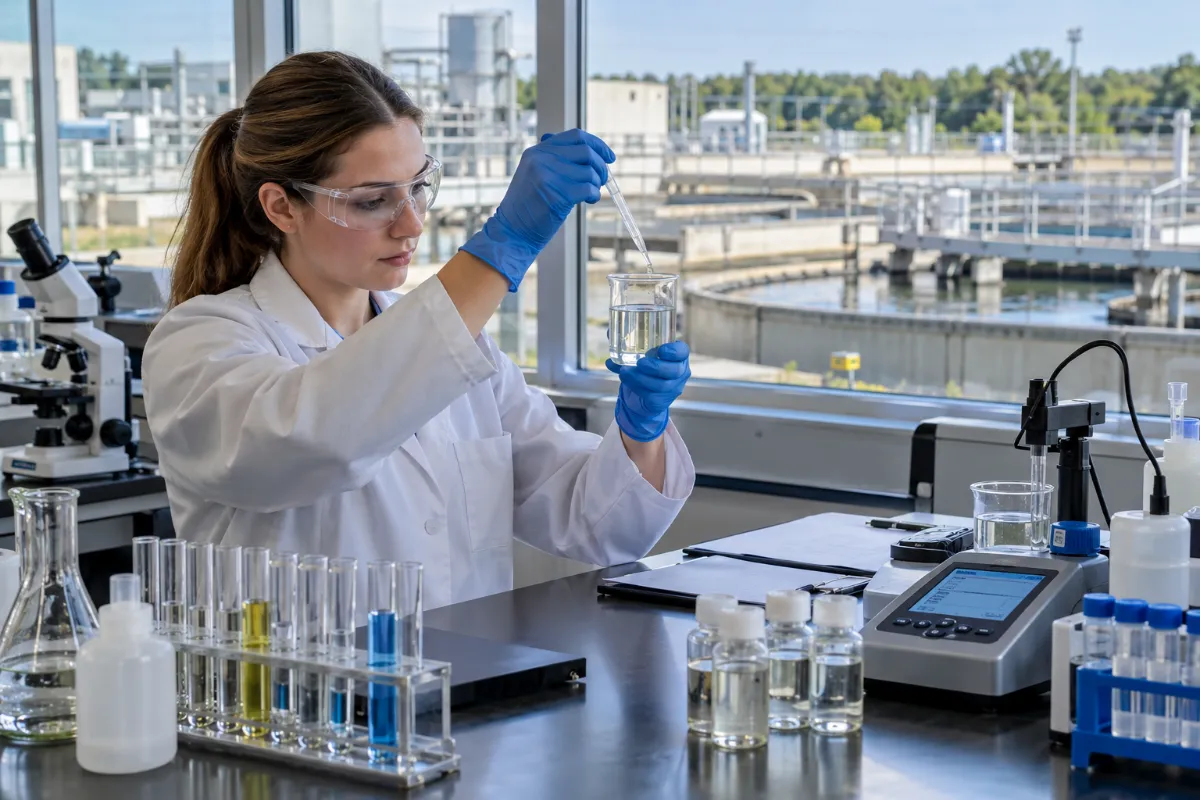
I’ve seen more evaporator projects fail at the sampling stage than at the design stage. Before you commit to any evaporator configuration, you need a representative feed characterization. A grab sample from the equalization tank on a quiet Tuesday tells you almost nothing.
What I insist on before sizing:
- Composite sampling over at least one full production cycle — typically 7–14 days, capturing every batch dump.
- TDS and conductivity profile — not just an average, but the peak and the swing range.
- COD, BOD, and TOC — to understand organic loading and potential for volatile carryover.
- Solvent screen — methanol, ethanol, acetone, IPA, dichloromethane, and anything with a boiling point below 100°C. These change the entire vapor handling strategy.
- Scaling ions — calcium, magnesium, barium, strontium, silica, sulfate, carbonate, phosphate.
- pH and buffering capacity — because pH drives both corrosion and scaling chemistry.
- Foaming tendency — surfactants from CIP and protein residues from fermentation are the usual culprits.
A feed with 2% TDS and 40,000 mg/L COD behaves completely differently from a feed with 8% TDS and 5,000 mg/L COD, even though both are “pharma wastewater.” The first needs aggressive volatile organic handling; the second needs scaling control and possibly a crystallizer.
The Core Technology: How an MEE Evaporator Actually Works
An MEE evaporator uses a compressor to raise the pressure and temperature of the vapor boiled off the wastewater, then returns that vapor to the heating side of the same heat exchanger. Because the compressed vapor is hotter than the boiling liquid, it condenses and releases latent heat back into the process. The only continuous energy input is the compressor work — typically 15–40 kWh per cubic meter of distillate, depending on the boiling point elevation and the compression ratio.
That’s the theory. In practice, pharmaceutical wastewater introduces several complications:
Boiling Point Elevation (BPE)
As dissolved solids concentrate, the boiling point rises. A brine at 20% TDS can have a BPE of 3–8°C depending on composition. Higher BPE means a higher compressor pressure ratio, which means more power and a more expensive compressor. This is why the achievable concentration factor is a design decision, not a given.
Volatile Organics in the Vapor
Methanol and acetone will preferentially partition into the vapor. If you don’t account for this, your “clean distillate” comes out with 5,000 mg/L COD and fails discharge. The fix is usually a combination of pre-stripping, a distillate polishing step, or a two-stage condensation with a dedicated solvent recovery loop.
Foaming and Entrainment
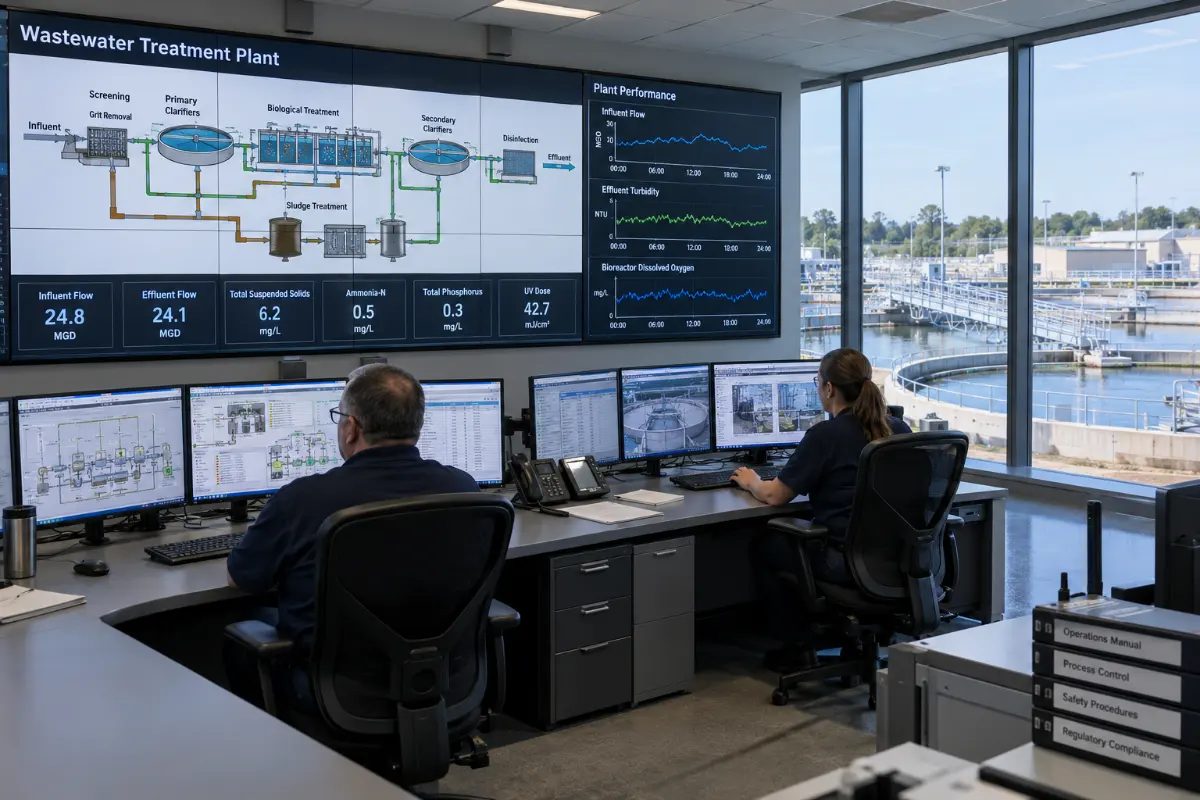
Surfactants and proteins cause foam that carries liquid droplets into the vapor line. Those droplets contaminate the distillate and foul the compressor. I’ve solved this with mechanical foam breakers, antifoam dosing, and in severe cases a reduced boiling intensity by lowering the temperature differential. There is no universal answer — it’s a case-by-case judgment.
Choosing Between MVC, MVR, and Multi-Effect Configurations
People use MVC and MVR almost interchangeably, and in most modern designs they are the same thing — mechanical vapor recompression. The distinction that actually matters is how many effects you run and whether you use a thermal or mechanical compressor.
| Configuration | Typical Energy Use | Best Fit | Main Limitation |
|---|---|---|---|
| Single-effect MVC | 25–45 kWh/m³ distillate | Small flows, high fouling, frequent cleaning | Higher specific power |
| Double-effect MVC | 18–30 kWh/m³ | Mid-size flows, moderate scaling | More complex control |
| Triple-effect MVC | 12–22 kWh/m³ | Large flows, low scaling, stable feed | High BPE sensitivity |
| MVR with falling film | 15–35 kWh/m³ | Heat-sensitive products, low fouling | Poor with suspended solids |
| MVR with forced circulation | 20–40 kWh/m³ | Scaling brines, crystallizing feeds | Higher pump power |
These ranges are indicative and project-dependent. The actual number depends on your BPE, the compressor efficiency, the heat exchanger approach temperature, and how much turndown you need. A system designed for 5 m³/h that runs at 1 m³/h most of the time will not hit its nameplate efficiency.
For most pharmaceutical applications I lean toward a mechanical vapor compression MVC evaporator in a forced-circulation arrangement, because it tolerates suspended solids and scaling better than falling film. Falling film is more efficient but demands cleaner feed than pharma plants usually deliver.
Pre-Treatment: The Part Everyone Underestimates
An evaporator is not a magic box. What goes in determines how often you clean, how long your heat exchangers last, and whether your distillate meets discharge limits. In my experience, 60–70% of the engineering effort on a pharma wastewater evaporator goes into pre-treatment, not the evaporator itself.
Typical Pre-Treatment Train
- Equalization and homogenization — 12–48 hours of mixing to flatten batch dumps.
- pH adjustment — usually to a range that minimizes corrosion and scaling, often 6.5–8.0.
- Chemical softening — lime or caustic soda plus soda ash to drop calcium and magnesium before they scale the heat exchanger.
- Solids removal — clarification, dissolved air flotation, or membrane filtration depending on the load.
- Sludge dewatering — a screw press sludge dewatering unit is often the simplest fit for the softener sludge and biological residuals.
- Optional stripping — air or steam stripping for ammonia or volatile solvents before the evaporator.
Skipping softening is the single most common mistake I see. A heat exchanger that scales in three weeks turns a profitable system into a maintenance nightmare. The cost of a softener is trivial compared to the cost of repeated CIP cycles and lost production.
Membrane Pre-Concentration
When the feed TDS is moderate and the organic load is high, a membrane step ahead of the evaporator can cut evaporator flow by 50–80%. A DTRO membrane system handles high-fouling, high-salinity streams that would destroy a conventional RO. For lower-salinity streams, a standard high-pressure RO membrane arrangement is cheaper and simpler.
The trade-off is concentrate management. Membranes don’t destroy anything — they just move the problem into a smaller volume. That concentrate still goes to the evaporator, but at a much higher TDS, which raises the BPE and reduces evaporator efficiency. It’s a balance, and I’ve seen both approaches win depending on the specific feed.
Material Selection and Corrosion Control
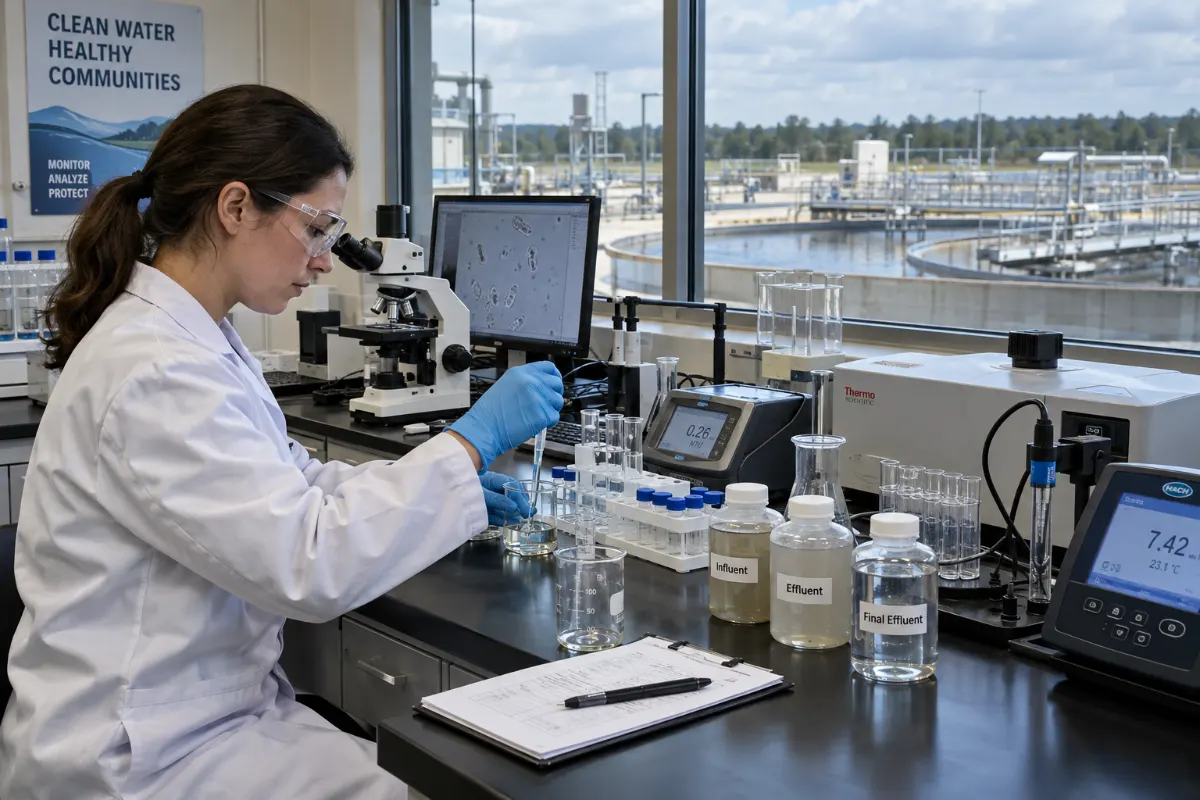
Pharmaceutical wastewater is often chloride-rich, and chloride plus heat plus oxygen equals stress corrosion cracking. I’ve seen 316L stainless steel fail in under two years on a system that should have lasted fifteen.
My default material choices:
- 316L stainless — only for low-chloride, near-neutral feeds. Verify chloride is below 200 mg/L at operating temperature.
- Duplex 2205 — a good middle ground for moderate chloride and moderate temperature. Often the best cost-performance for pharma.
- Titanium — for high-chloride feeds at moderate temperature. Excellent corrosion resistance but poor resistance to fluoride and dry chlorine.
- Super duplex or 6Mo — for aggressive chloride plus acid conditions.
- Graphite or PTFE-lined — for very low pH or solvent-heavy streams where metals are attacked.
The compressor is a separate materials problem. Vapor from pharma wastewater can carry trace acids and organics, so I specify a corrosion-resistant impeller coating or a titanium rotor for anything with a pH swing risk. It adds cost, but compressor replacement is a six-figure event.
Energy, Cost, and the Lifecycle Math
The capital cost of an MEE evaporator for pharma wastewater typically lands in the range of $150,000 to $800,000 for a 1–5 m³/h system, depending on materials, pre-treatment scope, and automation level. Larger systems scale sub-linearly but rarely come in cheap.
Operating cost is dominated by three things:
- Electricity for the compressor — usually 50–70% of OPEX.
- Pre-treatment chemicals — softening, pH adjustment, antifoam, and cleaning agents.
- Maintenance and consumables — compressor service, gaskets, heat exchanger cleaning, and periodic material replacement.
A well-designed system with a stable feed and good pre-treatment can run 8,000 hours per year with a two-week annual maintenance shutdown. A poorly designed system with variable feed may need weekly cleaning and struggle to hit 6,000 hours. That difference is enormous over a ten-year horizon — it’s often the difference between a project that pays back in four years and one that never does.
If you want a detailed breakdown of how capital and operating costs are structured, the MVR evaporator cost analysis covers the drivers in more depth.
“The evaporator is rarely the bottleneck. The bottleneck is almost always the feed — its variability, its scaling potential, and how honestly the plant describes it during design.” — a commissioning lesson I’ve learned more than once.
Operating Strategy: Keeping the System Stable
Stability is everything with pharma wastewater. An evaporator that runs at steady state for months will outperform a “more efficient” design that gets upset every week. Here’s how I approach operations:
Concentration Control
Run to a target brine density, not a fixed time. Density or conductivity control on the blowdown is more reliable than a timer, because feed strength varies. For crystallizing systems, control supersaturation carefully — a 2% overshoot in the wrong direction means a plugged heat exchanger.
Temperature Differential Management
Keep the approach temperature (the difference between heating vapor and boiling liquid) low enough to limit scaling but high enough to maintain heat transfer. This is a tuning exercise, and the right number depends on your specific scaling chemistry. I typically start at 5–8°C and adjust based on observed fouling rate.
Foam Control
Monitor foam height continuously if the feed is surfactant-rich. Antifoam dosing should be proportional to feed flow, not on a timer, because surfactant loading varies with production schedule.
Distillate Quality Monitoring
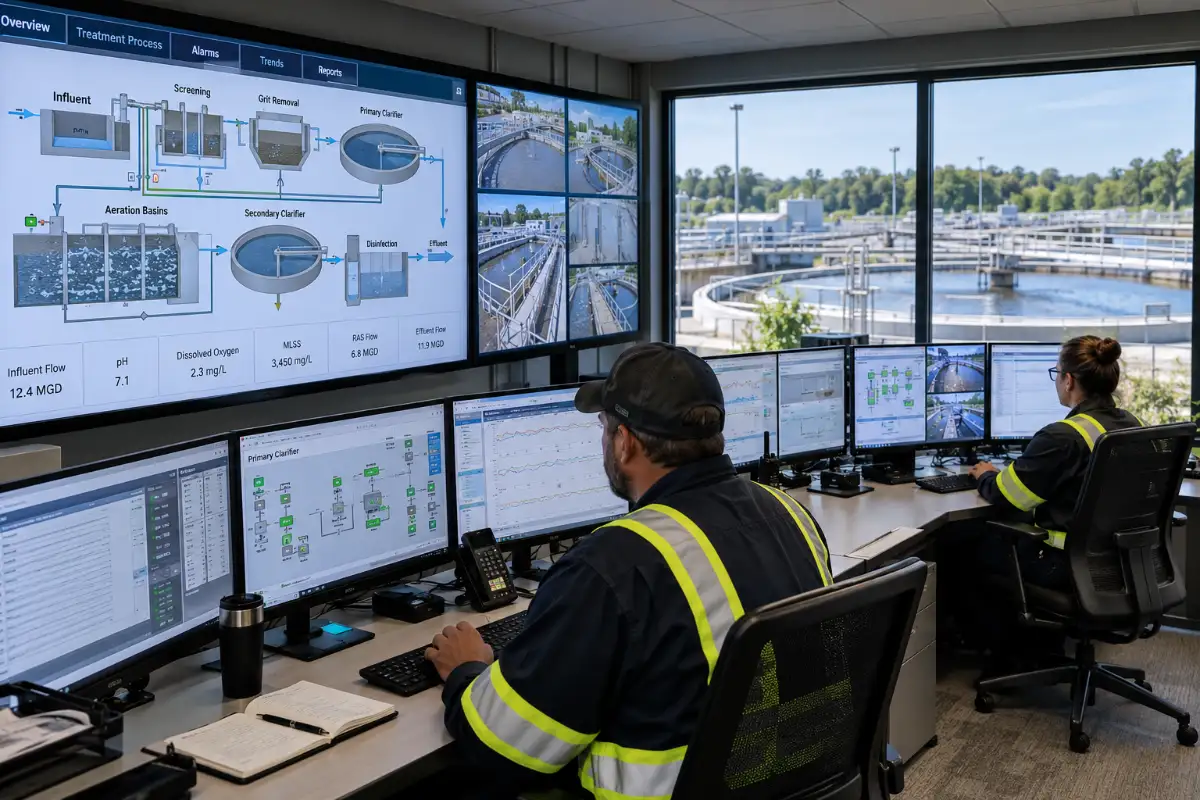
Online conductivity on the distillate catches entrainment and heat exchanger leaks early. If conductivity rises, you have a problem — don’t wait for a lab result to act.
Cleaning Frequency
Track CIP frequency as a KPI. If it increases without a feed change, something is wrong — usually scaling, fouling, or a change in the pre-treatment performance. Rising CIP frequency is the earliest warning sign of a developing problem.
Common Failure Modes and How to Avoid Them
| Failure Mode | Root Cause | Prevention |
|---|---|---|
| Heat exchanger scaling | Inadequate softening, high hardness | Chemical softening, antiscalant, forced circulation |
| Compressor fouling | Foam entrainment, volatile carryover | Demister, foam breaker, pre-stripping |
| Distillate contamination | Entrainment, heat exchanger leak | Online conductivity, regular pressure testing |
| Corrosion failure | Chloride attack, low pH | Correct alloy selection, pH control |
| Foaming and flooding | Surfactants, proteins | Antifoam, mechanical foam breaker, lower boil rate |
| Compressor surge | Low flow at high compression ratio | Anti-surge control, minimum flow recirculation |
| Crystallization in piping | Supersaturation, cooling in dead legs | Heat tracing, eliminate dead legs, density control |
Most of these are preventable with proper design and disciplined operation. The ones that hurt most — compressor fouling and heat exchanger scaling — are almost always traceable to a pre-treatment gap or an unrealistic feed assumption.
Integration with Zero Liquid Discharge
Many pharmaceutical plants are moving toward zero liquid discharge, either by regulation or by corporate policy. An MEE evaporator is usually the heart of a ZLD system, but it’s not the whole system. A complete zero liquid discharge system typically includes pre-treatment, membrane concentration, the evaporator, and a crystallizer or spray dryer for final brine solidification.
The evaporator’s job in ZLD is to concentrate the brine as far as economically possible before the crystallizer. The higher the concentration the evaporator achieves, the smaller and cheaper the crystallizer. But pushing concentration too far raises BPE, increases scaling risk, and drives up compressor power. The optimum is a balance, and it’s different for every feed.
For pharmaceutical wastewater specifically, I usually target 15–25% TDS from the evaporator before the crystallizer, but I’ve seen designs run higher and lower depending on the salt composition and the discharge requirements.
What I’d Tell a Plant Engineer Designing Their First System
If you’re specifying an MEE evaporator for pharmaceutical wastewater for the first time, here’s what I’d want you to take away:
- Characterize the feed properly. Two weeks of composite sampling, not one grab sample.
- Invest in pre-treatment. It’s cheaper than the maintenance you’ll avoid.
- Design for variability. Turndown matters more than peak efficiency.
- Choose materials conservatively. The cost difference between 316L and duplex is small compared to a premature failure.
- Plan for solvent handling. If your feed has methanol or acetone, the vapor is not clean.
- Build in monitoring. Online conductivity, density, and foam detection pay for themselves.
- Talk to operators early. The people who will run the system know where the feed surprises come from.
The technology is mature. The failure modes are well understood. What separates a good installation from a bad one is almost always the quality of the feed characterization and the honesty of the pre-treatment design.
If you’re working through a specific pharmaceutical wastewater challenge and want a second opinion on the process configuration, our team reviews feed data and proposes system layouts without obligation. You can reach out to our engineers here with your water analysis and flow data.
Frequently Asked Questions
What concentration can an MEE evaporator reach on pharmaceutical wastewater?
Typically 15–25% total dissolved solids before scaling or boiling point elevation becomes prohibitive. The exact limit depends on the salt composition, the presence of organics, and the temperature differential you can maintain. Some feeds with high solubility salts can go higher; feeds with calcium sulfate or silica scale out much earlier.
How much does an MEE evaporator cost for pharmaceutical wastewater?
For a 1–5 m³/h system with pre-treatment and reasonable automation, expect capital costs in the $150,000 to $800,000 range. Operating costs are dominated by compressor electricity, typically 15–40 kWh per cubic meter of distillate. Lifecycle cost is more sensitive to uptime and cleaning frequency than to the initial purchase price.
Can an MEE evaporator handle solvent-laden pharmaceutical wastewater?
Yes, but the vapor handling strategy changes. Volatile solvents like methanol and acetone partition into the vapor and contaminate the distillate. You’ll need pre-stripping, staged condensation, or a distillate polishing step. Ignoring this is one of the most common design mistakes I see.
How often does an MEE evaporator need cleaning?
A well-designed system with good pre-treatment can run 4–8 weeks between cleanings. A poorly designed one may need weekly cleaning. Cleaning frequency is the best single indicator of whether your pre-treatment is working. If it’s rising, investigate the feed and the softening performance before assuming the evaporator is the problem.
What’s the difference between MVC and MVR?
In modern usage, they describe the same principle — mechanical vapor recompression. MVC (mechanical vapor compression) and MVR (mechanical vapor recompression) both use a compressor to recover latent heat from the vapor. Some older literature uses MVR to describe thermal recompression with a steam jet ejector, but that’s increasingly rare in new installations.
Do I need a crystallizer with my evaporator?
Only if you’re pursuing zero liquid discharge or if your brine must be solidified for disposal. A standard evaporator produces a concentrated liquid brine that still needs disposal. A crystallizer takes that brine to solid salt. The decision depends on your discharge regulations, disposal costs, and corporate sustainability targets.
How do I prevent scaling in the heat exchanger?
Chemical softening ahead of the evaporator is the primary defense. Beyond that, forced circulation designs, antiscalant dosing, and operating at a lower temperature differential all help. The right combination depends on your specific scaling chemistry — calcium carbonate scales differently than calcium sulfate or silica.
What happens if the feed composition changes unexpectedly?
The system will typically show symptoms within hours: rising compressor amps, falling distillate rate, rising CIP frequency, or distillate conductivity alarms. The key is to have online monitoring that catches these early and a control strategy that can adjust to the new feed. Systems designed with generous turndown and flexible control handle feed changes far better than tightly optimized designs.