

If you’re dealing with lithium battery manufacturing wastewater, the short answer is this: a mechanical vapor recompression (MVC) evaporator is usually the best fit for most high-salinity, high-COD streams, while multi-effect evaporators still make sense when you have cheap waste heat available. I’ve sized and commissioned enough of these systems to know that the “best” choice depends on your salt load, your energy costs, and how much fouling your stream throws at you. Let me walk you through how I actually make that call on real projects.
What Makes Lithium Battery Wastewater So Difficult
Battery production isn’t one process — it’s several, and each one generates a different wastewater profile. Cathode active material production, anode graphite processing, electrolyte handling, and cell formation all produce streams that behave very differently in a treatment train.
The common thread is that these streams are hard on conventional biological treatment:
- High total dissolved solids (TDS). Sodium sulfate, sodium chloride, and residual lithium salts push conductivity well beyond what activated sludge can tolerate.
- Elevated COD. Solvents like NMP, binders, and organic additives contribute COD that isn’t easily biodegraded.
- Heavy metals. Nickel, cobalt, manganese, and traces of lithium need removal before discharge.
- Variable pH and composition. Batch production means the feed changes week to week.
In my experience, the streams that hurt the most are the ones with both high salt and high organic content, because they defeat membrane systems on the front end and biological systems on the back end. That’s exactly the gap evaporation fills.
Why Evaporation Beats Membrane-Only Approaches Here
I’ve seen plenty of projects where the original design was RO plus discharge. It works until the brine concentration climbs and the membranes start scaling with sulfate and carbonate hardness. Then the operating pressure goes up, recovery drops, and the cleaning frequency becomes a maintenance nightmare.
Evaporation sidesteps that by concentrating the stream thermally rather than pushing it through a membrane. You get:
- Consistent performance regardless of feed salinity
- Distillate quality good enough for reuse in many cases
- A concentrated brine or salt cake you can handle as solid waste
- A clear path to zero liquid discharge (ZLD) if your permit requires it
That said, evaporation isn’t free. It’s energy-intensive, and pretreatment matters enormously. If you skip softening or deaeration, you’ll pay for it in heat exchanger fouling within months.
Comparing the Main Evaporator Types
Here’s how I frame the decision for clients. The table below reflects typical design ranges I’ve worked with — your actual numbers will depend on feed chemistry, utility costs, and site constraints.
| Technology | Typical Energy Use | Best For | Main Trade-off |
|---|---|---|---|
| Single-effect evaporator | High (roughly 1 kg steam per kg water evaporated) | Small flows, low salt, simple operation | Poor steam economy; rarely economical above small capacities |
| Multi-effect evaporator | Moderate (roughly 0.3–0.5 kg steam per kg water with 2–3 effects) | Medium-to-large flows where waste steam is available | Larger footprint; needs a consistent steam source |
| MVC evaporator | Low (electric-driven, typically 15–40 kWh per m³ of distillate) | High-salinity streams, sites without steam, ZLD trains | Higher upfront cost; compressor maintenance |
| MVR with falling film | Low, similar to MVC | Large flows, cleaner feeds | Sensitive to scaling on the tube surface |
| MVR with forced circulation | Low, slightly higher pumping | Scaling-prone, high-solids feeds | More pump power; higher recirculation rates |
If you want to go deeper on the mechanical side, the MVC evaporator page covers compressor selection and how it affects turndown.
How I Choose Between MVC and Multi-Effect
The decision usually comes down to three questions:
- Do you have waste steam or cheap thermal energy? If yes, multi-effect wins on operating cost. If no, MVC is almost always the answer.
- How scaling-prone is your feed? High calcium, sulfate, or silica pushes you toward forced circulation or a falling-film design with proper pretreatment.
- What’s your discharge target? If you need a dry salt or a near-dry cake, you’re probably looking at an MVC-based ZLD train with a crystallizer at the end.
I’ve run the numbers on both sides many times. For a typical lithium battery wastewater stream with 30,000–80,000 mg/L TDS and moderate COD, an MVC system often pays back the higher capital cost within two to three years compared to a multi-effect system running on purchased steam.
Pretreatment: The Part Most Projects Get Wrong
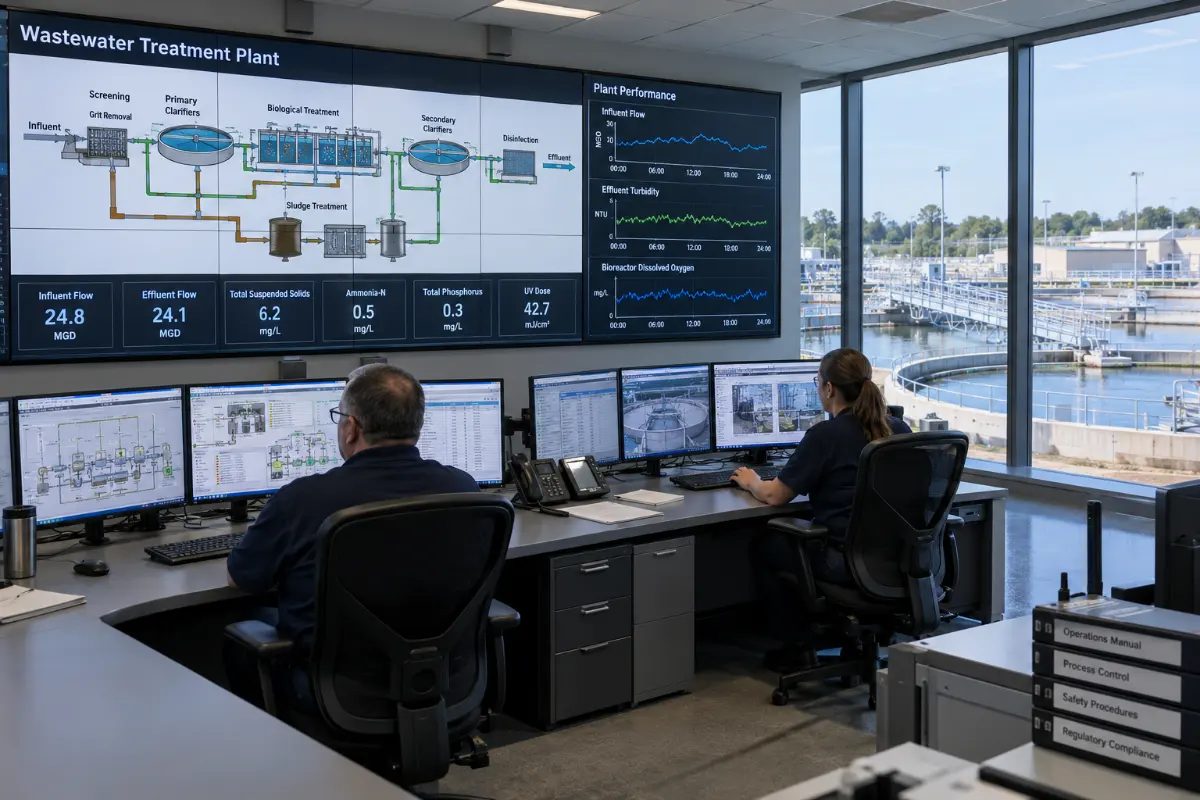
I’ll be blunt — the evaporator itself is rarely the failure point. Pretreatment is.
Before the feed reaches the evaporator, you typically need:
- Chemical softening to knock out calcium and magnesium hardness
- Heavy metal precipitation for nickel, cobalt, and manganese
- Filtration to remove suspended solids that would foul the heat exchanger
- Deaeration or pH adjustment to control corrosion and scaling
- Optional organics removal if COD is high enough to cause foaming
The heat exchanger design you choose is directly tied to how well you pretreat. Falling film is efficient but demands clean feed. Forced circulation tolerates more solids but uses more pump energy.
Energy and Operating Cost Reality Check
Let me give you an honest range. For an MVC system treating lithium battery wastewater:
- Electricity: typically 15–40 kWh per cubic meter of distillate, depending on boiling point elevation and compressor efficiency
- Pretreatment chemicals: highly variable, often the second-largest line item
- Maintenance: compressor overhauls every few years, plus routine heat exchanger cleaning
Multi-effect systems trade electricity for steam. If your site has a boiler running on natural gas at a reasonable price, the operating cost can be lower. But if steam has to be generated specifically for the evaporator, MVC usually wins.
I always tell clients to model three scenarios: current utility prices, a 20% increase, and a 20% decrease. The technology that wins across all three is the one you should pick.
Design Details That Matter in Practice
Boiling Point Elevation
High salt concentrations raise the boiling point, which reduces the temperature difference across the heat exchanger and increases compressor duty. This is why brine concentration has a practical ceiling — usually somewhere between 20% and 30% dissolved solids, depending on the salt mix.
Foaming and Carryover
Organics from binders and solvents can cause foaming. I’ve seen distillate quality drop from under 10 mg/L TDS to several hundred because of carryover. Antifoam helps, but the real fix is upstream organics removal.
Materials of Construction
Chloride-rich streams will eat 316L stainless steel. For those, duplex stainless or titanium is often the right call, even though it hurts the budget. Getting this wrong is expensive to fix later.
Turndown and Batch Operation
Battery plants often run in campaigns. Your evaporator needs to handle 30–50% turndown without fouling or losing efficiency. Variable-frequency drives on the compressor and circulation pumps help here.
A Typical Project Layout
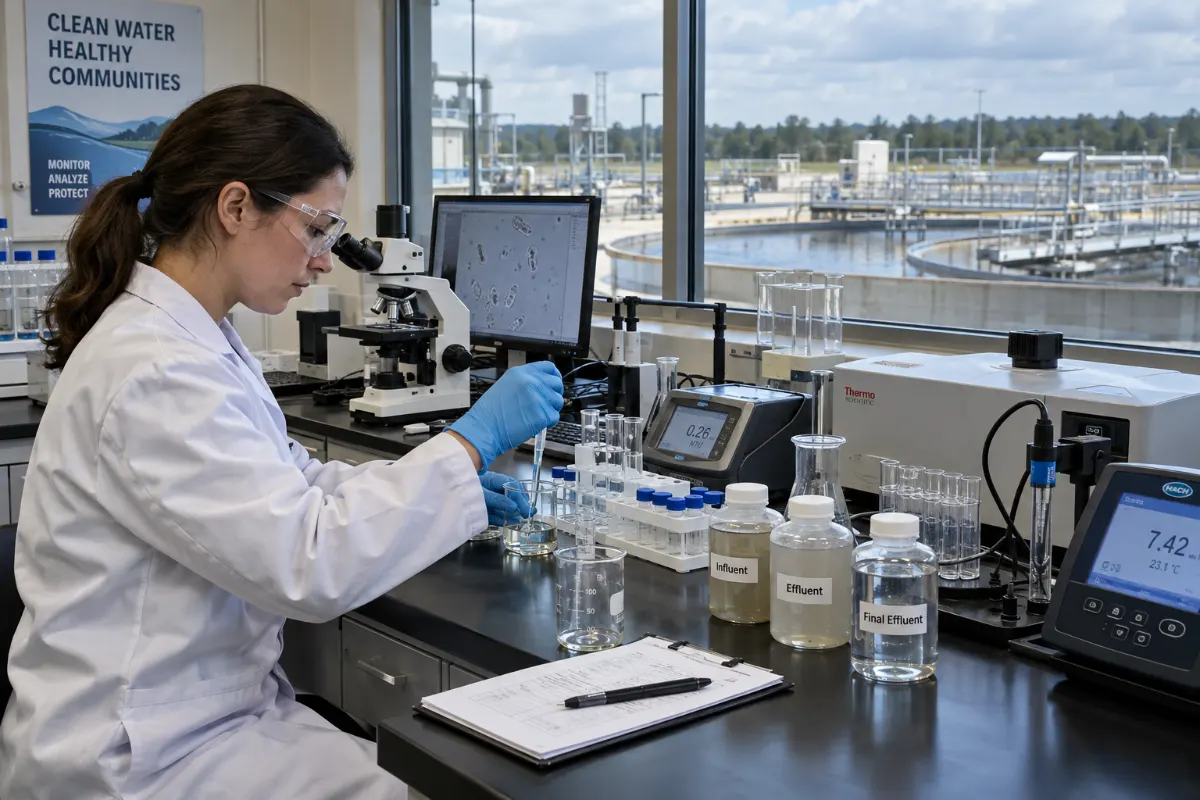
Here’s the sequence I’ve used on several battery wastewater projects, presented as a design pattern rather than a specific installation:
- Equalization and pH adjustment
- Chemical precipitation of heavy metals
- Softening and clarification
- Filtration (media or ultrafiltration)
- Optional DTRO membrane pre-concentration if flows are large
- MVC or multi-effect evaporation
- Crystallization or brine disposal
- Distillate polishing for reuse or discharge
On some projects, adding a membrane pre-concentration stage ahead of the evaporator cuts the evaporator size by 40–60%, which can pay for itself quickly.
Maintenance and Common Failure Modes
The three problems I see most often:
- Heat exchanger scaling. Usually from inadequate softening. Clean-in-place frequency should be tracked, and if it starts climbing, treat it as a pretreatment warning.
- Compressor vibration or seal failure. Often caused by liquid carryover from the separator. Fix the mist eliminator before you rebuild the compressor.
- Distillate quality drift. Almost always a foaming or carryover issue. Check the separator, the antifoam dosing, and the feed COD.
If you build a maintenance log that tracks these three items weekly, you’ll catch most problems before they become shutdowns.
When to Bring in Help
If your stream is above roughly 20,000 mg/L TDS, has variable composition, or needs to meet a ZLD permit, the sizing and integration work gets complicated fast. Pilot testing is often the cheapest insurance you can buy.
“The evaporator is the easy part. The feed chemistry is what decides whether your project succeeds.” — a sentiment I’ve heard from more than one commissioning engineer, and one I fully agree with.
If you want a second opinion on your feed analysis or a preliminary sizing, our engineering team can review your data and give you a straight answer on which technology fits. Talk to an engineer about your project — no obligation, just a technical conversation.
Frequently Asked Questions
What’s the difference between MVC and MVR, and does it matter for battery wastewater?
They’re closely related. MVC (mechanical vapor compression) and MVR (mechanical vapor recompression) both use a compressor to raise the pressure and temperature of evaporated vapor so it can be reused as the heating medium. In practice, the terms are often used interchangeably in the industry. What matters for battery wastewater is compressor type, turndown capability, and how the system handles scaling — not the label.
How much does a lithium battery wastewater evaporator cost?
Capital cost depends heavily on capacity, materials of construction, and whether pretreatment is included. As a rough planning range, small systems can start in the low six figures (USD), and larger ZLD trains can run well into seven figures. Operating cost is dominated by electricity or steam, pretreatment chemicals, and maintenance. I’d recommend getting at least three quotes with clearly defined scope boundaries.
Can I use a membrane system instead of an evaporator?
Sometimes, yes — especially if you add a high-pressure RO or DTRO stage for pre-concentration. But membranes hit a practical limit around 70–80 bar of operating pressure and struggle with scaling at high salinity. For true ZLD, evaporation is usually the final step regardless of what comes before it.
How often does the heat exchanger need cleaning?
With good pretreatment, I’d expect cleaning every three to six months. Without it, you could be cleaning monthly or more. Track the temperature difference across the exchanger — when it starts to drop, that’s your signal.
What distillate quality can I expect?
Well-designed systems typically produce distillate under 50 mg/L TDS, and often under 10 mg/L. That’s usually good enough for reuse as process water after polishing. If you’re seeing higher numbers, check for foaming, carryover, or a failing mist eliminator.
Do I need a pilot test before buying a full-scale system?
For high-salinity or variable feeds, yes. A pilot test tells you the achievable brine concentration, the scaling tendency, and the real energy consumption on your specific stream. It’s the cheapest way to de-risk a large capital decision.
What happens to the concentrated brine?
Options include crystallization to a solid salt, disposal at a licensed facility, or further processing to recover valuable materials like lithium or nickel. The right choice depends on your permit, your waste contractor, and whether recovery makes economic sense.