

If you’re treating mining wastewater or concentrated brine, the short answer is this: mechanical vapor recompression (MVC/MVR) evaporators are usually the best fit for high-salinity streams where energy cost and uptime matter most. Multi-effect evaporators still win when you have cheap waste heat available. And for moderate-salinity streams, a high-pressure RO or DTRO membrane system often beats evaporation on both capital and operating cost. I’ve delivered systems across all three categories, and the “best” choice almost never comes down to the evaporator alone — it comes down to your water chemistry, your energy source, and how much solid waste you’re willing to handle.
What Makes Mining Wastewater and Brine So Hard to Treat
Mining wastewater isn’t one thing. It ranges from mildly brackish drainage to saturated brine from a reverse osmosis reject line. What they share is a set of problems that break conventional treatment:
- High total dissolved solids (TDS). Often 20,000–250,000 mg/L. RO membranes can’t push past their osmotic limit without exotic pressures.
- Scale-forming ions. Calcium, magnesium, sulfate, silica, and carbonate all want to precipitate on hot surfaces.
- Variable flow and composition. Rainfall events, ore body changes, and process upsets swing the feed from week to week.
- Regulatory pressure. Discharge limits and zero liquid discharge (ZLD) mandates are tightening in most jurisdictions.
That combination is why evaporation-based systems dominate the back end of mining water treatment. They concentrate the brine to a manageable volume and produce clean distillate you can reuse or discharge. The fundamentals of what makes industrial wastewater difficult apply here, just at a much higher salinity.

How I Choose Between Evaporator Types
I’ve specified single-effect, multi-effect, and MVC systems for mining clients. The decision tree I use is roughly this:
- How much waste heat do you have, and what’s it worth?
- What’s the feed TDS, and what’s the target concentration?
- What’s your electricity price versus your steam price?
- How much operator attention can you realistically provide?
- What’s the solids handling plan downstream?
Those five questions eliminate most of the options quickly. Let me walk through the main evaporator families.
Mechanical Vapor Recompression (MVC/MVR)
MVC is my default recommendation for mining brine when power is available and steam isn’t. The compressor takes the vapor you just evaporated, compresses it, and reuses it as the heating medium. That means you’re paying for electricity to run a compressor instead of paying for steam to boil water.
Typical energy consumption for an MVC evaporator treating mining brine runs in the range of 15–35 kWh per cubic meter of distillate, depending on the boiling point elevation and the compressor efficiency. That’s project-dependent — high TDS and high boiling point elevation push it up. But compared to a single-effect evaporator, which might need 1.1–1.3 kg of steam per kg of water evaporated, MVC is dramatically cheaper to run where electricity is reasonably priced.
The trade-off is mechanical complexity. Compressors need maintenance, and they don’t like fouling. I always pair MVC with a robust pretreatment and antiscalant program. If you want the deeper engineering detail, the MVC evaporator design considerations are worth reviewing before you commit.
Multi-Effect Evaporators
Multi-effect systems reuse vapor by cascading it through successive stages at decreasing pressure. Each effect essentially evaporates water using the vapor from the previous effect. A triple-effect evaporator can cut steam consumption to roughly one-third of a single-effect unit.
If you have a free or cheap steam source — a boiler you’re already running, waste heat from a smelter, or a co-generation plant — multi-effect is often the lowest operating cost option. The capital cost is higher because you’re buying more heat exchanger surface and more vessels.
I typically recommend:
- Single-effect for small flows (under ~5 m³/h) or pilot work, where simplicity matters more than efficiency.
- Double-effect as a middle ground when steam is available but not free.
- Triple-effect and above when you have a reliable, low-cost steam supply and high flow.
You can compare the trade-offs on the multi-effect evaporator overview, or drill into triple-effect configurations if you’re already leaning that direction.
Membrane Systems: RO, DTRO, and High-Pressure RO
Not every mining stream needs evaporation. If your TDS is under roughly 60,000–80,000 mg/L and you’ve got good pretreatment, a high-pressure RO or DTRO (disc-tube reverse osmosis) system can concentrate the brine at a fraction of the energy cost of thermal evaporation.
DTRO is particularly useful for mining because the open-channel disc design handles suspended solids and scaling better than spiral-wound membranes. It’s a common front-end concentrator before an evaporator, and in some cases it’s the whole solution.
Where membranes lose is at very high salinity. Osmotic pressure climbs fast, and above a certain concentration the required feed pressure becomes impractical. That’s where evaporation takes over. The DTRO membrane system design and high-pressure RO capabilities pages cover the operating envelopes.

Comparing the Main Options
Here’s the comparison table I use in early-stage project discussions. Ranges are indicative and depend heavily on feed chemistry, energy prices, and site conditions.
| Technology | Typical Feed TDS | Energy Source | Relative Capex | Relative Opex | Best Fit |
|---|---|---|---|---|---|
| Single-effect evaporator | Any | Steam | Low | High | Small flow, simple duty |
| Double-effect evaporator | Any | Steam | Medium | Medium | Moderate flow, steam available |
| Triple-effect evaporator | Any | Steam | Medium-High | Low-Medium | High flow, cheap steam |
| MVC/MVR evaporator | Any | Electricity | Medium-High | Low | High salinity, power available |
| High-pressure RO / DTRO | Up to ~80,000 mg/L | Electricity | Medium | Low | Moderate salinity, pre-concentration |
| Hybrid membrane + MVC | Variable | Electricity | High | Lowest | ZLD projects, large scale |
In practice, most mining ZLD projects I’ve worked on end up as a hybrid: membrane concentration first, then evaporation for the final brine. That combination minimizes both energy and capital.
Need a second opinion on your brine treatment design? Send us your water analysis and flow data — we’ll walk through the evaporator selection logic with you, no obligation.
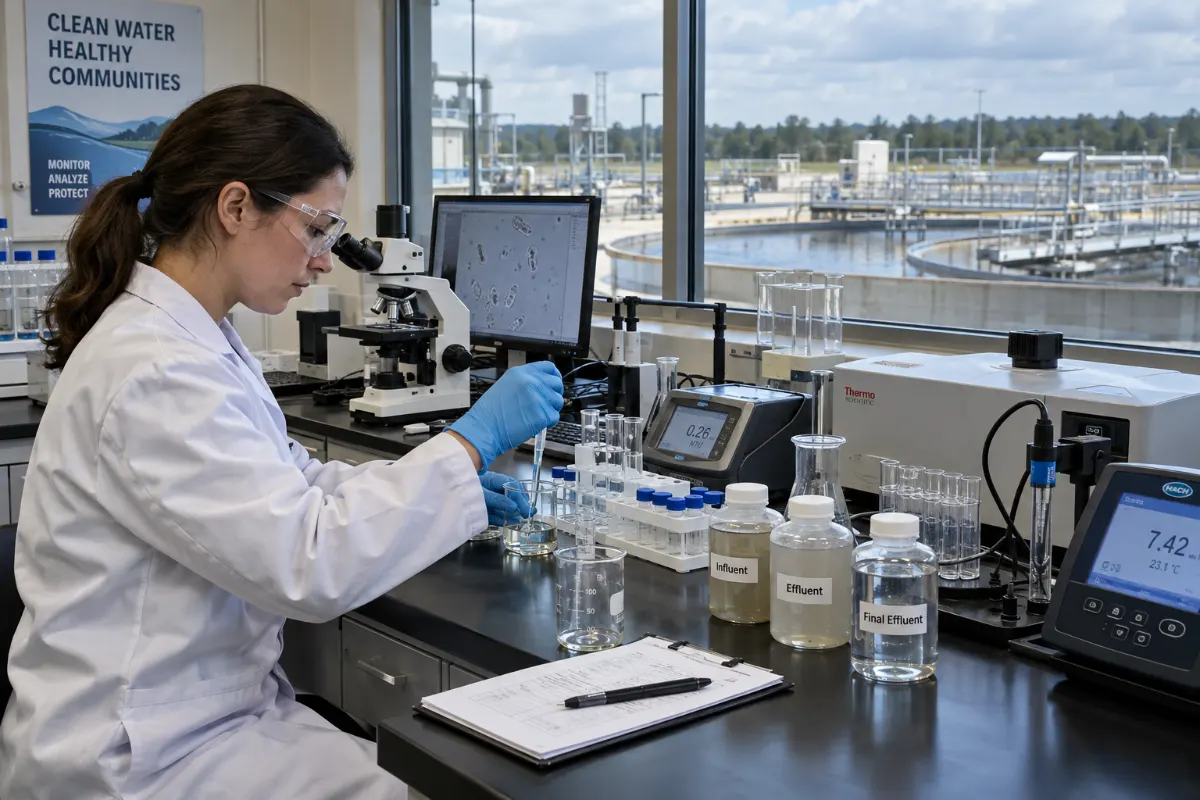
Pretreatment: Where Most Mining Evaporator Projects Fail
I’ll say this bluntly: the evaporator itself rarely causes the problems. Pretreatment does. I’ve seen more MVC systems fouled by inadequate softening than by any compressor failure.
Mining brine usually needs:
- Hardness removal. Lime softening, ion exchange, or chemical precipitation to knock out calcium and magnesium before they hit the heat exchanger.
- Silica control. Silica scales are notoriously hard to remove. Often handled with magnesium addition, pH adjustment, or seeding.
- Suspended solids removal. Clarification, filtration, or ultrafiltration upstream.
- Antiscalant dosing. Tuned to the specific brine chemistry — not a generic product off the shelf.
- Degassing. Removing dissolved gases that can corrode downstream equipment.
Skimping on pretreatment is the most common mistake I see in cost-cutting exercises. It looks cheaper on the bid sheet and costs far more over the plant’s life. The process design fundamentals behind this are worth a careful read if you’re early in the design phase.
Energy, Cost, and the Lifecycle View
Capital cost gets all the attention in procurement. But over a 15–20 year plant life, operating cost dominates. Here’s how I frame it for clients:
Energy Cost Drivers
- Electricity price × compressor kWh. For MVC, this is the single biggest lever.
- Steam price × steam consumption. For multi-effect, this is the single biggest lever.
- Boiling point elevation. Higher TDS raises the boiling point, which raises compressor duty or steam demand. This is why feed concentration matters so much.
- Turndown and part-load operation. Systems that run at 40% capacity most of the year rarely hit their design efficiency.
Maintenance and Consumables
Budget for:
- Compressor overhauls (MVC) on a 3–5 year cycle for continuous duty.
- Heat exchanger cleaning — mechanical or chemical — typically every 3–12 months depending on scaling tendency.
- Antiscalant and cleaning chemicals.
- Membrane replacement (if membranes are in the train) every 3–7 years.
- Solids handling and disposal, which is often the largest single operating cost in a ZLD plant.
The ZLD system design discussion covers how these costs stack up when you’re targeting zero discharge. For a broader view of where costs sit across the industry, the World Bank’s water resources work and EPA effluent guidelines are useful references for regulatory context and best practice.
Real-World Selection Scenarios
Let me walk through three anonymized scenarios that reflect the patterns I see most often.
Scenario 1: Moderate-Salinity Mine Drainage, ~15,000 mg/L TDS
Flow of 40 m³/h. No steam available, but grid power is reasonable. We specified a high-pressure RO train followed by a small MVC for the reject stream. The RO handles about 85% of the volume at low energy cost; the MVC polishes the remaining 15%. Total energy is far lower than an all-thermal design. This is the classic hybrid approach.
Scenario 2: High-Salinity Brine, ~120,000 mg/L TDS
Flow of 8 m³/h. Membranes aren’t practical at this concentration. We went straight to MVC with a forced-circulation heat exchanger to handle the scaling tendency. Pretreatment included chemical softening and antiscalant dosing. Distillate quality was good enough for reuse in the process. Solids went to a crystallizer for final disposal.
Scenario 3: Mine with Waste Heat from On-Site Power Generation
Flow of 25 m³/h, TDS around 45,000 mg/L. The site had surplus low-pressure steam from a co-generation unit. We specified a triple-effect evaporator, which used that steam at near-zero marginal cost. Electricity demand was minimal. This is the case where multi-effect clearly beats MVC — the energy source flips the economics.
Notice the pattern: the “best” evaporator changes with every scenario. There is no universal answer.
Common Failure Modes and How to Avoid Them
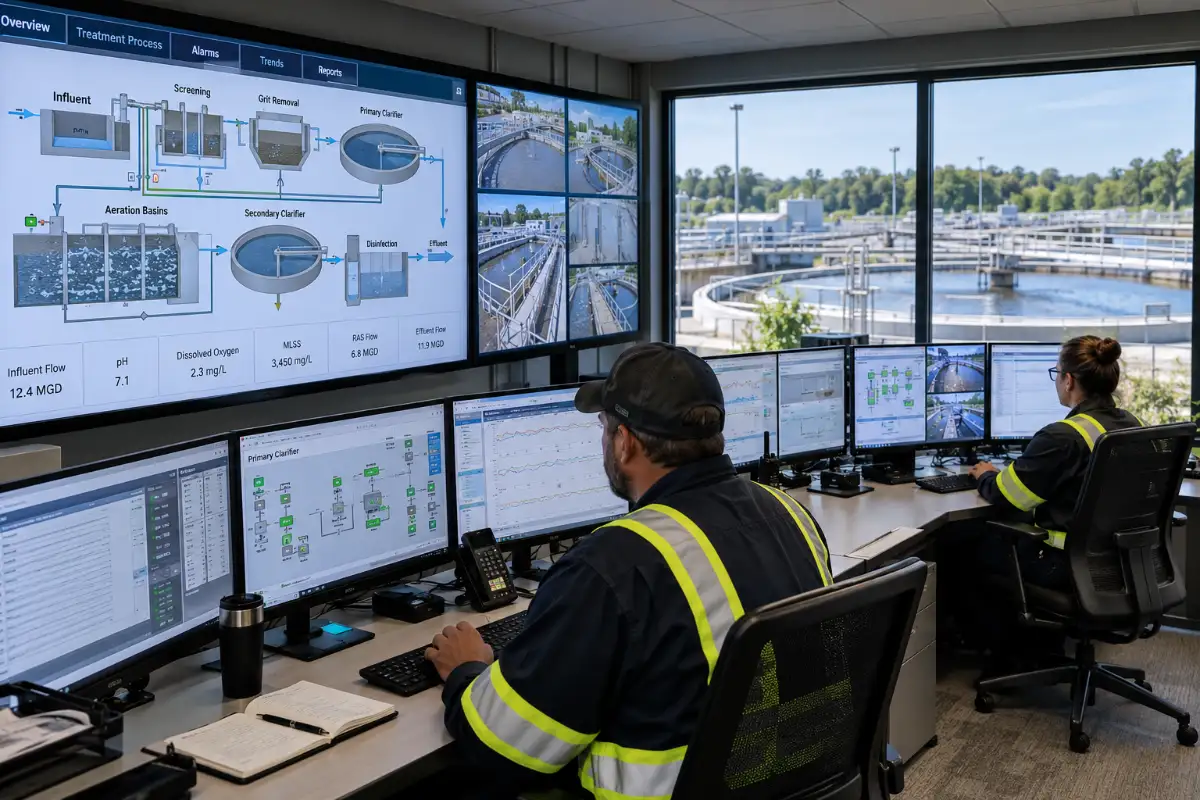
After enough projects, you start seeing the same problems repeat. Here are the ones I watch for:
- Scaling on heat transfer surfaces. Almost always a pretreatment or antiscalant dosing issue. Monitor heat transfer coefficients continuously.
- Foaming in the evaporator. Caused by organics or surfactants in the feed. Antifoam helps, but the real fix is upstream removal.
- Compressor vibration and bearing wear (MVC). Often a sign of liquid carryover or imbalance. Check the mist eliminator and demister performance.
- Corrosion in high-chloride brines. Material selection matters — duplex stainless, titanium, or higher alloys depending on chloride level and temperature.
- Poor turndown performance. Design for the actual operating profile, not the peak flow.
- Solids handling bottlenecks. The crystallizer or dryer is often the limiting unit, not the evaporator.
For a project-specific walk-through of these issues, the wastewater evaporator design overview covers many of them in more detail.
Frequently Asked Questions
What’s the best evaporator for high-salinity mining brine?
For most high-salinity streams where electricity is available and steam isn’t, MVC/MVR is the best choice. It reuses its own vapor as the heating medium, which cuts energy consumption dramatically compared to single-effect systems. If you have cheap waste steam, a multi-effect evaporator may be more economical instead.
How much does an MVC evaporator cost to operate?
Typical electricity consumption is in the range of 15–35 kWh per cubic meter of distillate, depending on boiling point elevation and compressor efficiency. Multiply that by your local industrial electricity rate to get the energy cost. Add maintenance, chemicals, and solids disposal for the full operating picture.
Can I use RO instead of an evaporator for mining wastewater?
Sometimes. High-pressure RO and DTRO work well up to roughly 60,000–80,000 mg/L TDS with good pretreatment. Above that, osmotic pressure becomes impractical and evaporation is usually required. Many ZLD projects use membranes for bulk concentration and evaporation for the final brine.
How often does an evaporator heat exchanger need cleaning?
With proper pretreatment and antiscalant dosing, most mining evaporators need cleaning every 3–12 months. If you’re cleaning more often than quarterly, something upstream needs attention — usually hardness or silica control.
What’s the difference between MVC and MVR?
They’re the same thing. MVC stands for mechanical vapor compression; MVR stands for mechanical vapor recompression. Both describe a system where a compressor raises the pressure and temperature of evaporated vapor so it can be reused as the heating medium.
How do I decide between a double-effect and triple-effect evaporator?
It comes down to steam cost and flow rate. Triple-effect cuts steam consumption to roughly one-third of single-effect but costs more upfront. If steam is cheap or free, higher effects pay back quickly. If steam is expensive or unavailable, MVC is usually the better route.
What pretreatment does mining brine need before evaporation?
At minimum: hardness removal (lime softening or ion exchange), suspended solids removal, silica control, and antiscalant dosing. Degassing may also be needed. The exact train depends on your water analysis — there’s no universal recipe.
What causes foaming in a mining wastewater evaporator?
Organics, surfactants, and certain dissolved gases in the feed are the usual culprits. Antifoam can manage symptoms, but the durable fix is removing the foam-causing compounds upstream through oxidation, coagulation, or biological treatment.
Final Thoughts on Selection
If you take one thing from this, let it be this: the best evaporator for mining wastewater and brine treatment is the one that matches your energy source, your water chemistry, and your operating reality. MVC wins on energy efficiency when power is available. Multi-effect wins when you have waste steam. Membranes win when salinity is moderate and you want to avoid thermal energy altogether. And hybrids frequently beat any single technology.
Get a proper water analysis, model the energy cost honestly, and design for the flow you’ll actually run — not the flow on the nameplate. Do that, and the right choice usually becomes obvious.
If you want a technical review of your specific stream, reach out to our engineering team — we’re happy to talk through the options with no sales pressure.