

If you’re dealing with pharmaceutical wastewater that’s high in COD, salts, and refractory organics, the best evaporator for concentration is almost always a mechanical vapor recompression (MVC) system, sometimes paired with a multi-effect train when you have cheap waste heat available. I’ve commissioned enough of these units to know that the “best” choice isn’t universal — it depends on your flow rate, salt load, scaling tendency, and whether you have thermal energy to spare. In this article I’ll walk through how I actually evaluate evaporator options for pharma effluent, what tends to fail in the field, and where the real cost drivers sit.
Why Pharmaceutical Wastewater Is Hard on Evaporators
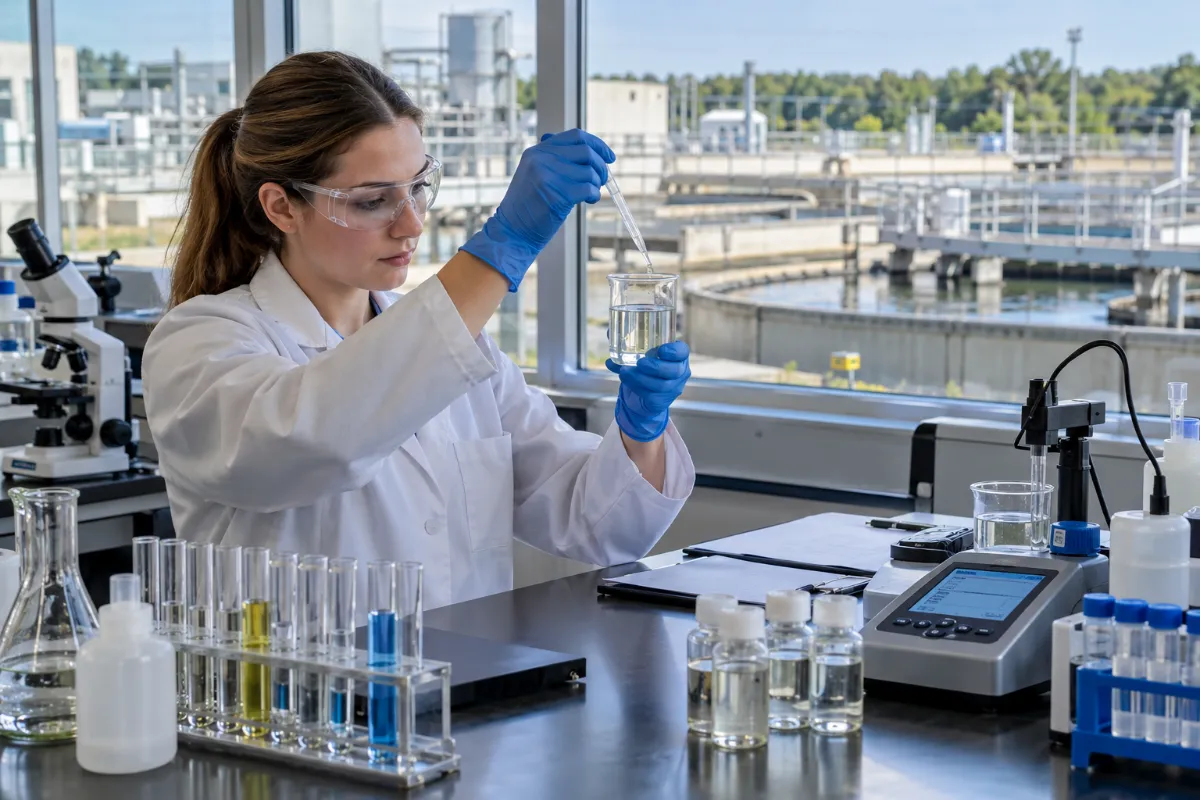
Pharma effluent is not like municipal sewage or even most food processing discharge. It carries a mix of solvents, active pharmaceutical ingredients (API residues), high dissolved solids, and often a stubborn fraction of COD that biological treatment can’t touch. Typical ranges I see in design packages look something like this:
- COD: 5,000–60,000 mg/L depending on the process (fermentation, synthesis, formulation)
- Total dissolved solids (TDS): 10,000–100,000+ mg/L
- Conductivity: highly variable, often 20–100 mS/cm
- pH: swings from 2 to 11 depending on the batch
- Foaming tendency: high, especially with surfactant-based products
That combination drives three problems: scaling on heat transfer surfaces, foaming that carries liquid into the vapor line, and corrosion from chlorides and organic acids. Any evaporator you pick has to survive all three.
The Main Evaporator Types and Where They Fit
Mechanical Vapor Recompression (MVC / MVR)
This is my default recommendation for most pharma concentration duties above roughly 3–5 m³/h. The compressor takes the vapor you just generated, compresses it, and reuses it as the heating medium. Electrical energy replaces steam, and the specific energy consumption lands in the range of 15–40 kWh per m³ of distillate for a well-designed unit — far lower than a single-effect steam evaporator.
The trade-off is capital cost and mechanical complexity. Compressors are the heart of the system, and if you get the impeller or the seals wrong for your vapor composition, you’ll be rebuilding it every 18 months. For more on how these are built, see our breakdown of mechanical vapor compression MVC evaporators.
Multi-Effect Evaporators (MED)
If you have waste steam available — say from a neighboring process — a multi-effect train can beat MVC on operating cost. Each additional effect reuses the vapor from the previous one, so a triple-effect system needs roughly one-third the steam of a single-effect. The catch is you need a steam supply and a condenser for the final vapor. For plants without that infrastructure, the piping and boiler often kill the economics.
I generally look at multi-effect evaporators when the client already has a steam header and the flow rate is above 10 m³/h. Below that, the added complexity rarely pays back.
Single-Effect and Double-Effect Units
Smaller pharma plants, or those with very high fouling streams, sometimes do better with a single-effect design because it’s simpler to clean. You sacrifice energy efficiency, but you gain uptime. Double-effect sits in the middle — better efficiency than single, less complexity than triple.
Membrane Pre-Concentration (RO / DTRO)
Before you evaporate, it’s worth asking whether you can concentrate first with membranes. High-pressure RO and DTRO (disc tube reverse osmosis) can push TDS up to 60,000–80,000 mg/L in the concentrate, which shrinks the evaporator you need. This is often the single biggest cost lever on a pharma project. We cover the membrane side in our DTRO membrane systems page.
Comparison Table: Evaporator Options for Pharma Wastewater
| Technology | Typical Capacity | Energy Source | Relative CAPEX | Best Fit |
|---|---|---|---|---|
| Single-effect | 0.5–5 m³/h | Steam or electric | Low | Small flow, high fouling |
| Double-effect | 2–10 m³/h | Steam | Medium | Moderate flow with steam available |
| Triple-effect | 5–30 m³/h | Steam | Medium-High | Large flow, cheap steam |
| MVC / MVR | 1–50 m³/h | Electric | High | No steam, energy-conscious plants |
| Membrane + MVC hybrid | 5–100 m³/h | Electric | High | ZLD, high salt, large scale |
These are indicative ranges based on typical project experience. Real numbers depend heavily on your specific stream and site conditions.
How I Actually Select an Evaporator
Selection isn’t about picking the most efficient machine on paper. It’s about matching the machine to the stream and the site. Here’s the sequence I run through on every project:
- Characterize the stream properly. Not a single grab sample — a composite over at least a week, ideally a month. Pharma batches vary, and a design based on one sample will fail.
- Check the scaling index. Calcium, magnesium, sulfate, carbonate, silica. If saturation indices are high, you need either pretreatment, seeded slurry operation, or a forced-circulation design.
- Assess foaming. If the stream foams in a beaker test, it will foam in the evaporator. Plan for antifoam dosing, mechanical defoaming, or a larger vapor space.
- Decide on steam vs. electric. If you have waste steam, multi-effect wins. If not, MVC. There’s rarely a case where a single-effect steam unit beats MVC on lifecycle cost at scale.
- Size the concentrate handling. The evaporator is only half the system. You still need to crystallize, dry, or dispose of the brine. This is where a lot of projects blow their budget.
- Plan turndown. Pharma plants often run at 30–50% of design flow for months. A system that can’t turndown gracefully will scale up or run inefficiently.
I’ve seen more evaporator projects fail from bad stream characterization than from bad equipment selection. Get the water right first, and the equipment choice usually becomes obvious.
Scaling, Fouling, and the Maintenance Reality
Pharma wastewater loves to scale. The organics and inorganics together form deposits that are harder to remove than either alone. In my experience, the cleaning interval on a poorly designed unit can drop to 2–3 weeks, which destroys availability.
What actually helps:
- Forced circulation for high-solids streams — keeps velocity up and reduces deposition.
- Seeded slurry operation for streams with high sulfate or carbonate hardness.
- Chemical cleaning-in-place (CIP) designed from day one, not bolted on later.
- Material selection — duplex stainless or titanium for chloride-bearing streams. 316L is not enough above roughly 500 mg/L chloride at temperature.
Heat exchanger design matters here too. If you undersize the surface area to save cost, you’ll run at higher wall temperatures and scale faster. Our page on MVC evaporator heat exchangers goes into the trade-offs.
Energy and Lifecycle Cost — Where the Money Goes
People focus on CAPEX, but on a 10-year basis, energy and maintenance usually dominate. Rough picture for a 10 m³/h pharma concentration duty:
- MVC electrical: roughly 15–40 kWh/m³ distillate, so 150–400 kWh/h at full load
- Triple-effect steam: roughly 0.35–0.45 kg steam per kg distillate if you have it available
- Membrane pre-concentration: 3–8 kWh/m³, but reduces evaporator load by 50–70%
- Maintenance and cleaning: typically 3–8% of CAPEX per year, higher for fouling streams
These are indicative ranges. Actual figures depend on your compressor efficiency, heat recovery, and how often you have to clean. A hybrid membrane-plus-MVC system often has the lowest 10-year cost for high-salt pharma streams, even though the upfront cost is higher.
For a deeper look at cost drivers, see our analysis of MVR evaporator CAPEX and OPEX.
Common Failure Modes I’ve Seen
After enough commissioning trips, the same problems show up:
- Compressor erosion from entrained droplets — usually a mist eliminator sizing issue.
- Scaling on the calandria within weeks because pretreatment was skipped.
- Foam carryover into the distillate, contaminating what should be clean water.
- Corrosion at weld seams from chloride stress cracking in 316L where duplex was needed.
- Turndown problems — compressor surge at low flow, forcing operators to run at full rate and waste energy.
None of these are exotic. They’re all preventable with proper design review and honest stream data.
Where Zero Liquid Discharge Fits
If your discharge permit is tight or you’re in a water-stressed region, you may be pushed toward zero liquid discharge (ZLD). That usually means membrane pre-concentration, then an evaporator/crystallizer to dry the brine. It’s expensive, but for pharma it’s often the only way to meet limits on TDS, COD, and specific APIs.
The key is not to design the ZLD system as an afterthought. If you know ZLD is coming, size the evaporator and the membrane train together from the start. Retrofitting is painful. Our ZLD systems page covers the integration side.
Practical Recommendations
If you want a short answer to take into a design meeting:
- For flows under 5 m³/h with no steam: single-effect MVC or a small MVR unit.
- For 5–30 m³/h with steam available: triple-effect MED, or MVC if electricity is cheap and steam is not.
- For 5–30 m³/h without steam: MVC, with membrane pre-concentration if TDS is above 30,000 mg/L.
- For anything heading to ZLD: hybrid membrane + MVC, designed as one system.
- Always include CIP, proper materials, and turndown capability in the spec — not as options.
If you’re working through a specific stream and want a second opinion on the configuration, our engineering team reviews stream data and can sanity-check your selection. You can reach out through our contact page.
Frequently Asked Questions
What’s the best evaporator for pharmaceutical wastewater with high salt and high COD?
In most cases, an MVC (mechanical vapor recompression) evaporator, often with membrane pre-concentration upstream. The membrane step reduces the volume the evaporator has to handle, and MVC avoids the need for a steam supply. For very high fouling streams, a forced-circulation MVC design is usually the right call.
How much does a pharmaceutical wastewater evaporator cost?
Capital cost varies widely with capacity, materials, and whether you include crystallization. As an indicative range, small MVC units (1–3 m³/h) start in the low six figures USD, while larger hybrid systems can run into the millions. Operating cost is dominated by electricity or steam, plus cleaning chemicals and maintenance. Get a proper quote based on your stream data — anything else is guesswork.
How often does an evaporator need cleaning on pharma wastewater?
Depends on scaling tendency. Well-designed units with proper pretreatment might run 3–6 months between cleanings. Poorly designed or unpretreated systems can need cleaning every 2–4 weeks. The single biggest factor is whether you removed hardness and silica before the evaporator.
Can I use a multi-effect evaporator instead of MVC to save energy?
Only if you have a reliable, cheap steam supply. Multi-effect systems are more thermally efficient per unit of steam, but if you’re generating that steam with a gas boiler, the overall cost often exceeds MVC. Run the numbers with your actual utility prices before deciding.
What causes foaming in pharma wastewater evaporators, and how do I fix it?
Surfactants, solvents, and fine suspended solids are the usual culprits. Fixes include antifoam dosing, a larger vapor space, mechanical defoaming, or upstream treatment to remove the foam-causing fraction. Foaming is one of the most common causes of distillate contamination, so it needs to be designed for, not treated as an operating nuisance.
Do I need zero liquid discharge for pharmaceutical wastewater?
Not always, but increasingly yes in regions with tight discharge limits or water scarcity. ZLD typically means membrane pre-concentration plus an evaporator/crystallizer. It’s capital-intensive, so it’s worth confirming your permit requirements before committing to the design.
How do I know if my stream is suitable for membrane pre-concentration?
Key factors are TDS, organic fouling potential, and scaling indices. DTRO and high-pressure RO can handle TDS up to roughly 60,000–80,000 mg/L in the concentrate, but organics and scaling ions need to be managed. A bench or pilot test is the only reliable way to confirm feasibility.