

If you’re comparing industrial vacuum evaporator manufacturers, the short answer is this: the equipment itself is rarely the deciding factor in whether a project succeeds. What separates a system that runs for fifteen years from one that struggles in year two is how well the manufacturer understands your specific wastewater chemistry, how honestly they size the thermal and mechanical components, and how they support you after commissioning. I’ve walked through enough evaporator buildings to know that two vendors can quote nearly identical duty specifications and deliver completely different outcomes. This article breaks down what actually matters when you’re evaluating suppliers, from compressor selection and heat exchanger metallurgy to lifecycle cost and maintenance reality.
What an Industrial Vacuum Evaporator Actually Does
Let’s start with the fundamentals, because I’ve seen too many procurement teams treat evaporators as generic boxes. An industrial vacuum evaporator concentrates dissolved solids in wastewater by boiling off water at reduced pressure. Running under vacuum lowers the boiling point, which cuts energy demand and reduces scaling on hot surfaces. You feed in wastewater, you get out two streams: distillate that’s often clean enough to reuse or discharge, and a concentrated brine or slurry that goes to further treatment or disposal.
The vacuum part is not a gimmick. At atmospheric pressure water boils at 100°C. Pull that down to roughly 0.2 bar absolute and you’re boiling closer to 60°C. That temperature difference matters enormously when your wastewater contains heat-sensitive organics, when you’re trying to recover a valuable product, or when you want to use low-grade waste heat instead of live steam. It also changes which materials survive in the unit — lower temperatures are gentler on gaskets and elastomers, but the vacuum itself puts different mechanical demands on the vessel and the vapor handling train.
For a broader look at where evaporation fits relative to other concentration technologies, our overview of evaporators for wastewater treatment covers the process logic in more depth than I can here.
The Three Core Evaporator Types You’ll Be Quoted
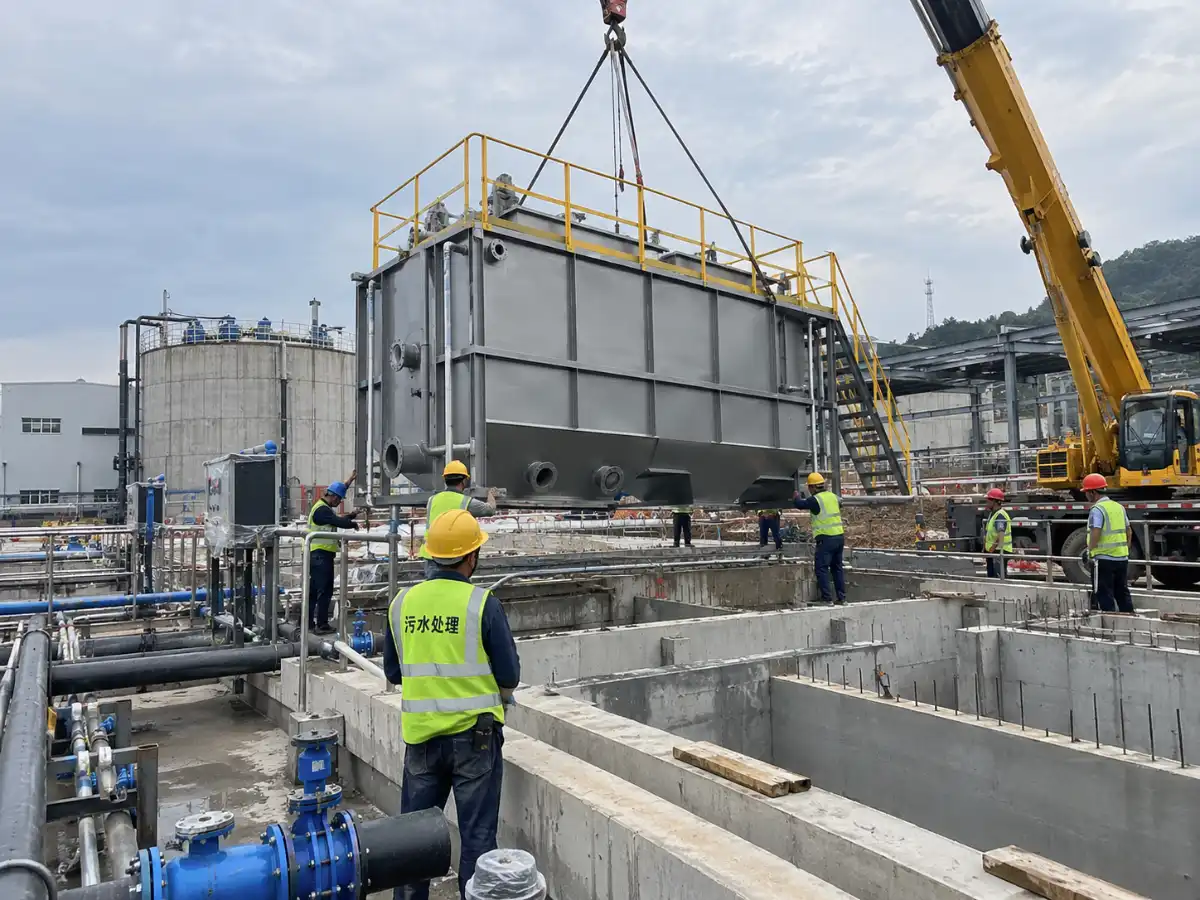
Almost every quote you receive will fall into one of three families. Understanding the differences before you talk to vendors keeps the conversation honest.
Mechanical Vapor Compression (MVC / MVR)
Here the vapor you generate gets compressed and reused as the heating medium. A compressor — usually a centrifugal or roots-type blower — lifts the vapor’s pressure and temperature so it can drive evaporation in the same vessel. The electrical demand per ton of water evaporated is the key metric, and it’s the reason MVC dominates when electricity is reasonably priced and steam is expensive or unavailable.
The compressor is the heart of the system and also the most expensive single component. Its selection depends on your evaporation rate, the boiling point elevation of your brine, and how much temperature lift you actually need. Get that lift wrong and you either can’t achieve the concentration you promised or you burn unnecessary power forever. I’ve written separately about how MVC evaporator heat exchangers interact with compressor duty, because these two components have to be designed as a pair, not independently.
Multi-Effect Evaporators
Multi-effect systems reuse vapor by passing it from one effect to the next at progressively lower pressure and temperature. A triple-effect unit can evaporate roughly three kilograms of water for every kilogram of steam, which is why it’s the workhorse where steam is cheap and available. The tradeoff is footprint and capital cost — you’re buying multiple vessels, multiple heat exchangers, and more instrumentation.
The economics shift depending on your steam price. If you have free waste steam, multi-effect wins easily. If you’re paying for boiler fuel, the math often swings back toward MVC. Our breakdown of multi-effect evaporators walks through how effect count changes both capital and operating cost.
Thermal Vapor Recompression (TVR)
Less common but still relevant. TVR uses a steam jet ejector to compress vapor instead of a mechanical compressor. Lower capital cost, no rotating equipment, but it consumes motive steam and offers less control. It shows up in specific niches where a plant already has high-pressure steam and wants a simple, robust solution.
Selection Comparison: Which Configuration Fits Your Project
This table reflects typical design ranges I’ve seen across projects. Actual numbers depend heavily on your specific chemistry, required concentration, and local utility costs — treat these as orientation, not specification.
| Parameter | MVC / MVR | Multi-Effect (2–3 effect) | Single-Effect / Thermal |
|---|---|---|---|
| Typical energy source | Electricity | Steam + some electricity | Steam or hot water |
| Specific energy (indicative) | 15–40 kWh per m³ evaporated | 0.3–0.5 kg steam per kg water (multi-effect) | 1.0–1.2 kg steam per kg water |
| Capital cost | Moderate to high | High | Lower |
| Footprint | Compact | Large | Small to moderate |
| Best fit | Steam-limited sites, ZLD, high electricity availability | Steam-rich plants, large flows | Small flows, pilot duty, low budget |
| Turndown flexibility | Good with VFD control | Moderate | Limited |
| Main rotating equipment | Compressor | Pumps, vacuum system | Pumps |
I want to be clear that the “specific energy” row is the single most abused number in vendor proposals. A compressor that looks efficient on paper can lose that advantage entirely if the boiling point elevation of your brine is high, because that elevation directly increases the required temperature lift. Always ask vendors to show you the boiling point elevation calculation, not just the compressor nameplate.
What Separates a Good Manufacturer From a Mediocre One
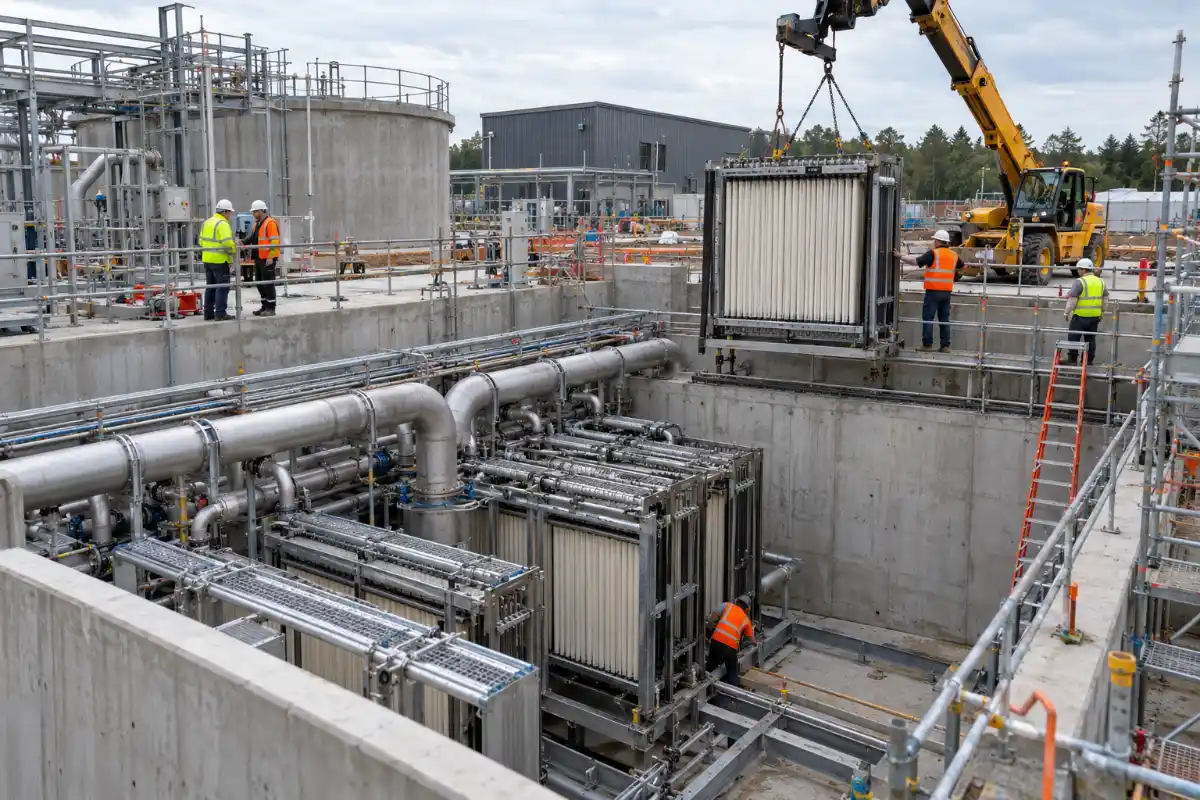
After enough projects, you start to see patterns. Here’s what I actually look for when evaluating a supplier.
They ask about your water before they quote
A serious manufacturer will not quote you off a one-line flow rate. They’ll want a full water analysis: total dissolved solids, hardness, silica, chlorides, sulfates, organics, pH, and any volatile compounds. Silica and calcium sulfate are the two scaling species that kill evaporator performance, and if your vendor doesn’t ask about them, they’re guessing.
If your feed is landfill leachate, the chemistry is genuinely nasty. Understanding what chemicals are in landfill leachate helps you have a more productive conversation about pretreatment requirements.
They’re honest about pretreatment
Almost every evaporator needs some pretreatment. Softening, degassing, pH adjustment, antiscalant dosing — the list depends on your feed. A vendor who tells you their evaporator handles everything without pretreatment is either inexperienced or selling you a system that will foul within months. The honest answer is usually “here’s what we need upstream, and here’s why.”
They specify materials properly
Chloride-rich wastewater at 60°C will destroy 316 stainless steel faster than most people expect. Good manufacturers specify duplex stainless, titanium, or high-alloy materials based on your actual chloride level and temperature, not based on what’s cheapest. They also know that the heat exchanger tubes, the vapor space, and the brine circulation loop may need different alloys because they see different conditions.
They talk about turndown and part-load operation
Your plant won’t always run at design flow. A manufacturer who only quotes performance at 100% load hasn’t thought about how the system behaves at 40% or 60%. Compressor surge, minimum circulation rates, and control stability all matter at part load, and they’re where a lot of “working” systems quietly fail.
In my experience, the single biggest predictor of a smooth project is whether the manufacturer’s process engineer has actually operated an evaporator. Vendors who’ve only designed them tend to underestimate the maintenance reality.
Energy Consumption and the Real Cost Picture
Capital cost gets all the attention during procurement. Operating cost determines whether the project was actually a good decision. Let me break down where the money goes.
- Electrical power — for MVC, this is the dominant cost. Compressor power scales with evaporation rate and temperature lift.
- Steam — for multi-effect and thermal systems, steam consumption drives operating cost. Even “cheap” steam has a real value if you could use it elsewhere.
- Cooling water — condensing the distillate and cooling the concentrate requires either cooling towers or a closed loop. This is often underestimated.
- Chemical dosing — antiscalants, caustic, and cleaning chemicals add up over a year.
- Maintenance labor — cleaning cycles, compressor service, pump repairs, and instrumentation calibration.
- Disposal of concentrate — sometimes the largest line item, especially for hazardous brines.
When I model lifecycle cost, I run a simple sensitivity: what happens to the total cost of ownership if electricity prices rise 30%? If the answer is “the project collapses,” you’ve chosen the wrong technology for your site. That’s why sites with unstable power pricing often prefer multi-effect systems even when MVC looks better on day one.
For a structured look at how these cost drivers play out, our analysis of MVR evaporator cost and price drivers goes into more detail than I can cover here.
Common Failure Modes and How to Avoid Them
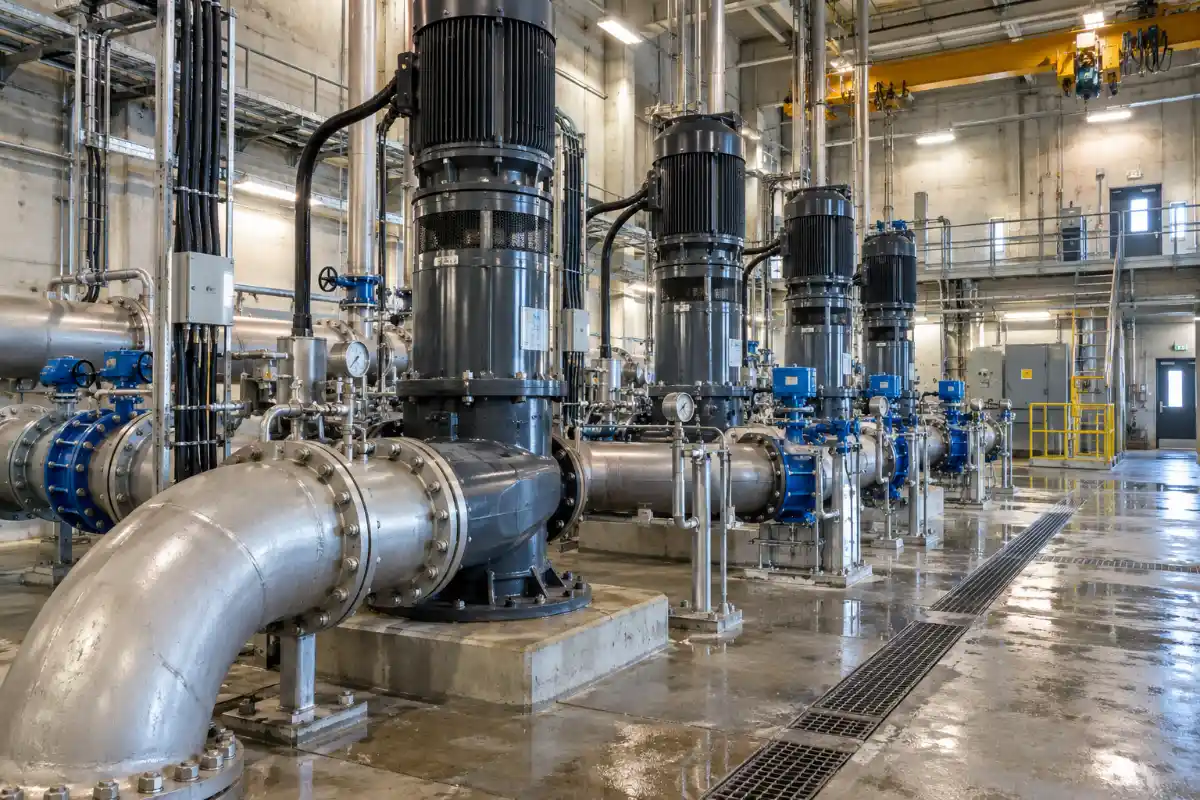
I’ve been called in to troubleshoot enough struggling installations to recognize the usual suspects. None of these are exotic.
Scaling on heat transfer surfaces
The number one cause of performance loss. As your brine concentrates, sparingly soluble salts precipitate on the hot surfaces of the heat exchanger. Heat transfer coefficient drops, the compressor has to work harder, and eventually you’re cleaning the unit every few days instead of every few weeks. The fix is usually a combination of proper pretreatment, antiscalant selection, and operating at a concentration that stays below the scaling threshold for your specific chemistry.
Compressor fouling and erosion
If your vapor train carries over liquid droplets or fine solids, the compressor impeller erodes. This is a slow degradation that shows up as gradually declining performance, and by the time you notice it, you’re looking at a rebuild. Proper mist elimination and droplet separation upstream of the compressor is non-negotiable.
Foaming and carryover
Wastewater with high organic content or surfactants foams in the boiling vessel. Foam carries liquid into the vapor line, which contaminates the distillate and stresses the compressor. Antifoam dosing and mechanical foam breaking are the usual solutions, but the real answer is understanding your feed chemistry before you buy.
Vacuum system instability
Vacuum leaks, condenser fouling, and ejector wear all degrade the vacuum, which raises the boiling point, which increases energy consumption. A vacuum system that’s slowly failing is easy to miss because the system keeps running — it just runs worse and worse. Trending your vacuum pressure over time is one of the simplest and most valuable maintenance habits you can build.
Control system drift
Conductivity sensors, level transmitters, and temperature elements drift. When they do, your concentration control drifts with them, and you either under-concentrate (wasting energy) or over-concentrate (scaling). Calibration schedules matter more than most operators expect.
Evaluating Manufacturers: A Practical Checklist
When you’re comparing industrial vacuum evaporator manufacturers, here’s what I’d actually put in front of each vendor. If they can’t answer these clearly, that tells you something.
- Can you show me a boiling point elevation calculation for my specific brine? This is the single most important technical question. If they don’t have it, they haven’t done the work.
- What pretreatment do you require, and why? A specific answer here is a good sign.
- What’s the expected cleaning frequency, and what drives it? If they say “rarely,” be suspicious.
- What’s your turndown range, and how does the system behave at minimum load?
- What’s the compressor service interval, and who does the work? For MVC systems, this is a major lifecycle cost.
- Can you provide references for similar wastewater chemistry? Not just similar flow — similar chemistry.
- What’s your commissioning and operator training process? The best-designed system fails if operators don’t understand it.
- What spare parts do you recommend keeping on site? A vendor who’s thought about this has thought about uptime.
I’d add one more thing that isn’t on most checklists: ask to speak with an operator at a reference site, not just the plant manager. Operators know where the system actually hurts.
Integration With Your Broader Treatment Train
An evaporator rarely stands alone. In most industrial applications, it sits at the back end of a treatment train that includes membrane concentration, chemical pretreatment, and solids handling. How you integrate these matters as much as the evaporator selection itself.
For high-salinity streams, membrane systems like DTRO membrane systems can concentrate the feed before it reaches the evaporator, which reduces evaporator duty and cuts total energy consumption. The tradeoff is membrane replacement cost and the complexity of managing two concentration stages. Where the feed is already concentrated or membrane fouling would be severe, going straight to evaporation is often simpler and more reliable.
If your project is driving toward zero liquid discharge, the evaporator is usually the crystallization or concentration step, and it has to be designed with the downstream crystallizer or spray dryer in mind. Our overview of zero liquid discharge systems covers how the pieces fit together.
Sludge handling deserves a mention too. If your process generates sludge that needs dewatering before disposal, the choice of dewatering equipment affects your overall operating cost and your waste volume. Our guide to screw press sludge dewatering covers the practical selection logic.
Regulatory Context: Why Evaporation Is Often the Right Answer
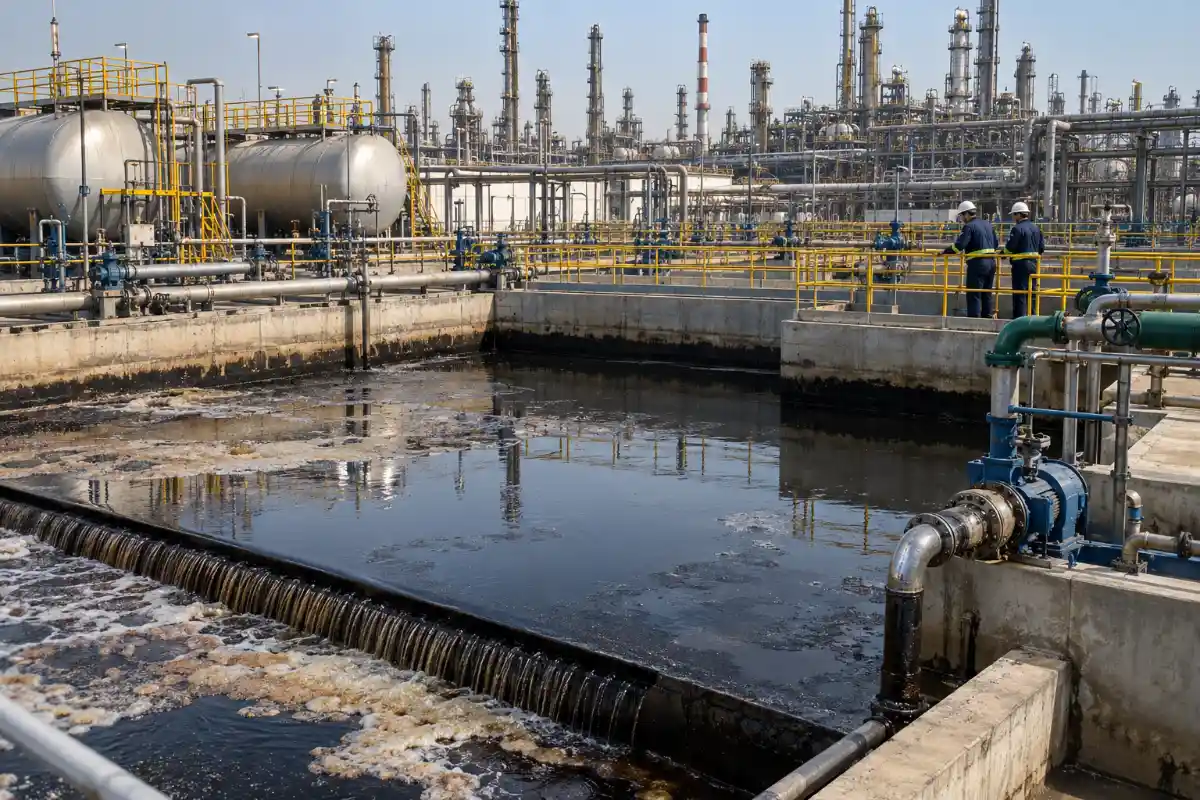
Discharge limits for dissolved solids, heavy metals, and specific ions have tightened across most industrial sectors. In many cases, conventional biological treatment and simple membrane filtration can’t meet the limits, and evaporation becomes the practical path to compliance.
The U.S. EPA’s framework for industrial discharge under the Clean Water Act sets the general structure, and the National Pollutant Discharge Elimination System governs how permits are issued. For projects with international scope, the World Bank’s water resources management guidance provides useful context on discharge expectations across regions. I’m not going to quote specific limits here because they vary enormously by jurisdiction, sector, and receiving water — that’s a conversation to have with your environmental consultant and your local regulator.
What I will say is this: when you’re designing for compliance, design for the limit plus a margin. Treatment systems that meet the limit exactly on the day of commissioning rarely meet it two years later after equipment has aged.
Commissioning and Startup: Where Projects Are Won or Lost
I’ve seen well-designed systems fail at startup because of poor commissioning discipline. Here’s what good commissioning looks like.
- Clean water testing first. Run the system on clean water to verify mechanical integrity, control logic, and instrumentation before introducing real wastewater.
- Incremental concentration. Bring the system up to design concentration gradually, watching for scaling, foaming, and control instability at each step.
- Operator training in the actual plant. Not a classroom session — hands-on, with the operators running the system under supervision.
- Documented baseline performance. Record energy consumption, distillate quality, and cleaning intervals during the first weeks so you have a reference point for future troubleshooting.
- Spare parts and consumables on site. The first cleaning cycle will reveal what you actually need.
If a manufacturer treats commissioning as a two-day handoff, expect problems. Good commissioning takes weeks, and it’s worth every hour.
Maintenance Reality: What You’ll Actually Be Doing
Let me be direct about maintenance, because this is where a lot of projects quietly disappoint.
Expect to clean heat transfer surfaces periodically. The interval depends on your chemistry and how well pretreatment is working, but it’s rarely “never.” Expect compressor service at defined intervals, which for large MVC units means planned downtime and specialized labor. Expect to replace pumps, sensors, and gaskets on a schedule. Expect to trend your performance data and act on it.
What you should not expect is a system that runs unattended for years. If a vendor promises that, they’re either selling you a very small system or they haven’t operated one.
The good news is that maintenance is predictable when the system is designed well. The bad news is that unpredictable maintenance is a symptom of a design that didn’t account for your actual wastewater.
A Note on Vendor Support and Long-Term Partnership
The manufacturer relationship doesn’t end at commissioning. In fact, that’s when it starts to matter most. I’ve seen projects where the vendor disappeared after handover and the plant struggled for years, and I’ve seen projects where the vendor stayed engaged and the system improved over time.
What to look for: responsive technical support, willingness to visit the site when problems arise, spare parts availability, and a genuine interest in how the system performs after startup. If a vendor treats your project as a transaction, you’ll feel it within the first year. If they treat it as a long-term relationship, you’ll feel that too.
When you’re ready to talk specifics about your wastewater and what configuration makes sense, our engineering team is available to work through the process with you. Reach out to discuss your project requirements.
Frequently Asked Questions
How do I choose between MVC and multi-effect for my wastewater?
Start with your utility situation. If steam is expensive or unavailable and electricity is reasonably priced, MVC is usually the better fit. If you have low-cost steam or waste heat, multi-effect systems often win on operating cost despite higher capital. Then check your flow rate and required concentration — very high flows favor multi-effect because compressor size becomes impractical, while smaller flows with high concentration ratios often favor MVC. Finally, look at your site’s power reliability. MVC depends on stable electricity, and if your grid is unreliable, that’s a real risk.
What’s a realistic energy consumption range for an industrial vacuum evaporator?
For MVC systems, typical specific consumption falls in the range of 15 to 40 kWh per cubic meter of water evaporated, depending on the boiling point elevation of your brine and the compressor efficiency. Multi-effect systems consume steam in the range of 0.3 to 0.5 kilograms of steam per kilogram of water evaporated for two to three effects, plus electrical power for pumps and vacuum. These are indicative ranges — your actual numbers depend on your specific chemistry and operating conditions.
How often will I need to clean the heat exchangers?
This varies enormously. With good pretreatment and well-controlled concentration, some systems run for weeks between cleanings. With difficult chemistry or poor pretreatment, cleaning can be needed every few days. The key variables are your scaling species (silica, calcium sulfate, and carbonate hardness are the usual culprits), your operating temperature, and your concentration factor. Ask your vendor for a specific cleaning interval estimate based on your water analysis, and treat any answer of “rarely” with skepticism.
What pretreatment is typically required before an evaporator?
Common pretreatment steps include softening or demineralization to remove hardness, pH adjustment, degassing to remove dissolved gases that would corrode the system, and antiscalant dosing to inhibit precipitation of sparingly soluble salts. Some feeds also need oil and grease removal, filtration, or oxidation of organics. The specific combination depends entirely on your wastewater chemistry, which is why a full water analysis is essential before any design work begins.
Can an evaporator handle wastewater with high organic content?
It can, but with caveats. High organics increase foaming tendency, can foul heat transfer surfaces, and may carry over into the distillate. You’ll typically need antifoam dosing, possibly some form of organic removal upstream, and careful control of the concentration factor to avoid the organics reaching problematic levels in the brine. Some organic compounds are volatile and will partition into the vapor, contaminating your distillate — this needs to be evaluated case by case. It’s not a deal-breaker, but it’s a design consideration that has to be addressed honestly.
What’s the typical lead time for a custom industrial evaporator system?
For a custom-designed system, lead times commonly run in the range of four to nine months from order to delivery, depending on the size, complexity, and current manufacturing load. Large MVC systems with custom compressors and exotic alloy heat exchangers tend toward the longer end. Add several weeks for installation and commissioning. If a vendor quotes dramatically shorter lead times, ask what they’re cutting — sometimes it’s engineering review, and that’s not a corner you want cut.
How do I evaluate a manufacturer’s technical capability?
Ask them to walk you through their design process for your specific wastewater. A capable manufacturer will want your full water analysis, will discuss boiling point elevation, scaling risk, and pretreatment requirements, and will show you how they arrived at their equipment sizing. They’ll also be honest about what their system can and can’t do. If a vendor gives you a quote without asking detailed questions about your water, that’s a red flag regardless of their price.
What happens to the concentrate after evaporation?
The concentrate — sometimes called brine or reject — is typically the smallest volume stream in the process, which is one of the main advantages of evaporation. Its disposal depends on its composition. Non-hazardous brine may go to a permitted disposal well, a wastewater treatment plant that accepts high-TDS streams, or further processing. Hazardous brine requires specialized disposal. In zero liquid discharge projects, the concentrate goes to a crystallizer or spray dryer to produce a solid waste. The cost of concentrate disposal is often overlooked during project planning and can be a significant operating expense.