

If you’re specifying an industrial wastewater evaporator, the fastest way to get it wrong is to size it on flow rate alone. I’ve watched plants buy a skid that looked perfect on paper, then fight scaling, fouling, and compressor failures within the first year — because nobody asked what was actually dissolved in the water. An evaporator is a heat and mass balance machine, not a filter. It concentrates what you feed it, and everything else — chemistry, pretreatment, materials, turndown — decides whether it runs for fifteen years or fifteen weeks. This guide walks through the selection logic I use on real projects: characterizing the stream, choosing between MVC, MVR, and multi-effect designs, costing out lifecycle energy, and avoiding the maintenance traps that quietly drain operating budgets. By the end, you should be able to hold a competent conversation with any evaporator vendor and know which questions expose a weak proposal.
Start With the Water, Not the Equipment
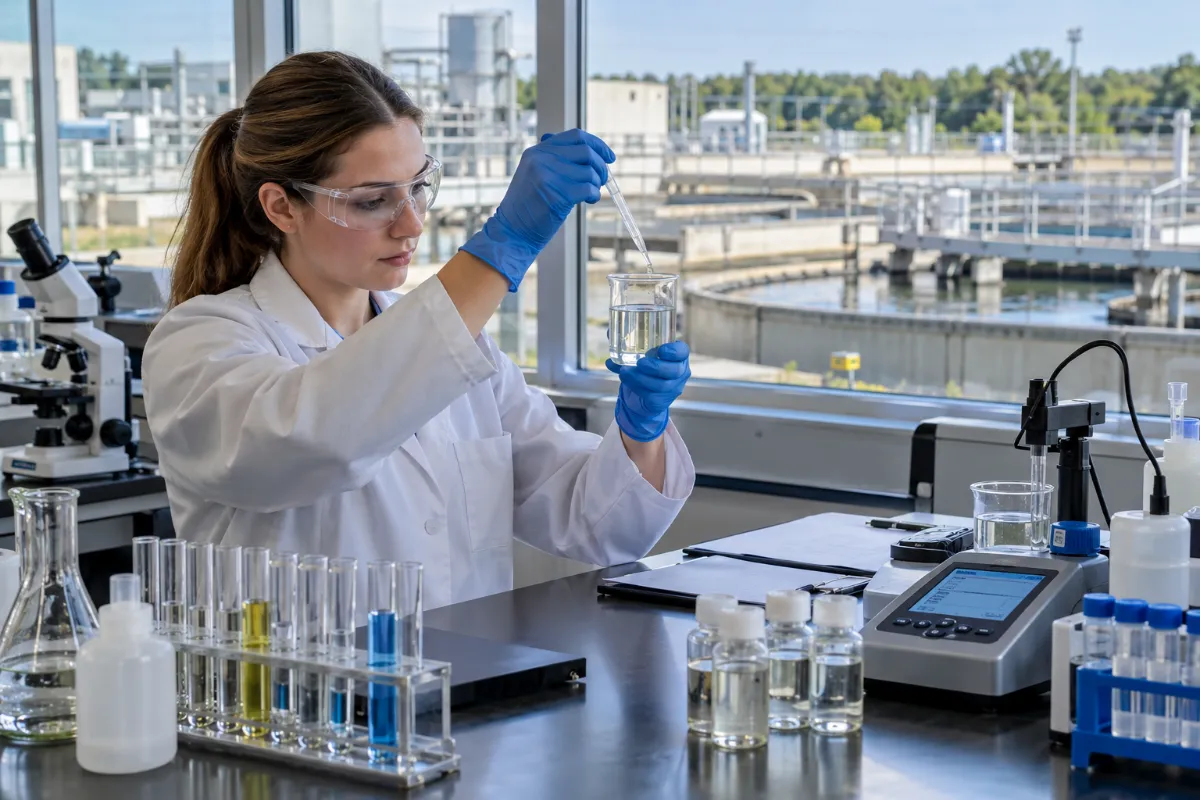
Every failed evaporator project I’ve been called into traces back to the same root cause: the feed stream was described in two numbers (flow and TDS) when it should have been described in twenty. Before you talk to a single supplier, you need a full water analysis and an honest operating profile. The evaporator doesn’t care that your plant is “similar to” another plant down the road. It cares about what’s in your specific water.
Here’s what I insist on seeing before design begins:
- Total dissolved solids and ionic composition. Not just TDS — the ratio of calcium to magnesium to sodium to sulfate to chloride matters enormously, because it determines which salts precipitate first and at what concentration.
- Scaling ions: calcium, magnesium, barium, strontium, silica, carbonate, sulfate. Silica is the silent killer in evaporators. Above roughly 100–150 mg/L, you need to plan for it explicitly.
- Organics: COD, TOC, oils and grease, solvents. Organics foam, foul heat transfer surfaces, and can carry over into condensate.
- Volatiles: ammonia, volatile organic compounds, and anything with a low boiling point. These don’t stay in the concentrate — they follow the vapor and contaminate your distillate.
- pH and buffering capacity. pH swings as you concentrate, and materials selection depends on where it lands.
- Suspended solids and hardness. Anything that can settle or scale needs pretreatment or it becomes a cleaning schedule.
I also want the variability, not just the average. Does the stream change between shifts? Seasonally? When a production line switches products? An evaporator designed for a steady 10 m³/h feed will behave very differently when it sees 6 m³/h of dilute rinse water in the morning and 12 m³/h of concentrated mother liquor at night.
Matching Evaporator Type to Stream and Site
There is no universally best evaporator. There’s a best evaporator for your stream, your utility costs, your operator skill level, and your site constraints. The three families you’ll encounter are mechanical vapor compression (MVC/MVR), multi-effect evaporation, and thermal (steam-driven) systems — and within each, there are meaningful variants.
Mechanical Vapor Compression (MVC / MVR)
MVC and MVR are essentially the same idea: compress the vapor you just produced and reuse it as the heating medium. A compressor does the work that steam would otherwise do. The energy math is attractive — a well-designed unit can move roughly 10–30 kWh of electricity per cubic meter of distillate, versus the equivalent of 100+ kWh of thermal energy in a single-effect steam system. That’s why MVC dominates where electricity is reasonably priced and steam is expensive or unavailable.
The trade-offs are real. Compressors are the heart of the system and they’re expensive to repair or replace. The technology works best on streams with moderate boiling point elevation — high-salinity brines push the compressor duty up and the efficiency down. And you need a stable, clean feed; MVC systems hate fouling because cleaning a compressor-driven circuit is a much bigger job than cleaning a steam-heated calandria.
If you want to go deeper on the compressor and heat exchanger side of these systems, the engineering detail matters more than the marketing: mechanical vapor compression MVC evaporator designs live or die on compressor selection and heat exchanger surface area. For a broader comparison of MVC vs MVR terminology and applications, see MVR technology.
Multi-Effect Evaporation
Multi-effect systems chain evaporator bodies together so that the vapor from one effect heats the next. Each additional effect reuses energy, so a triple-effect system uses roughly one-third the steam of a single-effect system for the same evaporation duty. The classic rule of thumb is that steam economy scales roughly linearly with the number of effects — but capital cost, footprint, and complexity also scale, and diminishing returns set in.
Multi-effect designs shine when you have cheap or waste steam available, when the stream is highly scaling (easier to clean a steam-heated vessel than a compressor circuit), or when electricity is expensive relative to fuel. They also handle higher boiling point elevation better than single-stage MVC in some configurations, because you can stage the temperature profile.
The practical effect count usually lands between two and four. Single-effect systems make sense for small flows or where simplicity wins: single-effect evaporators are the simplest, cheapest, and easiest to operate. Double and triple-effect systems trade capital for steam savings — double-effect evaporators and triple-effect evaporators are the workhorses of medium-to-large industrial applications.
Hybrid and Thermal Systems
In many real plants, the answer is a hybrid: membrane concentration (RO or DTRO) to get the bulk of the water out cheaply, then an evaporator to finish the job and reach zero liquid discharge. Membranes handle the volume; evaporators handle the salinity and the final polish. This is often the lowest lifecycle cost configuration, but it only works if the membrane can tolerate the stream chemistry without fouling beyond recovery.
| Technology | Typical Energy Profile | Best For | Main Watch-Out |
|---|---|---|---|
| Single-effect MVC | ~15–30 kWh/m³ distillate | Small flows, simple streams, no steam available | High energy per unit; compressor cost |
| Multi-effect MVC | ~8–20 kWh/m³ | Medium flows, moderate salinity | Compressor sizing vs. boiling point elevation |
| Double/triple-effect thermal | Steam-driven; economy 2–3 kg distillate per kg steam | Steam available, scaling streams | Condenser load, cooling water demand |
| Membrane + evaporator hybrid | Membrane 2–6 kWh/m³ + evaporator finishing | High volume, ZLD targets | Membrane fouling and brine disposal |
These ranges are indicative and project-dependent. Your actual numbers depend on boiling point elevation, feed temperature, heat exchanger design, compressor efficiency, and how aggressively you push concentration.
The Pretreatment Question Nobody Wants to Pay For
Here’s the uncomfortable truth: most evaporator problems are pretreatment problems in disguise. The evaporator is a concentrating device. If you feed it scaling ions, it will scale. If you feed it suspended solids, it will foul. If you feed it oil, it will coat the heat transfer surfaces and your efficiency will fall off a cliff.
Pretreatment usually involves some combination of:
- Softening or chemical precipitation to remove hardness before it becomes scale.
- Filtration — multimedia, cartridge, or ultrafiltration — to protect heat exchangers from solids.
- Deaeration or degassing for ammonia and other volatiles that would otherwise carry into condensate.
- pH adjustment to keep scale-forming salts soluble or to drive precipitation where you want it.
- Oil and grease removal via DAF, coalescing, or biological treatment upstream.
I’ve seen projects where the pretreatment package cost 40% of the evaporator itself, and the client balked — right up until the first cleaning cycle, when they realized the alternative was a two-day shutdown every three weeks. Pretreatment is not optional overhead. It’s the difference between a system that runs and a system that’s always being cleaned.
For oily or complex streams, this is especially critical. If your wastewater carries significant oil, review evaporation with oily wastewater before you commit to any evaporator design. The heat transfer implications are substantial.
Energy, Cost, and the Lifecycle Math That Actually Matters
Capital cost gets the attention. Operating cost decides whether the project was a good idea. I’ve watched clients save 20% on the purchase price and spend 40% more over five years on electricity and maintenance. Here’s how I frame the economics.
Capital Cost Drivers
The big capital drivers are heat exchanger surface area, compressor size and type, materials of construction, and the degree of automation. Materials escalate fast: carbon steel is cheap but rarely acceptable; 316L stainless is the baseline for most industrial wastewater; duplex, super duplex, titanium, and high-nickel alloys appear when chlorides, pH extremes, or high temperatures demand them. A stream that’s benign at 60°C can be aggressive at 100°C.
Compressor selection alone can swing capital by 30–50%. Centrifugal compressors are efficient at large flows but lose turndown; positive displacement (roots, screw) types handle smaller flows and wider ranges but cost more per unit of capacity. Getting this wrong means either paying for capacity you’ll never use or running a compressor outside its sweet spot for years.
Operating Cost Drivers
Energy dominates. For an MVC system, electricity is typically 60–80% of operating cost. For a steam-driven multi-effect system, steam and cooling water dominate. Maintenance — compressor overhauls, heat exchanger cleaning, gasket and seal replacement — is the second-largest line item.
There’s a useful way to think about it: every kilogram of water you remove with a membrane instead of an evaporator saves you roughly 80–90% of the energy for that kilogram. That’s why hybrid designs are so common in large ZLD projects. The evaporator handles the last, hardest portion of the concentration — where membranes can’t go — and the membrane handles the bulk volume where it’s cheap.
If you’re budgeting a project, it’s worth looking at realistic cost drivers rather than vendor quotes in isolation: MVR evaporator cost, CAPEX, and OPEX price drivers breaks down where the money actually goes. And for the full picture of how evaporators fit into a zero liquid discharge strategy, see zero liquid discharge ZLD systems.
Design Details That Separate Good Systems From Regrettable Ones
Two evaporators with identical flow and concentration specs can behave completely differently. The difference is in the details.
Heat Exchanger Configuration
Falling film, rising film, forced circulation, and plate designs each have a niche. Falling film is gentle and efficient for clean, low-viscosity streams. Forced circulation handles scaling and crystallizing streams because the high velocity keeps solids suspended. Plate exchangers are compact and easy to clean but have narrow gaps that foul quickly with solids. The choice follows the chemistry, not the price list.
Heat exchanger design is where a lot of the real engineering effort goes. If you want to understand what to ask a supplier about surface area, tube geometry, and materials, MVC evaporator heat exchangers is worth reading before your technical review meetings.
Turndown and Load Flexibility
Real plants don’t run at design point. They run at 60% on Tuesdays and 110% during a production push. A system with poor turndown either can’t handle the low end without scaling or can’t handle the high end without exceeding compressor limits. Ask specifically: what’s the minimum stable flow, and what happens to the heat balance at that flow?
Materials of Construction
This is where a lot of projects quietly go wrong. Chlorides at temperature are the classic stress corrosion cracking risk. High pH can attack aluminum and some stainless grades. Organic acids and solvents can degrade elastomers and gaskets. I always ask for a materials compatibility matrix tied to the actual operating temperature and concentration profile — not a generic recommendation.
Controls and Instrumentation
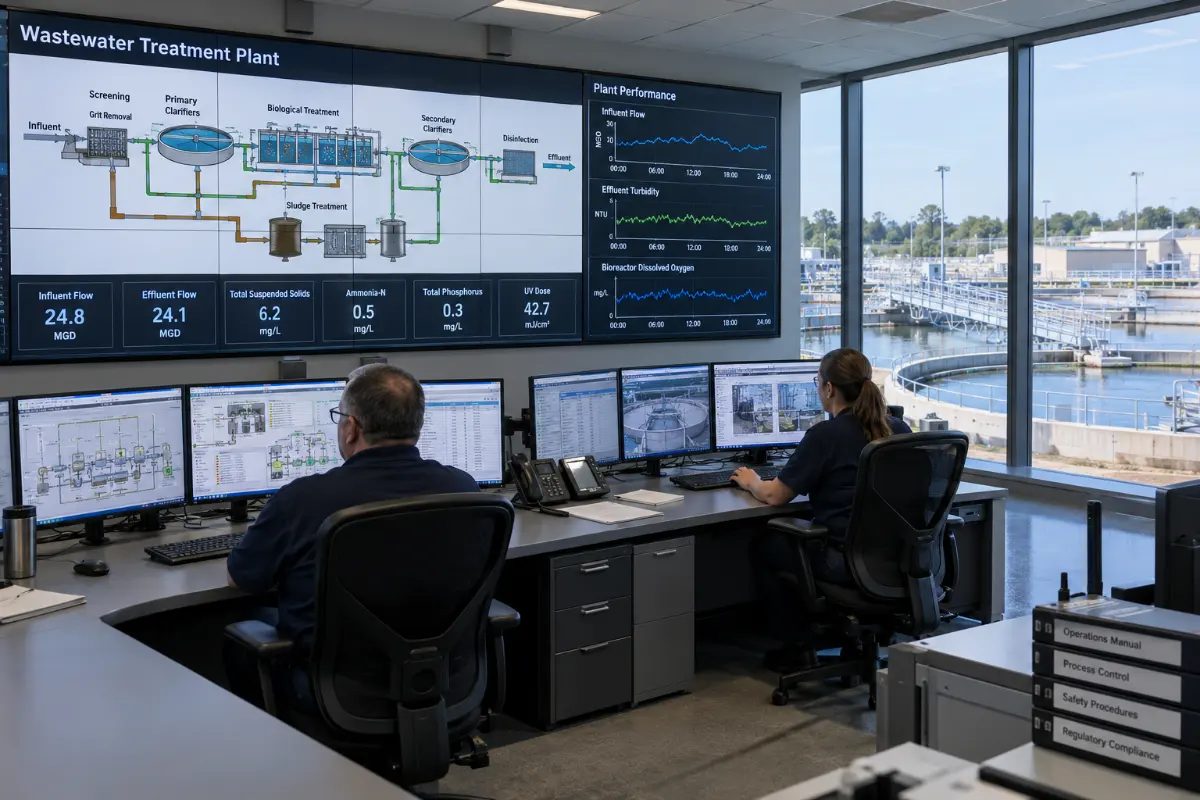
An evaporator without good instrumentation is a machine you operate blind. You need reliable density or conductivity measurement for concentration control, temperature and pressure at each stage, and level control that doesn’t hunt. Automated clean-in-place (CIP) capability is worth the capital if your stream fouls predictably — which most industrial streams do.
Operating and Maintenance Reality
Here’s what nobody tells you in the sales meeting: your evaporator will spend a meaningful fraction of its life being cleaned. How much depends on how well you characterized the stream and how honest you were about variability.
Common failure modes and their root causes:
- Scaling on heat transfer surfaces. Usually hardness or silica that wasn’t removed upstream. Manifests as falling capacity and rising compressor discharge temperature.
- Foaming and carryover. Organics, surfactants, or high dissolved solids. Contaminates condensate and can trip the system.
- Compressor vibration or surging. Often a symptom of fouled heat exchangers changing the system curve, or of operating outside the compressor’s design envelope.
- Corrosion and pitting. Wrong material for the chloride/temperature combination, or pH drift during concentration.
- Condensate quality excursions. Volatiles following the vapor, or carryover from foaming.
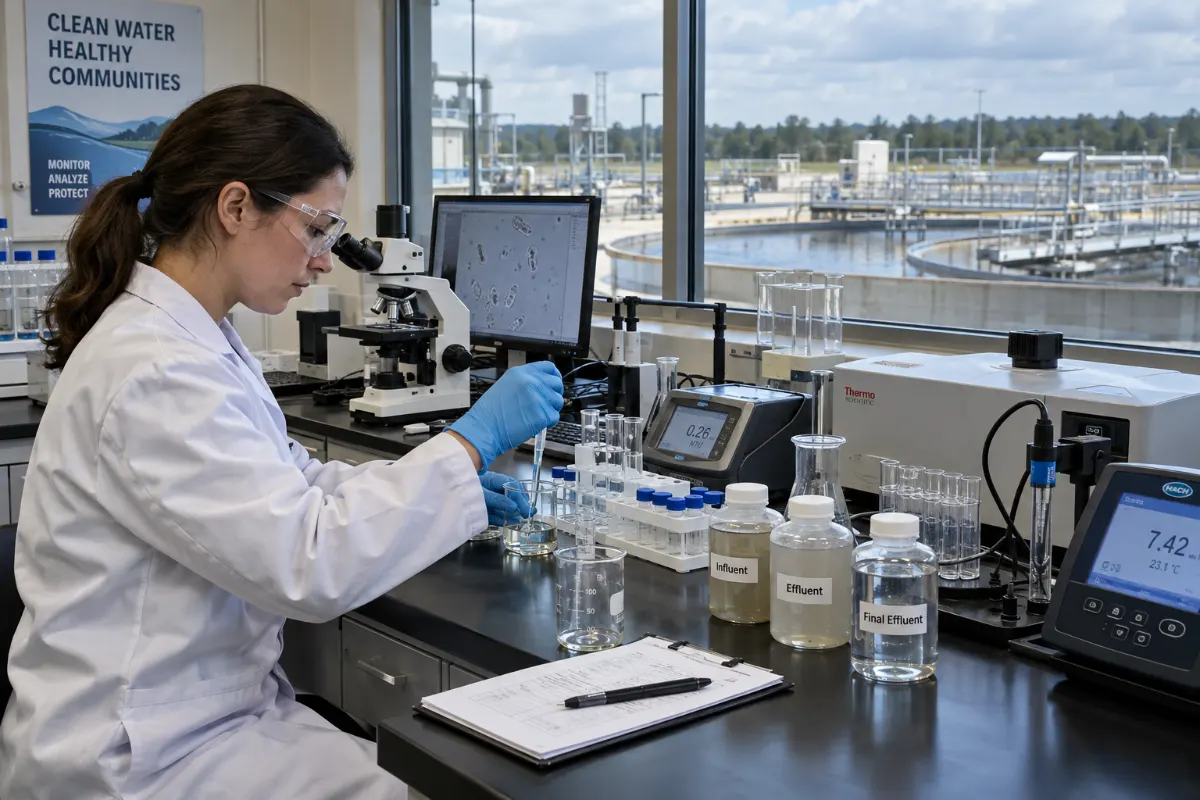
Preventive maintenance on an evaporator is mostly about watching trends, not reacting to alarms. Track compressor power, heat transfer coefficient (or its proxy), and condensate quality over time. A slow decline in heat transfer tells you scaling is starting — you can plan a cleaning instead of being forced into an emergency shutdown.
Spare parts strategy matters more than most buyers expect. Compressor internals, mechanical seals, gaskets, and instrumentation have lead times. A plant that keeps critical spares on site recovers from a failure in hours; one that doesn’t waits weeks.
How to Evaluate Vendor Proposals
When you’re comparing quotes, the numbers on the first page are the least useful. Here’s what I actually read for:
- Does the proposal include a full water analysis and mass balance? If not, the design is a guess.
- What’s the stated concentration limit, and why? A credible vendor can explain which salt or compound sets the limit and what happens as you approach it.
- What pretreatment is assumed, and is it in the scope? Watch for pretreatment listed as “by others” — that’s where finger-pointing starts.
- What’s the guaranteed performance, and under what conditions? A guarantee without defined feed chemistry and operating envelope is meaningless.
- What’s the maintenance schedule, and what does a cleaning cycle cost in downtime? If the vendor can’t answer this, they haven’t run the system.
- What’s the materials compatibility basis? Ask for the specific alloy and the corrosion data behind it.
- What’s the turndown range, and what happens at the low end?
A vendor who can’t walk through these points in a technical meeting is either selling someone else’s equipment or hasn’t done the engineering. Either way, that’s your signal.
If you want a starting point for scoping a project or comparing configurations, it’s often faster to have a focused technical conversation than to wade through generic brochures. The engineering team can walk through your stream chemistry and site constraints directly: talk to our engineers about your project.
Case-Style Examples: What Different Streams Teach You
I’ll keep these anonymous because the specifics belong to the clients, but the engineering lessons are general.
Electroplating Rinse Water
A plating operation generates large volumes of dilute rinse water with moderate heavy metals and a fairly benign salt profile. The winning configuration was membrane concentration to cut volume, followed by an MVC evaporator on the concentrated reject. The evaporator handled the final concentration to a small brine volume for disposal. Key lesson: when the bulk of the water is dilute, don’t evaporate it — concentrate it with membranes first. The energy difference over a year is enormous.
Pharmaceutical Wastewater
A pharmaceutical plant had a stream with high organic load, variable composition between batches, and strict condensate quality requirements. The evaporator needed robust pretreatment (filtration, pH control, and a biological step upstream) and a design that could tolerate batch-to-batch swings. The critical design decision was turndown — the system had to run stably at 40% of design flow during low-production weeks without scaling. Forced circulation with automated CIP made the difference.
Landfill Leachate
Leachate is one of the hardest streams you’ll ever feed an evaporator: high ammonia, high chlorides, variable organics, and a composition that shifts as the landfill ages. Ammonia is the classic trap — it follows the vapor and contaminates the distillate unless you strip it or use a design that handles it. Chlorides drive materials selection toward higher alloys. The systems that work in leachate are conservative, well-instrumented, and designed with more cleaning access than you’d think necessary. If you’re dealing with leachate specifically, understanding the chemistry is the first step: what chemicals are in landfill leachate covers the composition challenges in detail.
Across all three, the pattern is the same: the evaporator succeeds or fails based on how well the feed stream was understood and how honestly the variability was designed for.
Where Evaporators Fit in a Broader Treatment Train
It’s worth stepping back. An evaporator is rarely the whole solution — it’s the concentration and volume-reduction step in a larger treatment train. Upstream you might have equalization, biological treatment, DAF, membrane bioreactor, or RO. Downstream you have crystallizer, dryer, or brine disposal. The evaporator’s job is to take a large volume of water with dissolved solids and turn it into a small volume of concentrate plus clean distillate.
That framing helps you make better decisions. If you can reduce the volume upstream cheaply, do it. If you can recover the distillate for reuse, count that as a benefit. If the concentrate can be further processed to a solid, you’ve reached zero liquid discharge. Each step has its own cost and complexity, and the optimal train is the one with the lowest total lifecycle cost — not the lowest evaporator price.
Evaporators also pair naturally with membrane systems. High-pressure RO and DTRO can push concentration to the point where osmotic pressure becomes the limiting factor, at which point thermal or MVC evaporation takes over. If you’re building a ZLD train, the interface between membrane and evaporator is where most of the design effort goes — and where most of the operating cost lives.
Frequently Asked Questions
How do I know if I need an evaporator at all?
If your stream has high dissolved solids (roughly above 30,000–50,000 mg/L TDS) and you need to reduce volume or recover water, an evaporator is usually the practical option. Below that range, membrane processes are typically cheaper to operate. The decision point depends on the specific ions, because osmotic pressure and scaling potential vary widely. Run the mass balance before you decide.
MVC or multi-effect — which is cheaper to run?
It depends on your local energy prices. MVC runs on electricity; multi-effect runs on steam. If steam is cheap or available as waste heat, multi-effect usually wins on operating cost. If electricity is cheap and steam is expensive, MVC wins. In many locations the difference is close enough that capital cost, footprint, and maintenance access become the deciding factors.
What’s the biggest cause of premature evaporator failure?
In my experience, inadequate pretreatment. Scaling, fouling, and corrosion almost always trace back to something in the feed that wasn’t removed or accounted for. The second most common cause is operating outside the design envelope — running at flows or concentrations the system wasn’t built for.
How often will I need to clean the heat exchangers?
That varies enormously with the stream. A clean, well-pretreated stream might go months between cleanings. A scaling or organic-heavy stream might need cleaning every few weeks. The right design includes CIP capability and a cleaning schedule based on observed heat transfer decline, not a fixed calendar.
Can an evaporator handle variable flow from my plant?
It can, within limits. The key is turndown — the ratio between maximum and minimum stable flow. Most systems handle 50–100% of design flow well; below that, heat balance and scaling risk become problems. If your plant has wide swings, design for the low end and use equalization tanks to smooth the peaks.
What materials should I specify?
It depends on chlorides, pH, temperature, and the specific ions present. 316L stainless is a common baseline, but chloride-bearing streams at elevated temperature often require duplex, super duplex, or higher alloys. Get a materials compatibility assessment based on your actual operating profile, not a generic recommendation.
How do I evaluate the condensate quality?
Test it. The condensate should meet whatever reuse or discharge standard applies. Watch for volatiles (ammonia, organics) that follow the vapor, and for carryover from foaming. If condensate quality matters to your process, specify it in the performance guarantee and require the vendor to demonstrate it during commissioning.
What’s the typical lead time for an industrial evaporator?
For a custom-designed system, expect several months from order to delivery, plus installation and commissioning time. Compressor lead times are often the critical path. If schedule is tight, ask early about long-lead items and consider whether a modular or pre-engineered package fits your application.