

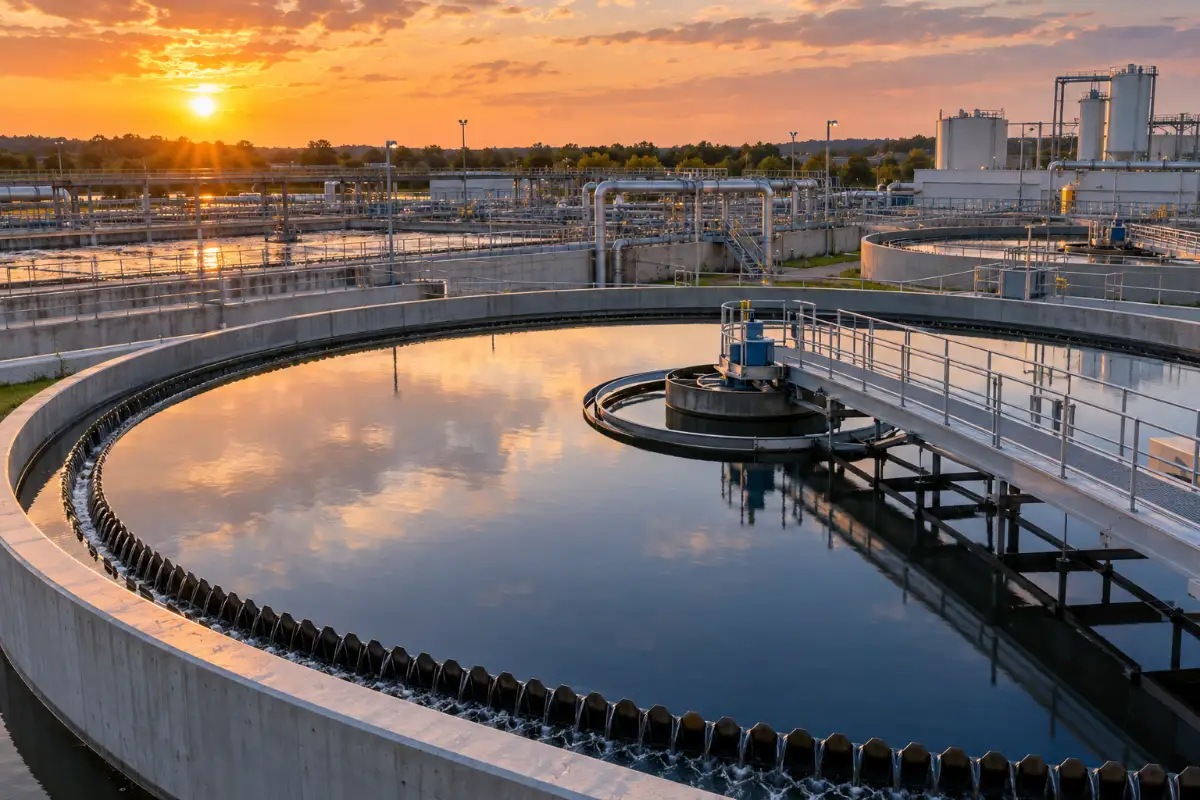
Landfill leachate RO concentrate is the reject stream left behind after reverse osmosis has pulled clean permeate out of raw leachate. It typically represents 15–30% of the feed volume but carries almost all of the salts, hardness, and residual organics. You cannot send it back to the landfill indefinitely, and you usually cannot discharge it without treatment. This article walks through the practical options I use on real projects: evaporation, DTRO and high-pressure RO staging, solidification, and brine crystallization, along with the design logic, energy trade-offs, and maintenance realities behind each one.
What Makes RO Concentrate Different From Raw Leachate
People often assume concentrate is just “stronger leachate.” That is not quite right, and the difference matters for equipment selection.
Raw leachate from a mature landfill is usually high in ammonia, COD, and a wide spread of dissolved solids. After biological treatment and RO, the permeate is clean. The concentrate, however, has been stripped of most of its biodegradable carbon. What remains is a brine-like liquid with these characteristics:
- High conductivity, often several times the raw leachate value
- Concentrated chlorides and sulfates
- Scale-forming ions such as calcium, magnesium, barium, and silica
- Refractory organics that survived biological treatment
- Elevated ammonia in some designs, depending on where the RO sits in the train
That combination is what makes concentrate hard to handle. It is too salty for another biological pass, too concentrated for a standard RO feed without pretreatment, and too dirty to simply evaporate in a cheap unit without fouling. If you want a deeper look at what is actually in leachate, this breakdown of chemicals found in landfill leachate is a useful reference before you size anything.
The Core Treatment Options and When Each One Fits
There is no universal answer. I have used all of the following on different sites, and the choice usually comes down to discharge limits, available energy, and how much solid residue the site can manage.
1. Staged High-Pressure RO and DTRO
The first move on most projects is to squeeze more water out of the concentrate before doing anything thermal. A DTRO membrane system uses disc-tube modules with an open channel that tolerates higher fouling than a spiral-wound element. High-pressure RO can push operating pressure into the 60–120 bar range depending on the salinity, recovering another 40–60% of the concentrate as permeate.
What this does well:
- Reduces the volume that must go to thermal treatment
- Lower specific energy than evaporation for the water it recovers
- Modular, so it can be staged as the landfill ages
What it does not do: it does not eliminate the brine. You still end up with a smaller, more concentrated reject stream that needs a final destination. Membrane fouling from organics and scaling from silica remain the two biggest operational headaches, and cleaning frequency is the number one cost driver in my experience.
2. Mechanical Vapor Recompression (MVC/MVR)
When the concentrate has to be reduced to a solid or near-solid, evaporation is the workhorse. An MVC evaporator compresses the vapor it generates and reuses that heat to drive further evaporation. For leachate concentrate, this is often the most energy-efficient thermal route because the compressor does most of the work instead of a boiler.
Typical design ranges I see quoted for leachate concentrate service:
- Concentration factor: 5–15x, project-dependent
- Specific power consumption: roughly 15–40 kWh per m³ of distillate, driven by boiling point elevation and compressor efficiency
- Distillate quality: usually good enough to polish with RO before discharge
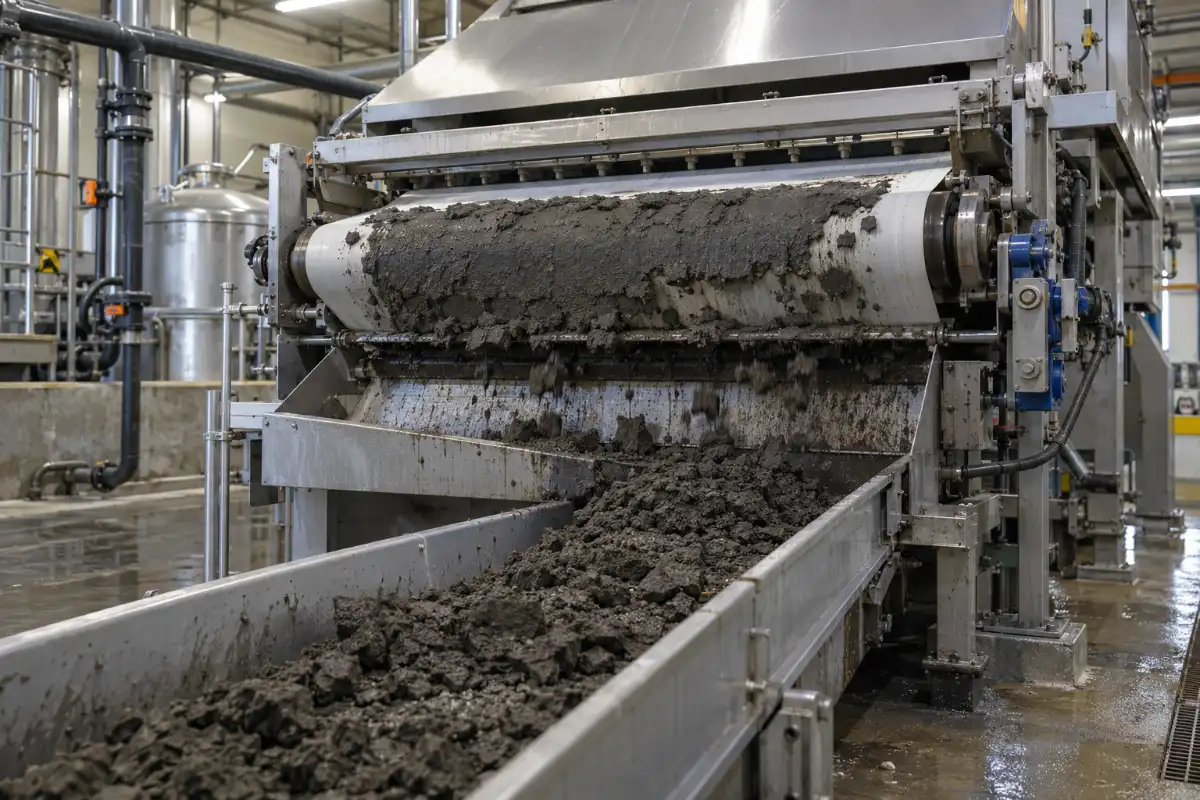
The catch is scaling and fouling. Concentrate with high hardness or silica will scale heat transfer surfaces fast. Pretreatment with softening, antiscalant, or seeded crystallization is often mandatory, and the heat exchanger design has to allow for frequent cleaning. I have seen projects where the evaporator worked beautifully for six months and then lost 30% capacity because nobody managed the pretreatment chemistry.
3. Multi-Effect Evaporation (MEE)
Where waste heat or low-cost steam is available, a multi-effect evaporator can be more economical than MVC. Steam economy improves with each effect, so a triple-effect unit uses roughly a third of the steam of a single-effect design for the same evaporation duty. The trade-off is capital cost, footprint, and the need for a reliable steam supply.
For leachate concentrate specifically, MEE is often paired with a final crystallizer. The evaporator brings the brine up in concentration, and the crystallizer forces the remaining salts to drop out as solids.
4. Solidification and Stabilization
On smaller sites or where thermal treatment is not feasible, concentrate can be mixed with cement, lime, fly ash, or other binders to lock the salts into a solid matrix. The solidified material is then landfilled. This is not elegant, and it adds mass to the landfill, but it is simple, low-energy, and requires far less operator skill than an evaporator train.
I treat solidification as a fallback, not a first choice. It works when concentrate volumes are small and the site has no thermal infrastructure.
5. Zero Liquid Discharge (ZLD) as a Full Train
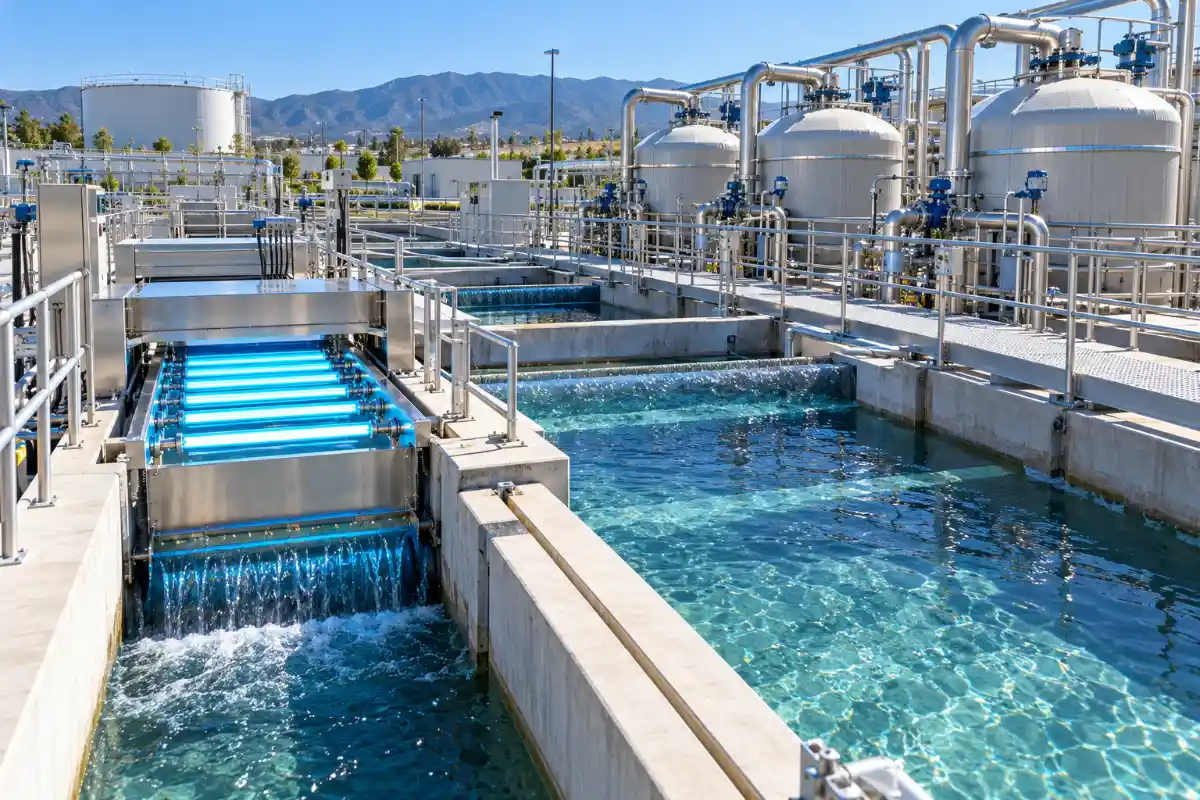
The combination that most modern projects move toward is a zero liquid discharge system: pretreatment, high-pressure RO or DTRO for bulk volume reduction, MVC or MEE for further concentration, and a crystallizer or spray dryer for final solids. The output is distilled water that can be reused or discharged, plus a dry salt cake that goes to landfill.
ZLD is not free. It is capital-intensive and power-hungry, and it demands disciplined operation. But where discharge permits are tight or nonexistent, it is often the only compliant path.
Side-by-Side Comparison of Concentrate Treatment Options
The table below reflects typical design ranges I have seen across projects. Actual numbers depend heavily on feed chemistry, site energy costs, and discharge requirements.
| Option | Volume Reduction | Energy Demand | Capital Cost | Operator Skill | Best Fit |
|---|---|---|---|---|---|
| High-pressure RO / DTRO | Moderate (40–60% of concentrate) | Low to moderate | Moderate | Moderate | Sites needing volume cut before thermal step |
| MVC/MVR evaporator | High (80–95%) | Moderate to high | High | High | Sites with power but no steam |
| Multi-effect evaporator | High (80–95%) | Moderate if steam is cheap | High | High | Sites with waste heat or low-cost steam |
| Solidification | None (mass increases) | Very low | Low | Low | Small volumes, remote sites |
| Full ZLD train | Near 100% liquid elimination | Very high | Very high | Very high | Tight discharge permits, water reuse goals |
Design Logic: How I Sequence the Train
When I sit down with a client to design a concentrate treatment system, I work through these questions in order:
- What is the discharge limit? If the site can discharge to a municipal sewer with a salinity allowance, the treatment train can be short. If not, ZLD may be required.
- What is the concentrate flow and chemistry? Volume drives equipment size; chemistry drives pretreatment and materials of construction.
- What energy is available? Power, steam, waste heat, or none of the above. This single factor often decides MVC versus MEE versus solidification.
- What can the site do with solids? If there is no landfill cell available for salt cake, crystallization is pointless.
- Who will operate it? A complex train with no trained operators will fail within a year. This is the most underrated design constraint.
On most projects, the answer ends up being a two-stage approach: membrane concentration first, then thermal finishing. That sequencing minimizes the volume that has to go through the most expensive equipment.
Energy and Lifecycle Cost Realities
Concentrate treatment is where the operating budget of a leachate plant usually lives. A few honest observations from projects I have been involved with:
- Evaporation dominates power consumption. An MVC unit on leachate concentrate can easily account for 50–70% of a site’s total treatment energy.
- Membrane replacement and cleaning chemicals are the second-largest recurring cost after energy.
- Pretreatment chemicals, especially antiscalant and softening lime or caustic, are frequently underestimated in the original budget.
- Labor and maintenance on thermal equipment are higher than most owners expect, particularly if the feed chemistry is variable.
I always recommend running a lifecycle cost model over at least ten years before committing to a technology. The cheapest capital option is rarely the cheapest over the life of the plant. For a broader view of how evaporation fits into wastewater treatment economics, this overview of wastewater evaporation systems is worth reading alongside your own cost model.
“The most common mistake I see is sizing the evaporator for the average concentrate flow and then discovering the landfill produces a much stronger leachate after a wet season. Design for the worst month, not the average year.”
Common Operating Problems and How to Handle Them
Scaling on Heat Transfer Surfaces
Calcium carbonate, calcium sulfate, and silica scale are the leading cause of evaporator downtime on leachate concentrate. Mitigation includes softening upstream, dosing antiscalant, operating at lower concentration factors, and designing for periodic chemical cleaning. Silica is the hardest to manage and often dictates the maximum achievable concentration.
Foaming and Carryover
Concentrate with residual surfactants or high organic content foams in the evaporator and can carry liquid into the distillate. Antifoam dosing, mechanical defoaming, and proper vapor-liquid separation design address most cases.
Membrane Fouling in the RO Stage
Organics, biofouling, and scaling all attack membranes. Regular cleaning-in-place, careful pH control, and pretreatment with ultrafiltration or softening extend membrane life significantly. Track normalized flux and pressure drop weekly, not monthly.
Corrosion
High chloride concentrate is aggressive. Material selection for wetted parts, typically duplex stainless, titanium, or high-alloy grades, is not a place to cut cost. I have seen carbon steel components fail in under a year in this service.
Distillate Quality Excursions
When the evaporator is upset, ammonia or volatile organics can carry into the distillate. A polishing RO or activated carbon stage on the distillate protects the discharge point.
Where Solids Go: The Final Destination Question
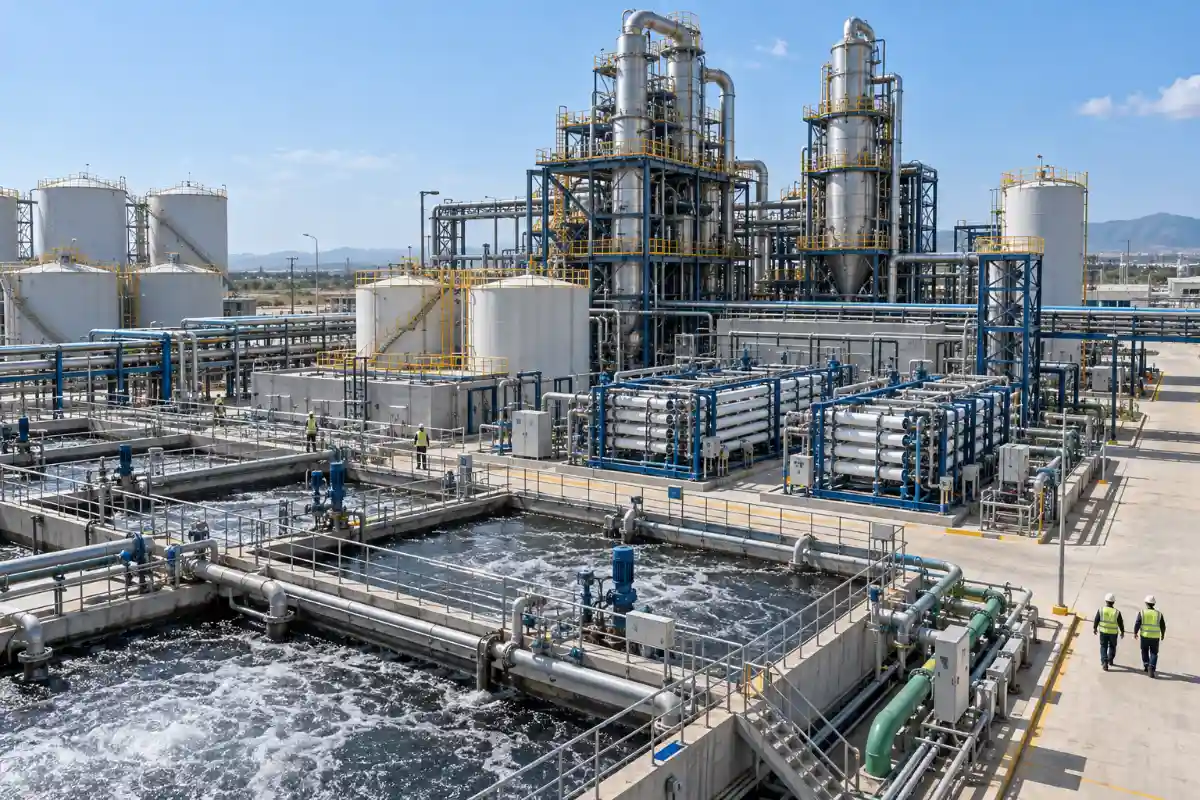
Every concentrate treatment train produces a solid or semi-solid residue. Before you select a technology, answer this question: where does the salt cake go?
Options include:
- Return to the landfill as solidified or crystallized salt
- Off-site disposal at a permitted facility
- Beneficial reuse, which is rare for mixed leachate salts
If the landfill will not accept the residue, or if off-site disposal costs are prohibitive, the entire technology selection changes. I have seen projects pivot from ZLD to solidification purely because of residue disposal economics.
Practical Selection Guidance
If you are early in the decision process, here is the short version of what I tell clients:
- Start with membrane concentration. It is the lowest-energy way to cut volume.
- Choose MVC when power is available and steam is not. Choose MEE when you have cheap steam or waste heat.
- Consider solidification only for small flows or as a bridging solution.
- Plan for ZLD if discharge is not an option, and budget for the operating complexity honestly.
- Always pilot before you buy. Leachate chemistry varies too much between sites for paper design to be reliable.
If you want to talk through a specific concentrate stream and what train makes sense for it, our engineering team works through these trade-offs with clients regularly. You can reach out here with your flow, chemistry, and discharge limits, and we will walk through the options with you.
Frequently Asked Questions
How much concentrate does a landfill leachate RO system typically produce?
Most leachate RO systems recover 70–85% of the feed as permeate, leaving 15–30% as concentrate. The exact split depends on feed salinity, membrane configuration, and how aggressively the system is operated. Systems using DTRO or staged high-pressure RO can push recovery higher, but the concentrate becomes more concentrated and harder to treat.
Can RO concentrate be recirculated back to the landfill?
Recirculation is sometimes used as a temporary measure, but it is not a treatment solution. Salts and refractory organics accumulate over time, raising the strength of the raw leachate and eventually overwhelming the RO system. Most sites use recirculation only as a short-term buffer while a dedicated concentrate treatment system is built.
What is the most energy-efficient way to treat leachate RO concentrate?
Membrane concentration, using DTRO or high-pressure RO, is generally the most energy-efficient first step because it removes water without a phase change. Thermal treatment such as MVC or MEE is more energy-intensive but achieves much higher volume reduction. The most efficient overall approach is usually a combination: membrane concentration first, thermal finishing second.
How often does an MVC evaporator need cleaning on leachate concentrate?
Cleaning frequency depends on feed chemistry and pretreatment. On well-pretreated concentrate, cleaning intervals of several weeks are achievable. On concentrate with high hardness or silica, weekly or even more frequent cleaning may be necessary. Designing for easy access to heat transfer surfaces and budgeting for cleaning chemicals from day one is essential.
Is ZLD always required for landfill leachate concentrate?
No. ZLD is required when discharge permits are very tight or when no discharge path exists. Many sites can treat concentrate with membrane concentration plus a smaller thermal step and discharge the distillate under a permit. The right answer depends on local discharge rules and the site’s ability to manage a solid residue stream.
What is the biggest cause of concentrate treatment system failure?
In my experience, the biggest cause is underestimating feed variability and pretreatment requirements. Leachate chemistry changes with landfill age, rainfall, and waste composition. Systems designed around a single snapshot of feed data often underperform within the first year. Robust pretreatment, conservative design margins, and operator training prevent most failures.
How should I handle the salt residue from concentrate treatment?
Most leachate salt residue goes back to the landfill as a solidified or crystallized solid, or is sent to a permitted disposal facility. Beneficial reuse is uncommon because the salt is a mixed composition. Residue disposal options and costs should be confirmed before finalizing technology selection, since they can change the entire economic picture.
Can I pilot-test concentrate treatment before committing to full scale?
Yes, and I strongly recommend it. A pilot program using actual concentrate from your site typically runs several weeks to a few months and reveals scaling tendencies, achievable concentration factors, and realistic cleaning intervals. Pilot data is the single most reliable input for full-scale design.