

If you’re specifying RO reject treatment equipment, the first thing to understand is that you’re not buying a single machine — you’re buying a brine management strategy. Reverse osmosis reject is the concentrated stream left behind after clean permeate is pushed through the membrane. Depending on your feed and recovery, that stream might sit at 15,000–35,000 mg/L TDS, or it might be far higher if you’re running a staged or closed-circuit design. My rule after a decade of commissioning these systems: size the reject treatment train around the worst-case water quality you expect over a five-year horizon, not the day-one lab sample. This guide walks through the selection logic, technology trade-offs, and the cost and maintenance realities that decide whether a project succeeds.
What Makes RO Reject Hard to Treat
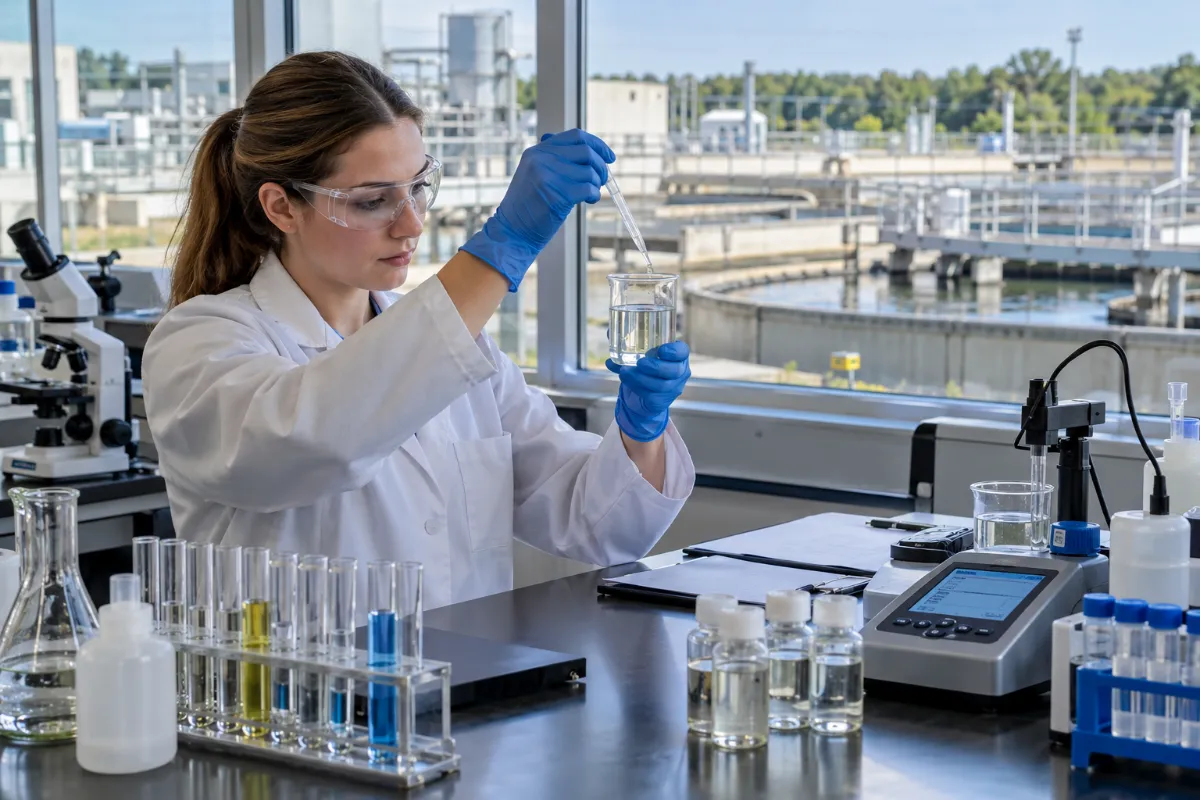
RO reject is not just “salty water.” It’s a concentrated cocktail of everything your pretreatment didn’t remove. The key parameters that drive equipment selection are:
- Total dissolved solids (TDS) — typically 3–6× the feed concentration, but can exceed 60,000 mg/L in high-recovery designs.
- Silica — the single most common cause of scaling in evaporators and membrane concentrators. Above roughly 120–150 mg/L, you need to think carefully about temperature and pH control.
- Hardness (calcium and magnesium) — drives scaling on heat transfer surfaces.
- Organics and COD — cause fouling, foaming, and biological growth in warm sections.
- Specific ions — sulfate, chloride, and in some industrial streams, heavy metals or ammonia.
I always ask for a full ion balance plus silica, COD, and TOC before quoting anything. A design built on TDS alone will fail. If you want to understand where these streams originate, our overview of what wastewater actually contains is a useful starting point for the chemistry side.
The Core Technology Options
There are four practical families of RO reject treatment equipment. Most real projects combine two or more.
1. High-Pressure and DTRO Membrane Systems
Disc-tube reverse osmosis (DTRO) is my first choice when the reject is still in a range where membranes make economic sense — roughly up to 80–120 bar, depending on the specific design. The open-channel disc-tube configuration handles suspended solids and fouling far better than spiral-wound elements, which matters when your feed has residual organics or scaling potential.
Typical recovery for a DTRO stage on RO reject sits in the 50–75% range, project-dependent. The concentrate that leaves the DTRO then becomes the feed to a thermal or evaporation step. You can review the hardware side at our DTRO membrane systems page if you want to see how the skids are configured.
2. Evaporation: MVC, MVR, and Multi-Effect
Once you’re past the point where membranes can concentrate further, evaporation takes over. This is where most of the capital and operating cost lives, so getting the technology right matters more than anything else.
- Mechanical vapor compression (MVC/MVR) — the workhorse for medium-to-large flows. It recompresses the vapor and reuses the latent heat, giving you roughly 15–25 kWh per cubic meter of distillate in a well-designed unit. Best when you have a stable, continuous flow and a decent power supply.
- Multi-effect evaporation — uses steam in a cascade. Economical when you have cheap waste steam or when electricity is expensive. A triple-effect unit can cut steam consumption to roughly one-third of a single-effect design.
- Single-effect — usually reserved for small flows or where steam is essentially free.
For a deeper comparison of the compressor-driven route, our MVC evaporator technology breakdown covers the thermodynamics and the practical limits. If you’re weighing effect count, the multi-effect evaporator page has a good summary of where each configuration wins.
3. Crystallization for Zero Liquid Discharge
If your discharge permit effectively requires zero liquid discharge (ZLD), the evaporator concentrate goes to a crystallizer. This is the most expensive step per unit of water treated, and it’s where projects most often run over budget. I always recommend piloting the crystallization step before committing to full-scale equipment, because the salt chemistry determines everything — a mixed-salt brine behaves very differently from a clean sodium chloride stream.
Our ZLD systems overview explains how the evaporator and crystallizer stages are typically integrated.
4. Ancillary Equipment You Can’t Skip
Pretreatment for the evaporator — softening, antiscalant dosing, pH adjustment, and often a degassing step — is not optional. I’ve seen more evaporator failures caused by inadequate pretreatment than by any defect in the evaporator itself. Budget 15–25% of your total equipment cost for this section and don’t let anyone talk you out of it.
Selection Logic: Matching Equipment to Your Stream
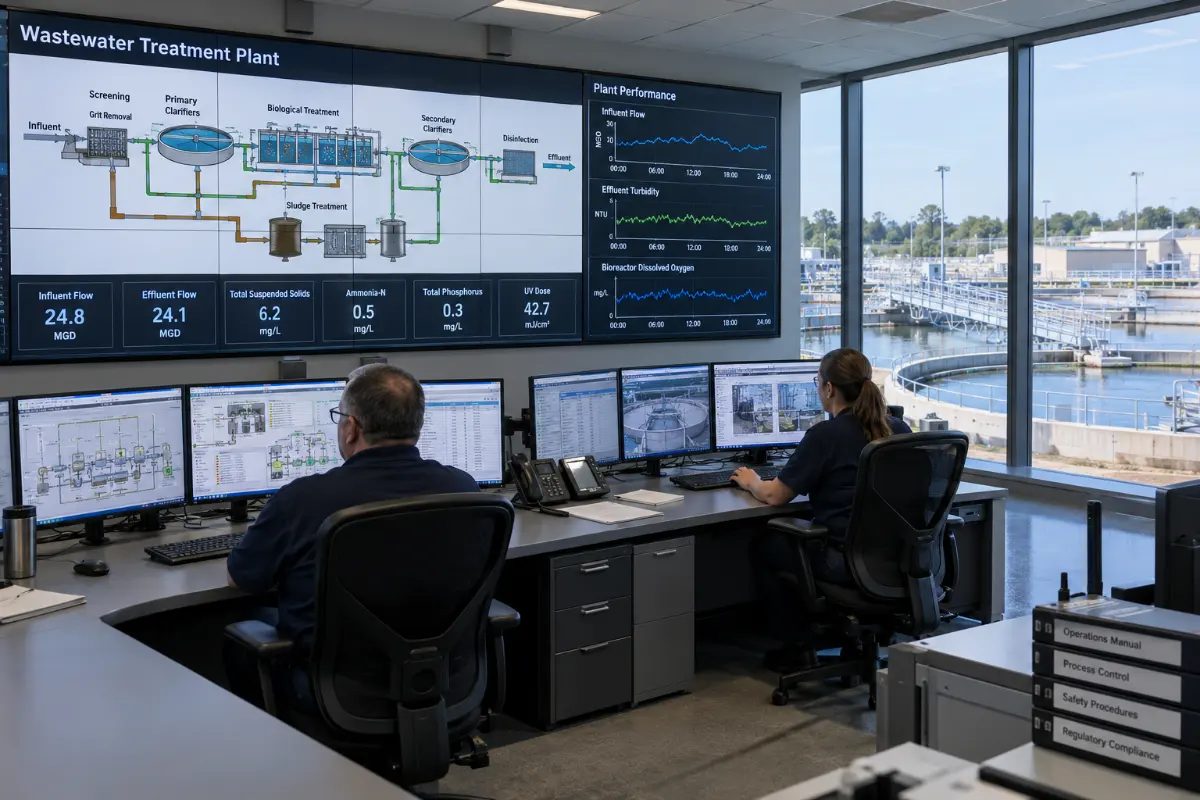
The table below is the decision framework I use in the field. It’s a starting point, not a substitute for a proper mass balance.
| Reject TDS Range | Recommended Primary Technology | Typical Recovery | Key Watch-Out |
|---|---|---|---|
| 10,000–25,000 mg/L | High-pressure RO or DTRO | 50–75% | Silica scaling, organic fouling |
| 25,000–60,000 mg/L | DTRO + MVC evaporator | 70–90% overall | Scaling on heat exchangers, foaming |
| 60,000–150,000 mg/L | MVC or multi-effect evaporator | 80–95% water recovery | High energy cost, corrosion |
| Above 150,000 mg/L or ZLD required | Evaporator + crystallizer | Near-total water recovery | Salt disposal, high capex |
Notice that recovery numbers are ranges. Actual performance depends on your specific ion profile, temperature, and how much pretreatment you’re willing to invest in. Any vendor who quotes a single fixed recovery number without a water analysis is guessing.
Energy, Cost, and the Real Operating Picture
Capital cost gets the attention, but operating cost decides whether the system is viable long-term. Here’s how the main components break down:
- Membrane stages — relatively low energy, typically 3–8 kWh/m³, but membranes need replacement every 3–5 years.
- MVC evaporator — 15–25 kWh/m³ for distillate, dominated by compressor power.
- Multi-effect evaporator — lower electrical demand but requires steam; total energy depends heavily on your steam cost.
- Crystallizer — the highest energy intensity per cubic meter of feed, often 40–80 kWh/m³ equivalent when you account for the full thermal load.
I tell clients to model three scenarios: baseline electricity price, a 30% increase, and a 30% decrease. If the project only works at the low end, the design is too fragile. The International Energy Agency publishes useful industrial electricity price data by region that helps ground these assumptions.
From experience: the projects that fail economically are almost never the ones with the wrong evaporator. They’re the ones where nobody modeled the electricity and chemical cost over a ten-year horizon.
Maintenance and Common Failure Points
RO reject systems run in harsh conditions. Here’s what actually breaks and how to plan for it:
Scaling on Heat Transfer Surfaces
Silica and calcium sulfate are the usual culprits. Mitigation is straightforward in principle — control temperature, control pH, dose antiscalant, and clean on schedule — but it requires discipline. I recommend a cleaning-in-place (CIP) system sized for at least weekly cleaning during commissioning, then adjusted based on actual fouling rates.
Compressor and Mechanical Failures
In MVC units, the compressor is the heart and the most expensive single component. Vibration monitoring and oil analysis are worth the small investment. Most compressor failures I’ve seen were preceded by weeks of subtle vibration changes that nobody was tracking.
Membrane Fouling and Replacement
DTRO discs foul more slowly than spiral elements but still foul. Track normalized permeability weekly. When it drops more than 15% from baseline and doesn’t recover with cleaning, you’re looking at replacement planning.
Foaming and Carryover
Organic-rich reject streams foam in the evaporator, and foam carries liquid into the distillate. Antifoam helps, but the real fix is usually upstream — better organics removal before the evaporator. If your reject comes from a landfill or a mixed industrial stream, understanding the chemical profile of leachate gives you a head start on predicting foaming behavior.
What to Ask Before You Sign
I’ve reviewed a lot of vendor proposals, and the good ones answer these questions without being asked:
- What’s the guaranteed recovery, and under what feed conditions?
- What’s the specific energy consumption at design and at 70% load?
- What pretreatment is included, and what’s assumed to be provided by the buyer?
- What’s the expected membrane or heat exchanger replacement interval, and what does it cost?
- What’s the commissioning and performance testing protocol?
- What happens to the final concentrate or salt — who handles disposal?
If a vendor is vague on any of these, that’s a signal. The U.S. Environmental Protection Agency also publishes guidance on industrial discharge and brine management that’s worth reviewing before you finalize your discharge strategy, particularly if you’re operating in a regulated watershed.
Typical Project Scenarios
To make this concrete, here are three anonymous scenarios that reflect the range of projects I see.
Electroplating Rinse Water Reclaim
A plating shop with a rinse water RO at 75% recovery produces reject at roughly 12,000–18,000 mg/L TDS with traces of nickel and chromium. The treatment train was a DTRO stage to push recovery to about 90%, followed by a small MVC evaporator for the final concentrate. The metal-bearing concentrate went back to the plating bath, which actually recovered some value. This kind of closed-loop thinking pays off when the chemistry allows it.
Pharmaceutical Wastewater with High COD
A pharma plant had RO reject with 25,000 mg/L TDS and COD above 3,000 mg/L. Straight evaporation would have foamed badly. The design added an advanced oxidation step before the evaporator, then ran a multi-effect system because the site had excess low-pressure steam. Recovery was around 85%, with the concentrate sent to a licensed disposal facility.
Landfill Leachate Concentration
Leachate is the hardest stream in this category — variable quality, high ammonia, high organics, and often high chloride. A typical train is biological treatment, then DTRO, then MVC evaporation of the DTRO concentrate. Recovery in the 80–90% range is achievable, but the pretreatment discipline is severe. If you’re evaluating this route, the landfill leachate treatment approach we use covers the staging logic.
When to Bring in an Engineer vs. Buy Off the Shelf
Standardized skid systems work well when your reject is predictable and falls within a well-understood range. They’re faster to deploy and cheaper up front. But if any of the following apply, you need custom engineering:
- Feed quality varies by more than 30% seasonally or by production batch.
- You have unusual ions — fluoride, boron, ammonia, or heavy metals.
- Your discharge permit has tight limits on specific parameters.
- You need ZLD or near-ZLD performance.
- Site utilities (power, steam, cooling water) are constrained.
In those cases, the extra engineering cost is trivial compared to the cost of a system that doesn’t perform.
Need help sizing an RO reject treatment train for your specific water analysis?
Share your feed chemistry and flow rate — we’ll help you work through the technology options and rough cost ranges.
Frequently Asked Questions
How much does RO reject treatment equipment cost?
It depends almost entirely on the technology and flow rate. A DTRO skid might run in the low-to-mid six figures for a modest flow, while a full MVC evaporator plus crystallizer for ZLD can be several million dollars. The dominant cost drivers are evaporator size, materials of construction (corrosion resistance matters), and the level of automation. Always ask for a breakdown between equipment, installation, and first-year operating cost.
Can I just discharge RO reject to the sewer?
Sometimes, but rarely without treatment. Many municipal treatment plants have TDS or specific ion limits that reject will exceed. Even where discharge is allowed, you’ll typically pay a surcharge based on concentration. Check your local discharge permit limits before assuming sewer disposal is an option — this decision often determines whether you need full ZLD or just partial concentration.
What’s the difference between MVC and MVR?
In practice, they refer to the same core technology — mechanical vapor compression or mechanical vapor recompression. Both use a compressor to raise the pressure and temperature of the vapor so it can be reused as the heating medium. Some vendors use the terms interchangeably; others apply MVC to the compressor-driven evaporator and MVR to the broader recompression concept. Ask for the specific energy consumption figure, not the acronym.
How often do membranes need replacement?
For RO reject service, expect 3–5 years for DTRO discs under good operating conditions, sometimes shorter if fouling is aggressive. Track normalized permeability and salt passage monthly. When cleaning no longer restores performance to within about 85% of baseline, plan for replacement. Keeping a spare set on site is cheap insurance if downtime is expensive.
Why does my evaporator keep foaming?
Foaming almost always traces back to organics, surfactants, or high alkalinity in the feed. Antifoam dosing helps as a temporary measure, but the durable fix is upstream — better oil and grease removal, COD reduction, or pH adjustment. If foaming started suddenly, check whether your upstream process changed or whether pretreatment chemicals are being overdosed.
What pretreatment is mandatory before an evaporator?
At minimum: softening or antiscalant dosing to control hardness scaling, pH adjustment to keep silica soluble, and removal of suspended solids. For organic-rich streams, add COD reduction. For ammonia-bearing streams, consider degassing or stripping. The exact set depends on your water analysis, but skipping pretreatment to save capital is the most common cause of premature evaporator failure I see in the field.
How do I decide between evaporation and membrane concentration?
Use membranes as far as they’ll economically go, then switch to evaporation. Membranes are cheaper to operate per cubic meter but hit practical limits around 80–120 bar and become fouling-prone at high concentration. Evaporation handles any concentration but costs more energy. The optimal split point is project-specific and worth modeling carefully before you commit to equipment.
RO reject treatment is fundamentally a concentration problem, and every concentration step has a cost. The equipment selection follows from a clear mass balance, an honest look at your utility costs, and a realistic assessment of how much pretreatment you’re willing to maintain. Get those three things right, and the technology choice usually becomes obvious.