

Titanium evaporators solve a specific problem that stainless steel and most other materials can’t handle: wastewater that eats metal. When chlorides, fluorides, or low-pH streams hit a conventional evaporator, you get pitting, stress cracking, and tube failures within months. Titanium changes that equation. In my experience specifying and commissioning evaporation systems for aggressive industrial streams, the decision usually comes down to three things — chloride concentration, operating temperature, and how much oxygen or oxidizing agent is present. Get those three right and a titanium heat exchanger surface will outlast several replacements of a lesser alloy. Get them wrong and you’ve spent a lot of money on the wrong grade. This article walks through how I actually evaluate titanium for corrosive wastewater evaporation, where it works, where it doesn’t, and what the real cost picture looks like over a system’s life.
Why Corrosive Wastewater Breaks Conventional Evaporators
Most industrial evaporators are built around 304 or 316L stainless steel because it’s affordable, weldable, and easy to fabricate. That works fine for food processing, mild brine, and most municipal concentrates. It falls apart the moment you introduce aggressive chemistry.
Chlorides are the usual culprit. Once chloride concentration climbs past roughly 200–300 mg/L and the metal surface temperature sits above about 60 °C, 316L becomes vulnerable to pitting and crevice corrosion. Push the temperature higher and add an acidic pH, and you’re looking at stress corrosion cracking — the kind of failure that shows up as a hairline crack through a tube wall and shuts the plant down without warning.
Fluoride is worse. Even at low concentrations, hydrofluoric acid and fluoride salts attack the passive oxide layer on stainless steel and destroy it quickly. Low-pH streams from pickling, etching, and metal finishing do the same thing. And if the wastewater contains oxidizing agents — hypochlorite, peroxide, ferric ions, or dissolved chlorine — the corrosion rate accelerates dramatically.
I’ve walked into plants where a 316L evaporator lasted eleven months on a plating rinse stream. The tubes were perforated in a pattern that matched the liquid distribution, which told me exactly where the hot spots were. That’s a classic chloride pitting signature. Rebuilding with titanium fixed it, but only after we also corrected the circulation rate and the surface temperature profile.
Where Titanium Fits in the Material Selection Matrix
Titanium isn’t the only answer, and it isn’t always the right one. The honest engineering approach is to compare it against the realistic alternatives before you commit.
| Material | Chloride Tolerance | Temperature Limit (practical) | Relative Cost | Best Fit |
|---|---|---|---|---|
| 304 SS | Very low | ~50 °C | Low | Mild, near-neutral streams |
| 316L SS | Low–moderate | ~60 °C | Low | Low-chloride concentrates |
| Duplex 2205 | Moderate–high | ~80 °C | Medium | Chloride brines, moderate pH |
| Super duplex 2507 | High | ~90 °C | Medium–high | Aggressive brine, neutral pH |
| Grade 2 Titanium | Very high | ~120 °C (oxidizing) | High | Chloride + oxidizing streams |
| Grade 12 Titanium | Very high | ~150 °C | High | Reducing acids, HCl service |
| Nickel alloys (C-276) | Very high | ~150 °C | Very high | Mixed acids, fluoride, extreme pH |
Two things to note about that table. First, the temperature limits are practical limits for continuous service, not lab ratings — real systems have hot spots, stagnant zones, and startup transients that push local conditions beyond the bulk reading. Second, titanium’s performance depends heavily on whether the environment is oxidizing or reducing. In oxidizing chloride service, titanium forms a stable passive film and performs beautifully. In reducing acid service — hydrochloric acid, sulfuric acid below certain concentrations — it needs a Grade 12 or a palladium-enhanced grade, or it corrodes fast.
This is where a lot of projects go wrong. Someone specifies “titanium” without specifying the grade, and the fabricator delivers Grade 2 because it’s the most common. On an oxidizing chloride stream, that’s fine. On a pickling liquor with free HCl, it’s a mistake.

How Titanium Behaves Inside an Evaporator
An evaporator isn’t a uniform environment. The heat exchanger surface sees the highest temperature and the highest concentration of dissolved solids. The vapor space sees something completely different. The concentrate sump sits somewhere in between. Titanium selection has to account for all three zones, and in most designs, the heat exchanger is the only place where titanium is essential.
Heat Exchanger Surfaces
This is where titanium earns its keep. Falling film and forced circulation evaporators both put a thin liquid film against a hot metal wall. That film concentrates as water evaporates, so the local chloride level can be two to five times the bulk concentration. Titanium handles that. So does a properly specified super duplex in many cases, but once you cross into strong oxidizing conditions or temperatures above 90 °C, titanium becomes the safer choice.
The tube wall thickness matters too. I typically see 0.7–1.0 mm for titanium tubes in evaporator service. Going thinner saves material cost but reduces the corrosion allowance and makes the tubes more vulnerable to mechanical damage during cleaning. Going thicker doesn’t help corrosion resistance — titanium doesn’t corrode in a way that benefits from extra wall — but it does buy you more cleaning cycles before you have to replace a tube bundle.
Vapor Space and Mist Elimination
Vapor space is usually the least aggressive zone, but not always. If the wastewater contains volatile acids — formic, acetic, or traces of HCl — the vapor can be acidic and hot. Titanium handles this well, but the mist eliminator and the vapor piping need to be evaluated separately. I’ve seen designers specify titanium for the heat exchanger and 316L for the vapor line, only to have the vapor line fail first because the condensate was more aggressive than expected.
Concentrate Handling
The concentrate sump and discharge piping see the highest solids concentration and often the lowest pH. This is where you need to think about erosion as well as corrosion. Titanium has good erosion resistance, but pumps and valves in titanium are expensive, and often a lined steel or a high-alloy alternative makes more sense for the wetted parts downstream of the evaporator body.
For a deeper look at how these components are put together, the MVC evaporator heat exchanger design reference covers the mechanical details that matter most.
Choosing the Right Evaporator Configuration for Aggressive Streams
Titanium is a material decision, but it interacts with the process configuration. The wrong configuration will stress titanium in ways that shorten its life, no matter how good the alloy is.
MVC and MVR Systems
Mechanical vapor compression systems are the workhorse for industrial wastewater concentration. They’re energy-efficient because they reuse the latent heat of the vapor, and they operate at relatively low temperatures — typically 60–90 °C in the heat exchanger. That temperature range is friendly to titanium, and the low operating pressure reduces the risk of scaling and corrosion acceleration.
The tradeoff is that MVC systems are sensitive to fouling. If the wastewater has high hardness or suspended solids, the heat exchanger surface fouls, and cleaning cycles become frequent. Titanium tolerates chemical cleaning well, but repeated thermal and mechanical cycling does stress the tube-to-tubesheet joints. I’ve seen more failures at the welds than in the tube wall itself.
For a full breakdown of how the compression loop works and where titanium fits, the mechanical vapor compression MVC evaporator page is a good technical reference.
Multi-Effect Systems
Multi-effect evaporators use steam to drive the first effect and then reuse the vapor in subsequent effects. They’re more thermally efficient than single-effect systems but operate at higher temperatures in the first effect, which is where titanium’s temperature limits start to matter. A triple-effect system with a first-effect temperature above 120 °C may need a higher-grade titanium or a nickel alloy in that first effect, with titanium in the lower-temperature effects.
The multi-effect evaporator configuration is worth considering when you have a reliable steam supply and the wastewater chemistry is aggressive but not extreme. The triple-effect arrangement is often the sweet spot for larger flows, and the double-effect design makes sense for smaller capacities or when steam is limited.
Hybrid and ZLD Approaches
For zero liquid discharge applications, evaporation is usually the final concentration step after membrane separation. Titanium evaporators work well here because the feed to the evaporator is already concentrated and often has high chloride content — exactly the condition where titanium outperforms stainless steel.
A typical ZLD train might use high-pressure RO or DTRO to concentrate the wastewater to 8–12% total dissolved solids, then feed the concentrate to a titanium evaporator for further concentration to 20–30%, followed by a crystallizer. The titanium evaporator is the critical barrier that keeps the whole train running. The ZLD system architecture overview explains how the evaporation stage integrates with the membrane stages.

Operating Parameters That Determine Titanium Life
Material selection is necessary but not sufficient. How you run the evaporator determines whether titanium lasts fifteen years or five.
Temperature Control
Every 10 °C increase in heat exchanger surface temperature roughly doubles the corrosion rate for most metals, and titanium is no exception, even though its baseline rate is very low. Keeping the surface temperature below 100 °C wherever possible is a simple way to extend life. In MVC systems this is usually easy. In multi-effect systems it requires careful steam pressure control.
The trap is that operators sometimes raise the temperature to boost capacity during production peaks. That works for a while, then the tubes fail. I always recommend a hard high-temperature interlock on systems handling aggressive streams, set at least 10 °C below the material’s practical limit.
Concentration Limits
Titanium handles high chloride concentrations well, but there’s a limit. Above about 25% chloride by weight, and especially if the pH drops below 2, even titanium can struggle. This is where you need to either dilute the feed, neutralize the pH, or move to a higher alloy.
The practical approach is to define a maximum concentration target for the evaporator and design the downstream crystallizer or disposal route around that. Trying to push the evaporator to maximum concentration to reduce downstream volume is a false economy when it costs you a tube bundle.
pH and Oxidizing Conditions
Titanium’s passive film needs oxygen to maintain itself. In fully deaerated, reducing acid service, titanium can corrode rapidly. Most industrial wastewaters contain enough dissolved oxygen or oxidizing species to keep the film intact, but if you’re dealing with a strictly anaerobic stream or one dominated by reducing acids, you need to either add a small amount of oxidant or switch to a nickel alloy.
The other side of that coin is that titanium is very tolerant of oxidizing agents like hypochlorite and ferric chloride — much more so than stainless steel. If your wastewater contains these, titanium is often the only practical metal choice.
Flow Velocity and Distribution
Stagnant zones are corrosion zones. Wherever the liquid sits still against a hot titanium surface, the local chemistry changes — oxygen gets consumed, pH shifts, and deposits form. Good liquid distribution is critical. Falling film evaporators need uniform wetting of the tube surface. Forced circulation systems need enough velocity to keep solids in suspension.
I usually target a minimum liquid velocity of 1.5–2.5 m/s in the heat exchanger tubes for aggressive streams. Below that, you risk deposition and under-deposit corrosion. Above about 3 m/s, erosion starts to become a concern, especially if the stream contains abrasive solids.
Energy and Lifecycle Cost Reality
Titanium costs more upfront. There’s no way around that. But the lifecycle math usually favors it for genuinely corrosive streams, and it’s worth walking through the numbers honestly.
| Cost Element | 316L System | Titanium System |
|---|---|---|
| Heat exchanger capital | Baseline | 2.5–4× baseline |
| Expected tube life (aggressive chloride) | 1–3 years | 10–15+ years |
| Replacement cost per event | Moderate | High but rare |
| Downtime per replacement | 3–7 days | Not applicable in normal life |
| Cleaning frequency | Higher (corrosion products) | Lower |
| Energy consumption | Comparable | Comparable |
The energy side is essentially identical — material choice doesn’t change the thermodynamics. What changes is the maintenance and replacement cost. If a 316L bundle fails every two years and takes a week to replace, you’re looking at significant lost production in addition to the parts cost. Over a fifteen-year horizon, titanium usually wins on total cost of ownership even at 3× the initial heat exchanger cost.
The exception is when the stream is only mildly corrosive. If 316L will genuinely last ten years, the titanium premium is hard to justify. That’s why the material selection has to be based on actual water analysis, not on a general “we have chlorides” statement.
For a detailed cost breakdown of evaporation systems, the MVR evaporator cost analysis covers the capital and operating drivers in more depth.
Maintenance Practices That Keep Titanium Systems Running
Titanium is low-maintenance compared to stainless steel, but it isn’t zero-maintenance. The practices that matter most are the ones that prevent the conditions titanium can’t handle.
Cleaning
Titanium tolerates most standard cleaning chemicals, including dilute hydrochloric acid, citric acid, and caustic. The exception is hydrofluoric acid — even trace amounts will attack titanium aggressively, and many commercial descalers contain fluoride. Always check the SDS before introducing any cleaner. I’ve seen a well-intentioned maintenance crew destroy a titanium bundle in a single cleaning cycle by using a fluoride-based descaler.
Mechanical cleaning should be gentle. Titanium is not as hard as it looks, and wire brushes or aggressive scraping can damage the passive film and create initiation sites for corrosion.
Inspection
Annual inspection of the heat exchanger is standard. Look for discoloration, which can indicate localized overheating or a breakdown of the passive film. Check the tube-to-tubesheet welds carefully — this is where most failures start. Dye penetrant testing on a sample of tubes can catch early cracking before it becomes a through-wall failure.
Water Chemistry Monitoring
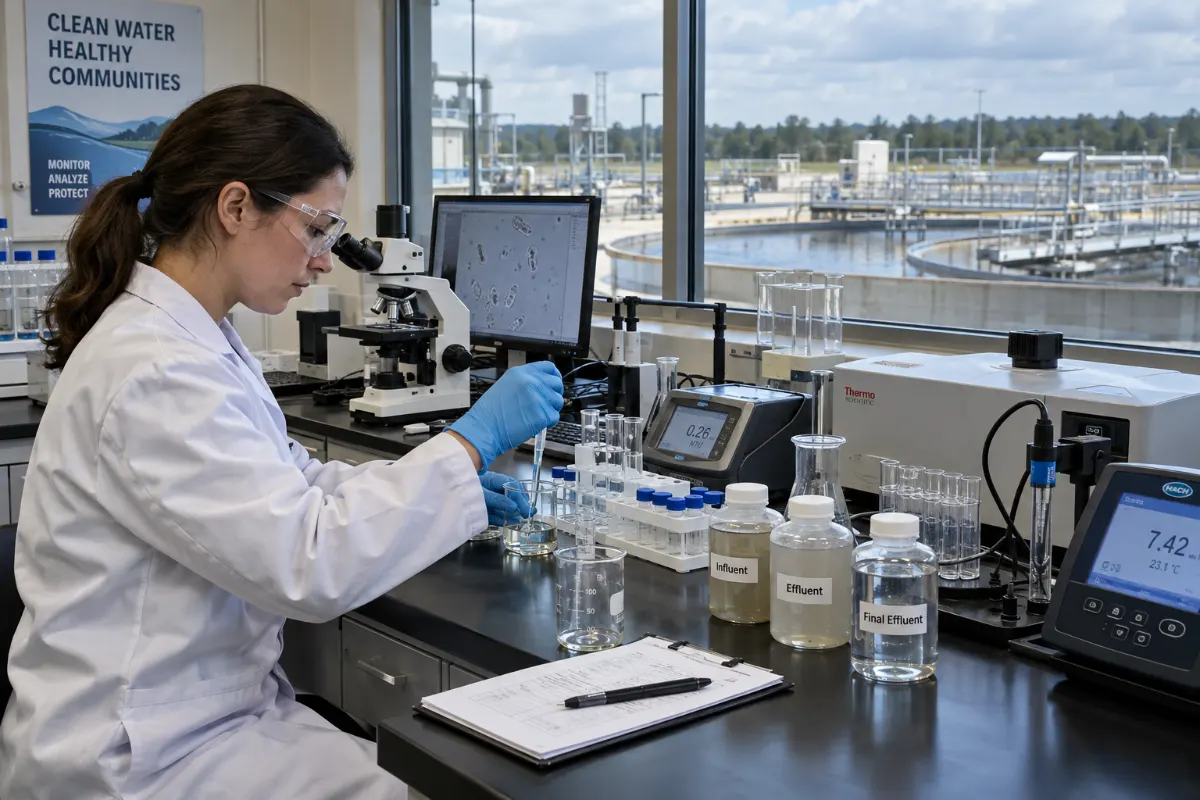
Continuous monitoring of pH, chloride, and oxidation-reduction potential gives you early warning if the feed chemistry shifts. Wastewater composition changes — a new process line, a different raw material, a cleaning cycle upstream — and those changes can push the stream into a range where titanium is no longer the right material. Catching that early lets you adjust pretreatment rather than replace a bundle.
Common Failure Modes and How to Prevent Them
When titanium evaporators fail, it’s rarely because titanium was the wrong material. It’s usually because something about the operating condition changed, or because a detail in the design was overlooked.
Under-Deposit Corrosion
Scale or solids deposit on the tube surface, and the chemistry under the deposit becomes different from the bulk. Oxygen gets depleted, pH shifts locally, and corrosion initiates. This is the most common failure mode I see in systems that were correctly specified but poorly operated. Prevention is straightforward: maintain cleaning schedules, control the concentration to stay below scaling thresholds, and use antiscalant where appropriate.
Weld Failures
Titanium welding requires an inert atmosphere — any oxygen contamination during welding creates a brittle, corrosion-prone zone. A properly welded titanium heat exchanger will outlast the tubes. A poorly welded one will fail at the welds within a year. This is why fabricator qualification matters as much as material grade. I always ask for weld procedure specifications and welder certifications before approving a titanium heat exchanger purchase.
Galvanic Corrosion
When titanium is coupled with a less noble metal in the same electrolyte, the less noble metal corrodes preferentially. This is rarely a problem for the titanium itself, but it can destroy a stainless steel flange, a carbon steel support, or a copper instrument connection. Insulating gaskets and isolation washers are the standard fix, and they should be specified anywhere titanium interfaces with a dissimilar metal.
Hydrogen Embrittlement
Under strongly reducing conditions, titanium can absorb hydrogen and become brittle. This is uncommon in normal industrial wastewater service because there’s usually enough oxygen or water present to prevent it, but it’s a real risk in cathodically protected systems or in streams with high concentrations of reducing acids. Grade 12 titanium is more resistant, and in extreme cases a nickel alloy is the safer choice.
Design Checklist Before You Specify Titanium
Before committing to titanium, I run through a short checklist. It saves money and prevents unpleasant surprises.
- Complete water analysis, including chloride, fluoride, sulfate, pH, and oxidizing species — not just a general characterization
- Peak concentration and peak temperature the heat exchanger surface will actually see, not the design average
- Presence of any reducing acids or anaerobic conditions
- Solids content and scaling potential, which drive cleaning frequency and under-deposit risk
- Compatibility of the cleaning chemicals with titanium, especially fluoride content
- Weld quality requirements and fabricator qualification
- Dissimilar metal interfaces and isolation requirements
- Operating envelope — what happens if the plant runs at higher temperature or concentration than design
If the analysis shows a genuinely aggressive stream with chlorides above a few hundred mg/L and temperatures above 60 °C, titanium is usually the right call. If the stream is borderline, duplex stainless may be a better economic choice. If the stream contains significant fluoride or is strongly reducing, titanium may not be the answer at all, and you should look at nickel alloys.
Where Titanium Evaporators Make Sense — and Where They Don’t
The honest answer is that titanium is a targeted solution, not a universal one. It makes sense when you have:
- High chloride concentrations combined with temperatures above 60 °C
- Oxidizing conditions that would destroy stainless steel
- Low-pH streams where stainless steel fails quickly
- A lifecycle horizon long enough to justify the higher upfront cost
It doesn’t make sense when:
- The stream is mildly corrosive and 316L would last ten years
- Fluoride is present in significant concentration
- The stream is strongly reducing with no oxygen present
- Capital budget is the binding constraint and the stream can be pretreated to a less aggressive condition
In my experience, the projects that go wrong are the ones where titanium was specified on reputation rather than on analysis. The projects that go right are the ones where someone actually looked at the water chemistry, defined the operating envelope, and matched the material to the condition.
Working on a corrosive wastewater evaporation project?
Send us your water analysis and process conditions. We’ll help you evaluate whether titanium is the right material, and if so, which grade and configuration fits your stream.
Frequently Asked Questions
What chloride concentration justifies titanium over 316L stainless steel?
There’s no single number, but as a general guideline, once chloride exceeds about 300–500 mg/L and the heat exchanger surface temperature is above 60 °C, 316L becomes risky. Above 1,000 mg/L chloride with temperatures above 80 °C, titanium is usually the more cost-effective choice over the system’s life. The exact threshold depends on pH, oxygen content, and whether there are crevices or stagnant zones.
Can titanium handle fluoride in wastewater?
No. Titanium is not resistant to fluoride, even at low concentrations. Fluoride attacks the passive oxide film, and once that film breaks down, corrosion proceeds rapidly. If your wastewater contains fluoride, you need to either remove it in pretreatment or select a nickel-based alloy such as C-276 for the wetted surfaces.
What’s the typical operating temperature limit for titanium in evaporator service?
For Grade 2 titanium in oxidizing chloride service, the practical limit is around 120 °C. Grade 12 extends that to roughly 150 °C and handles reducing acids better. Above those temperatures, or in more aggressive chemistry, you should look at higher alloys. In MVC systems, operating temperatures are usually well below these limits, so titanium has plenty of margin.
How long should a titanium heat exchanger last in corrosive wastewater service?
With correct material selection and good operating practice, 10–15 years is a reasonable expectation for the tube bundle, and the shell often lasts longer. Failures before that are usually traceable to a specific cause — under-deposit corrosion, poor weld quality, an operating excursion, or a chemistry change that wasn’t caught in monitoring.
Is titanium more expensive to maintain than stainless steel?
The day-to-day maintenance cost is usually lower because titanium corrodes more slowly and fouls less from corrosion products. The parts cost, when replacement is needed, is higher. The net effect over a full lifecycle is usually favorable for titanium in genuinely aggressive service, and unfavorable in mild service where stainless steel would have lasted anyway.
Can I clean a titanium evaporator with standard descalers?
Most standard descalers are fine, but you must check for fluoride content. Many commercial products contain ammonium bifluoride or hydrofluoric acid, both of which will damage titanium. Use citric acid, sulfamic acid, or a fluoride-free proprietary descaler, and always verify the SDS before introducing any chemical to the system.
What happens if the wastewater chemistry changes after the system is installed?
This is common and it’s the main reason titanium systems fail unexpectedly. A new process line, a different raw material, or a change in upstream treatment can shift the stream into a range where titanium is no longer appropriate. Continuous monitoring of pH, chloride, and ORP gives you early warning. If the chemistry drifts, the fix is usually to adjust pretreatment or operating conditions rather than replace the heat exchanger.
Does titanium work in zero liquid discharge systems?
Yes, and it’s often the preferred material for the evaporation stage in ZLD trains. The concentrate coming out of the membrane stages typically has high chloride and high TDS, which is exactly where titanium outperforms stainless steel. The main consideration is making sure the upstream membrane system delivers a feed chemistry that stays within titanium’s operating envelope.