

If you run a plant that pays twice for water — once to buy it and again to discharge it — the fastest path to savings is usually a well-designed reuse train. Wastewater reuse equipment for manufacturing plants typically combines pretreatment, membrane separation, and evaporation to turn a waste stream into process water you can actually use again. In my experience, the right combination depends less on the technology label and more on your water chemistry, discharge limits, and how much you can tolerate operational complexity. This article walks through how I select and size reuse systems, where they fail, and what the real cost picture looks like over ten years.
Start With the Water Balance, Not the Equipment
Before I quote a single pump, I build a plant-wide water balance. I want to know four numbers: total intake, total discharge, evaporation and product losses, and the quality of each stream by source. Most plants I visit have at least three distinct waste streams — rinse water, cleaning-in-place (CIP) caustic, and cooling tower blowdown — and they behave nothing alike.
Reuse only makes sense when you match a waste stream to a demand. Cooling tower makeup, floor washing, and certain rinse stages tolerate far more dissolved solids than a boiler feed or a pharmaceutical ingredient contact line. When you map quality against demand, you often find that 40 to 60 percent of your water can be recovered with simple filtration and a bit of disinfection. The remaining high-salinity or high-COD stream is where the expensive equipment lives.

I always ask the operations team one blunt question: what happens if the reuse system trips at 2 a.m.? If the answer is “the line stops,” we design with a storage buffer and a potable water tie-in. If the answer is “we switch to drain,” we can simplify the control logic. That single answer changes capital cost more than any membrane selection.
Matching Treatment Technology to Wastewater Type
There is no universal reuse train. What works on food and beverage rinses will plug solid on an electroplating line. Here is how I generally categorize industrial wastewater before choosing equipment.
Low-salinity, high-solids streams
These are the easy wins. Suspended solids, oils, and biological oxygen demand (BOD) dominate, and dissolved salts are modest. A conventional train of equalization, coagulation, dissolved air flotation, and media filtration gets you most of the way. If you need higher quality, add ultrafiltration ahead of a reverse osmosis (RO) stage. Recovery of 70 to 80 percent is realistic here, and the concentrate is often small enough to send to the existing discharge point.
High-salinity streams
Once total dissolved solids (TDS) climb above roughly 10,000 to 15,000 mg/L, standard RO becomes impractical because osmotic pressure kills your recovery. This is where you either use high-pressure RO membranes, or you move to thermal concentration. I have used DTRO membrane systems on leachate and plating waste with good results, but they demand careful pretreatment and frequent cleaning.
Streams with volatile organics or oil
Oil and grease will destroy membranes and foul evaporator heat exchangers. If you see an oil sheen, you need separation before anything else. I have written about the specific challenges of evaporation with oily wastewater, and the short version is: remove the oil first, or you will pay for it in downtime.
Streams heading toward zero liquid discharge
When discharge permits effectively prohibit liquid outfall, you need a concentration train that ends in a crystallizer or a solid waste. A typical arrangement is RO or DTRO to concentrate, followed by a thermal evaporator to reduce volume further. The ZLD system design is really a chain of volume-reduction steps, each one more energy-intensive than the last.
Core Equipment Options and How They Compare
I group reuse equipment into three families: membrane systems, thermal evaporators, and dewatering equipment for the sludge and concentrate you generate. Each has a distinct operating cost profile.
| Technology | Typical feed TDS | Indicative recovery | Main energy driver | Best fit |
|---|---|---|---|---|
| Industrial RO | < 10,000 mg/L | 65–80% | High-pressure pump | Low-salinity rinse water |
| DTRO | 10,000–30,000 mg/L | 60–75% | High-pressure pump + cleaning | Leachate, plating waste |
| MVC evaporator | 20,000–200,000 mg/L | 85–95% water recovery | Compressor | Concentrate volume reduction |
| Multi-effect evaporator | 20,000–250,000 mg/L | 85–95% water recovery | Steam supply | Plants with waste steam |
| Screw press dewatering | Sludge / concentrate | Not applicable | Drive motor | Reducing haul-off volume |
These ranges are indicative and project-dependent. Feed chemistry, scaling tendency, and the presence of organics can shift recovery by 10 points or more in either direction. I never quote a recovery figure without a water analysis and a bench test.

Membrane systems: the workhorse
RO remains the cheapest way to remove dissolved salts per cubic meter of water treated, as long as your feed is clean enough. The failure mode is almost always fouling, not membrane fatigue. If you control scaling with antiscalant and pH adjustment, and you control biological growth with a biocide program, membranes last three to five years. If you skip pretreatment, you will be cleaning every two weeks and replacing elements annually.
For high-pressure duty, I look at the specific high-pressure RO membrane selection carefully because pressure rating and salt rejection trade off against cost. A membrane rated for 1,200 psi costs meaningfully more than one rated for 600 psi, and you only need the higher rating if your concentrate osmotic pressure demands it.
Thermal evaporators: the volume killer
When membrane recovery tops out, evaporation takes over. Two main configurations dominate industrial reuse.
Mechanical vapor compression (MVC) uses a compressor to recompress the vapor produced by boiling, and that compressed vapor then heats the next batch of feed. The compressor is the dominant energy consumer, but the system needs almost no external steam once running. I have used MVC evaporators on plating rinse concentrate and pharmaceutical waste with consistent results, provided the feed is degassed and the heat exchanger surfaces stay clean.
Multi-effect evaporation uses steam in the first effect and reuses the vapor in subsequent effects. If your plant already has waste steam, a multi-effect evaporator can beat MVC on operating cost. If you have no steam and would have to generate it, MVC usually wins on total cost of ownership. The number of effects — single, double, triple — is a function of steam cost and how much capital you want to tie up.
Rule of thumb I use: if steam costs less than about half of electricity per unit of heat delivered, multi-effect wins. If steam is expensive or unavailable, MVC wins. The crossover point moves with local utility rates, so run the numbers for your site.
Dewatering: closing the loop on solids
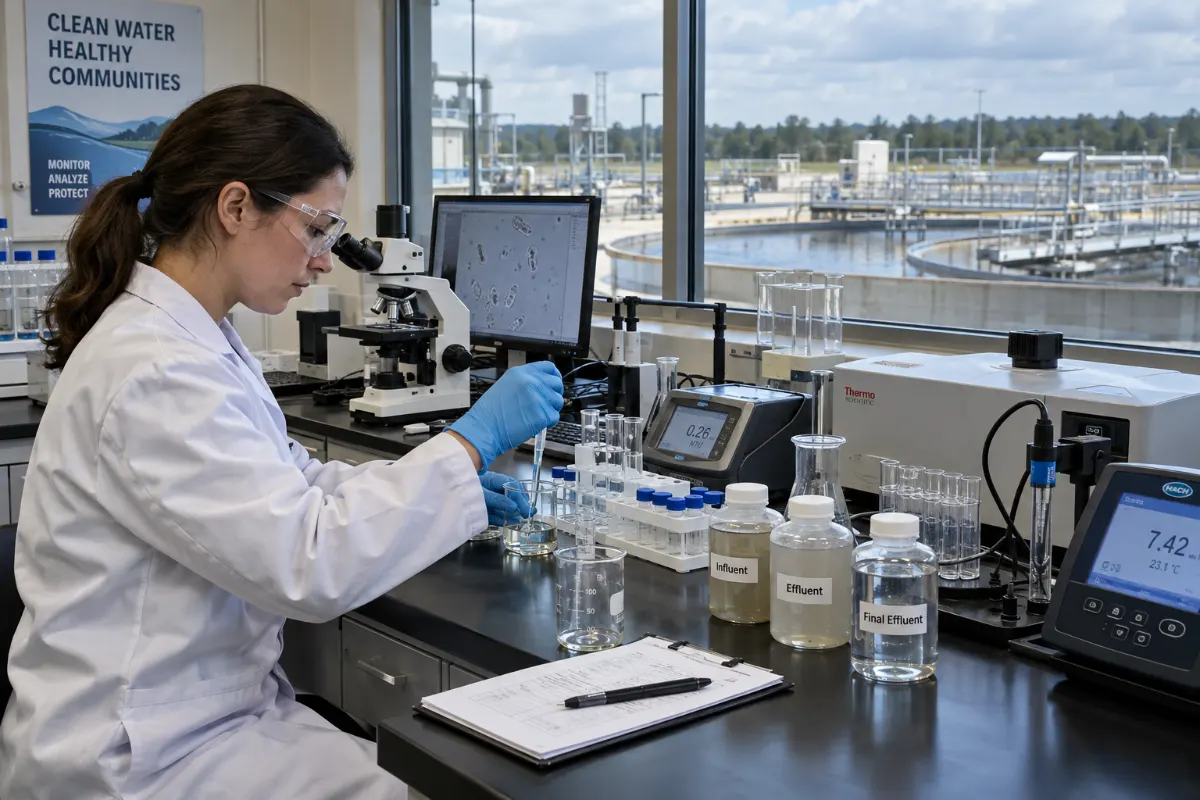
Every reuse system produces a solids stream. If you cannot dewater it, your haul-off costs will erase the savings from water recovery. For sludge and concentrate slurries, a screw press is often the simplest and most robust option. I have detailed the selection logic in a screw press dewatering guide, but the key point is that cake dryness drives haul-off cost, and a few percentage points of dryness can swing the economics significantly.
Design Details That Decide Whether the System Works
I have seen identical equipment packages perform completely differently at two plants. The difference is almost always in the details that get squeezed out during cost-cutting.
Equalization and buffering
Industrial wastewater quality swings with production. Without adequate equalization — typically 8 to 24 hours of retention — your downstream equipment sees shock loads that cause fouling, scaling, and control instability. I size equalization tanks on the worst 24-hour quality swing, not the average. The extra tank volume is cheap compared to the downtime it prevents.
Pretreatment precision
Membrane and evaporator performance is set by pretreatment. Softening, antiscalant dosing, pH control, and degassing are not optional. I have watched a plant try to save money by skipping degassing ahead of an MVC evaporator, and the compressor fouled within months. The repair cost exceeded the savings many times over.
Heat exchanger design
In evaporators, the heat exchanger is where scale forms and where performance degrades first. Material selection, surface finish, and cleaning access matter more than nominal capacity. I always ask the vendor how the heat exchanger is cleaned and how long that takes. If the answer involves a full shutdown and a crane, I look for a different design.
Instrumentation and controls
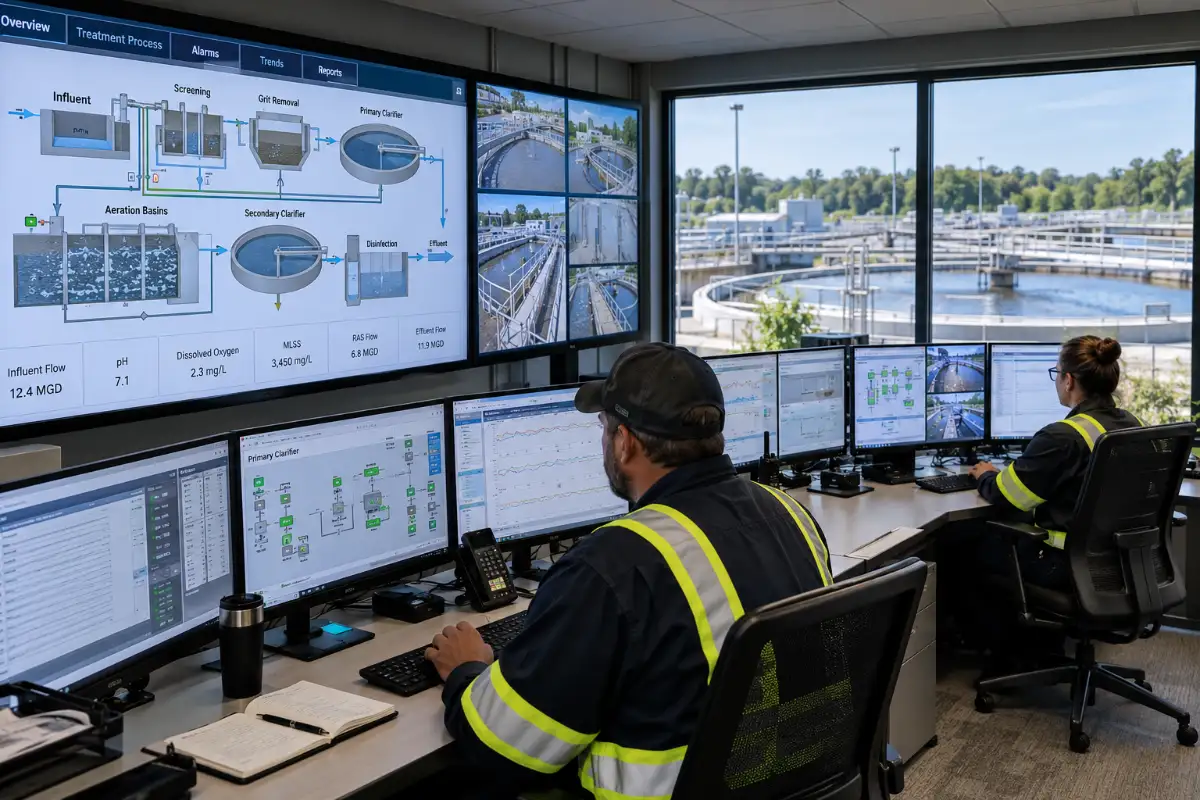
Reuse systems fail quietly. Conductivity, pH, turbidity, and flow instruments are what tell you a membrane is fouling or an evaporator is scaling. I specify redundant conductivity monitoring on the RO permeate and trend data logging on the evaporator compressor current. Compressor current creeping up over weeks is the earliest sign of heat exchanger fouling.
Energy and Lifecycle Cost: The Real Comparison
Capital cost is the easy number to compare. Operating cost is where the decisions get made, and it is where I spend most of my time with clients.
| Cost element | RO / DTRO | MVC evaporator | Multi-effect evaporator |
|---|---|---|---|
| Relative capital | Low to medium | High | High |
| Electricity | Moderate | High | Low to moderate |
| Steam | None | Minimal (startup only) | Moderate to high |
| Membrane / element replacement | Every 3–5 years | Not applicable | Not applicable |
| Cleaning chemicals | Moderate | Low to moderate | Low to moderate |
| Maintenance labor | Moderate | Moderate to high | Moderate to high |
Over a ten-year horizon, the pattern I see most often is this: RO and DTRO have the lowest total cost when feed quality allows, MVC wins when steam is unavailable, and multi-effect wins when waste steam is genuinely cheap and reliable. The trap is assuming waste steam is free. It is not free if you could sell it, use it elsewhere, or if the supply is intermittent.
I also factor in the cost of the concentrate. If your concentrate goes to a permitted outfall, the cost is low. If it goes to a crystallizer or a haul-off truck, that cost can dominate the whole project. Any reuse evaluation that stops at the permeate quality is incomplete.
Maintenance and Common Failure Modes
Most reuse system problems fall into a handful of categories. Knowing them ahead of time is the difference between a system that runs for years and one that becomes a maintenance burden.
- Membrane fouling and scaling. Caused by inadequate pretreatment, wrong antiscalant, or pH drift. Symptom: rising feed pressure, falling permeate flow, rising conductivity.
- Evaporator heat exchanger scaling. Caused by hardness, silica, or organics. Symptom: rising compressor current, falling evaporation rate, increasing temperature difference.
- Compressor vibration and bearing wear. Caused by liquid carryover or imbalance. Symptom: increasing vibration, noise, and current spikes.
- Foaming in the evaporator. Caused by surfactants or high organics. Symptom: carryover into the condensate and loss of distillate quality.
- Pump and valve wear. Caused by abrasive solids. Symptom: declining flow, seal leaks, erratic control.
- Instrument drift. Caused by fouling or calibration neglect. Symptom: control decisions based on wrong data.
I build a maintenance calendar around these failure modes rather than a generic schedule. For example, I inspect the evaporator heat exchanger every 2,000 operating hours, and I clean membranes based on normalized flow decline, not on a fixed interval. Condition-based maintenance beats calendar-based maintenance every time on these systems.
How I Approach Selection and Sizing
When a client asks me to size a reuse system, I work through a sequence that keeps me from over- or under-designing.
- Characterize the water. Full analysis including TDS, hardness, silica, COD, BOD, oil and grease, pH, and temperature. Sample over time, not once.
- Define the reuse target. What quality does the receiving process actually need? Be specific about conductivity, silica, and organics.
- Set recovery expectations. Based on chemistry, not on a vendor’s optimistic number.
- Choose the primary technology. Membrane first if chemistry allows, thermal if it does not.
- Design the concentrate handling. This is where projects fail. Plan it from the start.
- Size for the worst case. Peak flow, peak salinity, peak temperature. Not the average.
- Plan the maintenance access. Cleaning, inspection, and replacement must be practical.
I also recommend a pilot test whenever the feed chemistry is unusual. A pilot costs a fraction of the full system and reveals fouling behavior, cleaning frequency, and real recovery. I have seen pilots change the selected technology more than once.
If you want to talk through a specific stream or review a design, you can reach out to our engineering team and we will look at your water analysis together.
Regulatory and Reporting Considerations
Reuse systems do not exist in a vacuum. Discharge permits, reporting requirements, and internal environmental targets all shape the design. In many jurisdictions, the permit limits are on concentration, not mass, which means a reuse system that reduces volume but concentrates the discharge can actually make compliance harder. I always check whether the permit is concentration-based or mass-based before finalizing a design.
For reference on discharge expectations and best practices, the U.S. Environmental Protection Agency publishes effluent guidelines by industry category, and the World Bank maintains environmental, health, and safety guidelines that many international projects reference. These are useful starting points, but your specific permit is what governs.
Frequently Asked Questions
What is the most common mistake in wastewater reuse projects?
Sizing the system on average water quality instead of the worst-case swing. Industrial wastewater changes with production, and a system designed for the average will fail on the peaks. I always design for the 95th percentile quality and flow, not the mean.
How do I decide between membrane and thermal concentration?
Start with TDS and osmotic pressure. If your feed is below roughly 10,000 to 15,000 mg/L and pretreatment can keep it clean, membrane systems are usually cheaper to build and run. Above that, or when organics and scaling potential are high, thermal evaporation becomes more reliable. The decision often comes down to whether you have steam available.
What recovery rate can I realistically expect?
For RO on clean, low-salinity feed, 70 to 80 percent is achievable. For DTRO on challenging feed, 60 to 75 percent. For MVC and multi-effect evaporators, 85 to 95 percent water recovery is typical, with the remainder leaving as concentrate or solids. These are indicative ranges; your actual numbers depend on chemistry and pretreatment.
How often will I need to clean membranes or heat exchangers?
With good pretreatment, membrane cleaning every three to six months is typical. Without it, every two to four weeks. For evaporator heat exchangers, cleaning intervals of 2,000 to 4,000 operating hours are common, but scaling-prone feeds can require much more frequent cleaning. Condition-based cleaning based on performance trends is more effective than fixed schedules.
What drives the operating cost the most?
For membrane systems, it is electricity for the high-pressure pump plus membrane replacement every three to five years. For MVC evaporators, it is compressor electricity. For multi-effect evaporators, it is steam. In all cases, the cost of handling the concentrate or solids stream can dominate if it requires haul-off or crystallization.
Can I retrofit reuse equipment into an existing plant?
Yes, but the constraints are usually space, utilities, and tie-in points. Retrofits often need more equalization volume than a greenfield design because existing processes were not built with reuse in mind. I plan the tie-ins carefully so the plant can run on the reuse system or the original water source without a full shutdown.
How do I know if my feed is suitable for evaporation?
Look at scaling potential, organics, and foaming tendency. High hardness, silica, or oil content will require pretreatment or special design. A bench test or pilot is the most reliable way to confirm suitability before committing capital.
Closing Thoughts
Wastewater reuse equipment for manufacturing plants is not a single product you buy off a shelf. It is a train of unit operations selected to match your specific water chemistry and your specific reuse target. The engineering work that matters most happens before the equipment is ordered: the water balance, the quality characterization, the concentrate plan, and the honest assessment of how much operational complexity your team can handle.
Get those right, and the system runs quietly for years. Get them wrong, and you will spend your maintenance budget fighting fouling, scaling, and downtime. I have seen both outcomes, and the difference is almost never the brand of the equipment. It is the quality of the design and the discipline of the operation.