

If you are sourcing a zero liquid discharge system from a manufacturer in China, the short answer is this: the technology is mature and widely deployed, but the outcome of your project depends far less on the country of origin than on how honestly the vendor engineers the front end of the process. I have spent more than a decade designing and commissioning evaporator and membrane trains for industrial wastewater, and I have watched plants succeed or fail based on pretreatment decisions made long before anyone selected an evaporator. This article walks through how these systems are actually built, where they go wrong, and what to verify before you sign a purchase order.

What a Zero Liquid Discharge System Actually Includes
People often talk about ZLD as if it were a single piece of equipment. It is not. A complete train typically stacks three or four process blocks in series, and each one exists to protect the next.
- Pretreatment and softening — chemical dosing, clarification, filtration, and ion exchange or lime softening to knock out hardness, silica, and heavy metals.
- Concentration — reverse osmosis, often high-pressure or DTRO, to reduce the volume that has to be evaporated.
- Evaporation and crystallization — MVC or MVR evaporators driving the brine to saturation, followed by a crystallizer if you need dry solids.
- Solids handling — centrifuge or filter press, sometimes a screw press for sludge, plus the conveyor and packaging side.
The concentration stage is where the economics live. Every cubic meter you remove with membranes costs a fraction of what it costs to boil off. A well-designed zero liquid discharge system pushes the membrane stage as hard as the chemistry allows before the thermal section takes over.
Matching the Process Train to the Wastewater
I have never seen two wastewaters that behaved the same way, even when the analytical reports looked similar on paper. The train has to follow the water, not the other way around.
High-salinity brines
For reverse osmosis concentrate, produced water, and cooling tower blowdown, the sequence is usually softening, then high-pressure membrane concentration, then evaporation. The membrane step might use a DTRO membrane system when the feed is dirty or scaling-prone, because the disc-tube design tolerates fouling that would destroy a spiral-wound element in weeks.
Organic-heavy streams
Pharmaceutical and chemical wastewater carries solvents, COD, and color. Here the evaporation stage does double duty: it separates clean distillate from a concentrated organic residue. You need to watch foaming and volatile carryover, and often a stripper upstream. If you want a sense of how this plays out in practice, our pharmaceutical wastewater treatment project notes cover the general approach.
Leachate and complex mixtures
Landfill leachate is the hardest feed I deal with. It changes composition seasonally, carries high ammonia, and has scaling ions that shift with rainfall. A robust train here is biological treatment, then membrane concentration, then evaporation of the reject. The chemistry of these streams is genuinely difficult, and understanding what chemicals are in landfill leachate is the first step in any credible design.
Evaporator Selection: MVC, MVR, and Multi-Effect
This is where most of the capital cost sits and where most of the operating cost is decided. Three families dominate.
| Technology | Typical energy use | Best fit | Main trade-off |
|---|---|---|---|
| Single-effect | High (roughly 1 kg steam per kg water) | Small flows, pilot work, difficult chemistry | Simple and cheap to build, expensive to run |
| Multi-effect | Moderate (drops with each added effect) | Medium to large flows with steam available | Needs a steam supply and more plot space |
| MVC / MVR | Low (compressor electricity only) | Large flows, no steam, high power available | Higher capex, compressor is the critical item |
Mechanical vapor compression is the workhorse for ZLD because it recycles its own vapor instead of buying steam. The compressor is the heart of the machine, and its reliability determines whether your plant runs 8,000 hours a year or 4,000. If you want the engineering background, our MVC evaporator page explains the thermodynamics without the marketing gloss.
Multi-effect still wins when you have cheap steam, such as a plant with an existing boiler and low electricity prices. A multi-effect evaporator can be the lower total-cost choice in that situation, even though it uses more thermal energy than MVR.
Where Chinese Manufacturing Genuinely Helps
I will be direct about this, because vague answers waste everyone’s time. The strengths are real and specific.
- Fabrication capacity. Titanium, duplex stainless, and high-alloy heat exchangers can be built at a scale and speed that is hard to match elsewhere.
- Vertical integration. Many suppliers make their own heat exchangers, vessels, and skids, which compresses lead time and reduces interface risk.
- Cost structure. On large evaporator trains, the delivered price is often meaningfully lower than Western alternatives for comparable materials.
- Reference depth. Because domestic industrial growth has been so intense, many manufacturers have genuinely run hundreds of similar units.
The weaknesses are equally specific. Documentation quality varies enormously. Spare parts logistics can be slow. And some suppliers will quote a system they have not fully engineered, betting that the site team will sort out the details. That last point is the single biggest risk in this market.
How to Evaluate a Manufacturer Without Visiting Ten Factories
You cannot audit every supplier. You can, however, ask questions that separate engineers from salespeople.
- Ask for the heat and mass balance. A real vendor will produce one for your water analysis. A reseller will send a brochure.
- Ask what happens at 1.3 times design salinity. Good engineers have thought about turndown and upset conditions. Weak ones have not.
- Ask about the compressor. Who makes it, what is the service interval, and what is the lead time on a replacement?
- Ask for the scaling control strategy. Silica, calcium sulfate, and carbonate each need different treatment. A generic answer means they have not done the chemistry.
- Ask who commissions it. If the answer is a third party you have never heard of, budget for problems.
A MVC evaporator manufacturer worth hiring will answer all five in writing. If they cannot, the price advantage is illusory.
Energy, Cost, and the Lifecycle View
Capital cost gets the attention. Operating cost decides whether the plant survives budget reviews three years in.
For an MVR system, electricity is the dominant operating expense. A typical design range for evaporating water in an MVR train is on the order of 15 to 40 kWh per cubic meter of distillate, depending on boiling point elevation, compressor efficiency, and how much preheating you recover. That is an indicative range, not a guarantee — your number will move with the specific salts in your brine.
For multi-effect systems, steam consumption falls roughly in proportion to the number of effects, but you pay for the steam and the larger footprint. A rough comparison that has held up in my projects:
| Cost driver | MVR | Multi-effect |
|---|---|---|
| Capital cost | Higher | Moderate to higher with more effects |
| Primary energy | Electricity | Steam plus some electricity |
| Sensitivity to power price | High | Low |
| Sensitivity to steam price | Low | High |
| Footprint | Compact | Larger |
The right answer is a function of your local energy prices, not a universal rule. I have recommended MVR in one plant and a triple-effect in a nearly identical one, purely because the second site had surplus steam from an existing process.
Maintenance and the Failure Modes That Actually Happen
After enough commissioning trips, you start to see the same problems repeat. None of them are exotic.
Scaling and fouling
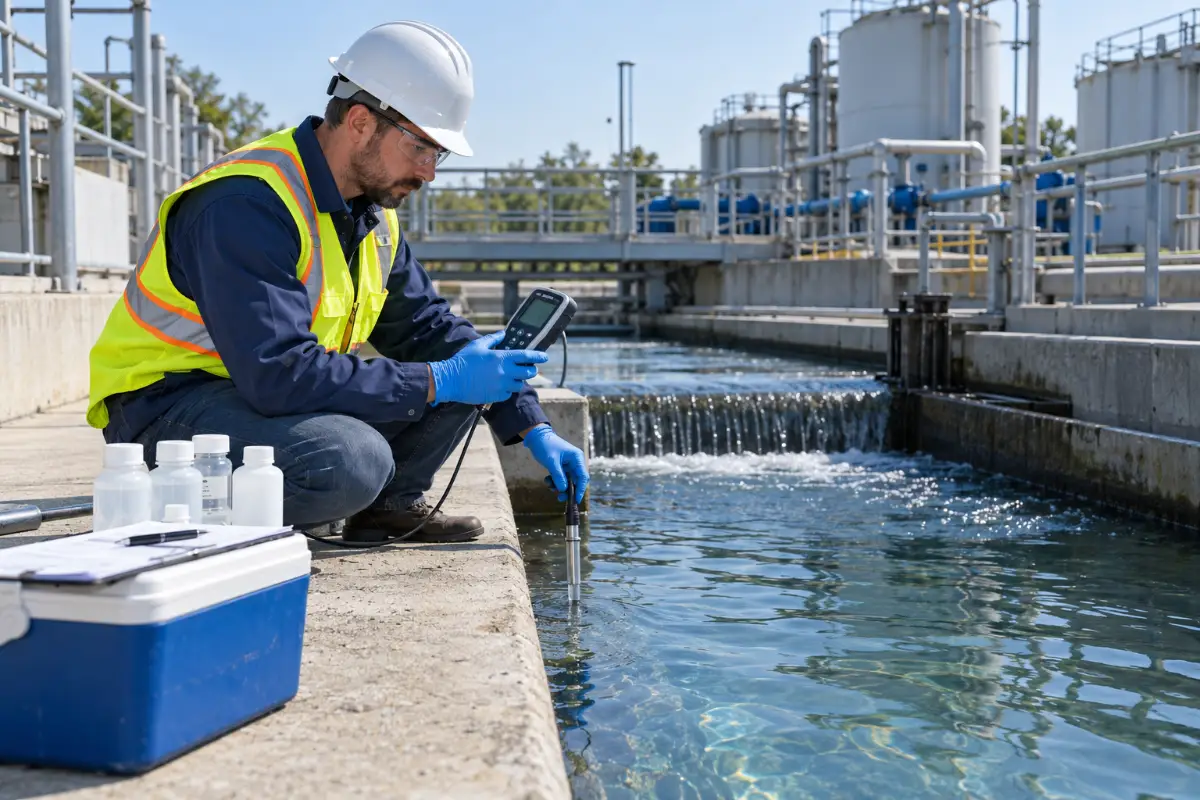
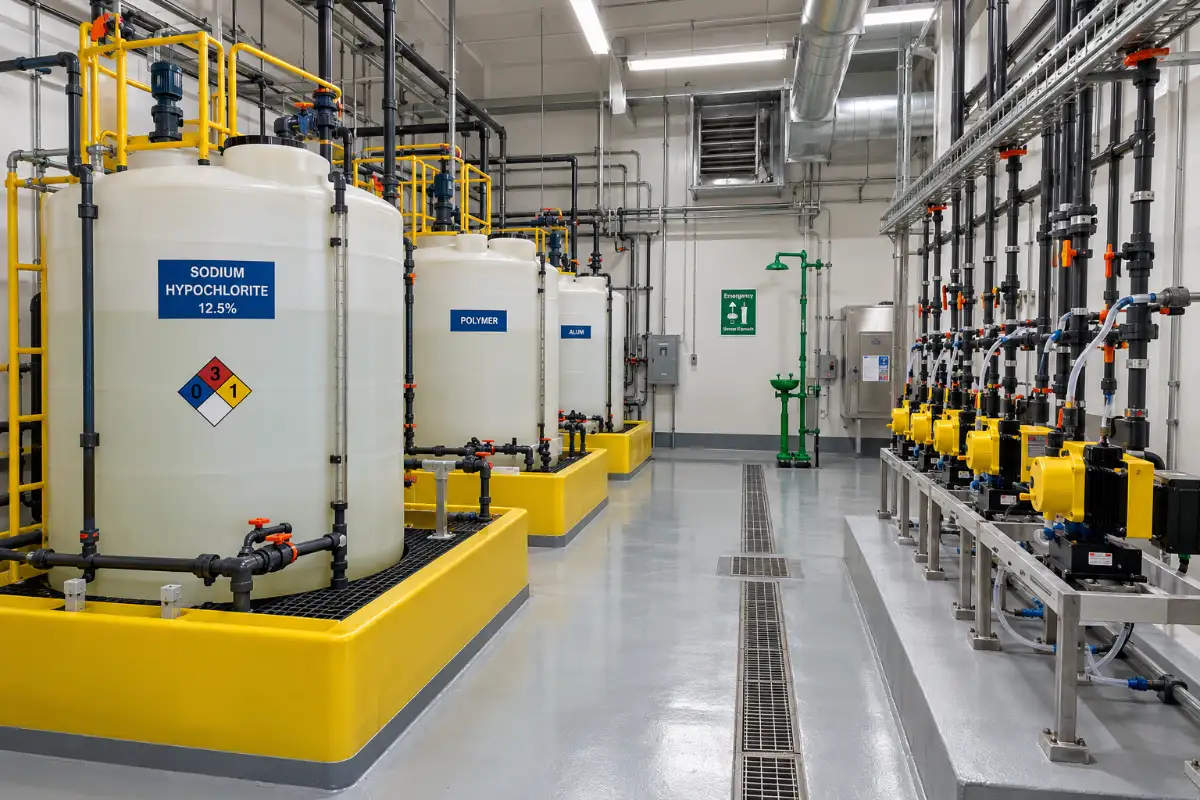
This is the number one killer. Heat transfer drops, the compressor works harder, and eventually the unit trips on high temperature or low vacuum. The fix is upstream: proper softening, antiscalant selection, and a realistic cleaning-in-place schedule. If your pretreatment is undersized, no evaporator will save you.
Foaming and carryover
Organic-rich streams foam. Foam carries liquid into the distillate and contaminates it. Defoamers help, but the real fix is often a mechanical one — larger vapor space, mist eliminators, or a pre-concentration step.
Compressor wear
Centrifugal and roots-type compressors are robust but not immortal. Vibration monitoring, oil analysis, and a stocked spare rotor set are worth the money. A compressor failure with no spare on site can idle a plant for months.
Corrosion
Chlorides plus heat equals corrosion. Material selection is not a place to save money. I have seen 316L specified for a service that needed titanium, and the exchanger was through-wall in eighteen months.
Control logic drift
Operators tune around problems, and over a year the plant ends up running in a mode nobody designed. Periodic review of setpoints and interlocks catches this before it becomes a failure.
Pretreatment: The Part Nobody Wants to Pay For
If I could change one thing about how these projects are bought, it would be this. Clients routinely trim the pretreatment budget to afford a bigger evaporator. That is backwards.
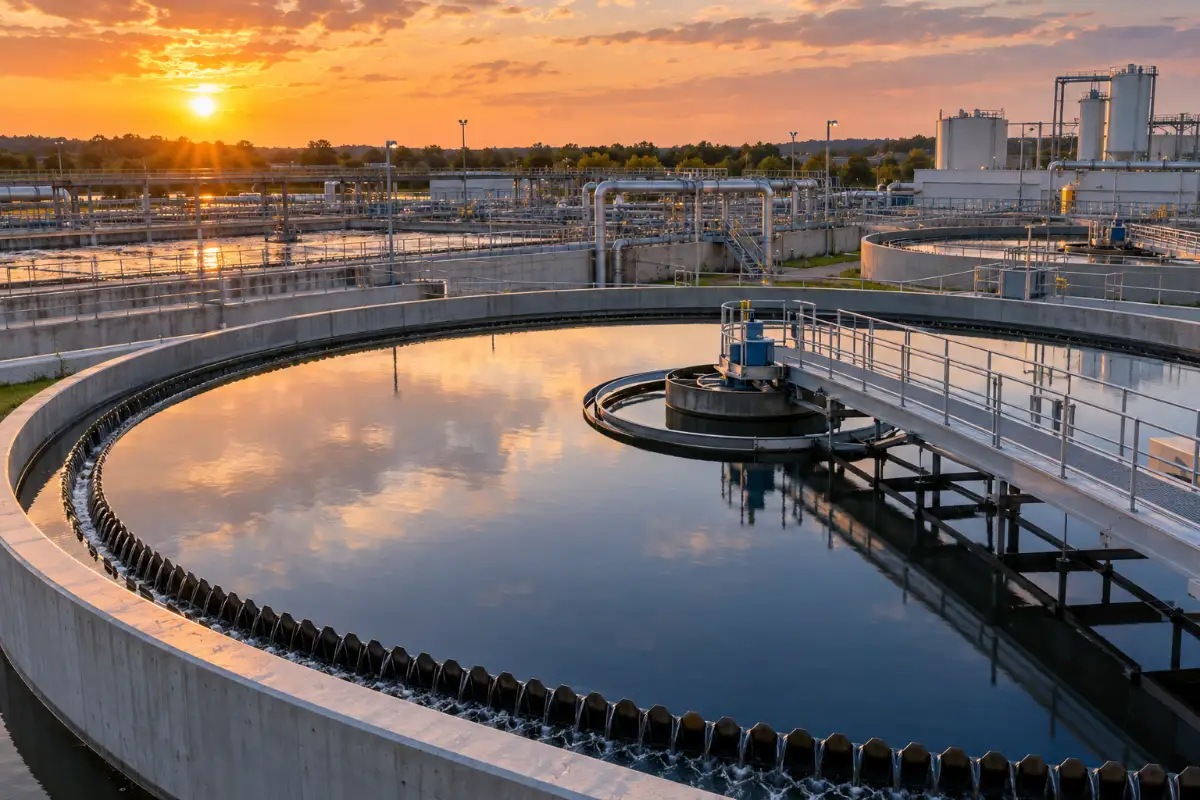
Softening, filtration, and where needed, a screw press sludge dewatering step to handle the solids you generate, are what keep the thermal section alive. A 10% saving on pretreatment can cost you 30% more in evaporator downtime over five years.
The same logic applies to membrane staging. Pushing high-pressure RO harder with a well-designed high-pressure RO membrane array reduces the volume reaching the evaporator, which shrinks the whole downstream train. It is almost always cheaper to concentrate with pressure than with heat.
Regulatory Context and Why It Matters to Design
ZLD is often driven by discharge limits rather than by a desire for dry solids. The U.S. Environmental Protection Agency sets effluent guidelines for several industrial categories that effectively push plants toward near-zero discharge, and the World Bank publishes environmental, health, and safety guidelines that many international projects reference during permitting. The International Energy Agency tracks industrial energy intensity, which is relevant because a poorly chosen evaporator can dominate a plant’s electrical load.
What this means for design is simple: know your discharge limit before you size anything. A system designed to meet 500 mg/L TDS is a fundamentally different machine from one designed for zero liquid discharge with salt recovery.
Commissioning and the First Six Months
The commissioning period is where you learn whether the design was honest. I always budget for a stabilization phase of at least three to six months, because the feed chemistry you tested in a lab is never quite the feed you get in the plant.
Expect to adjust antiscalant dosing, cleaning frequency, and sometimes the operating pressure or temperature profile. A vendor who disappears after handover has left you with a machine you cannot tune. A vendor who stays through stabilization has given you a working plant.
For anyone planning a project and wanting a second opinion on train selection, our team at Memvatop reviews process designs regularly and can flag issues before they become field problems.
Practical Selection Guidance
If you take nothing else from this article, take these points.
- Design from the water analysis, not from a template. Seasonal and batch variation matters.
- Maximize membrane concentration before thermal evaporation. It is the cheapest volume reduction you will ever buy.
- Choose MVR or multi-effect based on your actual energy prices, not on fashion.
- Oversize pretreatment deliberately. It is the cheapest insurance in the plant.
- Insist on the heat and mass balance, the scaling control plan, and a named commissioning engineer.
- Budget for stabilization, spare parts, and a realistic maintenance crew.
A well-engineered system from a competent manufacturer runs quietly for decades. A poorly engineered one from a low bidder becomes a permanent maintenance project. The difference is not the flag on the shipping crate — it is the quality of the engineering conversation you have before the order is placed.
Frequently Asked Questions
How much does a zero liquid discharge system cost?
There is no meaningful single number. Cost scales with flow rate, salinity, the number of process stages, and material selection. Small systems handling a few cubic meters per day sit in a very different range from large MVR trains processing hundreds of cubic meters per hour. The honest approach is to fix the flow, the feed chemistry, and the required output quality first, then request budgetary pricing against that specification.
MVR or multi-effect — which should I choose?
It comes down to your energy prices and whether you have steam. MVR uses electricity and no steam, so it wins where power is cheap and steam is unavailable. Multi-effect uses steam and less electricity, so it wins where you already have a boiler and steam is effectively free. Footprint, plot space, and maintenance capability also matter.
What causes most evaporator failures?
Scaling and fouling, almost every time. When heat transfer surfaces foul, everything downstream suffers. The root cause is usually undersized or poorly controlled pretreatment, not the evaporator itself. Get the softening and antiscalant program right and the evaporator will behave.
How long does commissioning take?
Mechanical and electrical commissioning of a mid-sized train typically takes several weeks. Process stabilization, where you tune dosing and operating parameters against real feed, usually runs three to six months. Plan for it in your schedule and budget rather than treating it as an afterthought.
Can I retrofit a ZLD system onto an existing plant?
Yes, but space and utilities are usually the limiting factors. Retrofits often need a new softening package, additional power capacity for MVR compressors, and a solids handling area. Survey the available plot and the electrical service before you commit to a technology.
What spare parts should I stock?
At minimum: compressor wear components or a spare rotor set, mechanical seals, gaskets, antiscalant and cleaning chemicals, instrumentation spares for level and conductivity, and one complete set of heat exchanger tubes if the alloy is exotic. Lead times on specialty items can run into months.
How do I verify a manufacturer’s claims?
Ask for the heat and mass balance, a scaling control plan, the compressor make and model with service intervals, and the name of the engineer who will commission the plant. Then ask for contact details of two or three similar installations and actually call them. Vendors who cannot provide these are not engineering firms.