

If you are comparing landfill leachate treatment plant manufacturers, the short answer is this: the right supplier is the one who designs around your specific leachate chemistry, not the one with the longest equipment list. Leachate changes as a landfill ages, and a system that works in year two may struggle in year twelve. I have spent more than a decade sizing, commissioning, and troubleshooting leachate plants, and the projects that hold up over time are almost always the ones where the manufacturer asked hard questions before quoting. This article walks through what actually matters when you evaluate suppliers, from process selection and materials to energy use, maintenance, and lifecycle cost.
Why Leachate Is Harder Than Most Industrial Wastewater
Leachate is not a single, stable stream. It is rainwater that has percolated through waste, picking up dissolved organics, ammonia, heavy metals, salts, and trace contaminants along the way. The composition shifts with rainfall, season, waste age, and how the landfill is capped and operated.
That variability is the core engineering problem. A plant sized for average conditions will be undersized during the wet season and over-engineered during dry months. Good manufacturers account for this by designing with turndown flexibility, buffer capacity, and control logic that adjusts to real inlet conditions rather than a single design point.
Typical leachate characteristics I see across projects include:
- COD: often in the 2,000–20,000 mg/L range, higher in young landfills
- BOD/COD ratio: drops as the landfill ages, shifting from biological to physicochemical treatment
- Ammonia nitrogen: frequently 500–3,000 mg/L, one of the hardest parameters to remove
- Chloride and TDS: can climb above 10,000 mg/L in mature sites
- Heavy metals: variable, sometimes low, sometimes problematic depending on waste input
If you want a deeper breakdown of what is actually in the water, this reference on leachate chemistry is a useful starting point before you talk to any supplier.
How to Evaluate a Leachate Treatment Plant Manufacturer
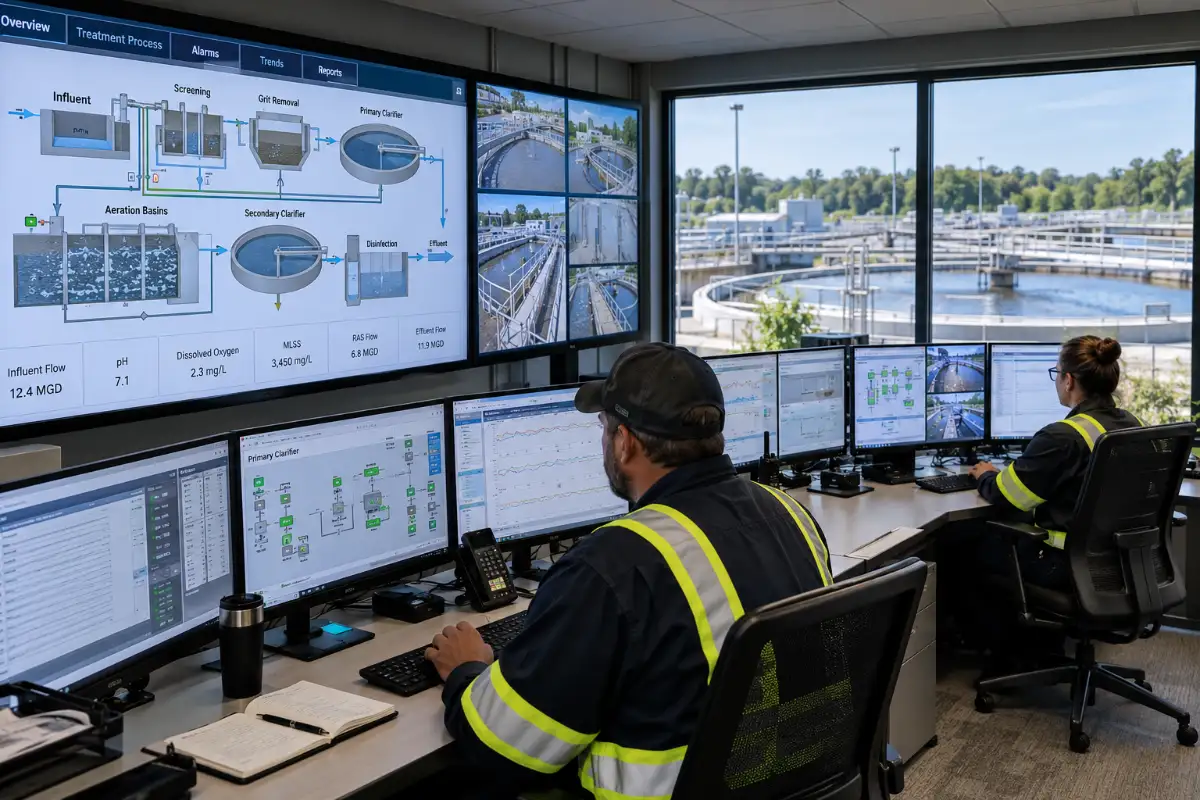
Most manufacturers will send you a glossy capability deck. That tells you very little. What separates a competent supplier from a risky one is how they handle the pre-design phase and how they respond to uncomfortable questions.
1. Do they ask for real water analysis before quoting?
If a manufacturer quotes you a system based on a single lab report from two years ago, that is a red flag. Leachate changes. A serious supplier will ask for at least a full year of analytical data, seasonal variation, flow records, and any historical treatment issues. They will also want to know about your discharge permit limits, because those drive the entire process train.
2. Can they explain why they chose a specific process?
A supplier who cannot clearly justify why they selected biological treatment, membrane separation, evaporation, or a hybrid approach is guessing. Each technology has a defined window where it makes sense. If they cannot articulate the trade-offs, they probably have not done the engineering.
3. What is their position on pilot testing?
For anything above a small flow rate, pilot testing is not optional. It is how you confirm fouling behavior, scaling risk, biological kinetics, and achievable recovery. Manufacturers who resist pilot testing usually do so because they are not confident in their design.
4. Who actually builds the critical equipment?
Many companies assemble systems from third-party components. That is fine if they take full responsibility for performance. It becomes a problem when the evaporator, membranes, or compressors come from multiple vendors and no one owns the integrated result.
5. What does their service model look like after commissioning?
Leachate plants run for decades. The manufacturer’s ability to support membrane replacement, compressor overhaul, heat exchanger cleaning, and control system updates matters more than the initial price difference between two quotes.
Process Selection: The Real Decision Point
Before you can compare manufacturers, you need to understand what process train your site actually needs. This is where most projects get into trouble, because the process decision is often made by the supplier rather than by the owner’s engineering team.
Biological Treatment
Conventional activated sludge, MBR, and sequencing batch reactors work well for young leachate with high BOD/COD ratios and moderate ammonia. They are relatively low cost to operate but generate significant sludge and struggle with mature leachate where the biodegradable fraction has already been consumed.
Membrane Separation
Reverse osmosis and DTRO (disc tube reverse osmosis) handle high salinity and reject a broad range of contaminants. DTRO in particular is common in leachate because its open-channel design tolerates fouling better than spiral-wound membranes. If you are evaluating this route, DTRO membrane systems are worth understanding in detail, especially the concentrate handling side.
Evaporation and Crystallization
Thermal processes concentrate the brine and produce distillate that can often be reused or discharged. They are energy-intensive but handle high TDS, ammonia, and difficult organics that membranes cannot. For sites facing zero liquid discharge requirements, evaporation is usually unavoidable.
Hybrid Trains
Most modern leachate plants are hybrids: biological pretreatment, membrane concentration, and thermal finishing. The question is not which single technology to pick, but how to sequence them so each stage does what it does best.
| Process | Best For | Main Limitation | Typical Energy Demand |
|---|---|---|---|
| Biological (MBR/SBR) | Young leachate, high BOD/COD | Sludge, poor performance on mature leachate | Low to moderate |
| DTRO / RO | High salinity, broad contaminant rejection | Concentrate disposal, membrane fouling | Moderate to high |
| MVC Evaporation | High TDS, ammonia, ZLD sites | Scaling, compressor maintenance | High per m³ |
| MVR Evaporation | Large flows, steam cost reduction | Higher capex, compressor complexity | Moderate per m³ |
| Multi-Effect Evaporation | Steam available, high capacity | Steam dependence, larger footprint | Varies with effects |
None of these numbers are fixed. Actual figures depend on inlet concentration, target recovery, ambient conditions, and how the system is controlled. Treat any specific energy claim from a supplier as a starting point for verification, not a guarantee.
Evaporation and Concentration: Where Most Leachate Plants Live or Die
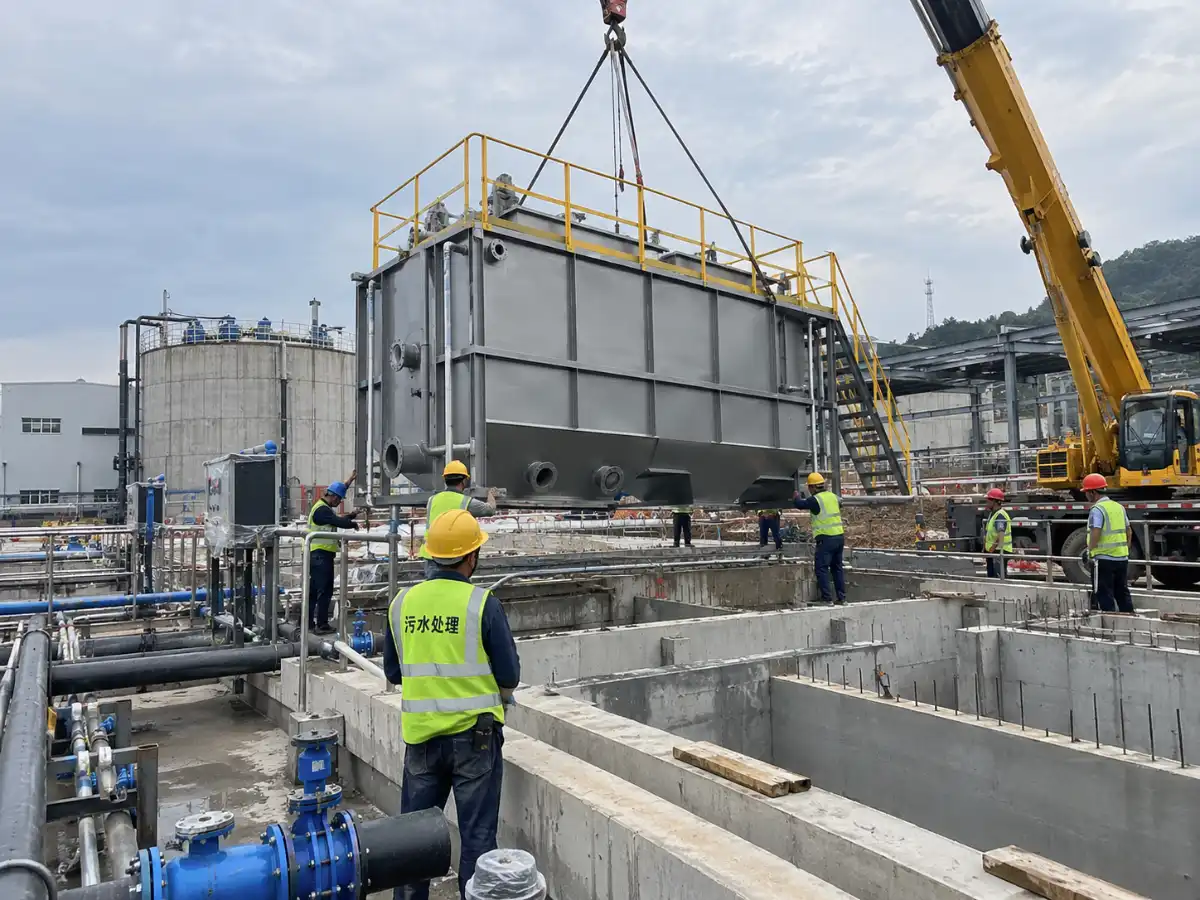
Once biological and membrane stages have done their job, you are usually left with a concentrated brine that still contains ammonia, salts, and residual organics. This is where evaporation technology earns its place, and where the choice between MVC, MVR, and multi-effect systems has the biggest impact on operating cost.
MVC vs. MVR: What Actually Differs
Mechanical vapor compression and mechanical vapor recompression are closely related. Both compress the vapor produced by evaporation and reuse its latent heat. The difference is mostly in how the compressor is configured and how the system is integrated with the heat exchangers.
For leachate, the practical questions are:
- How much scaling will occur on the heat transfer surfaces, and how often will you need to clean?
- What is the compressor’s tolerance for entrained droplets and corrosive vapors?
- How does the system handle turndown when flow drops in dry months?
- What is the realistic availability target, and how does that affect your storage requirements?
If you are going down the MVC route, the design of the MVC evaporator heat exchangers is often the single biggest factor in long-term reliability. Poorly designed exchangers foul faster, require more frequent cleaning, and drive up both maintenance labor and downtime.
Multi-Effect Systems
Multi-effect evaporators use steam to drive multiple evaporation stages in series, with each stage operating at lower pressure and temperature. They are efficient when steam is available and flows are large. For leachate, they are less common than MVC or MVR because steam supply is often not available at landfill sites, but they remain relevant where a site has an existing steam system or where capacity justifies the complexity.
Understanding the differences between single-effect, double-effect, and triple-effect configurations is useful because the efficiency gain per added effect is not linear. The second effect typically delivers the largest marginal improvement; beyond three effects, the returns diminish relative to added capital and complexity.
Concentrate and Salt Handling
Evaporation does not destroy contaminants. It concentrates them. The residual brine or salt must be handled, and this is where many projects underestimate cost and complexity. For sites targeting zero liquid discharge, the evaporation stage is usually followed by crystallization or solidification. The ZLD system design needs to be considered from day one, not bolted on after the evaporator is installed.
Energy, Cost, and Lifecycle Reality
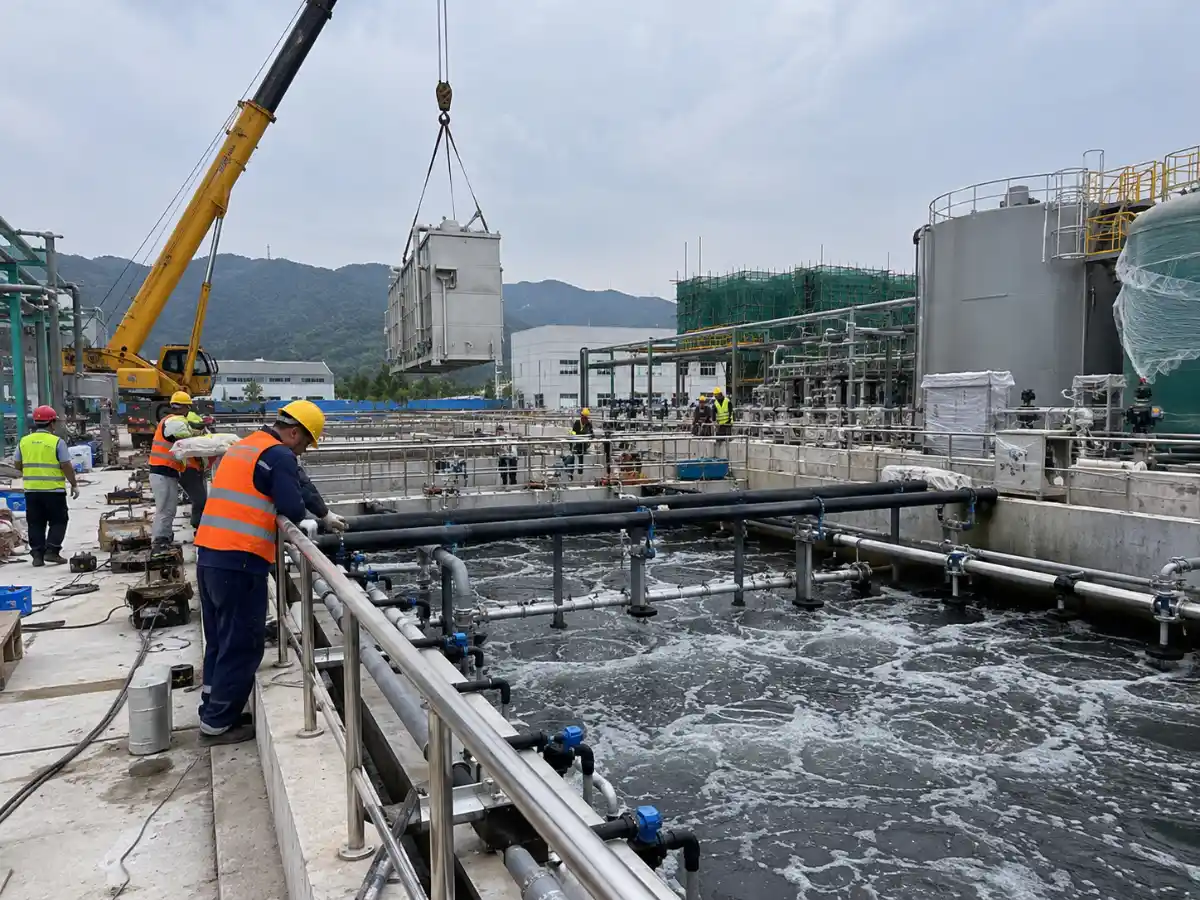
Leachate treatment is energy-intensive, and the operating cost usually dominates the total cost of ownership over a 15–20 year horizon. When you compare manufacturers, compare their predicted energy consumption per cubic meter of treated water, not just their equipment price.
Indicative Cost Ranges
The following ranges are indicative and project-dependent. They are meant to frame discussions, not to serve as budget numbers.
| Cost Element | Typical Range | What Drives It |
|---|---|---|
| Capital cost (per m³/day capacity) | Wide range depending on train | Process complexity, materials, automation level |
| Electrical consumption (MVC/MVR) | 15–40 kWh/m³ treated | Inlet TDS, recovery target, compressor efficiency |
| Membrane replacement | Every 2–5 years | Fouling rate, cleaning frequency, feed quality |
| Chemical consumption | Highly variable | Antiscalant, cleaning chemicals, pH adjustment |
| Labor and maintenance | Ongoing | Automation level, site staffing model |
Be cautious with any manufacturer who quotes a single energy number without showing the assumptions behind it. The number depends on inlet concentration, ambient temperature, recovery ratio, and how the system is operated. A well-designed system running at design conditions can look very different from the same system running at half load in winter.
Where Lifecycle Cost Actually Hides
The biggest hidden costs in leachate plants are usually:
- Fouling and cleaning downtime. Every day the plant is offline, leachate accumulates. Storage capacity becomes a real constraint.
- Compressor maintenance. MVC and MVR compressors are precision machines. Rebuild intervals and spare parts availability matter.
- Membrane replacement frequency. A system that fouls membranes quickly may look cheap upfront but cost far more over ten years.
- Control system obsolescence. If the PLC and HMI are proprietary and unsupported after five years, you will pay for it.
For a more detailed breakdown of how evaporator costs are structured, including capex and opex drivers, this cost analysis is worth reviewing before you finalize a shortlist of suppliers.
Materials of Construction and Fouling Management
Leachate is corrosive. Chlorides attack stainless steel. Ammonia and organic acids create additional stress. The materials a manufacturer specifies tell you a lot about whether they have actually built leachate plants before.
What to Look For
- Duplex or super duplex stainless steel for wetted parts in high-chloride service
- Titanium or high-alloy tubes in heat exchangers where chloride stress corrosion is a risk
- Non-metallic wetted components where practical, especially in low-temperature sections
- Proper gasket and seal selection matched to the actual chemistry, not a generic default
Fouling management is equally important. Leachate contains organics, hardness, and suspended solids that will deposit on heat transfer surfaces and membranes. Good designs include:
- Pre-treatment that removes the bulk of suspended solids and hardness
- Antiscalant dosing tuned to the actual saturation indices
- Cleaning-in-place systems sized for realistic cleaning frequency
- Redundant capacity so cleaning can be done without stopping the whole plant
If fouling is not addressed in the design, it will be addressed in your maintenance budget. There is no third option.
What a Good Manufacturer Actually Delivers
When I look back at the projects that went smoothly, the manufacturers shared a few traits. They were not always the cheapest. They were not always the largest. But they consistently did the following:
They took responsibility for performance
A performance guarantee tied to real inlet conditions, with clear definitions of what happens if the inlet changes, is a sign of a confident supplier. Vague guarantees that exclude every possible variation are not worth the paper they are printed on.
They designed for maintenance access
Every piece of equipment that needs periodic cleaning, inspection, or replacement should be accessible without dismantling half the plant. This sounds obvious, but I have seen heat exchangers installed in positions that require a crane and a two-day shutdown just to open a flange.
They provided realistic operating documentation
Operating manuals that reflect the actual system, with actual setpoints and actual troubleshooting guidance, are worth more than a generic binder. Ask to see a sample before you sign.
They planned for the site’s full lifecycle
Landfills operate for decades and then close. Leachate continues to be generated long after waste acceptance stops. A system that only makes sense during the active phase will become a liability during closure and post-closure care. The best manufacturers design with that full timeline in mind.
Common Mistakes When Selecting a Manufacturer
I have seen the same mistakes repeated across projects in different industries. Here are the ones that cost the most.
- Buying on capital cost alone. The cheapest quote is rarely the lowest total cost. Energy, chemicals, membranes, and downtime add up fast.
- Skipping pilot testing. A pilot is not a formality. It is how you find out what the real fouling rate is before you commit capital.
- Ignoring concentrate management. If you cannot dispose of or treat the concentrate, the whole plant is a dead end.
- Underestimating storage. Leachate does not stop when the plant is offline. Storage capacity is your buffer against maintenance and upset conditions.
- Accepting vague performance guarantees. If the guarantee does not define inlet conditions, outlet limits, and remedies, it is not a guarantee.
- Not visiting a reference site. Ask to see a plant the manufacturer built, ideally one with similar chemistry and similar age. Talk to the operators, not the sales team.
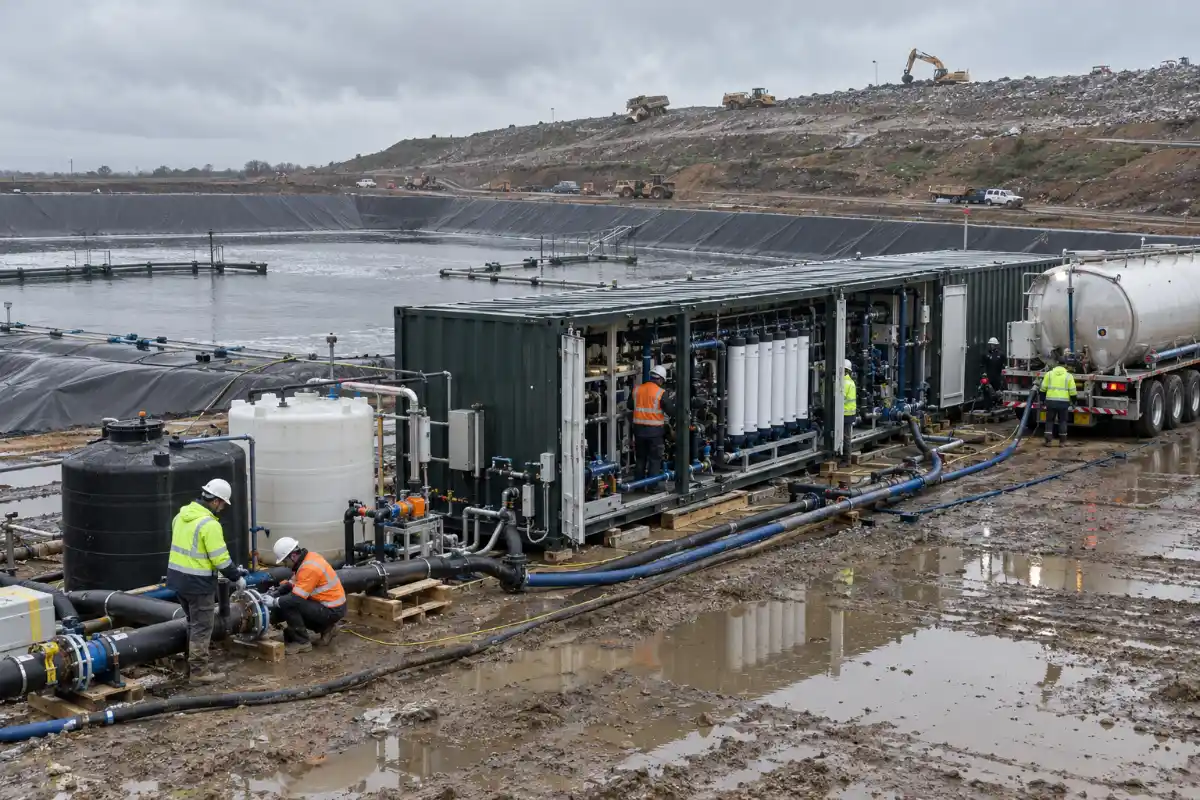
If you want to see how a well-designed leachate project comes together in practice, the landfill leachate treatment project overview shows the kind of process integration that separates a workable design from a fragile one.
Regulatory Context and Discharge Limits
Discharge limits drive process selection more than any other single factor. In the United States, leachate is regulated under the Clean Water Act, with specific effluent guidelines that vary by landfill type and discharge route. In the European Union, the Water Framework Directive and the Landfill Directive set the framework, with member states applying their own numeric limits.
Before you talk to any manufacturer, get clear answers to these questions:
- Where will the treated water go? Surface water, sewer, reuse, or evaporation?
- What are the numeric limits for COD, BOD, ammonia, TSS, metals, and salinity?
- Are there seasonal or flow-based variations in the permit?
- What monitoring and reporting is required, and who is responsible?
For reference on how discharge standards are structured, the EPA’s NPDES program page is a useful starting point, and the World Bank’s water resources materials provide broader international context. These are not substitutes for local legal advice, but they help frame the conversation with your engineering team.
Manufacturers who understand the regulatory framework will design to the permit limits, not to a generic target. That distinction matters when the permit is tight and the chemistry is difficult.
Questions to Ask Before You Shortlist
When you are down to two or three manufacturers, the questions you ask will separate them quickly. Here is what I would want answered in writing.
| Question | What a Good Answer Looks Like |
|---|---|
| How many leachate plants have you commissioned? | Specific numbers, with references available |
| What is your design basis for inlet variability? | Clear ranges, with justification |
| What is the guaranteed energy consumption? | A number tied to defined conditions |
| What is your membrane or compressor replacement interval? | Based on operating experience, not marketing |
| What happens if the plant does not meet performance? | Specific remedies, not vague commitments |
| What is your spare parts lead time? | Realistic, with stock locations |
| Who provides operator training? | Named personnel, with duration and scope |
If a manufacturer cannot answer these clearly, they are not ready to build your plant. It is better to find that out during procurement than during commissioning.
Where Evaporation Fits in the Overall Train
Evaporation is not a first-line treatment. It is a concentration and finishing step. In a well-designed leachate plant, it usually sits after biological treatment and membrane concentration, handling the brine that those stages cannot process further.
That positioning matters for cost. The less water you send to the evaporator, the smaller the evaporator and the lower the energy bill. Every cubic meter you can remove upstream through biological treatment, membrane concentration, or volume reduction is a cubic meter you do not have to evaporate.
This is why process integration is so important. A manufacturer who only sells evaporators will tend to put the evaporator early in the train. A manufacturer who understands the full process will push as much work as possible upstream, where it is cheaper. If you want to understand how evaporation integrates with the broader treatment approach, wastewater evaporation system design covers the integration logic.
Frequently Asked Questions
What is the most important factor when choosing a leachate treatment plant manufacturer?
Their willingness and ability to design around your actual water chemistry, not a generic template. A manufacturer who insists on real analytical data, pilot testing, and clear performance definitions is almost always a better choice than one who quotes quickly on limited information.
How much does a landfill leachate treatment plant cost?
Capital cost varies widely with flow rate, process train, materials, and automation level. Operating cost is often more significant over the plant’s life, driven by energy, chemicals, membrane replacement, and maintenance labor. Any specific number should be treated as indicative until a proper design basis is established.
Can leachate be treated without evaporation?
Yes, in some cases. Biological treatment combined with membrane separation can meet many discharge limits, especially for younger leachate with favorable BOD/COD ratios. Evaporation becomes necessary when salinity is high, when ammonia is difficult to remove biologically, or when zero liquid discharge is required.
How often do membranes need to be replaced?
Typical membrane life in leachate service is two to five years, but this depends heavily on feed quality, pre-treatment effectiveness, cleaning frequency, and operating conditions. A well-designed system with good pre-treatment will be at the longer end of that range.
What causes the most downtime in leachate treatment plants?
Fouling and scaling on heat transfer surfaces and membranes, followed by compressor maintenance in thermal systems. Both are manageable with proper design, but they require realistic cleaning schedules and adequate redundancy so the plant can continue operating during maintenance.
Do I need a pilot test before buying a full-scale plant?
For any system above a small flow rate, yes. Pilot testing confirms fouling behavior, achievable recovery, biological kinetics, and the actual performance of the proposed process train under your specific water chemistry. It is the cheapest insurance you can buy.
How do I compare manufacturers when their quotes look similar?
Look past the equipment list. Compare their design basis, performance guarantees, materials of construction, service model, spare parts strategy, and reference installations. Ask for a site visit and talk to the operators. The differences that matter over a twenty-year plant life are rarely visible on the first page of a quote.
Closing Perspective
Selecting a landfill leachate treatment plant manufacturer is not a procurement exercise. It is an engineering decision that will shape your operating cost, compliance risk, and maintenance burden for the life of the landfill. The right partner will push back on incomplete data, insist on pilot testing, and design for the full lifecycle of the site, including closure and post-closure care.
The wrong partner will sell you a system that works on paper and fails in the field. The difference usually shows up in the questions they ask before they quote, not in the price they offer after.
If you are working through a leachate project and want to talk through process selection, energy trade-offs, or concentrate management, Talk to our engineering team. We are happy to review your data and help you frame the right questions for your shortlist.