

If you’re budgeting an industrial brine concentration system, expect the total installed cost to land somewhere between $150,000 and $3 million+ depending on evaporation capacity, feed chemistry, materials of construction, and whether you need full zero liquid discharge (ZLD) or just volume reduction. I’ve quoted, built, and commissioned these systems for over a decade, and I can tell you the equipment price tag is rarely the number that surprises people. The real cost driver is almost always the specific brine you’re dealing with — its scaling tendency, corrosivity, and the disposal route you’re trying to avoid. This article breaks down where the money actually goes, from capital equipment to the energy bill that keeps you up at night.
What Drives the Cost of a Brine Concentration System
Let me start with the uncomfortable truth: two projects with identical flow rates can differ in price by a factor of three. I’ve seen a 20 m³/day MVC unit quote at $280,000 and a similar-capacity multi-effect system quote at $850,000, both technically valid. The difference came down to feed chemistry and the customer’s tolerance for operating complexity.
Here are the variables that move the number most:
- Evaporation rate (kg/h or m³/day): This sets the heat exchanger surface area, compressor size, and vessel dimensions. It’s the single biggest cost multiplier.
- Feed total dissolved solids (TDS): Higher TDS means higher boiling point elevation, which changes compressor duty and material selection.
- Scaling and fouling potential: Hardness, silica, and sulfate levels dictate whether you need pretreatment, seeded slurry operation, or frequent clean-in-place (CIP) cycles.
- Materials of construction: Carbon steel is cheap. Duplex stainless, titanium, and high-nickel alloys are not. Chloride content decides which you need.
- Concentration target: Getting from 3% to 15% solids is a very different machine than getting from 15% to a crystallizer feed at 30%+.
- Discharge or ZLD requirement: If you must produce dry solids, add a crystallizer, centrifuge, and dryer — which can double the project cost.
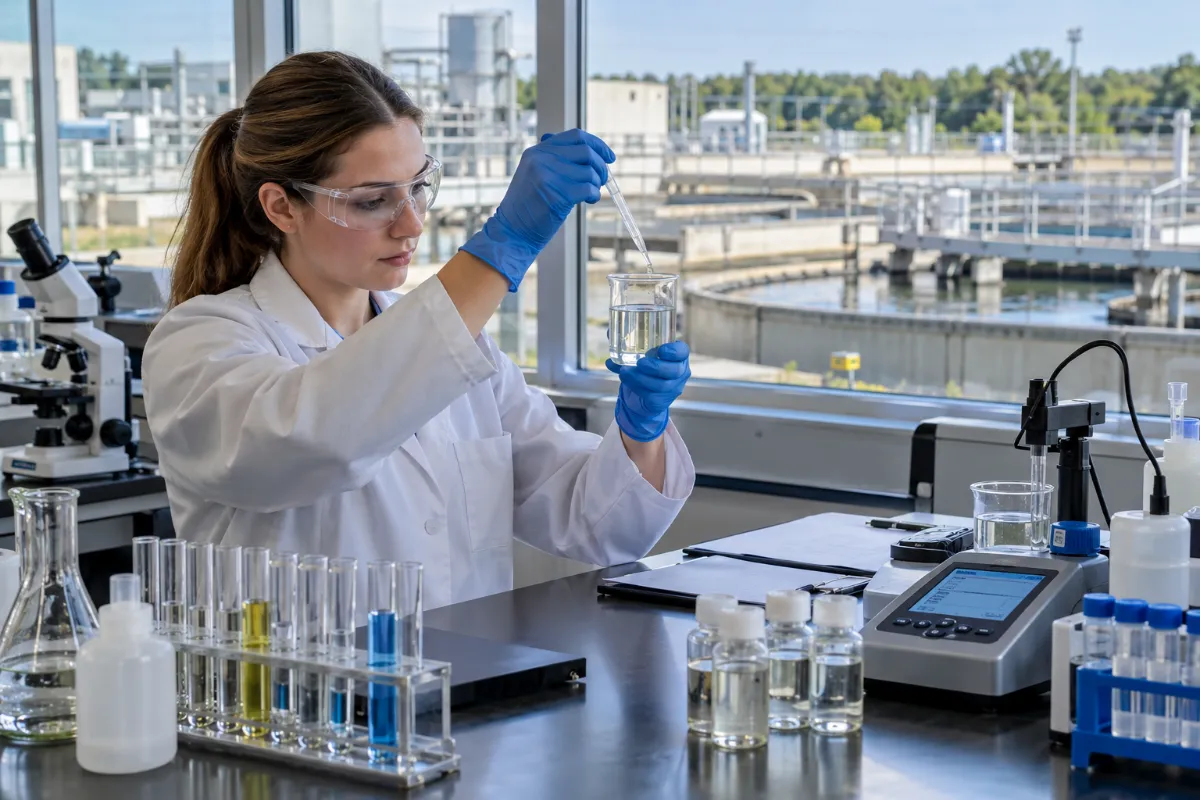
I always tell clients to nail down the water analysis before we talk price. A $2,000 lab report saves $200,000 in change orders.
Capital Cost Breakdown: Where the Money Goes
When I build a cost estimate, I break it into four buckets. Here’s a typical split for a mid-size MVC brine concentrator handling 10–30 m³/day of RO reject:
| Cost Category | Typical Share of CAPEX | Notes |
|---|---|---|
| Evaporator body & heat exchangers | 35–45% | Driven by surface area and alloy choice |
| Compressor or steam supply | 15–25% | MVC compressor is the costliest single component |
| Pumps, piping, valves, instrumentation | 10–15% | Corrosion-resistant wetted parts add up fast |
| Pretreatment & chemical dosing | 5–15% | Softening, antiscalant, pH adjustment |
| Civil, structural, electrical, controls | 10–20% | Site-specific; often underestimated |
| Engineering, freight, installation, commissioning | 10–20% | Varies by region and site access |
Notice I didn’t list a single “system price.” That’s because a real budget has to account for the stuff around the evaporator. I’ve watched projects blow their budget on structural steel and electrical upgrades, not the core equipment.
For a closer look at how compressor selection affects both capital and operating cost, the mechanical vapor compression MVC evaporator overview is worth reading before you commit to a technology.
Operating Cost: The Number That Determines Payback
CAPEX hurts once. OPEX hurts every month for 20 years. I’ve seen clients fixate on a $50,000 capital difference and ignore a $120,000 annual energy gap. That’s a mistake.
The dominant operating cost is energy — either electricity for an MVC compressor or steam for a multi-effect evaporator. Here’s how they compare in practice:
| Technology | Typical Energy Consumption | Best Fit |
|---|---|---|
| Single-effect evaporator | ~1.0–1.1 kg steam per kg water evaporated | Small flows, cheap steam available |
| Double-effect | ~0.55–0.6 kg steam per kg water | Moderate flows, steam available |
| Triple-effect | ~0.38–0.42 kg steam per kg water | Larger flows, steam available |
| MVC (mechanical vapor compression) | ~15–35 kWh per m³ evaporated | No steam, electricity available |
These are indicative ranges. Actual consumption depends on boiling point elevation, compressor efficiency, heat recovery, and how close you push the concentration. Don’t let anyone quote you a fixed number without a water analysis in hand.
Beyond energy, budget for:
- Antiscalant and cleaning chemicals: typically $2–8 per m³ of feed, higher for silica-laden brines
- Maintenance labor: 4–10 hours per week for a well-instrumented system, more if fouling is aggressive
- Replacement parts: compressor overhauls every 5–8 years, heat exchanger gaskets and tubes as needed
- Disposal of concentrate or solids: this is the cost you’re usually trying to eliminate, so it deserves careful accounting
If your site has no steam but cheap off-peak power, MVC usually wins on lifecycle cost. If you have waste steam from another process, a multi-effect train can be dramatically cheaper to run. I’ve written more about that trade-off in the context of multi-effect evaporators.
Choosing the Right Technology for Your Brine
There’s no universal best answer. I evaluate four things before recommending a technology:
- Is steam available? If yes, multi-effect is often the lowest OPEX. If no, MVC.
- What’s the scaling risk? High hardness or silica may push you toward seeded slurry or a falling-film design with careful pretreatment.
- What’s the target concentration? Volume reduction to 15–20% solids is a different machine than crystallization.
- What’s the disposal constraint? If you need ZLD, the evaporator is only part of the system.
For high-salinity streams where membrane systems still make sense as a pre-concentration step, a DTRO membrane system can cut the evaporator load significantly. I’ve used this combination on landfill leachate and it works well — the membrane does the bulk volume reduction, and the evaporator polishes the concentrate.
When the discharge permit truly requires no liquid leaving the site, you’re looking at a zero liquid discharge ZLD system, which adds crystallization and dewatering to the train. That’s a bigger capital commitment, but it eliminates the long-term liability and hauling cost.
Materials of Construction and Their Cost Impact
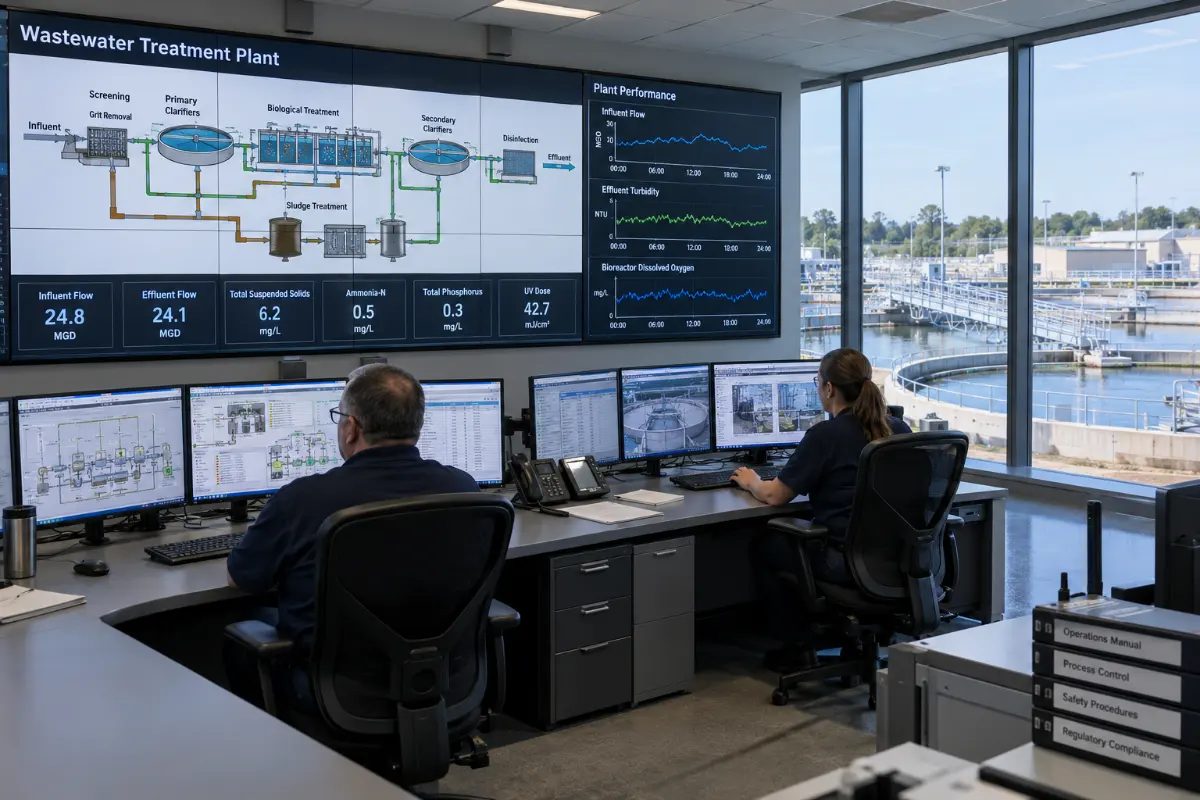
I’ve seen more projects get derailed by material selection than almost anything else. Chlorides attack standard stainless steel. High-temperature brines accelerate corrosion. Get this wrong and you’ll be replacing heat exchangers every 18 months.
| Material | Relative Cost | Typical Application |
|---|---|---|
| Carbon steel | 1.0x | Non-corrosive, neutral pH streams only |
| 304/316 stainless | 2–3x | Low chloride, moderate temperature |
| Duplex stainless | 3–4x | Moderate chloride, higher temperature |
| Titanium | 5–7x | High chloride, oxidizing conditions |
| High-nickel alloys | 8–12x | Severe chloride, high temperature, acidic |
These multipliers are rough and vary with market conditions. The point is that a brine with 50,000 mg/L chloride at 100°C is going to demand expensive metallurgy, and that has to be in the budget from day one.
One thing I’ve learned: don’t skimp on the heat exchanger. The MVC evaporator heat exchangers are where corrosion and scaling show up first. Upgrading the alloy there costs less than a full system replacement later.
Installation, Commissioning, and the Costs People Forget
I’ve never seen a project where installation came in exactly as budgeted. Here’s what I now build into every estimate:
- Freight and rigging: Large vessels don’t fit through standard doors. Cranes, permits, and escorts add up.
- Foundation and structural steel: Evaporators are heavy, and they vibrate. Skid-mounted helps, but not always.
- Electrical: MVC compressors draw serious amperage. Your existing panel may not have capacity.
- Piping tie-ins: Shutdown windows, temporary piping, and hot-tap work all cost money.
- Commissioning and training: Budget 2–4 weeks of on-site support for a first-of-its-kind installation.
- Performance testing: You’ll want a documented acceptance test. Build it into the contract.
If you’re retrofitting into an existing plant, add 15–25% to your installation estimate. Nothing is ever where the drawings say it is.
For facilities that need to get running fast, a pre-packaged industrial wastewater treatment approach can reduce site work, but you trade some flexibility for speed. It’s a real trade-off, not a free lunch.
Maintenance and Reliability: The Long-Term Cost Picture
A brine concentrator is a hard-working machine. It runs hot, it handles aggressive chemistry, and it doesn’t like surprises. Here’s how I think about maintenance cost over a 15–20 year life:
| Item | Frequency | Relative Annual Cost |
|---|---|---|
| CIP (clean-in-place) | Weekly to monthly | Medium |
| Antiscalant & chemicals | Continuous | Medium–High |
| Compressor service | Annual inspection, major overhaul every 5–8 years | Low annual, high spike |
| Heat exchanger tube/gasket replacement | Every 3–7 years | Medium |
| Pump seals and impellers | Every 1–3 years | Low–Medium |
| Instrumentation calibration | Quarterly to annual | Low |
The biggest variable is fouling. A well-designed system with proper pretreatment might CIP once a month. A poorly designed one might CIP weekly, and that labor and downtime adds up fast.
I always recommend clients track three numbers from day one: specific energy consumption (kWh per m³ evaporated), CIP frequency, and concentrate density. If any of those drift, you have a problem worth investigating before it becomes an outage.
How to Compare Quotes Without Getting Fooled
When you’re evaluating bids, don’t just compare the bottom line. I’ve seen low bids that looked great until you added the missing pretreatment, the undersized compressor, or the cheap alloy that fails in year three.
Ask every vendor these questions:
- What feed chemistry did you design for, and what’s your scaling assumption?
- What’s the guaranteed evaporation rate and energy consumption, and under what conditions?
- What materials did you specify for wetted parts, and why?
- What’s included in commissioning, and what’s excluded?
- What’s the expected CIP frequency, and what chemical consumption does that imply?
- What’s the warranty, and what does it actually cover?
If a vendor can’t answer those clearly, that’s your answer.
For projects where you need a partner who can handle the full train — pretreatment, evaporation, and crystallization — it helps to work with someone who’s commissioned these systems in the field, not just modeled them in software. You can talk through your project with our engineering team if you want a second opinion on a quote or a design concept.
Typical Cost Ranges by System Size
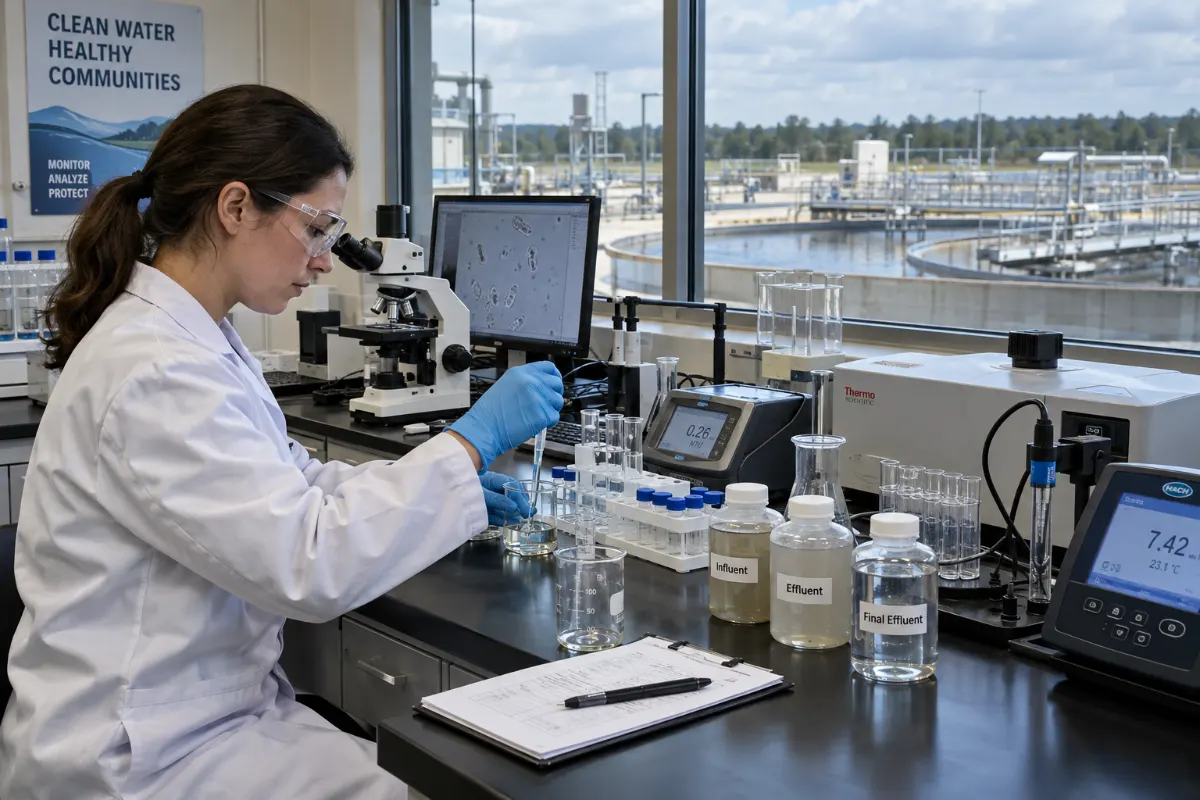
I want to be careful here, because these numbers move with steel prices, freight, and site conditions. But here are indicative installed-cost ranges I’ve seen for brine concentrators, excluding crystallization:
| Capacity (m³/day evaporation) | Indicative Installed Cost | Typical Application |
|---|---|---|
| 1–5 | $150,000 – $400,000 | Small industrial, pilot-scale |
| 5–20 | $350,000 – $900,000 | Mid-size industrial, RO reject |
| 20–50 | $800,000 – $1.8M | Larger industrial, leachate |
| 50–150 | $1.5M – $3.5M | Large industrial, ZLD pre-concentration |
Add 40–80% for full ZLD with crystallization and solids handling. Add 20–40% if you need exotic alloys. These are not quotes — they’re planning ranges to help you sanity-check proposals.
The U.S. Environmental Protection Agency publishes effluent guidelines that often drive the decision to concentrate rather than discharge, and the World Bank has useful guidance on industrial water management that can help frame the lifecycle cost argument internally.
Frequently Asked Questions
What’s the biggest cost driver in a brine concentration system?
Feed chemistry. Specifically, scaling tendency and corrosivity. Those two factors determine pretreatment needs, material selection, and cleaning frequency — and together they can swing the total cost by 2–3x for the same flow rate.
Is MVC always cheaper to operate than multi-effect evaporation?
No. MVC wins when you have no steam and reasonably priced electricity. If you have waste steam available, a multi-effect train can have a much lower operating cost. It depends entirely on your site’s energy balance.
How much maintenance should I budget annually?
As a planning figure, budget 3–6% of capital cost per year for maintenance, chemicals, and consumables. Aggressive brines push toward the high end. Well-pretreated, benign streams can run lower.
Can I add a concentrator to an existing RO system?
Usually yes, and it’s often the smartest move. Concentrating RO reject reduces the volume you have to evaporate, which shrinks the evaporator and cuts both capital and operating cost. Just make sure the RO reject chemistry is compatible with your chosen evaporator design.
What causes a brine concentrator to underperform?
In my experience, the top three causes are: scaling on heat transfer surfaces, compressor wear or fouling, and feed chemistry that differs from the design basis. All three show up as higher energy consumption and lower evaporation rate. Track specific energy from day one and you’ll catch problems early.
Do I need ZLD, or is volume reduction enough?
That depends on your discharge permit and disposal options. If you can send concentrate to a permitted disposal facility at acceptable cost, volume reduction is usually enough. If your permit requires no liquid discharge, or if hauling costs are prohibitive, ZLD is the answer. Run the lifecycle numbers both ways before deciding.
How long does a brine concentration system last?
With proper maintenance and appropriate materials, 15–20 years is realistic. The compressor and heat exchangers are the components most likely to need major service or replacement during that period.