

When plant managers ask me where to source custom wastewater treatment equipment suppliers, the honest answer is that the supplier matters less than the engineering logic behind the quote. I’ve reviewed hundreds of vendor proposals over the past decade, and the ones that hold up in year three are the ones built around your actual water chemistry, not a catalog. A good custom supplier starts by asking about your influent variability, discharge limits, and operator skill level before they ever talk about equipment. If they lead with a price sheet, walk away. The right partner designs around your constraints — floor space, power availability, sludge handling, and the reality of who will run the system at 2 a.m. on a Sunday. That’s the difference between a system that works and one that becomes a maintenance headache.
What “Custom” Actually Means in Industrial Wastewater
In my experience, “custom” gets thrown around loosely. Some suppliers mean they’ll swap a pump brand. Others mean they’ll re-engineer the entire process train. The distinction matters because it drives cost, lead time, and how well the system tolerates upsets.
True customization usually involves at least three layers:
- Process customization — selecting the treatment train based on your specific contaminants, flow profile, and target discharge quality.
- Mechanical customization — materials of construction, footprint, skid layout, and tie-in points that match your existing plant.
- Control customization — PLC logic, alarm setpoints, remote monitoring, and operator interface language that fits how your team actually works.
A supplier that only does the first layer is really a reseller. A supplier that does all three is the one you want when your effluent is anything other than textbook municipal sewage.
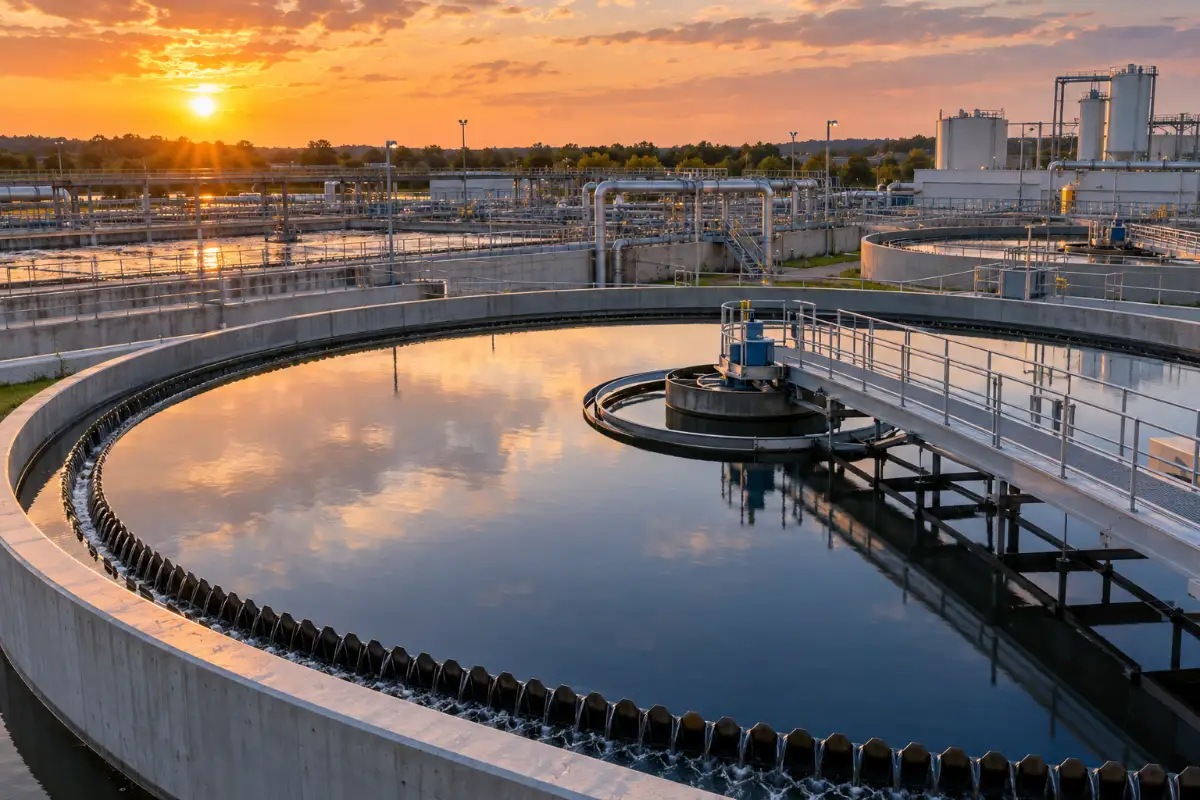
Matching the Process Train to Your Wastewater
Before you evaluate suppliers, you need to know what you’re treating. I always ask for a minimum of two weeks of composite sampling data, plus grab samples during known upset conditions. A single lab report from a calm week tells you almost nothing.
Here’s how I frame the decision matrix for most industrial clients:
| Wastewater Type | Typical Core Process | Polishing / Concentration Step | Key Design Consideration |
|---|---|---|---|
| Electroplating rinse water | Chemical precipitation + clarification | High-pressure RO or DTRO | Heavy metal sludge handling, pH control |
| Pharmaceutical fermentation | Anaerobic + aerobic biological | MVR or multi-effect evaporation | High COD, antibiotics, foam control |
| Landfill leachate | Pre-treatment + biological | DTRO + evaporation for ZLD | Ammonia, salinity, seasonal variation |
| Chemical plant brine | Neutralization + softening | MVC evaporator + crystallizer | Scaling, corrosion, salt recovery |
| Battery / new energy | Precipitation + UF | RO + evaporation | Nickel, cobalt, sulfate loading |
Notice that evaporation shows up repeatedly as the concentration step. That’s not because evaporators are trendy — it’s because they handle the high-TDS streams that membranes can’t push through economically. If your total dissolved solids are above roughly 30,000–50,000 mg/L, you’re usually past the point where RO alone makes sense.
For these high-salinity streams, a mechanical vapor compression (MVC) evaporator is often the workhorse. It recovers the latent heat of the vapor it produces, which is why its energy consumption per cubic meter of distillate is dramatically lower than a simple single-effect unit.
Reading a Custom Equipment Proposal Like an Engineer
Most buyers focus on the price line. I focus on five things first, and price comes sixth.
- Design basis clarity. Does the proposal state influent characteristics, flow range, and target effluent quality with numbers? Or does it say “per client data” and leave it vague?
- Materials of construction. 316L stainless is not the same as duplex, and duplex is not the same as titanium. The wrong choice shows up as pitting within 18 months.
- Redundancy and turndown. Can the system run at 40% flow without fouling? What happens during a production shutdown?
- Sludge and concentrate handling. Where does the waste go? This is where most projects blow their operating budget.
- Instrumentation package. Cheap flow meters and pH probes cost you more in labor than they save in capex.
- Price and lead time. Now you can compare apples to apples.
I’ve seen a $400k proposal beat a $280k proposal on total cost of ownership within two years, almost entirely because of items 2 and 5.
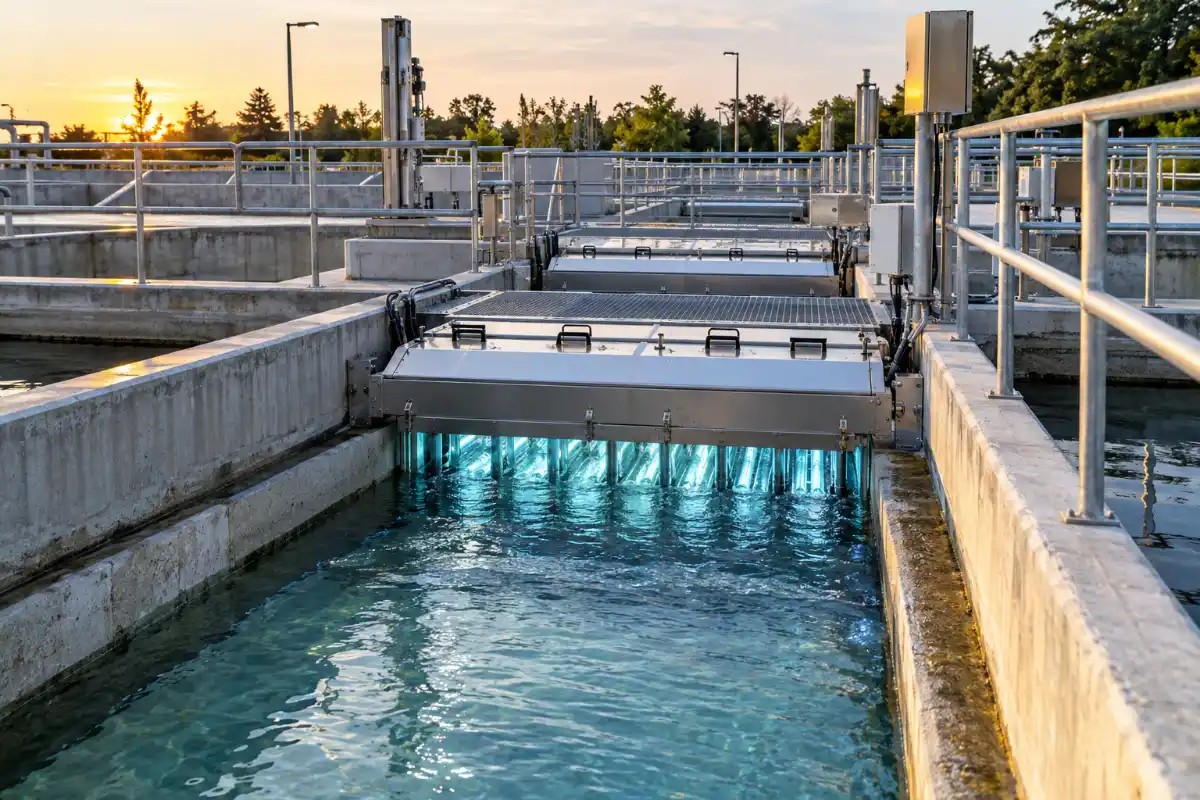
Evaporation and Membrane Systems: Where Customization Pays Off
Two technology families dominate the high-difficulty end of industrial wastewater: thermal evaporation and membrane separation. Both benefit enormously from customization, and both punish you if you buy off the shelf.
Thermal Evaporation Systems
The choice between single-effect, double-effect, triple-effect, and MVC comes down to your steam availability, power cost, and scaling tendency. Here’s how I usually break it down:
| System Type | Steam Demand | Power Demand | Best Fit |
|---|---|---|---|
| Single-effect | High | Low | Small flows, cheap steam, simple operation |
| Double-effect | Medium | Low | Moderate flows, steam available |
| Triple-effect | Low | Low | Larger flows, steam available, scale-tolerant |
| MVR | Minimal (startup) | High | No steam, high power availability, medium-large flows |
| MVC | Minimal (startup) | High | No steam, medium flows, robust design |
The rule of thumb I give clients: if you have cheap steam and low electricity rates, multi-effect wins. If you have no steam but reasonable power, MVR or MVC wins. If your stream scales aggressively, you want a forced-circulation design regardless of the effect count.
One project-dependent range worth noting: MVC evaporators typically achieve somewhere between 15 and 40 kWh per cubic meter of distillate, depending on boiling point elevation, compressor efficiency, and heat exchanger fouling. That range is wide because the physics is wide — don’t let anyone quote you a single number without explaining the assumptions.
Membrane Systems
For lower-TDS streams, membrane separation is usually cheaper to run than evaporation. But standard RO tops out around 70–80 bar, which limits you to feed concentrations of maybe 50,000–70,000 mg/L TDS. Beyond that, you need either DTRO (disc-tube reverse osmosis) or a thermal step.
DTRO handles higher fouling potential because of its open-channel design. It’s a common pre-concentration step before evaporation in zero liquid discharge trains. The combination — DTRO to concentrate, evaporator to finish — is often the most economical path to zero liquid discharge.
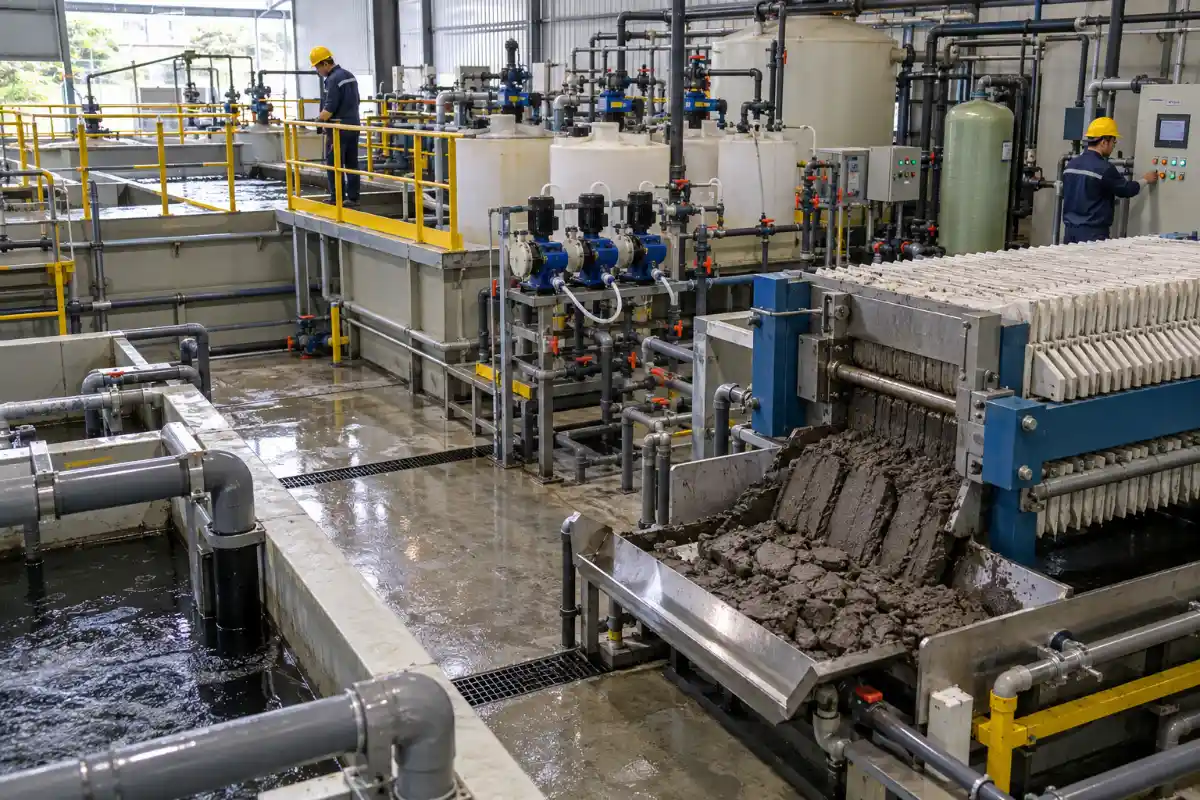
Energy, Operating Cost, and the Numbers Suppliers Don’t Volunteer
Capital cost gets all the attention. Operating cost determines whether your plant manager still likes you in year two.
For a typical industrial wastewater system, the operating cost splits roughly like this:
- Electrical power — 30–60% of OPEX, dominated by blowers, compressors, and high-pressure pumps.
- Thermal energy — 0–40%, depending on whether you use steam-driven evaporation.
- Chemicals — 10–25%, mostly antiscalant, acid, caustic, and coagulant.
- Membrane and consumable replacement — 5–15% averaged over the asset life.
- Labor and maintenance — 10–20%, heavily influenced by automation level.
I always ask suppliers to provide a one-page OPEX model with their proposal. If they can’t, they either don’t understand their own system or they’re hoping you won’t ask. Either way, that’s a red flag.
“The most expensive wastewater system is the one you have to replace in five years because it was undersized or built with the wrong materials.” — a sentiment I’ve heard echoed by plant engineers across dozens of projects, and one that has held true every time.
For reference on discharge expectations and technology baselines, the U.S. Environmental Protection Agency publishes effluent guidelines by industry category, and the World Bank maintains environmental, health, and safety guidelines that many international projects reference during design review. The International Energy Agency also tracks industrial energy intensity trends that are useful when you’re building a long-term OPEX case.
Common Failure Modes I See in Custom Systems
Even well-designed systems fail. Here are the patterns I see most often, and what causes them:
- Scaling in the evaporator heat exchanger. Usually caused by underestimating calcium or silica in the feed. Fix: proper softening upstream and antiscalant dosing.
- Membrane fouling within months. Often from inadequate pre-treatment — missing UF, poor coagulation, or no antiscalant.
- Compressor vibration and bearing failure in MVC systems. Usually from liquid carryover or improper inlet superheat control.
- Foaming in biological or evaporation stages. Surfactants, oils, or high organic loading. Fix: defoamer dosing or mechanical foam breaking.
- Corrosion at weld seams. Often from using the wrong filler metal or skipping post-weld passivation.
- Control system lockouts. Caused by overly aggressive alarm setpoints that trip the system on normal process variation.
Every one of these is preventable with better front-end engineering. That’s the value a real custom supplier brings — not the equipment itself, but the thinking behind it.
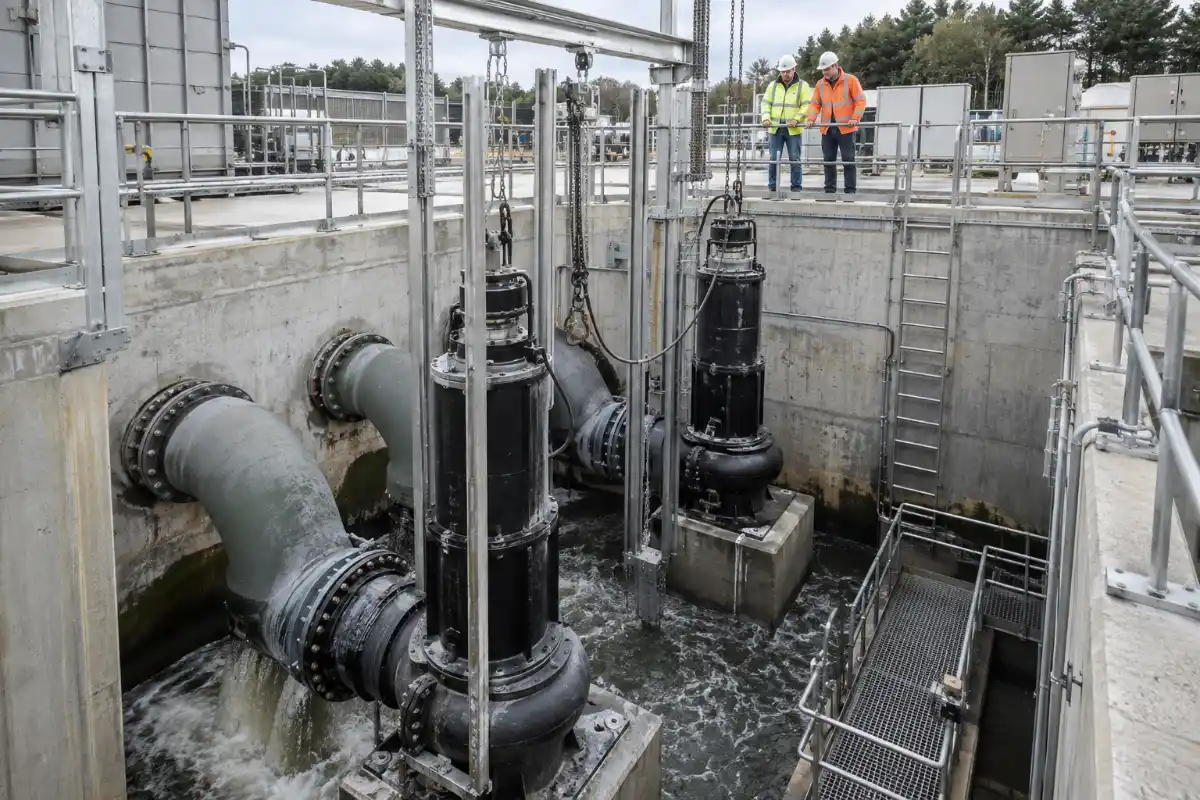
How to Evaluate Suppliers Without Getting Burned
After sitting through more vendor meetings than I care to count, here’s the checklist I use:
- Ask for a reference project with similar water chemistry. Not just similar industry — similar water. Chemistry is what breaks systems.
- Request the P&ID and mass balance. If they hesitate, that’s your answer.
- Ask who does the commissioning. If it’s a third party, understand the handoff risk.
- Confirm spare parts availability. A proprietary compressor with a 20-week lead time will shut you down.
- Check the warranty scope. Performance warranty is different from equipment warranty. You want both.
- Visit a running installation if possible. Talk to the operator, not the salesperson.
I’ve walked away from suppliers who couldn’t answer basic questions about turndown ratio. The good ones welcome the interrogation.
If you want to see how a properly engineered system is specified end-to-end, you can talk through your project with our engineering team — we’ll walk you through the design basis before anyone talks about price.
Pre-Treatment: The Step Everyone Underestimates
I’ve never seen a wastewater system fail because the evaporator was too small. I’ve seen plenty fail because the pre-treatment was an afterthought.
Pre-treatment does three jobs:
- Remove suspended solids and oils that would foul downstream equipment.
- Adjust pH and chemistry so the main process can actually work.
- Reduce the load on the expensive parts of the system.
Typical pre-treatment steps in an industrial train include:
- Coarse and fine screening
- Equalization tank with mixing
- Chemical coagulation and flocculation
- Dissolved air flotation (DAF) for oils and light solids
- Clarification or sedimentation
- Filtration (multimedia, cartridge, or UF)
- Softening or ion exchange for hardness removal
Skipping any of these steps to save capex almost always costs more in OPEX. I’ve seen a project save $60k on pre-treatment and spend $180k on membrane replacements in the first three years. That math never works.
Automation and Operator Interface
A custom system is only as good as the people running it. If your operators are experienced with DCS systems, you can push more automation. If they’re used to manual valves, an over-automated system will confuse them and get bypassed.
What I recommend for most industrial installations:
- PLC-based control with a clear HMI
- Trending for at least the last 30 days of key parameters
- Alarm prioritization — critical, warning, and informational tiers
- Remote access for your engineering team and the supplier’s support team
- Automatic chemical dosing with feedback from flow and pH
- Data logging that satisfies your environmental reporting requirements
The goal is not full autonomy. The goal is a system that tells you when something is drifting before it becomes a failure.
Lifecycle Cost: The Only Number That Matters
I’ll say this plainly: capex is the least important number in the proposal. What matters is the 10-year total cost of ownership.
A reasonable framework for comparing two proposals:
| Cost Category | Typical Share of 10-Year TCO | Notes |
|---|---|---|
| Capital equipment | 25–40% | Includes installation and commissioning |
| Energy | 20–40% | Highly variable by technology |
| Chemicals and consumables | 10–20% | Antiscalant, membranes, filters |
| Maintenance and labor | 10–20% | Depends on automation and reliability |
| Waste disposal | 5–15% | Sludge, concentrate, spent media |
When I build these models for clients, the ranking often flips relative to capex. The cheaper system wins on day one and loses by year five. Every time.
Frequently Asked Questions
How do I know if my wastewater needs a custom system or a standard package?
If your flow varies by more than 30% day to day, if your TDS is above 10,000 mg/L, if you have more than two regulated contaminants, or if your discharge limits are tighter than typical municipal standards, you need custom engineering. Standard packages work well for consistent, low-complexity streams.
What’s the typical lead time for a custom industrial wastewater system?
For a mid-size system — say 50 to 200 m³/day — expect 12 to 20 weeks from purchase order to shipment, plus 4 to 8 weeks for installation and commissioning. Evaporation systems tend to run longer because of compressor lead times and heat exchanger fabrication. Rush schedules are possible but usually add 10–20% to cost.
How much does a custom wastewater treatment system cost?
It depends heavily on the process train and materials. Small membrane systems might start in the low six figures. Full ZLD trains with evaporation and crystallization can run into the millions. I always tell clients to budget 15–25% above the equipment quote for installation, utilities, and contingency.
What maintenance does an MVC or MVR evaporator need?
Daily: check compressor vibration, oil levels, and distillate quality. Weekly: inspect heat exchanger for scaling, verify chemical dosing rates. Monthly: clean or descale as needed, check instrumentation calibration. Annually: inspect compressor internals, replace worn seals, and review control logic. The biggest maintenance driver is feed water quality — cleaner feed means longer intervals between cleanings.
Can I add a custom system to my existing treatment plant?
Usually yes, but the tie-in points matter. You need to identify where the new system takes feed, where it returns treated water, and how it handles concentrate. I recommend a hydraulic profile review before finalizing the design — retrofits often reveal bottlenecks in the existing plant that the new system will expose.
What causes an evaporator to lose capacity over time?
Scaling on heat transfer surfaces is the most common cause, followed by compressor wear and non-condensable gas buildup. If capacity drops more than 10% from baseline, it’s time to investigate. Regular chemical cleaning and proper antiscalant dosing prevent most of this.
How do I evaluate whether DTRO or evaporation is right for my concentrate?
If your concentrate TDS is below about 50,000 mg/L and fouling potential is manageable, DTRO can often handle it at lower energy cost. Above that, or if you have high scaling ions, evaporation becomes more reliable. Many projects use both — DTRO to pre-concentrate, evaporation to finish. The crossover point depends on your specific water and power costs.
What should be in the commissioning plan?
At minimum: a documented performance test at design conditions, operator training with hands-on time, a full set of as-built drawings, spare parts list, and a defined warranty period with response time commitments. I also insist on a 30-day performance observation period before final acceptance.
Custom wastewater treatment is not about buying equipment. It’s about buying engineering judgment. The suppliers worth your time will ask hard questions, push back on unrealistic specifications, and stay involved long after the invoice is paid. That’s the standard I’d hold every vendor to.