

If you’re evaluating advanced industrial wastewater treatment technologies for water reuse, the short answer is this: there is no single best process. Reuse quality targets, brine chemistry, and site energy costs decide everything. In my experience delivering systems for plating lines, pharmaceutical plants, and landfill leachate sites, the projects that hold up over ten years are the ones where the designer matched the treatment train to the actual water, not to a catalog. This article walks through the process logic, selection criteria, and operating realities behind modern reuse systems — evaporators, membranes, and zero liquid discharge — so you can judge what fits your plant.
Start With the Water, Not the Equipment
Every failed reuse project I’ve walked into had the same root cause: someone picked equipment before characterizing the feed. Industrial wastewater is not municipal sewage. It changes with production schedules, raw material batches, and cleaning cycles. Before any process selection, you need a minimum dataset:
- Total dissolved solids (TDS) and the full ion profile, including silica, calcium, magnesium, and barium
- COD and BOD, plus the ratio between them
- Oil and grease, free and emulsified
- Heavy metals and their speciation
- pH range, not just an average value
- Temperature swings across the day and season
- Flow variability — peak-to-average ratio matters more than the design average
I’ve seen a plating shop with a stable average TDS of 3,500 mg/L that spiked past 9,000 mg/L every time they dumped a spent bath. A membrane system sized on the average would have fouled within weeks. That single data point changed the entire train.
If you’re new to the fundamentals, it helps to first understand what wastewater actually contains at the industrial scale, because the contaminant classes drive everything downstream.
Membrane Pretreatment: Where Reuse Systems Live or Die
Reverse osmosis gets the credit, but pretreatment does the work. In reuse trains, RO and DTRO membranes are almost always downstream of physical-chemical treatment, filtration, and often biological polishing. The membrane is the last barrier, not the first.
Conventional RO vs. DTRO for Difficult Streams
Standard spiral-wound RO works well when the feed is clean and the recovery target is moderate. When you’re dealing with high fouling potential, high salinity, or streams that would plug a conventional element, disc-tube RO (DTRO) earns its place. The open-channel design tolerates suspended solids and scaling better, and it handles higher pressures. For leachate and concentrated industrial brine, this is often the difference between a system that runs and one that’s cleaned every shift.
You can review the configuration details of DTRO membrane systems if you’re comparing them against conventional RO for a high-fouling application.
Practical Recovery Ranges
These are typical design ranges, and actual numbers depend heavily on feed chemistry and pretreatment quality:
| Feed Type | Typical RO Recovery | Key Limiting Factor |
|---|---|---|
| Low-TDS rinse water | 70–85% | Concentrate disposal |
| Plating rinse with metals removed | 60–75% | Scaling, silica |
| Pharmaceutical process water | 65–80% | Organics, fouling |
| Landfill leachate (post-bio) | 75–85% with DTRO | Scaling, organics |
| High-salinity brine | 40–60% | Osmotic pressure |
Notice the trend: the cleaner the feed, the higher the recovery. Every percentage point of recovery you push costs pretreatment money somewhere else. There’s no free recovery.
Evaporation and Concentration: Handling the Brine
Once membranes have done what they can, you’re left with concentrate. This is where thermal processes take over, and this is where most of the lifecycle cost lives. The choice between mechanical vapor recompression (MVC/MVR) and multi-effect evaporation is fundamentally an energy economics question.
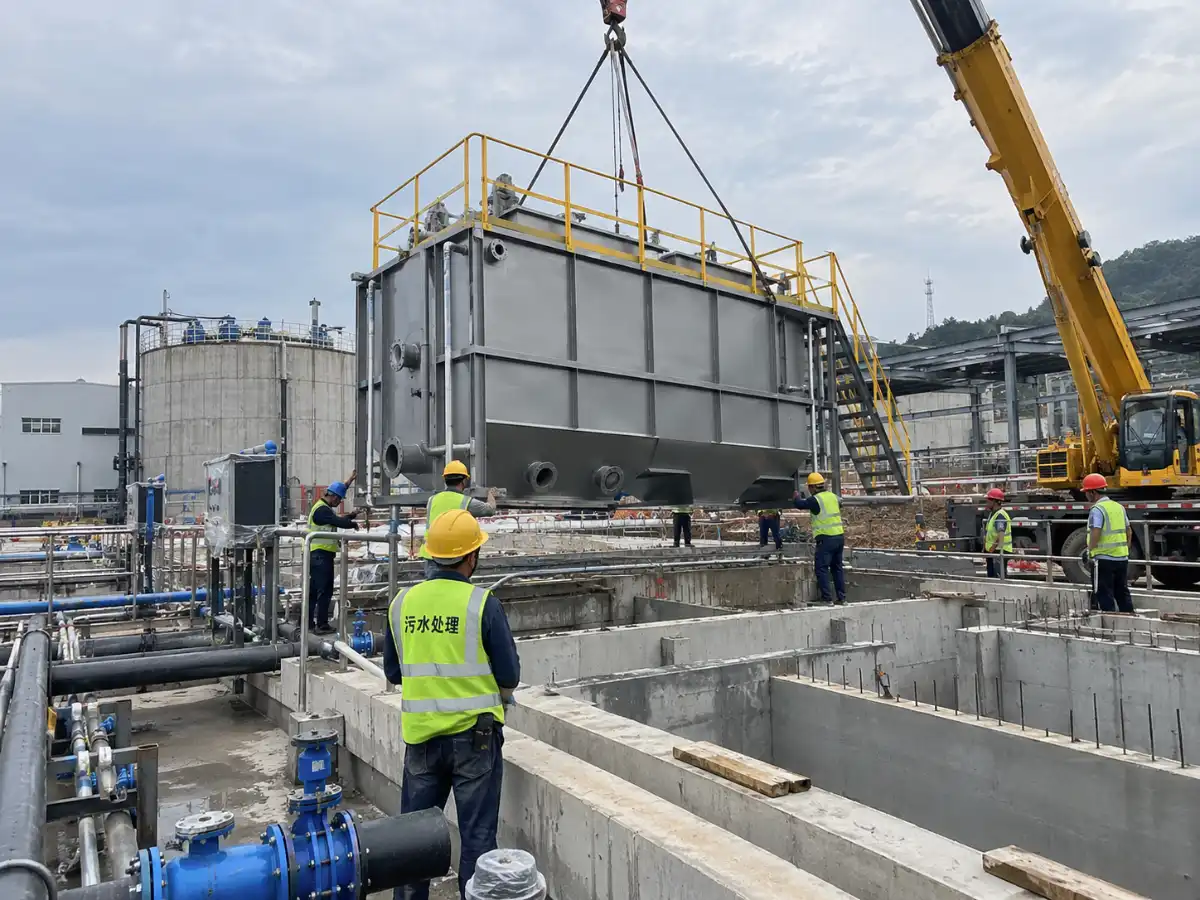
MVC and MVR: The Workhorse for Concentrated Streams
Mechanical vapor compression uses a compressor to raise the pressure and temperature of the vapor boiled off the wastewater, then reuses that vapor as the heating medium. The result is very low specific energy consumption compared to single-effect evaporation — typically in the range of 10–25 kWh per cubic meter of distillate for well-designed systems, though this depends on boiling point elevation and compressor efficiency.
The trade-off is capital cost and mechanical complexity. The compressor is the heart of the system, and it needs a properly characterized duty. If your feed chemistry causes foaming, scaling, or boiling point elevation, the compressor selection gets harder. I always push for pilot or bench boiling tests before finalizing a mechanical vapor compression MVC evaporator design on a new stream.
Multi-Effect Evaporation: When You Have Waste Heat
Multi-effect evaporators stage multiple boiling vessels at decreasing pressure, reusing the vapor from one effect to heat the next. Energy efficiency improves roughly with the number of effects, but so does capital cost and footprint. The classic rule: one kilogram of steam can evaporate roughly one kilogram of water per effect.
Multi-effect systems make sense when you have cheap or waste steam available, or when the feed has characteristics that make compressor-based systems difficult. If you want to compare configurations, the differences between double-effect and triple-effect evaporators come down to steam cost versus capital, and it’s worth running the numbers for your specific utility rates.
Heat Exchanger Design Matters More Than People Expect
The evaporator heat exchanger is where fouling shows up first. Material selection, tube geometry, and circulation velocity all determine how often you clean. A poorly designed exchanger will force you into a cleaning cycle that erases the energy savings you paid for. This is one area where I’ve seen more operational pain than almost anywhere else, and it deserves serious attention during design. The engineering of MVC evaporator heat exchangers is worth studying before you sign off on a vendor’s proposal.
Zero Liquid Discharge: When Reuse Isn’t Enough
Sometimes the goal isn’t just reuse — it’s eliminating the discharge entirely. Zero liquid discharge (ZLD) combines concentration, crystallization, and often drying to convert liquid waste into a solid residue and recoverable water. It’s expensive, energy-intensive, and increasingly required in water-stressed regions or for specific permit conditions.
A typical ZLD train looks like this:
- Pretreatment and softening to remove scale-forming ions
- Membrane concentration (RO or DTRO) to reduce volume
- Thermal concentration (MVC/MVR or multi-effect) to push toward saturation
- Crystallization to precipitate salts
- Dewatering of the solids
The economics are unforgiving. ZLD systems can consume 20–60 kWh per cubic meter of feed, depending on the train and the salt load. That’s why the design sequence matters: every cubic meter you remove with membranes before thermal treatment saves significant energy. If you’re evaluating a ZLD requirement, start with zero liquid discharge ZLD systems and work backward through the train to see where the cost concentrates.
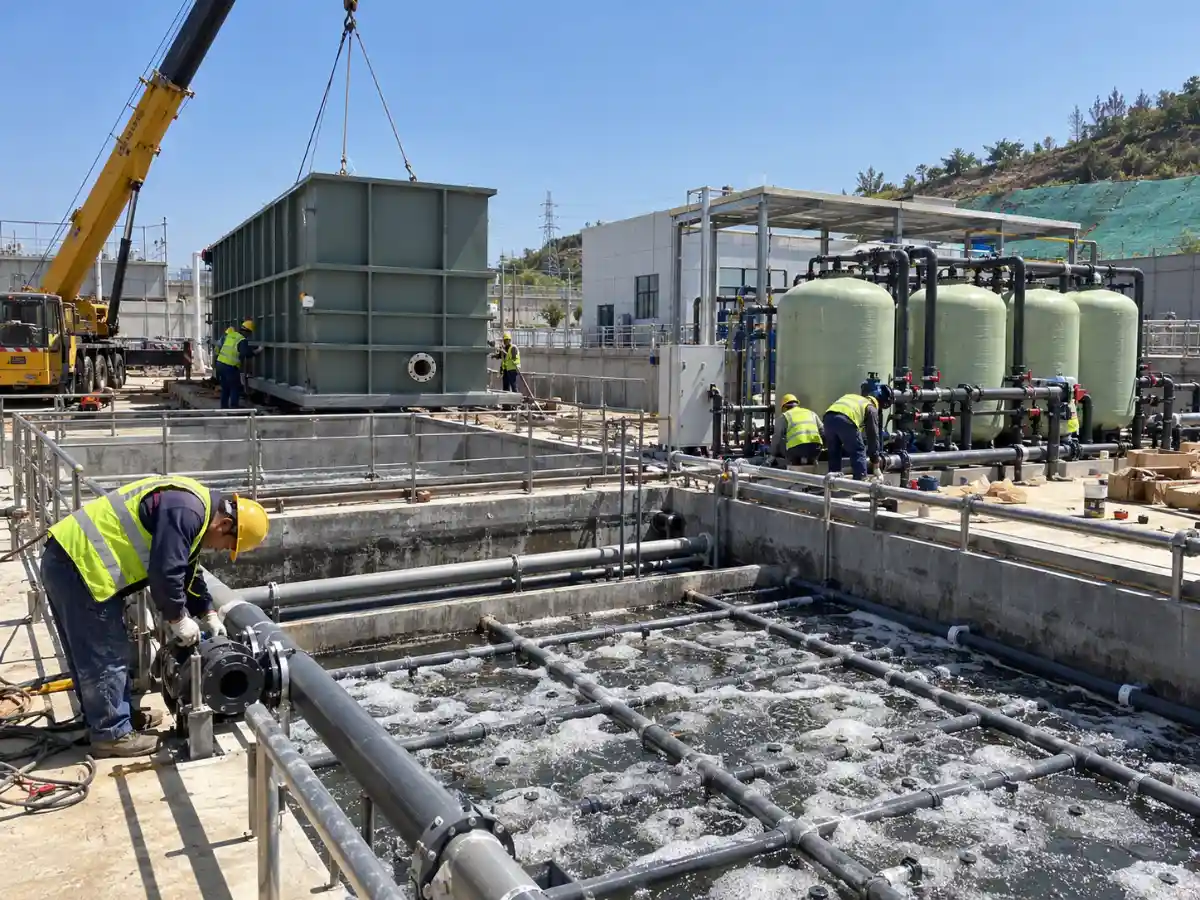
Sludge Handling: The Overlooked Cost Center
Everyone focuses on the water. The sludge is where operating budgets quietly bleed. In reuse systems, you generate sludge from pretreatment, softening, and biological polishing. How you dewater it determines your disposal cost per ton.
Screw press dewatering has become a common choice for industrial sludge because it runs continuously, uses little water, and handles a range of sludge types. But performance is feed-dependent. A screw press that hits 20% dry solids on one sludge may struggle to reach 15% on another. The polymer conditioning, sludge age, and prior thickening all affect the result.
If you’re dealing with sludge handling challenges, a practical reference on screw press sludge dewatering can help you set realistic expectations for cake dryness and polymer consumption.
Energy, Cost, and the Lifecycle View
Capital cost is the easy number to compare. Operating cost is where systems diverge, and it’s where I’ve seen projects fail after commissioning. The main cost drivers:
| Cost Element | Typical Share of OPEX | Main Influencing Factor |
|---|---|---|
| Electricity | 30–55% | Process type, energy recovery |
| Thermal energy (steam/gas) | 10–40% | Evaporator configuration |
| Membrane replacement | 5–15% | Feed quality, cleaning frequency |
| Chemicals | 10–20% | Pretreatment demand, antiscalants |
| Labor and maintenance | 10–20% | Automation level, reliability |
These ranges are indicative and project-dependent. A plant with waste heat available can cut thermal costs dramatically. A plant with high electricity rates should lean toward multi-effect systems if steam is available. There’s no universal answer, and anyone who gives you one without asking about your utility rates is guessing.
For a broader look at how these numbers play out in practice, the cost structure of MVR evaporator cost and price drivers is worth reviewing before you budget.
Selection Logic: Putting the Train Together
Here’s how I approach process selection when a client asks for a reuse system:
- Define the reuse target. Cooling tower makeup, boiler feed, and rinse water have very different quality requirements. Don’t over-treat.
- Characterize the feed properly. Seasonal and batch variability included.
- Remove the easy contaminants first. Oil, suspended solids, and metals are cheaper to remove physically than thermally.
- Concentrate with membranes as far as scaling allows. This reduces thermal load.
- Finish with thermal treatment or ZLD only for the volume that membranes can’t handle.
- Design for maintenance access. If operators can’t clean it, they won’t.
The most common mistake I see is jumping to thermal treatment too early. Thermal processes are powerful but expensive per cubic meter. Every liter you remove upstream with cheaper processes improves the overall economics.
“The best reuse system is the one your operators can keep running at 3 a.m. on a Sunday. Design for reliability first, efficiency second.” — a principle I’ve applied across dozens of industrial installations.
Common Operating Problems and How to Avoid Them
Scaling in Evaporators
Calcium, magnesium, and silica scale on heat transfer surfaces and kill efficiency. Softening, antiscalant dosing, and seed slurry techniques all help. The right choice depends on the scaling species and the concentration factor you’re targeting.
Membrane Fouling
Organic fouling, biofouling, and scaling each need different countermeasures. Cleaning chemicals that work on one may damage another. Regular performance monitoring — normalized flux and pressure drop — catches problems before they become failures.
Foaming in Evaporators
Surfactants and organics cause foaming that carries over into the distillate and contaminates your recovered water. Antifoam dosing and mechanical foam breaking both help, but the best fix is removing foam-causing compounds upstream.
Compressor Reliability in MVC Systems
The compressor is the most maintenance-intensive component. Vibration monitoring, oil analysis, and proper inlet conditions extend its life. Don’t let the compressor run outside its design envelope.
Where to Focus Your Engineering Effort
If you take one thing from this article, make it this: the process train is only as good as its weakest stage. A brilliant evaporator downstream of inadequate pretreatment will fail. A perfectly sized membrane system fed uncharacterized water will foul. The engineering effort belongs in feed characterization, pretreatment design, and operability — not in chasing the newest equipment.
Reuse is achievable across a wide range of industrial streams. The technology exists. The challenge is matching it to your specific water, your utility costs, and your team’s ability to operate and maintain it. That’s a design problem, not a product problem.
Discuss Your Reuse Project With Our Engineers →
Frequently Asked Questions
How do I decide between MVC and multi-effect evaporation for my wastewater?
Start with your energy costs. If electricity is cheap relative to steam, MVC usually wins. If you have waste steam or low-cost thermal energy, multi-effect systems can be more economical. Also consider feed chemistry: high boiling point elevation and scaling tendency make MVC compressor selection harder, sometimes favoring multi-effect designs. Run a lifecycle cost comparison using your actual utility rates.
What recovery rate can I realistically expect from an industrial RO system?
It depends almost entirely on feed chemistry. Clean, low-TDS streams can reach 70–85% recovery. High-salinity or scaling-prone streams may only reach 40–60% without extensive pretreatment. DTRO configurations can push higher on difficult streams, but every increase in recovery requires more pretreatment investment. There’s no universal number.
How often will my evaporator need cleaning?
That depends on the scaling and fouling tendency of your feed and how well your pretreatment works. Well-designed systems with proper softening and antiscalant dosing may run for weeks between cleanings. Poorly pretreated feeds can require cleaning every few days. Budget for cleaning chemicals and downtime, and design for easy access to heat transfer surfaces.
Is zero liquid discharge always required for water reuse?
No. ZLD is typically driven by discharge regulations or site-specific constraints, not by reuse goals alone. Many reuse systems discharge a small concentrate stream under permit while recovering the majority of water. ZLD makes sense when discharge is prohibited or when the concentrate has no disposal pathway. It significantly increases both capital and operating costs.
What’s the biggest cause of reuse system failure after commissioning?
In my experience, it’s inadequate feed characterization leading to undersized pretreatment. Systems are designed on average conditions, then fail when the plant runs a new product batch or changes a cleaning chemical. The second most common cause is poor operator training — complex systems that aren’t properly understood don’t get maintained correctly. Design for the variability you’ll actually see, not the variability you hope for.
Can I add reuse capability to an existing treatment plant?
Often yes, but it requires careful evaluation of the existing treatment train. The key questions are whether the existing pretreatment produces water clean enough for membrane or thermal polishing, and whether there’s space and utility capacity for the new equipment. Retrofits can work well when the existing biological or physical-chemical treatment is solid. They fail when the existing system is already struggling.
How do I handle the concentrate stream from a membrane system?
Options include thermal concentration, evaporation ponds (where climate and permits allow), deep well injection (rarely permitted now), and crystallization for ZLD. The choice depends on volume, chemistry, and local disposal options. Thermal concentration with MVC or multi-effect is the most common industrial solution. Whatever you choose, plan the concentrate pathway before you design the membrane system — not after.