

If you are comparing brine concentrator manufacturers for an industrial water treatment project, the short answer is this: the best supplier is not the one with the lowest price per unit of evaporation, but the one who can match the technology to your actual water chemistry, give you a defensible energy and scaling model, and still answer the phone three years after commissioning. I have spent over a decade sizing evaporators, running pilot tests, and fixing systems that were sold on optimistic assumptions. Most brine concentrator failures I have seen were not hardware failures. They were selection failures. The right manufacturer asks hard questions about scaling ions, organics, and turndown before quoting anything.
What a Brine Concentrator Actually Does
A brine concentrator takes a wastewater stream that is already too concentrated for conventional membrane treatment and reduces its volume by evaporating clean water out of it. What is left behind is a much smaller, much saltier reject stream. In a zero liquid discharge (ZLD) train, the concentrator sits between the pretreatment and the final crystallizer, and it does most of the heavy lifting on volume reduction.
The core principle is simple. Add heat to the brine, evaporate water, condense the vapor, and send the distillate back to reuse or discharge. The engineering difficulty is never the evaporation itself. It is managing what the dissolved solids do to your heat transfer surfaces while you evaporate.
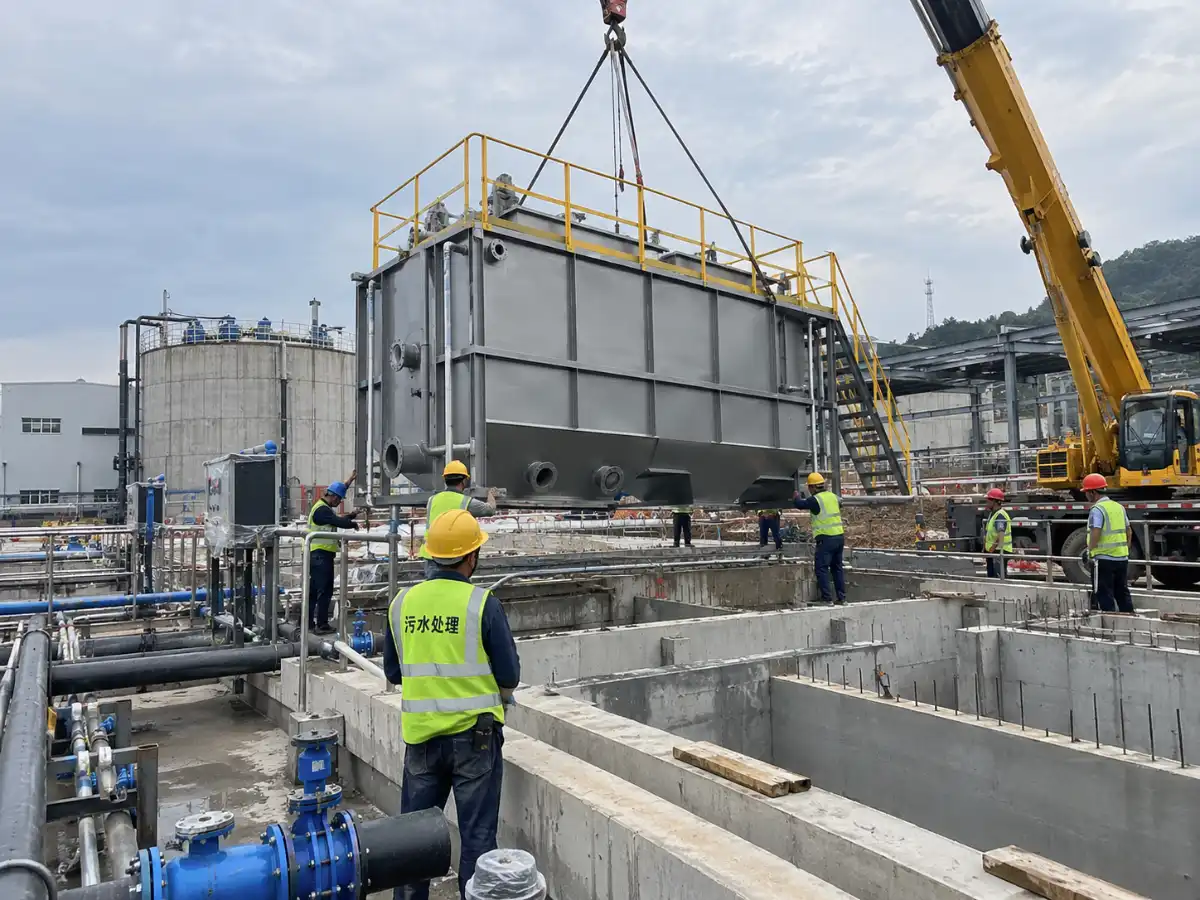
In practice, most industrial concentrators fall into two families:
- Thermal multi-effect systems that reuse steam across several stages to cut energy demand.
- Mechanical vapor compression (MVC/MVR) systems that use a compressor to recompress the vapor and reuse it as the heating medium.
Both approaches work. The choice depends on your steam availability, electricity cost, capacity, and how nasty your brine is.
The Two Main Technology Paths
Multi-Effect Evaporation
A multi-effect evaporator uses the vapor from one stage to heat the next stage at a lower pressure. Each added effect improves steam economy, which is why you see double effect and triple effect designs on medium and large projects. If your plant already has cheap waste steam, this is often the lowest operating cost route.
The tradeoff is footprint and turndown. More effects mean more vessels, more piping, and a system that does not like to run at 30 percent of design capacity. I have watched plants fight a triple effect system for years because they sized it for a peak flow that only happens four months a year.
Mechanical Vapor Compression
An MVC evaporator compresses the vapor it generates and reuses that compressed vapor as the heat source. In most cases it does not need an external steam supply after startup, which makes it attractive where steam is expensive or unavailable. The compressor is the heart of the system, and the compressor is where the money and the maintenance risk live.
For a broader look at how these systems fit into a full treatment train, the MVR technology overview is a useful reference before you start talking to vendors.
What Separates a Good Manufacturer from a Bad One
After sitting through enough vendor presentations, I can usually tell within twenty minutes whether a supplier understands my project. Here is what I actually look for.
1. They ask for a full water analysis before quoting
Not just TDS. I want to see calcium, magnesium, sulfate, silica, carbonate, chloride, organics, and pH. A vendor who quotes a concentrator off a single TDS number is guessing, and you will pay for that guess during operation.
2. They talk about scaling and fouling honestly
Calcium sulfate and silica are the two most common problems in brine concentration. A serious supplier will tell you where the solubility limits sit, what pretreatment they recommend, and what cleaning frequency to expect. If a vendor claims their system “never scales,” that is a warning sign, not a feature.
3. They provide a real heat and mass balance
Ask for the balance sheet: flow in, flow out, steam or power consumption, distillate quality, and the concentration factor. If the numbers are vague, the design is vague.
4. They have experience with your specific brine
Landfill leachate, electroplating rinse water, pharmaceutical mother liquor, and battery production wastewater behave very differently. Ask for references in your sector, not just total project count.
5. They design for turndown and cleaning
A concentrator that only runs at 100 percent capacity is a liability. I want to see turndown to at least 50 percent, an accessible heat exchanger for cleaning, and a control philosophy that does not trip the whole train every time a sensor drifts.
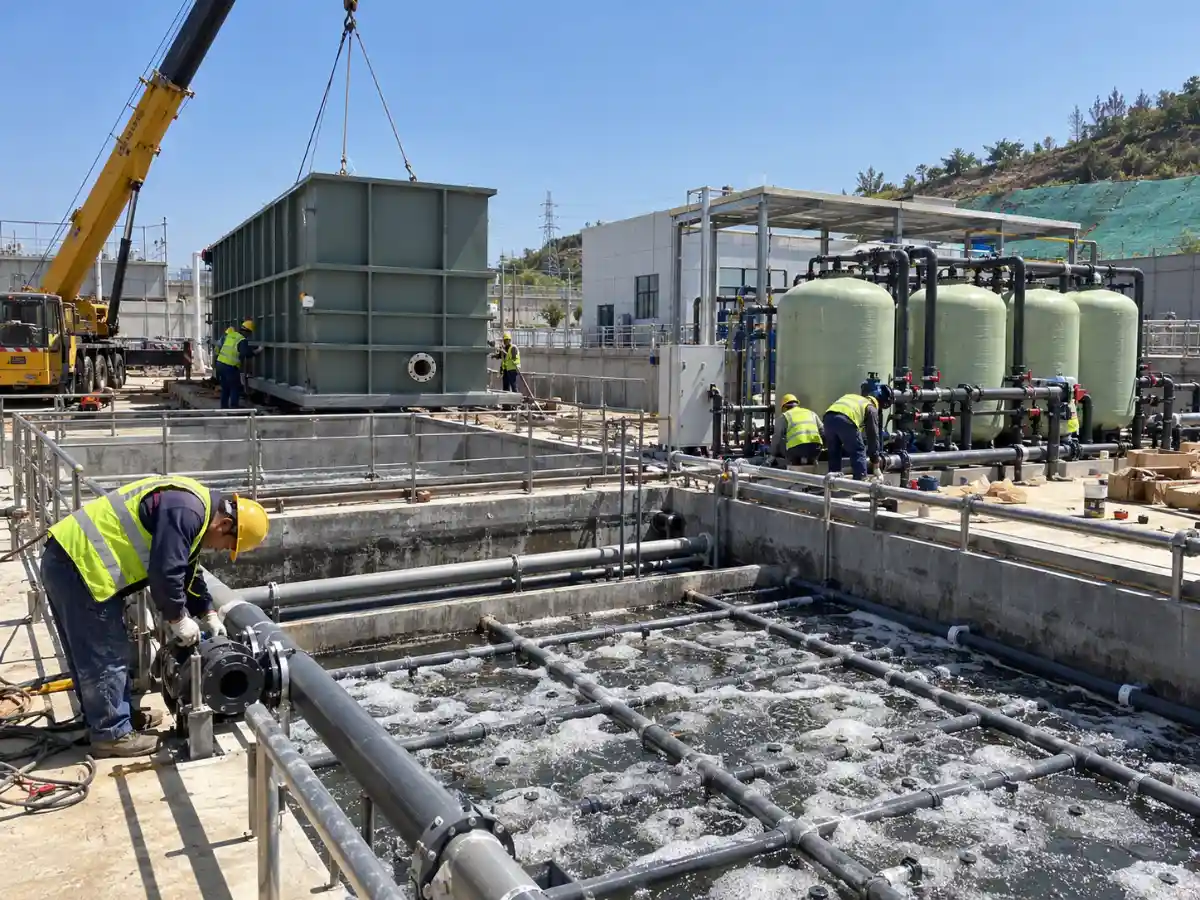
Comparing the Main Concentrator Types
The table below reflects typical design ranges I have seen across real projects. Actual numbers depend heavily on your brine chemistry, capacity, and site conditions, so treat these as indicative, not guaranteed.
| Technology | Typical Capacity Range | Energy Source | Best Fit | Main Watch-Out |
|---|---|---|---|---|
| Single effect evaporator | Small, up to a few m³/h | Steam or electric | Small flows, pilot duty, high-value concentrates | Poor steam economy at scale |
| Multi-effect (2–4 effects) | Medium to large | Steam | Plants with available low-cost steam | Footprint, limited turndown |
| MVC / MVR | Medium to large | Electricity | No steam available, high energy cost areas | Compressor maintenance, power quality |
| Membrane + concentrator hybrid | Wide range | Electricity + heat | ZLD trains, high recovery targets | Membrane fouling upstream |
When I see a project with high recovery targets and a strict discharge limit, the hybrid route usually wins. A high-pressure membrane stage such as DTRO or a high-pressure RO system takes the first concentration step, and the evaporator handles the final volume. That combination often cuts total energy use compared to evaporating the whole stream.
Energy and Lifecycle Cost: Where the Real Numbers Live
Capital cost gets all the attention during procurement, but the operating cost decides whether the system survives budget reviews five years later. Two cost drivers dominate:
- Heat or power consumption per cubic meter of distillate produced.
- Maintenance and cleaning, which is directly tied to scaling and fouling behavior.
For an MVC system, the compressor is usually the largest single power consumer. For a multi-effect system, steam consumption per unit of evaporation drops as you add effects, but the capital cost rises and the operating window narrows. I have seen projects where a two-effect design was the right answer simply because the plant could not guarantee enough steam pressure to feed a four-effect train reliably.
If you want a more detailed breakdown of what drives cost on these systems, the discussion of MVR cost drivers covers capex and opex in more depth than I can fit here.
In my experience, the single biggest cost mistake on brine concentrator projects is undersizing the pretreatment. Every dollar saved on pretreatment usually comes back as three dollars of cleaning labor and lost production.
Maintenance Reality Check
Any honest conversation about concentrator manufacturers has to include maintenance. These systems run hot, wet, and salty, which is a hard environment for any equipment.
Common problems I have dealt with
- Heat exchanger fouling: the number one issue. Usually driven by calcium sulfate or silica precipitation.
- Compressor wear: on MVC systems, impeller erosion and bearing wear are routine overhauls, not surprises.
- Foaming and carryover: organics in the feed cause foam that contaminates the distillate.
- Corrosion: chloride-rich brines attack the wrong metallurgy fast.
- Control drift: density and conductivity sensors need regular calibration or the whole system runs blind.
A manufacturer who cannot walk you through a realistic maintenance schedule, spare parts list, and cleaning procedure is not ready to build your system.
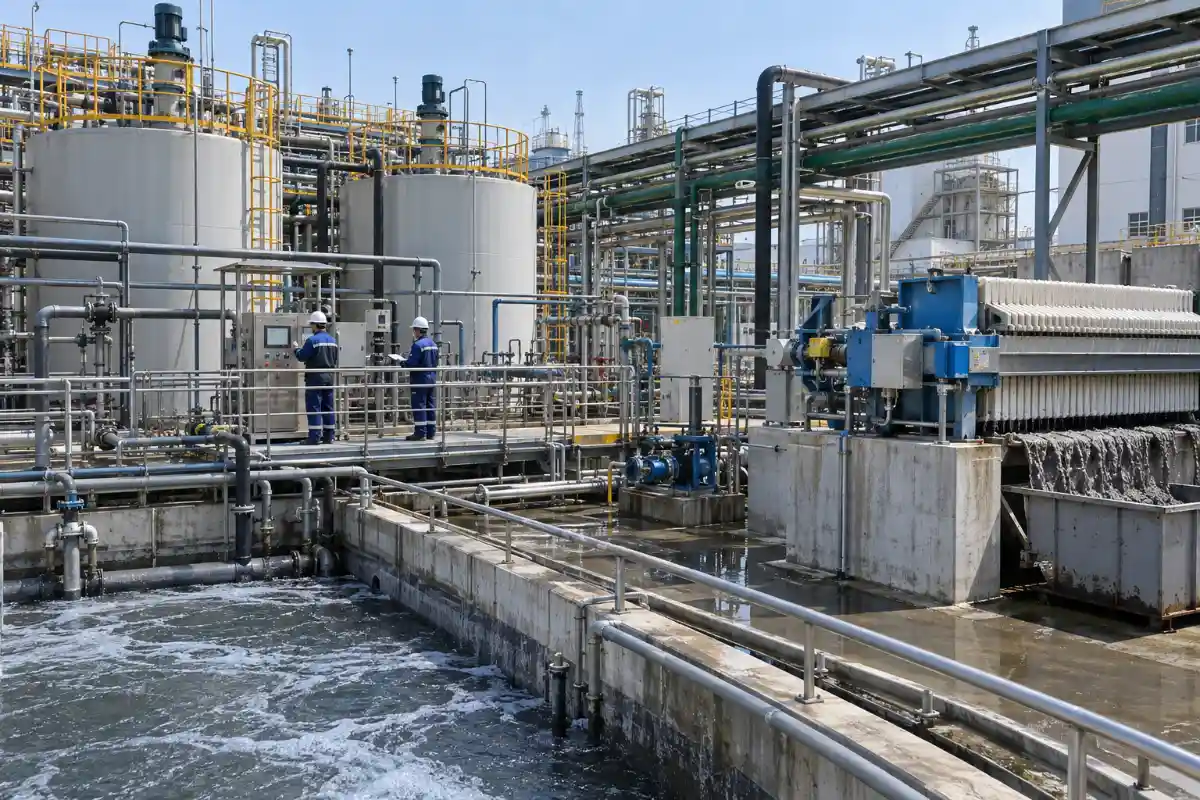
How I Evaluate a Manufacturer During Procurement
Here is the process I use when I am helping a client shortlist suppliers. It is not glamorous, but it works.
- Screen on experience first. Have they built systems on brines similar to yours? Ask for a reference list and actually call two or three of them.
- Request a preliminary heat and mass balance. This separates real engineers from sales teams within a week.
- Ask about pilot testing. For difficult brines, a pilot is worth more than any proposal document.
- Review the metallurgy and materials of construction. This is where cheap suppliers quietly cut corners.
- Check the control philosophy. Ask how the system handles feed upset, power loss, and sensor failure.
- Compare lifecycle cost, not just capex. A slightly higher capital cost with lower cleaning frequency often wins.
- Confirm after-sales support. Remote diagnostics, spare parts availability, and commissioning support matter more than most buyers expect.
If you want to see how these principles play out in real project types, the case write-ups on landfill leachate treatment and pharmaceutical wastewater treatment show the kind of design decisions that make or break a concentrator installation.
Typical Design Ranges You Can Use for Early Sizing
These are indicative ranges I use for early-stage planning. They are not a substitute for a proper design, but they help you sanity-check vendor proposals.
| Parameter | Typical Range | Notes |
|---|---|---|
| Concentration factor | 3x to 10x | Limited by scaling ions, not by equipment |
| Distillate quality | 10–100 mg/L TDS | Depends on carryover control |
| MVC specific power | 20–60 kWh/m³ distillate | Strongly dependent on brine properties |
| Multi-effect steam economy | 0.4–0.35 kg steam/kg water per effect | Improves with more effects |
| Turndown | 50–100% of design | Below 50% is usually unstable |
If a vendor quotes numbers well outside these ranges without a clear explanation, ask why. Sometimes there is a good reason. Often there is not.
Bringing It Together
Choosing a brine concentrator manufacturer is really a test of engineering honesty. The best suppliers will tell you what will go wrong, what it will cost to maintain, and where the design margins actually sit. The worst will promise a system that runs forever with no cleaning and no operator attention. I have never seen that system built.
My advice is straightforward. Get a full water analysis, insist on a heat and mass balance, ask for references in your sector, and compare lifecycle cost instead of sticker price. If a supplier cannot survive that process, you have your answer before you sign anything.
Talk to an Engineer About Your Brine Concentrator Project
Frequently Asked Questions
How do I choose between MVC and multi-effect evaporation?
Start with your energy situation. If you have reliable, low-cost steam, multi-effect systems usually deliver lower operating cost. If steam is expensive or unavailable, MVC is the better fit because it runs primarily on electricity. Capacity, footprint, and brine chemistry also matter, so the decision should be made after a proper heat and mass balance, not before.
What is the typical lead time for a brine concentrator system?
For a custom industrial system, expect roughly six to twelve months from order to delivery, depending on capacity, materials of construction, and compressor sourcing. Add several weeks for site installation and commissioning. Pilot testing, if required, adds time before the order.
How often will my concentrator need cleaning?
That depends almost entirely on your brine chemistry and pretreatment. A well-designed system on a moderate brine might run for weeks between cleanings. A poorly pretreated system with high calcium or silica can foul in days. This is one of the first questions I ask any manufacturer, and the answer tells me a lot about how realistic their design is.
Can a brine concentrator handle high organic loads?
It can, but organics change the design. Foaming, fouling, and distillate quality all become harder to control. In most cases, upstream treatment to reduce organics is cheaper than trying to solve the problem inside the evaporator. If your stream has significant organic content, ask the manufacturer to address it explicitly in the proposal.
What is the biggest cause of concentrator downtime?
In my experience, heat exchanger scaling is number one, followed by compressor issues on MVC systems and control problems caused by drifting sensors. All three are manageable with proper design, realistic cleaning schedules, and operator training. Downtime usually traces back to a design assumption that did not match the real feed water.
Do I need a pilot test before buying?
For simple, well-characterized brines, a pilot is often optional. For complex streams such as leachate, mixed industrial wastewater, or brines with high silica, a pilot is worth the cost and time. It is the cheapest way to find out whether a design assumption will hold up in the real world.
What information should I prepare before contacting a manufacturer?
Have a full water analysis ready, including major ions, silica, organics, and pH. Also prepare your design flow rate, target concentration, discharge limits, available utilities, and site constraints. The more complete your data package, the more useful the first round of proposals will be.