

Scaling is the single most common reason a wastewater evaporator loses capacity, and in most plants I visit, it starts long before anyone notices the symptoms. The short answer: you prevent scaling by controlling what enters the evaporator, keeping the brine chemistry inside a safe operating window, and designing the heat exchanger so solids leave instead of baking onto the tubes. Do those three things consistently and you can run for months between cleanings instead of weeks. Skip any one of them and you will be hydro-blasting tubes at 2 a.m. I have commissioned and troubleshot enough of these systems to know that scaling is rarely a single failure — it is a slow accumulation of small decisions that nobody owned.
Why Evaporators Scale in the First Place
When you boil wastewater, you are deliberately concentrating dissolved solids. That is the whole point. But concentration has a ceiling. Every salt has a solubility limit, and once you cross it, the dissolved ions want to become solid crystals. Those crystals have two choices: stay suspended in the brine, or attach to the hottest surface they can find. The hottest surface is almost always your heat exchanger tubes.
Three mechanisms drive this:
- Inverse solubility salts. Calcium carbonate, calcium sulfate, and some silicates become less soluble as temperature rises. So the hotter your tube wall, the more aggressively they precipitate right on it.
- Concentration at the boundary layer. Even when bulk brine looks fine on paper, the thin film of liquid touching the tube wall is far more concentrated because water is evaporating right there. Local supersaturation can hit 1.5 to 2 times the bulk value.
- Nucleation sites. Rough surfaces, weld seams, corrosion pits, and existing scale layers give crystals a place to latch on. Once you have a seed layer, growth accelerates.
This is why two plants running the same feed chemistry can have completely different scaling behavior. One has polished tubes and tight brine control; the other has a pitted heat exchanger and a brine density that drifts upward every shift.
Start With the Feed: Pretreatment That Actually Pays Off
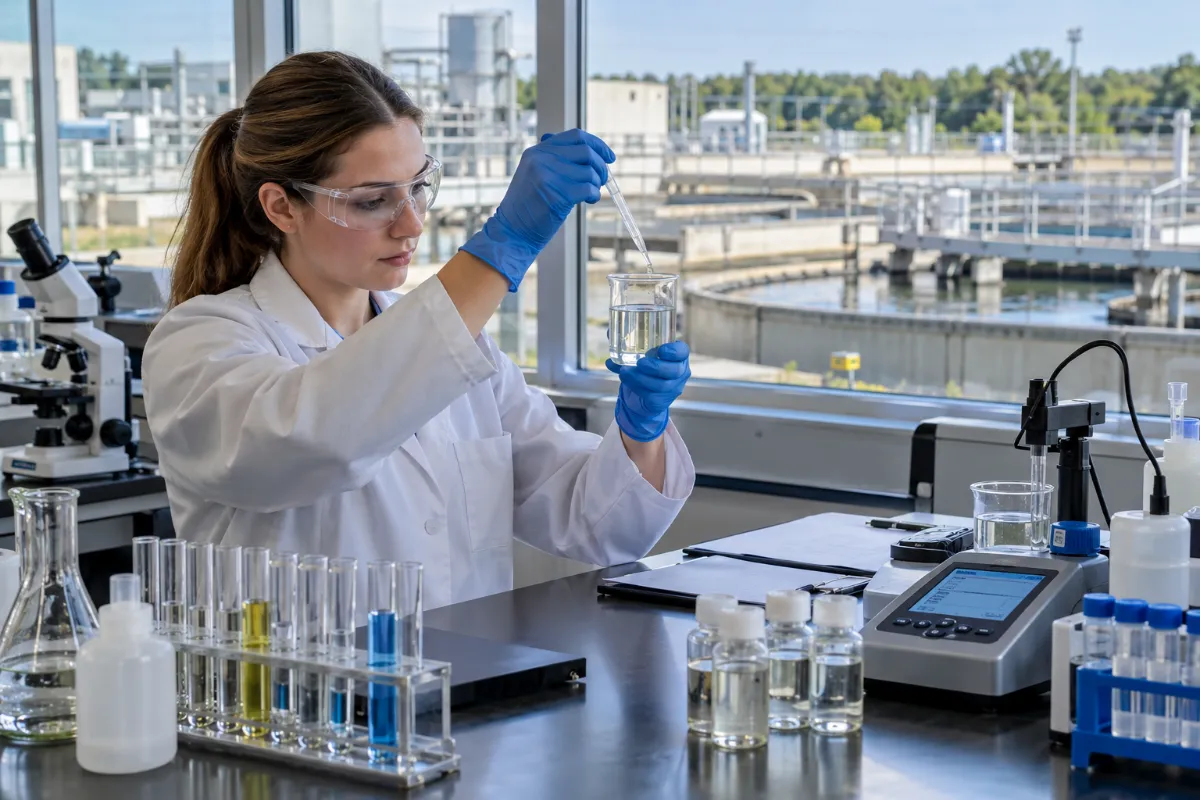
I have never seen a scaling problem solved downstream that could have been prevented upstream. Pretreatment is where you get the best return on effort, and it is also where most operators cut corners because the evaporator “seems to be handling it.”
Remove hardness before it reaches the boiler
Calcium and magnesium are the usual suspects. Softening, lime-soda softening, or ion exchange will drop hardness to the low single digits as CaCO3. If your feed swings — and industrial wastewater always swings — you need enough resin volume or enough chemical dosing turndown to handle the peak, not the average. Sizing for the average is the most common design mistake I run into.
Deal with silica early
Silica is the quiet killer. It does not respond well to acid cleaning, and once it polymerizes on a hot surface, you are looking at mechanical removal. If your feed carries more than roughly 20 to 30 mg/L as SiO2, you should be actively managing it through pH control (keeping it alkaline enough to stay soluble), magnesium addition for co-precipitation, or a dedicated silica removal step. The exact threshold depends heavily on your concentration factor and operating temperature, so treat that range as indicative, not a rule.
Knock out suspended solids and oil
Any particulate that makes it into the evaporator becomes a nucleation site. Fine solids also foul the distribution system and can blind the mist eliminator. For oily wastewater, even a few hundred ppm of free oil will form a film on tube surfaces that then cooks into a hard deposit. A well-run dissolved air flotation unit, followed by filtration, is often the difference between a stable evaporator and a chronic problem.
In my experience, a plant that spends 15 percent more on pretreatment typically saves 30 to 40 percent on evaporator maintenance over a five-year horizon. The math almost never favors skipping it.
Brine Chemistry Control: The Operating Window You Cannot Ignore
Once the feed is clean, your job shifts to keeping the brine inside a defined envelope. This is the part that requires discipline, because it means blowing down concentrate even when you would rather squeeze out more water recovery.
Track concentration factor, not just density
Density is a convenient proxy, but it lies when your feed composition changes. A brine at 1.25 specific gravity can be perfectly safe one week and supersaturated with sulfate the next if the feed shifted. I prefer to build a simple mass balance around the key scaling ions — calcium, sulfate, carbonate, silica — and set a maximum concentration factor for each. Then you control to the tightest one. It takes an afternoon to build the spreadsheet and it will save you weeks of downtime.
Use antiscalants correctly
Antiscalants work by threshold inhibition and crystal distortion. They buy you time and headroom, but they do not suspend the laws of thermodynamics. Two rules I follow:
- Dose based on the worst-case scaling ion concentration in the brine, not the feed. Many dosing systems are set on feed flow, which means the effective dose drops as you concentrate.
- Match the chemistry to the salt. A phosphonate that handles calcium carbonate well may do very little for calcium sulfate or silica. Get the supplier to give you a compatibility statement for your specific brine, and verify it with a bench test.
Watch pH like a hawk
pH controls which salts are soluble. Carbonate scaling drops sharply below pH 8, but very low pH can accelerate corrosion and, in some brines, push silica toward gel formation. Most systems I work on run best in a narrow band, often pH 6.5 to 8, but your specific chemistry dictates the target. The point is to control it continuously, not check it once a shift.
Heat Exchanger Design Choices That Reduce Fouling
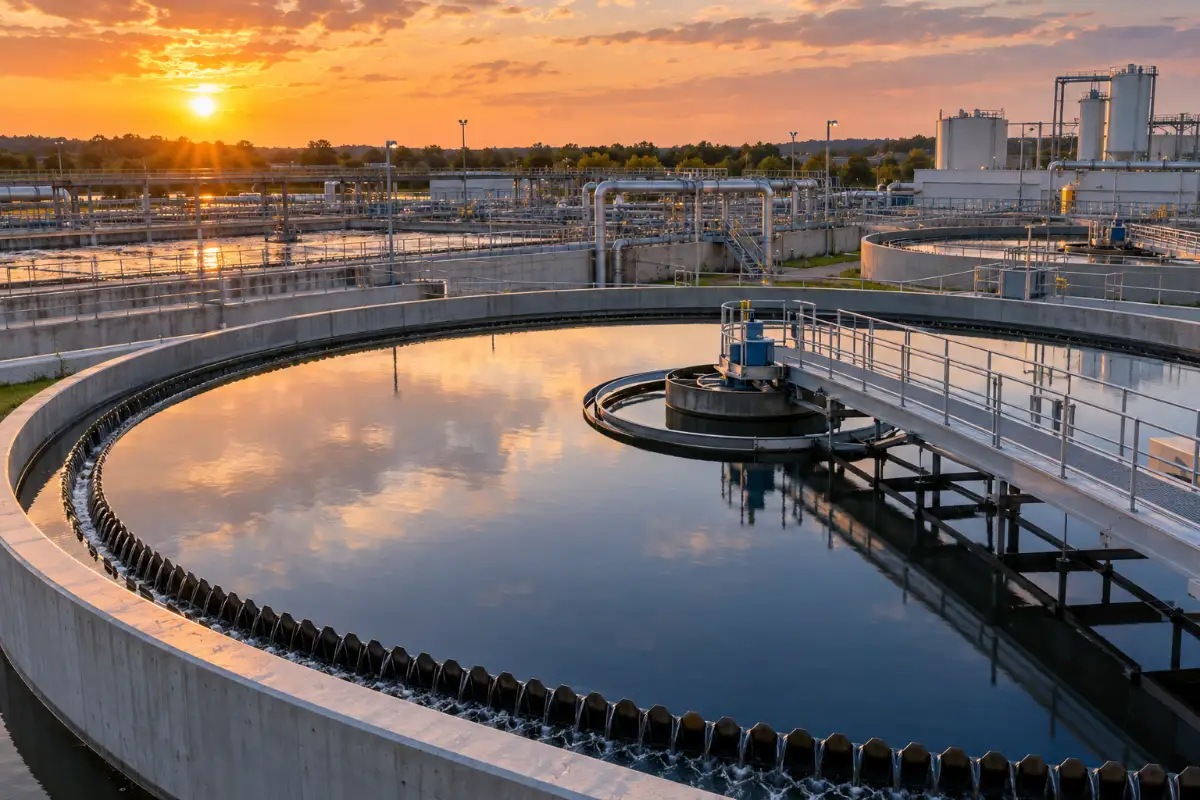
You can do everything right on chemistry and still scale if the heat exchanger is poorly matched to the duty. Design decisions made at the quotation stage determine how forgiving the unit will be in year three.
Surface temperature beats bulk temperature
The tube wall temperature drives precipitation. A falling film evaporator with a modest temperature difference across the wall will foul far more slowly than a forced circulation unit running a high delta-T. If your process allows it, keep the temperature difference between heating medium and boiling brine as low as economically practical. Typical designs land somewhere between 5 and 15 °C, but the right number depends on your energy cost and how sensitive your brine is.
Velocity and wetting
In forced circulation designs, tube velocity above roughly 1.5 to 2 m/s keeps crystals suspended and scours the surface. In falling film designs, uniform wetting matters more than velocity — dry patches scale almost instantly. This is where a properly designed liquid distributor earns its keep. I have seen distributors with clogged orifices cause localized scaling that looked like a chemistry problem but was purely a hydraulics problem.
For mechanical vapor recompression systems, the compressor and heat exchanger work as a pair, and the heat exchanger design has to account for the specific compression ratio and resulting temperature lift. If you want to understand how that interaction affects fouling, the MVC evaporator heat exchanger design considerations are worth reviewing before you finalize a specification.
Material and surface finish
Smooth surfaces foul less. Electropolished stainless, or higher alloys where chlorides demand it, will outperform rough 316L. This is not a place to save money. A marginally higher material cost pays back in reduced cleaning frequency within the first year or two in most aggressive brines.
Choosing the Right Evaporator Type for Your Scaling Risk
Different evaporator configurations tolerate scaling very differently. This table reflects general design tendencies I have observed across projects; your specific brine and duty will shift the picture.
| Configuration | Scaling Tolerance | Typical Cleaning Interval | Best Fit |
|---|---|---|---|
| Single-effect, forced circulation | Moderate | 2–6 weeks | Small flows, high fouling brines |
| Multi-effect (2–3 effects) | Moderate to low | 4–12 weeks | Energy-sensitive, moderate scaling |
| MVC / MVR | Moderate | 4–10 weeks | High energy cost, medium-to-large flows |
| Falling film | Low | 2–8 weeks | Clean feeds, heat-sensitive products |
| Forced circulation with crystallizer | High | 8–20 weeks | High-solids brines, ZLD duty |
Cleaning intervals in that table are indicative ranges from projects I have been involved with. They move a lot based on feed quality, antiscalant program, and how disciplined the operators are about brine blowdown.
If your brine is genuinely aggressive, a crystallizer-based design that deliberately precipitates solids in the bulk liquid — rather than on the tubes — is often the only way to run long campaigns. That is standard practice in zero liquid discharge systems, where the evaporator has to handle saturated brine as a normal condition, not an upset.
Operating Practices That Keep Tubes Clean
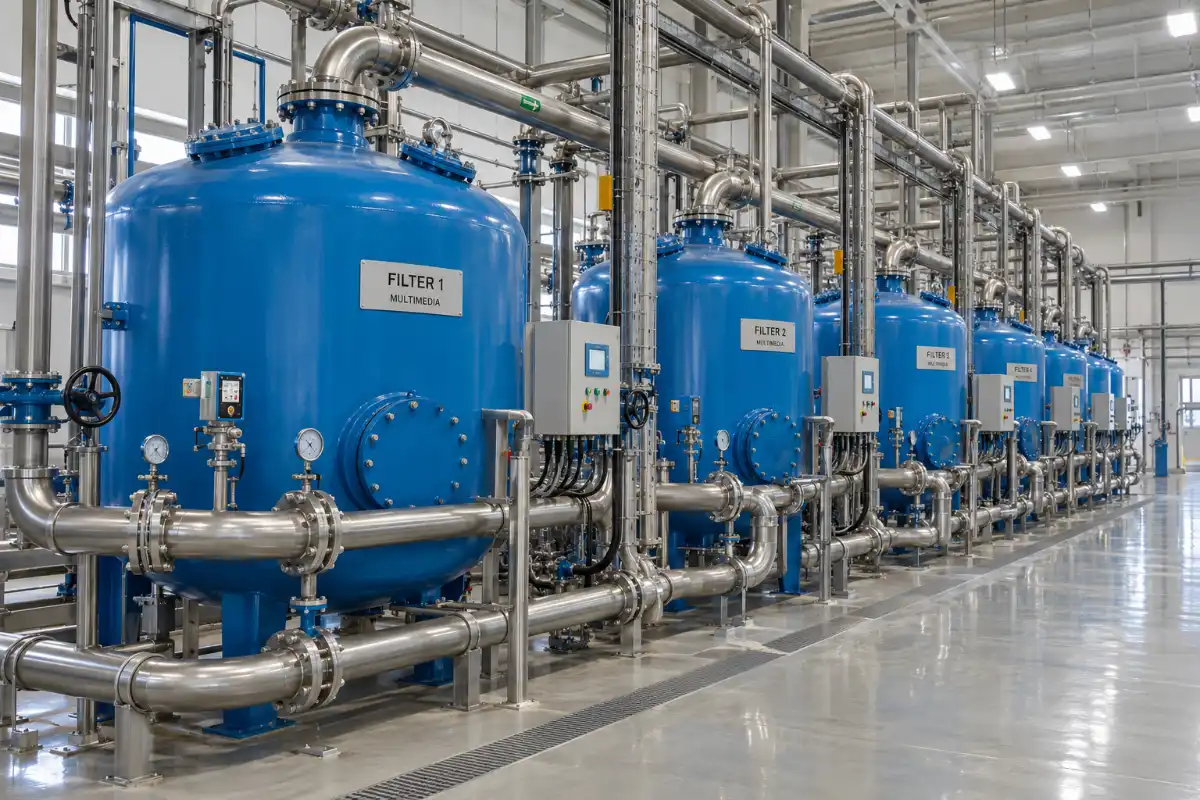
Design gets you a good starting point. Operations determine whether you stay there. These are the practices I insist on when I hand over a system.
Blow down on a schedule, not on a hunch
Concentrate removal should be tied to a measured parameter — density, conductivity, or a specific ion — and it should happen continuously or on a tight cycle. Batch blowdown based on “it looks thick enough” is how you end up with a supersaturated brine sitting in the sump overnight.
Log the right data
At minimum, record daily: feed flow and quality, brine density and temperature, steam or compressor amps, and pressure drop across the heat exchanger. Rising pressure drop at constant flow is the earliest reliable indicator of fouling. If you catch it in the first 10 percent, a mild wash will restore performance. If you wait until you lose 30 percent of capacity, you are looking at mechanical cleaning.
Clean early, clean gently
Preventive cleaning with the correct chemistry — often a mild acid for carbonate, a chelant or alkaline wash for sulfate and organics — costs a fraction of a shutdown for hydro-blasting. Build cleaning into your maintenance calendar as a planned activity, not a reaction to failure. And always verify the cleaning chemical against your construction material; I have seen well-intentioned acid washes destroy a heat exchanger because nobody checked the alloy.
Respect the mist eliminator and condenser
These are not scaling surfaces in the same way tubes are, but carryover of brine droplets will deposit solids in the condenser and downstream. A fouled mist eliminator raises pressure drop and can force you to reduce throughput. Wash it on schedule.
Cost and Energy Trade-offs You Should Think Through Early
Scaling prevention costs money — pretreatment chemicals, antiscalant, more frequent blowdown, potentially a larger evaporator. It also saves money. The trade-off is not always obvious, so it helps to frame it in lifecycle terms.
- Pretreatment capex and opex versus reduced cleaning labor and chemical cost.
- Larger heat exchanger surface area (lower delta-T, slower fouling) versus higher initial equipment cost.
- Higher blowdown rate (safer brine chemistry) versus higher concentrate disposal cost.
- Antiscalant dose versus the cost of one unplanned shutdown.
In most industrial projects I have worked on, the unplanned shutdown cost dominates everything else. A single 48-hour outage in a plant where the evaporator is on the critical path can exceed the annual antiscalant budget several times over. That reframes the decision: you are not buying chemicals, you are buying uptime.
Energy is the other lever. Mechanical vapor recompression typically uses far less energy per unit of water evaporated than a steam-driven multi-effect system, but the compressor and heat exchanger are more sensitive to fouling because a small loss of heat transfer directly raises compressor power. If you are evaluating configurations, the cost drivers for MVR evaporators are worth understanding before you commit to a technology.
Dealing with a scaling problem you cannot pin down?
Send us your feed analysis and current operating data. We will review the brine chemistry and heat exchanger duty with you and tell you where the scaling risk actually sits.
Case-Style Example: A Plating Wastewater Evaporator That Would Not Stay Clean
I worked on a project where a plating shop was running an MVC evaporator on rinse water concentrate. The unit was cleaning every 10 to 14 days, and the plant was losing about a shift per cleaning. Feed analysis looked unremarkable on paper. But the brine density target had been set years earlier based on a different product mix, and the shop had since added a nickel line.
What we found after a full mass balance:
- Sulfate was concentrating to roughly twice the level the original design assumed.
- The antiscalant in use was a carbonate-oriented phosphonate with limited sulfate efficacy.
- Tube velocity in the lower bundle was below 1.2 m/s, so crystals were settling rather than staying entrained.
- Blowdown was manual and happened once per shift, allowing the brine to swing above the safe concentration factor for several hours each day.
The fix was not exotic. We switched to a sulfate-compatible antiscalant, moved blowdown to continuous control on conductivity, and raised circulation rate by trimming the pump impeller. Cleaning interval went from 12 days to just over 60. No equipment replacement, no chemistry miracle — just aligning the operating window with what the brine actually was.
This is the pattern I see most often. The scaling is real, but the root cause is a mismatch between current operation and the assumptions baked into the original design.
When Membrane Concentration Should Come First
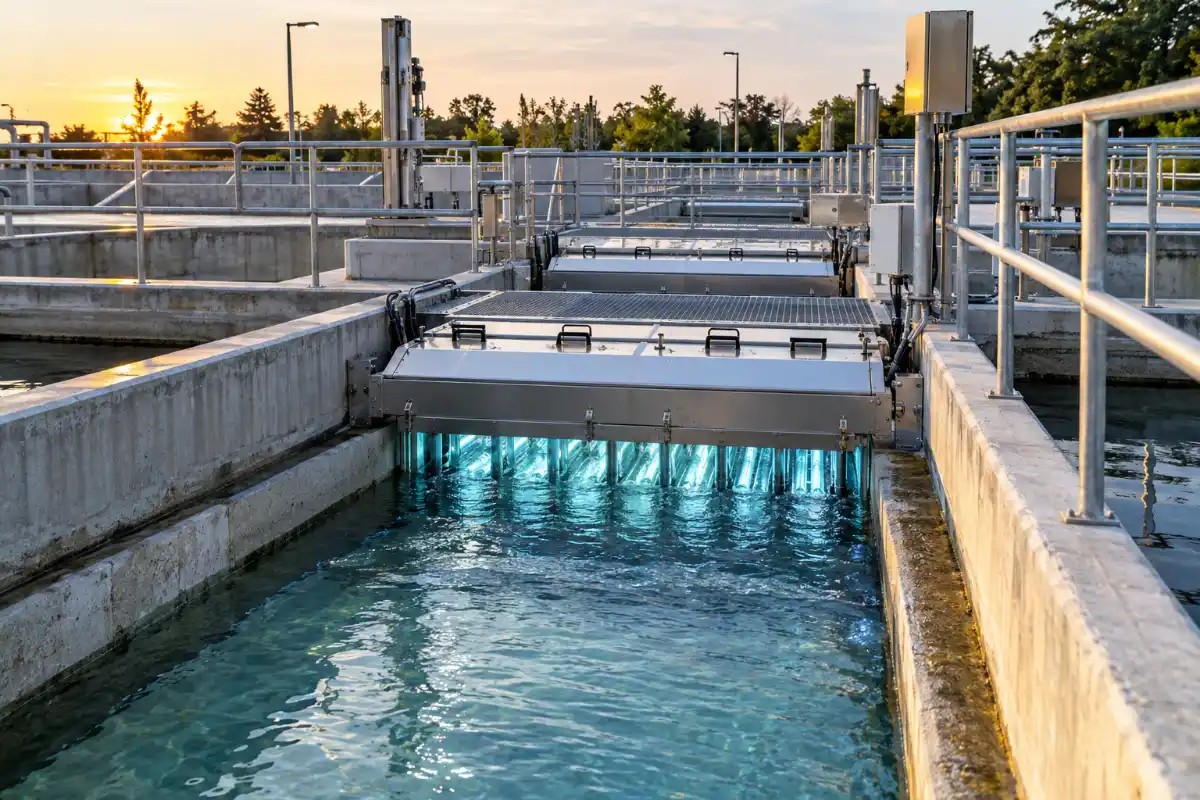
Not every wastewater should go straight to an evaporator. If your feed is 2 to 5 percent total dissolved solids and your target is a small concentrate volume, a membrane step ahead of the evaporator can cut the thermal load dramatically. Disc tube reverse osmosis, in particular, handles high-fouling and high-salinity streams that would destroy a conventional spiral-wound element.
The benefit for scaling prevention is straightforward: the evaporator sees a much smaller volume of much more concentrated feed, which means a smaller unit, shorter residence time, and often a more controllable brine chemistry. It also means the evaporator is doing less work, so any scaling that does occur has less surface area to affect.
That said, membrane pretreatment has its own scaling risks — sulfate and carbonate scaling on the membrane surface, organic fouling, and biofouling. The design logic is to place the scaling burden where it is cheapest to manage. For many ZLD flows, that means membranes handle the bulk concentration and the evaporator handles the final step. If you are weighing that architecture, the DTRO membrane system approach is one option worth evaluating against your specific brine.
Maintenance Program: What Actually Keeps You Running
A scaling prevention program is not a document. It is a set of habits. Here is what I consider non-negotiable on any evaporator I am responsible for.
| Activity | Frequency | Purpose |
|---|---|---|
| Feed quality check (hardness, silica, TDS) | Daily | Catch upstream upsets before they reach the brine |
| Brine density / conductivity log | Continuous or per shift | Confirm you are inside the safe concentration window |
| Heat exchanger pressure drop | Daily | Earliest indicator of fouling |
| Antiscalant dosing verification | Per shift | Dosing pumps drift; verify actual delivery |
| Preventive chemical wash | Per schedule or on trend | Remove early deposits before they harden |
| Inspection of distributor, mist eliminator | Monthly | Catch mechanical fouling before it becomes thermal fouling |
| Full heat exchanger inspection | Annually or per campaign | Assess tube condition, corrosion, and residual deposits |
The two rows most often skipped are antiscalant verification and pressure drop logging. Both are cheap, both are early-warning, and both prevent the expensive failures.
Common Mistakes and How to Avoid Them
After enough projects, the same errors show up again and again. If you recognize your plant in this list, you are not alone.
- Sizing pretreatment for average feed quality. Industrial wastewater peaks. Size for the peak, or add buffering.
- Setting brine density once and never revisiting it. Product mix changes; your brine target should change with it.
- Using the wrong antiscalant. Match chemistry to the dominant scaling salt, not to whatever was on the shelf.
- Cleaning only when capacity drops. By then you are removing hard scale, not soft deposit. Clean early.
- Ignoring the heat exchanger pressure drop trend. It is the cheapest fouling sensor you have.
- Running a high delta-T to save surface area. You save capex and pay for it in cleaning labor every month.
- Not documenting cleaning chemistry and results. Without records, you cannot improve the program.
Frequently Asked Questions
How often should a wastewater evaporator be cleaned?
It depends on the brine, the design, and the pretreatment. A well-run unit on a moderate feed might go 8 to 12 weeks between cleanings. Aggressive brines with high silica or sulfate can need cleaning every 2 to 4 weeks. If you are cleaning more often than monthly, something in the design or operation needs attention — that is not a normal baseline.
Can I prevent scaling without chemicals?
Partially. Good pretreatment, correct brine concentration control, and proper heat exchanger design will reduce scaling significantly. But for most industrial brines, some form of antiscalant or scale inhibitor is the practical way to extend run time. Mechanical and thermal approaches alone rarely give you long campaigns on hard brines.
What is the most common cause of sudden scaling?
A change in feed composition that nobody flagged. A new process line, a different raw material, a cleaning chemical from another department entering the drain — any of these can shift the brine chemistry outside its safe window. The second most common is a failed or drifted antiscalant dosing pump.
Does higher temperature always mean more scaling?
No, and this is a common misconception. Temperature affects different salts differently. Calcium carbonate and calcium sulfate become less soluble as temperature rises, so they scale more readily on hot surfaces. Some salts are the opposite. Silica behavior is more complex. The right operating temperature depends on which salts dominate your brine.
How do I know if my antiscalant is working?
Track heat exchanger pressure drop and capacity over time at constant operating conditions. If both stay stable, the program is working. If pressure drop climbs steadily, either the dose is too low, the chemistry is wrong for your brine, or something else changed. A bench-scale test with your actual brine is the most reliable way to verify before you commit to a full-scale dose.
Should I choose MVC or multi-effect for a scaling-prone brine?
Both can work if designed correctly. MVC is usually more energy-efficient but more sensitive to heat transfer loss, so fouling hurts it more. Multi-effect systems tolerate moderate fouling better in some configurations because there are more stages to distribute the duty. The deciding factors are usually energy cost, flow rate, and how aggressive the brine is — not a single technology preference.
What is the single most effective scaling prevention step?
If I had to pick one, it would be controlling the brine concentration factor against a measured scaling ion, not against density or a fixed schedule. Everything else supports that. When the brine stays inside its window, the rest of the program has room to work.
Closing Thoughts
Scaling prevention is not a product you buy or a single fix you install. It is the result of aligning feed quality, brine chemistry, heat exchanger design, and operating discipline. The plants that run long campaigns are not using secret chemistry — they are paying attention to the fundamentals and catching problems when they are still cheap to fix.
If you are designing a new system, build in the margin for pretreatment and heat transfer surface. If you are operating an existing one, start with the mass balance and the pressure drop log. Those two things will tell you more about your scaling risk than any vendor presentation. And if you are stuck on a brine that will not behave, get the chemistry and the hydraulics reviewed together — the answer is usually in the interaction, not in either one alone.