

If you’re budgeting a wastewater evaporator installation, the honest answer is that total installed cost usually lands between $180,000 and $2.5M for industrial-scale systems, with most mid-size projects settling in the $400,000 to $900,000 range. That spread isn’t random. It reflects evaporator type, capacity, materials of construction, pretreatment requirements, and how much site work the plant has to absorb. I’ve quoted and commissioned enough of these systems to know that the equipment price tag is often less than half the real number. The rest hides in civil works, utilities, piping, electrical, permitting, and startup. This article breaks down where that money actually goes, so you can build a budget that survives contact with reality.

What “Installation Cost” Really Covers
When a vendor quotes you an evaporator, they’re usually quoting a skid or a module. Installation is everything between that skid arriving on a truck and the system running at design capacity. In my experience, buyers who conflate the two end up with a nasty surprise at the 60% engineering milestone.
A realistic installed-cost breakdown looks like this:
| Cost Category | Typical Share of Installed Cost | Notes |
|---|---|---|
| Core evaporator equipment | 35–50% | Heat exchangers, compressor or steam chest, vapor body, pumps |
| Pretreatment (if required) | 5–20% | Softening, antiscalant dosing, oil removal, pH adjustment |
| Civil and structural | 8–15% | Foundations, containment, access platforms |
| Piping and valves | 7–12% | Often underestimated on corrosive service |
| Electrical and controls | 8–14% | MCC, VFDs, instrumentation, PLC integration |
| Erection and commissioning | 8–15% | Labor, cranes, startup support, operator training |
| Engineering and permitting | 4–10% | Process design, P&IDs, air and discharge permits |
Those percentages shift depending on where you build, what the wastewater contains, and whether you’re bolting onto an existing plant or starting from a greenfield pad. A system installed inside an operating chemical plant costs more to erect than one on a fresh concrete slab, simply because of access, hot work permits, and shutdown windows.
How Evaporator Type Drives the Price
The single biggest lever on cost is the technology you pick. A single-effect evaporator is cheap to buy and expensive to run. A mechanical vapor recompression (MVC) system costs more upfront and dramatically less per cubic meter of distillate. Multi-effect arrangements sit in between. I’ve watched plants save six figures a year in energy by paying 30% more at the capital stage — and I’ve watched others regret over-specifying when their flow was too small to justify it.
Single-effect and double-effect systems
For low flows — say under 5 m³/day of concentrate — a single-effect evaporator is often the sensible choice. Capital is low, footprint is small, and operation is simple. The trade-off is steam consumption. If you don’t have cheap waste steam available, the operating cost will eat you alive. A double-effect evaporator roughly halves steam demand per unit of evaporation, which can justify the higher capital in two to four years on medium flows.
Multi-effect evaporators
Once you’re above roughly 10–15 m³/day of evaporation, multi-effect evaporators start making economic sense, provided you have a steam source. Each additional effect adds capital but reduces specific steam consumption. Triple-effect configurations are a common sweet spot in chemical and pharmaceutical service, where steam is available and the added complexity is manageable.
MVC and MVR systems
Mechanical vapor recompression is where most of my industrial clients end up, especially when they have no steam and no appetite for a boiler. An MVC evaporator uses a compressor to recompress the vapor it generates, reusing the latent heat. Electricity replaces steam. For a plant with reasonable power rates and no waste heat, this is usually the lowest life-cycle cost option above a few cubic meters per day.
The compressor is the heart of the system and often the single most expensive component. That’s why heat exchanger and compressor selection deserves more scrutiny than the vessel fabrication. A cheap compressor that fails at year three will wipe out any savings from the initial bid.
Wastewater Chemistry: The Hidden Cost Multiplier
Two projects with identical flow rates can differ in cost by a factor of three because of what’s dissolved in the water. This is the part of the budget that gets missed most often.
Scaling and fouling
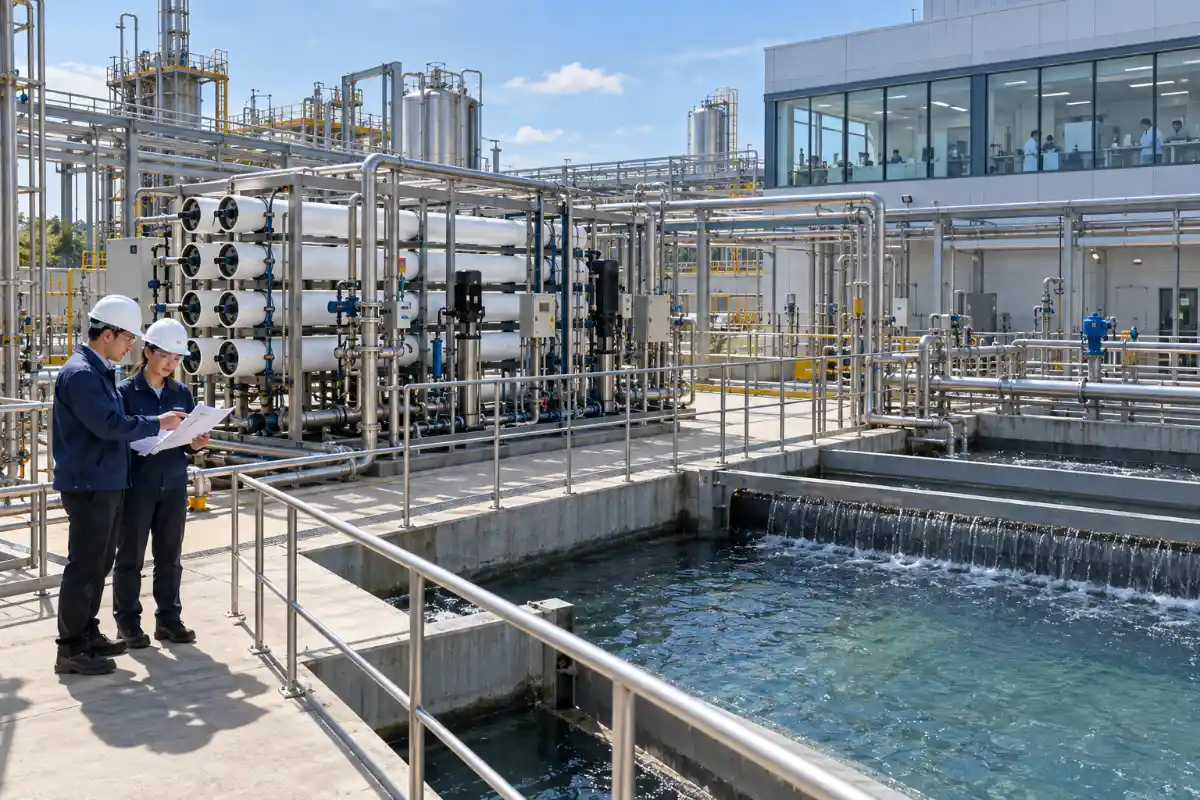
Hardness, silica, and sulfate scale the heat transfer surfaces. Once you’re cleaning every two weeks instead of every two months, you’ve destroyed the operating economics. Pretreatment — softening, antiscalant dosing, sometimes a membrane step upstream — adds capital and chemical cost but protects the evaporator. On high-hardness streams I’ve specified DTRO membrane systems ahead of the evaporator to reduce the volume that has to be boiled, which cuts both capital and energy.
Corrosion and materials
Chlorides, fluorides, and low pH push you from 316L stainless into duplex, super duplex, titanium, or even higher alloys. Material upgrades on wetted parts can add 20–60% to the equipment cost. On a landfill leachate project I worked on, the chloride load forced us into titanium heat exchangers — expensive, but the alternative was a system that failed in eighteen months. If you want a sense of how aggressive leachate chemistry gets, the breakdown of leachate constituents is a good starting reference.
Organics, oils, and foaming
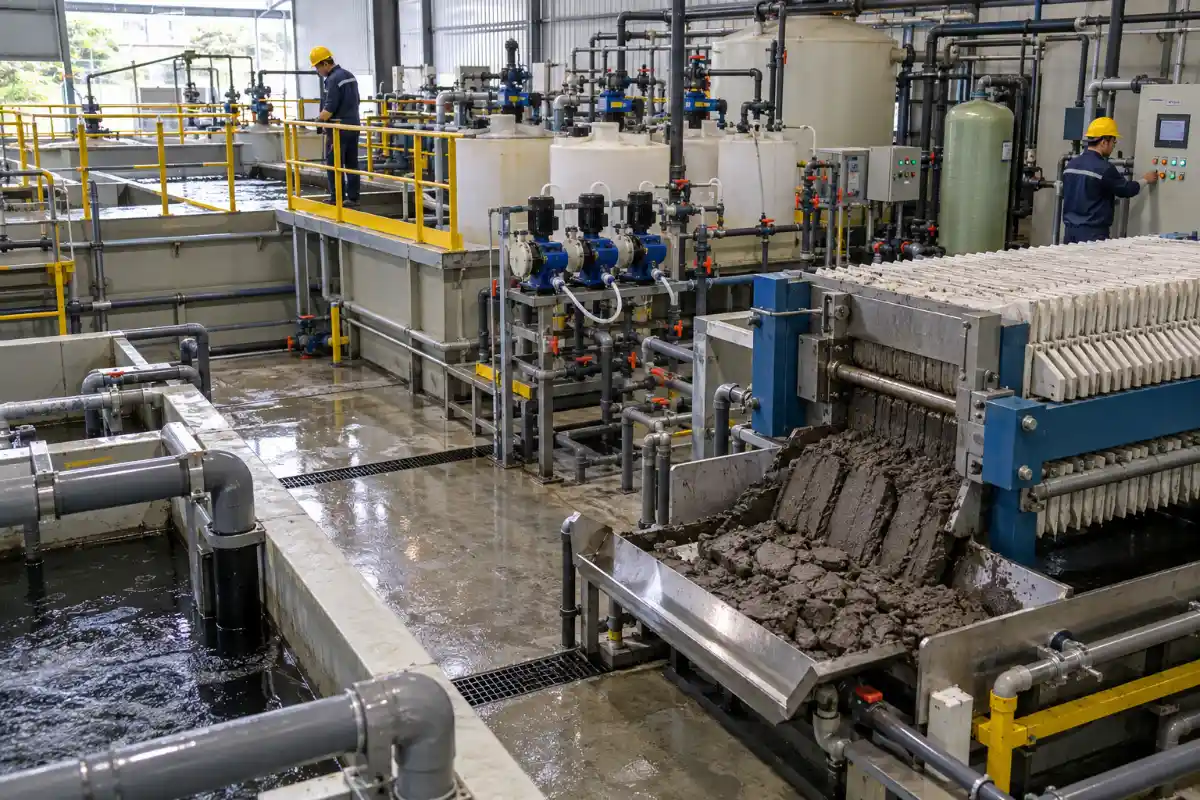
Oily or surfactant-laden streams foam in the vapor body, carry over into the compressor, and cause failures. Defoaming, oil separation, or a pre-concentration step may be required. These aren’t optional add-ons; they’re the difference between a system that runs and one that trips every shift.
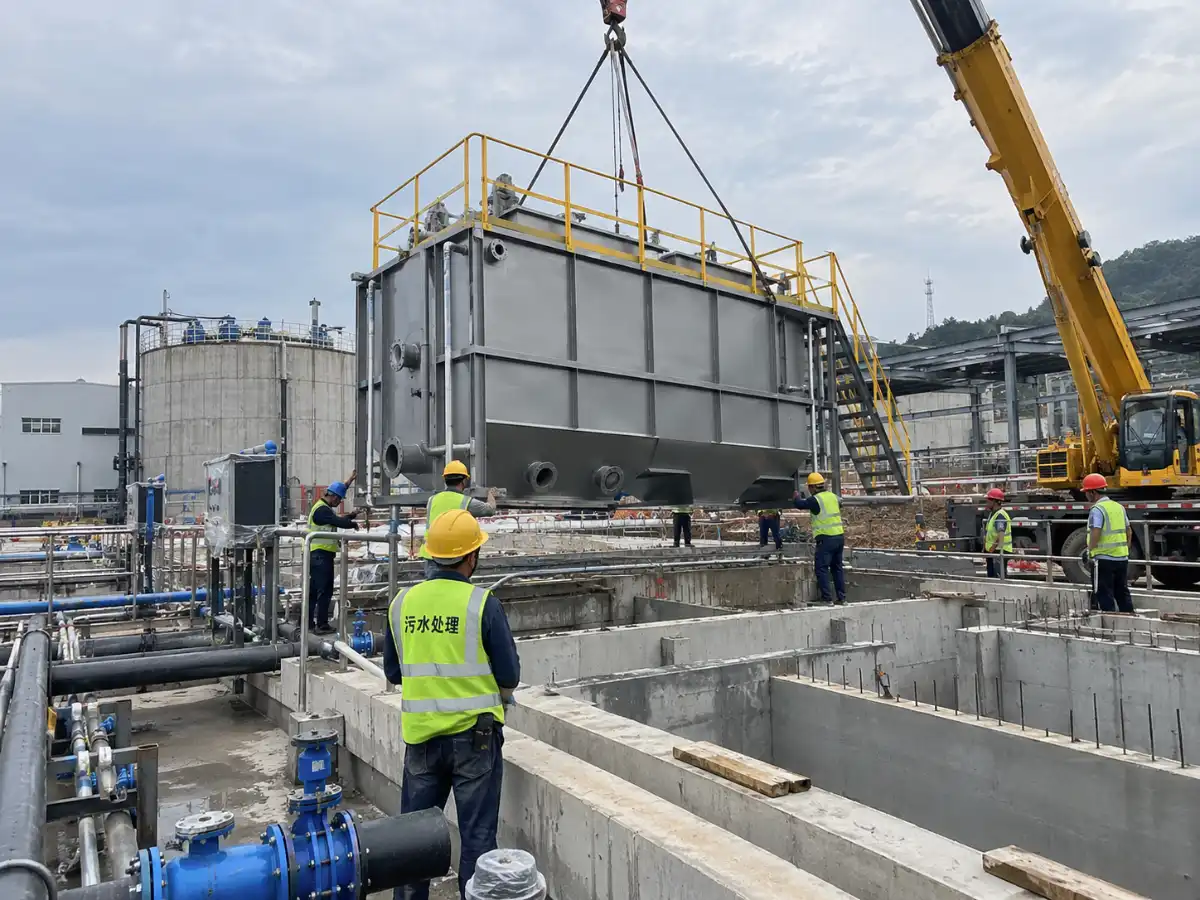
Site Conditions and Installation Scope
Installation labor and civil work are where budgets drift. A few things I always walk through with clients before they sign:
- Available footprint. Tight indoor retrofits cost more to erect than outdoor pads. Crane access alone can add tens of thousands.
- Utilities at the battery limit. Steam, power, cooling water, and instrument air need to be within reasonable distance. Long runs of pipe and cable add up fast.
- Containment and spill control. Most jurisdictions require secondary containment for concentrated brine. That’s concrete, liners, and sumps.
- Permitting. Air permits for the vapor stream, discharge permits for the distillate, and sometimes waste classification for the concentrate. Permit timelines can delay startup by months.
- Shutdown windows. If you’re tying into an operating plant, the tie-in has to happen during a turnaround. That constrains schedule and can add premium labor.
I usually budget 15–25% contingency on installation scope for brownfield projects, and 10% for greenfield. Anyone who tells you 5% is enough hasn’t commissioned a system on a live site.
Operating Cost: The Number That Actually Matters
Capital is a one-time hit. Operating cost compounds every year. When I evaluate evaporator options, I run a ten-year life-cycle comparison, not a five-year one, because these systems typically run for fifteen to twenty-five years.
| Cost Driver | Typical Range | Comment |
|---|---|---|
| Electricity (MVC/MVR) | 15–45 kWh per m³ distillate | Highly dependent on boiling point elevation and compressor efficiency |
| Steam (multi-effect) | 0.15–0.45 kg steam per kg water evaporated | Depends on number of effects |
| Antiscalant / chemicals | $0.5–$4 per m³ feed | Wide range based on scaling tendency |
| Membrane replacement (if upstream) | Every 2–4 years | Amortize into annual cost |
| Maintenance labor | 2–5% of installed cost per year | Higher on aggressive chemistry |
| Cleaning chemicals and downtime | Project-dependent | Often the largest hidden cost |
If you want a deeper look at how these operating numbers translate into total cost of ownership, the MVR evaporator cost drivers writeup covers the capital and operating side in more detail.
Zero Liquid Discharge Changes the Math
If your permit requires zero liquid discharge, the evaporator is only part of the story. You’ll need a crystallizer or a spray dryer downstream to turn the brine into a solid. That roughly doubles the installed cost compared to a simple volume-reduction evaporator. A ZLD system typically involves pretreatment, membrane concentration, evaporation, and crystallization — each stage with its own capital, energy, and maintenance burden.
I always ask clients whether ZLD is truly required or whether a brine disposal contract is available. Sometimes the disposal route, even at high cost per cubic meter, is cheaper over the asset life than building and running a crystallizer. Run both scenarios before committing.
Where Projects Go Over Budget
After enough of these projects, the overruns start to look predictable. Here’s what I see most often:
- Underestimated pretreatment. The feed chemistry was characterized from a single grab sample, not a composite over time. Real variability shows up after startup.
- Materials downgraded to hit a bid target. The system runs for a year, then corrodes through.
- Compressor undersized or over-specced. Either the system can’t reach design concentration, or you paid for capacity you’ll never use.
- Controls integration ignored. The PLC talks to nothing, and operators run the system manually. Reliability suffers.
- No operator training budget. The best-designed system fails in the hands of untrained staff.
- Permit delays. Equipment sits in a warehouse for six months while the air permit works through review.
Each of these is preventable with proper front-end engineering. The cost of a thorough feasibility study is trivial compared to the cost of a system that doesn’t work.
How to Build a Defensible Budget
If you’re putting together a capital request or an EPC bid package, here’s the approach I recommend:
- Characterize the feed properly. Composite samples over at least two weeks, covering seasonal or batch variability. Include TDS, TSS, hardness, silica, chlorides, COD, and pH range.
- Define the product. What distillate quality do you need? What concentrate concentration? These two numbers drive everything.
- Pick the technology on life-cycle cost. Not lowest capital. Run a ten-year NPV including energy, chemicals, maintenance, and expected downtime.
- Get a scope-of-supply matrix from every vendor. Who supplies the civil work? The electrical? The piping? The startup? Ambiguity here is where change orders are born.
- Budget contingency honestly. 10% greenfield, 15–25% brownfield. Don’t let anyone talk you down.
- Plan for spares and training. Budget 2–4% of equipment cost for critical spares, and a real training program for operators.
For a broader view of how evaporation fits into a full treatment train, the wastewater evaporation system overview is a useful reference when you’re mapping out the process flow.
Need a realistic cost estimate for your project?
Send us your feed analysis and flow rate. We’ll come back with an indicative installed-cost range and a scope-of-supply breakdown you can take to your capital committee.
Frequently Asked Questions
What is the typical installed cost of an industrial wastewater evaporator?
For most industrial systems between 5 and 50 m³/day of evaporation, installed cost falls in the $400,000 to $900,000 range. Small single-effect units can come in under $200,000, while large MVC or ZLD trains with crystallization can exceed $2.5M. The biggest variables are technology type, materials of construction, pretreatment scope, and site conditions.
How much does it cost to operate an MVC evaporator per cubic meter?
Electricity dominates operating cost, typically 15–45 kWh per cubic meter of distillate depending on boiling point elevation and compressor efficiency. Add chemicals, maintenance, and periodic cleaning, and total operating cost commonly lands between $4 and $15 per cubic meter of feed, with aggressive chemistries pushing the upper end.
Why do evaporator installation projects go over budget so often?
The usual culprits are incomplete feed characterization, underestimated pretreatment, materials downgraded during bidding, undefined scope boundaries between vendors, and permit delays. A thorough feasibility study and a clear scope-of-supply matrix eliminate most of these risks before construction starts.
Do I need pretreatment before my evaporator?
It depends on the feed. High hardness, silica, sulfate, oils, or volatile organics usually require some form of pretreatment — softening, antiscalant dosing, oil separation, or a membrane step. Skipping pretreatment to save capital almost always costs more in cleaning downtime and premature equipment failure.
How long does installation and commissioning take?
From equipment delivery to steady-state operation, plan on 3 to 6 months for a mid-size system, and 9 to 18 months for a full ZLD train including crystallization. Permitting can add several months on top, especially for air emissions or concentrate disposal approvals.
What maintenance costs should I budget annually?
Plan on 2–5% of installed cost per year for routine maintenance, plus periodic heat exchanger cleaning and compressor servicing. On aggressive service, cleaning frequency can drive maintenance to the upper end of that range. Critical spares — compressor parts, pump seals, instrumentation — should be budgeted separately at startup.
Is MVC always cheaper than multi-effect evaporation?
Not always. MVC wins when electricity is reasonably priced and no steam is available. Multi-effect wins when you have cheap or waste steam and moderate flows. The right answer comes from a ten-year life-cycle cost comparison using your actual utility rates, not from a rule of thumb.
Can I install an evaporator indoors or does it need to be outdoors?
Either is possible, but indoor installation typically adds 10–20% to erection cost due to access constraints, ventilation requirements, and rigging complexity. Outdoor installation is more common for MVC systems above 10 m³/day, provided freeze protection and weatherproofing are addressed.
The Bottom Line
Wastewater evaporator installation cost is not a single number you can look up. It’s a function of your water, your site, your permit, and the technology you choose. The plants that get this right spend real money on front-end engineering — feed characterization, life-cycle analysis, and a clear scope of supply — before they ever ask for a bid. That upfront work is what keeps the project on budget and the system running for the next twenty years. If you approach it as an equipment purchase, you’ll pay for it later. If you approach it as a process design problem, you’ll get a system that actually works.